
Centralised vacuum systems
A centralised vacuum system is a single integrated solution for your entire production — pump station, filter, piping and suction points, designed together with you from start to finish.
Contact for advice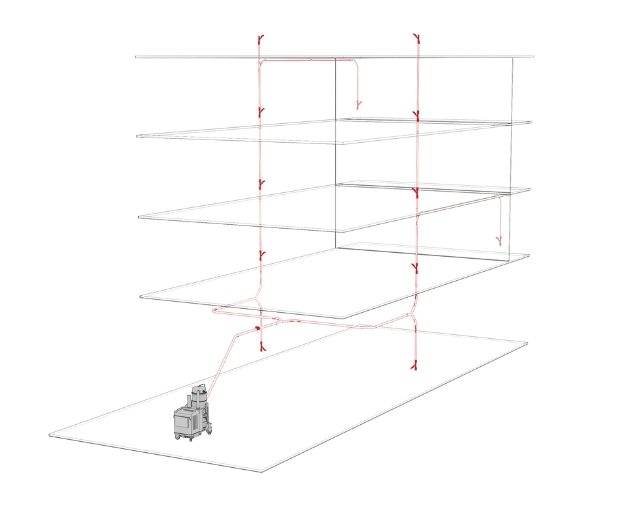
What is a centralised vacuum system?
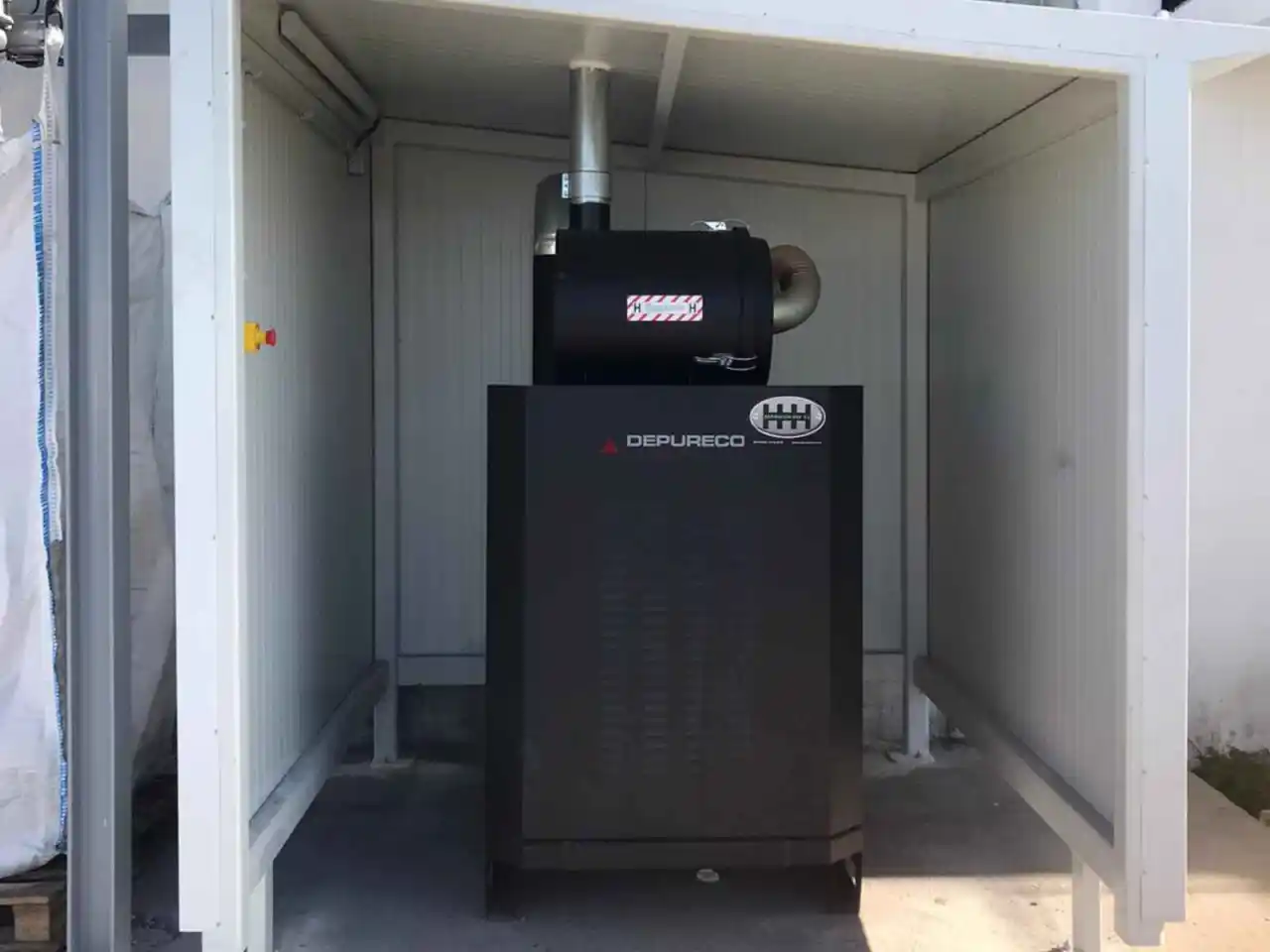
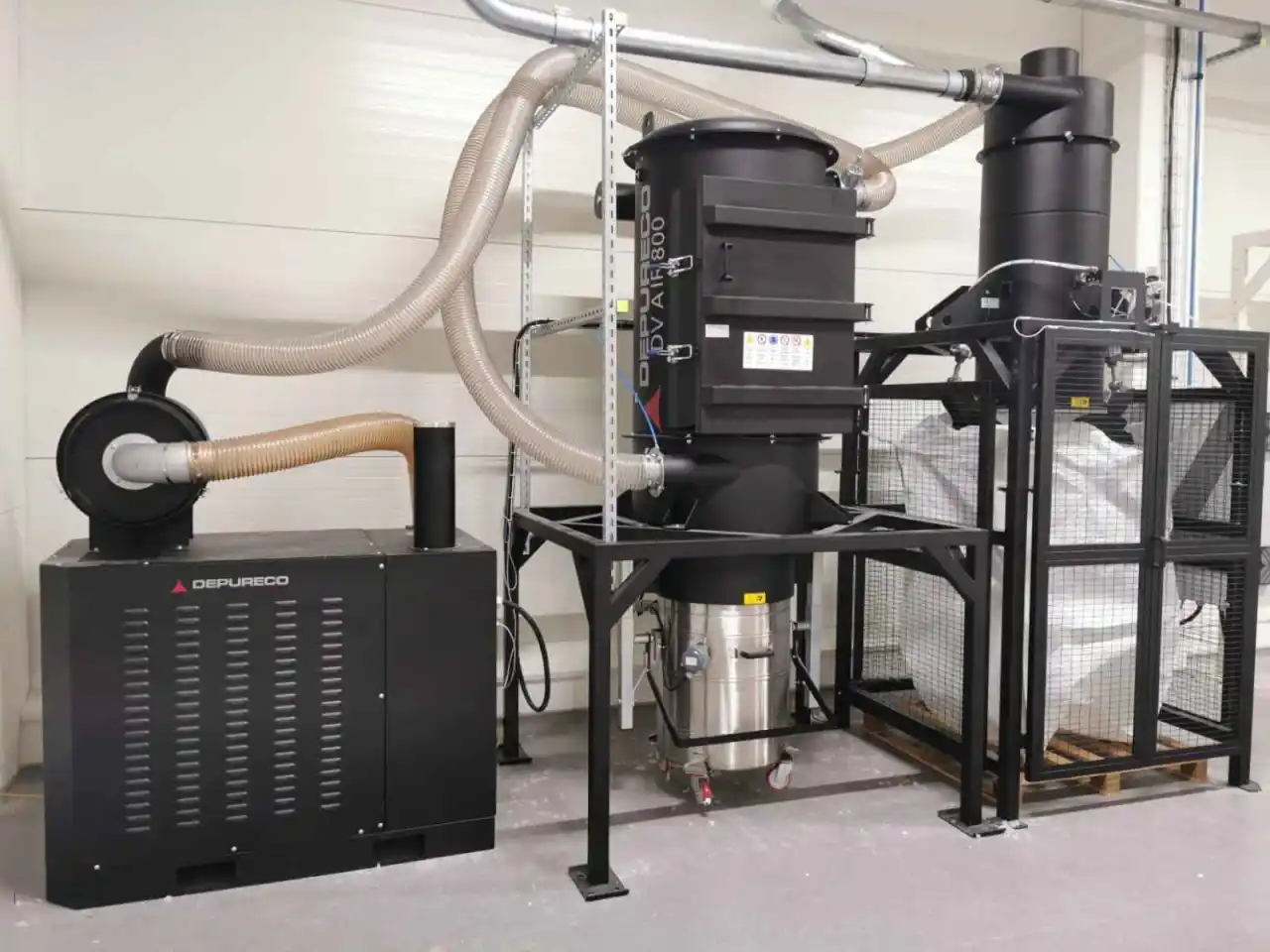
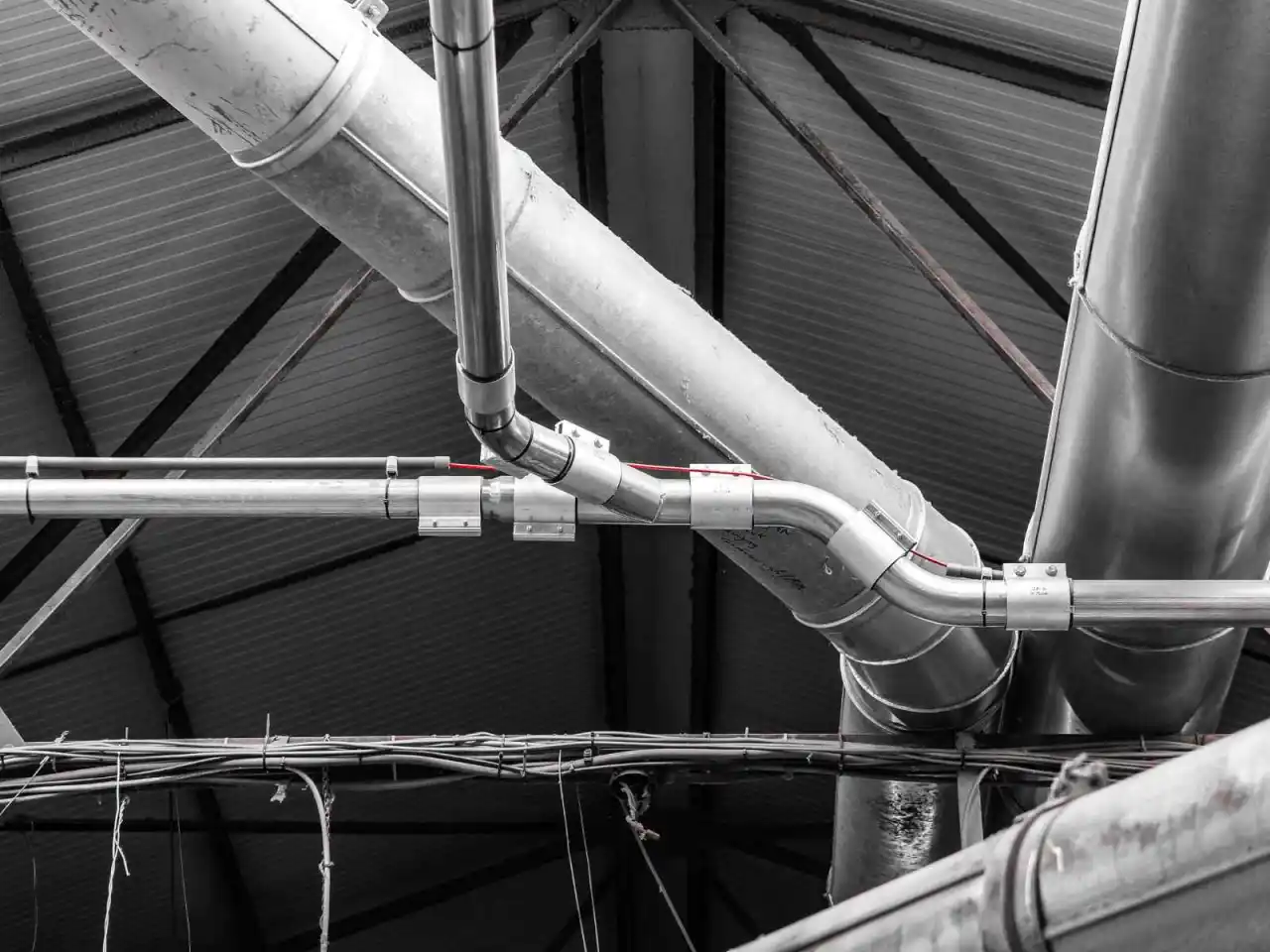
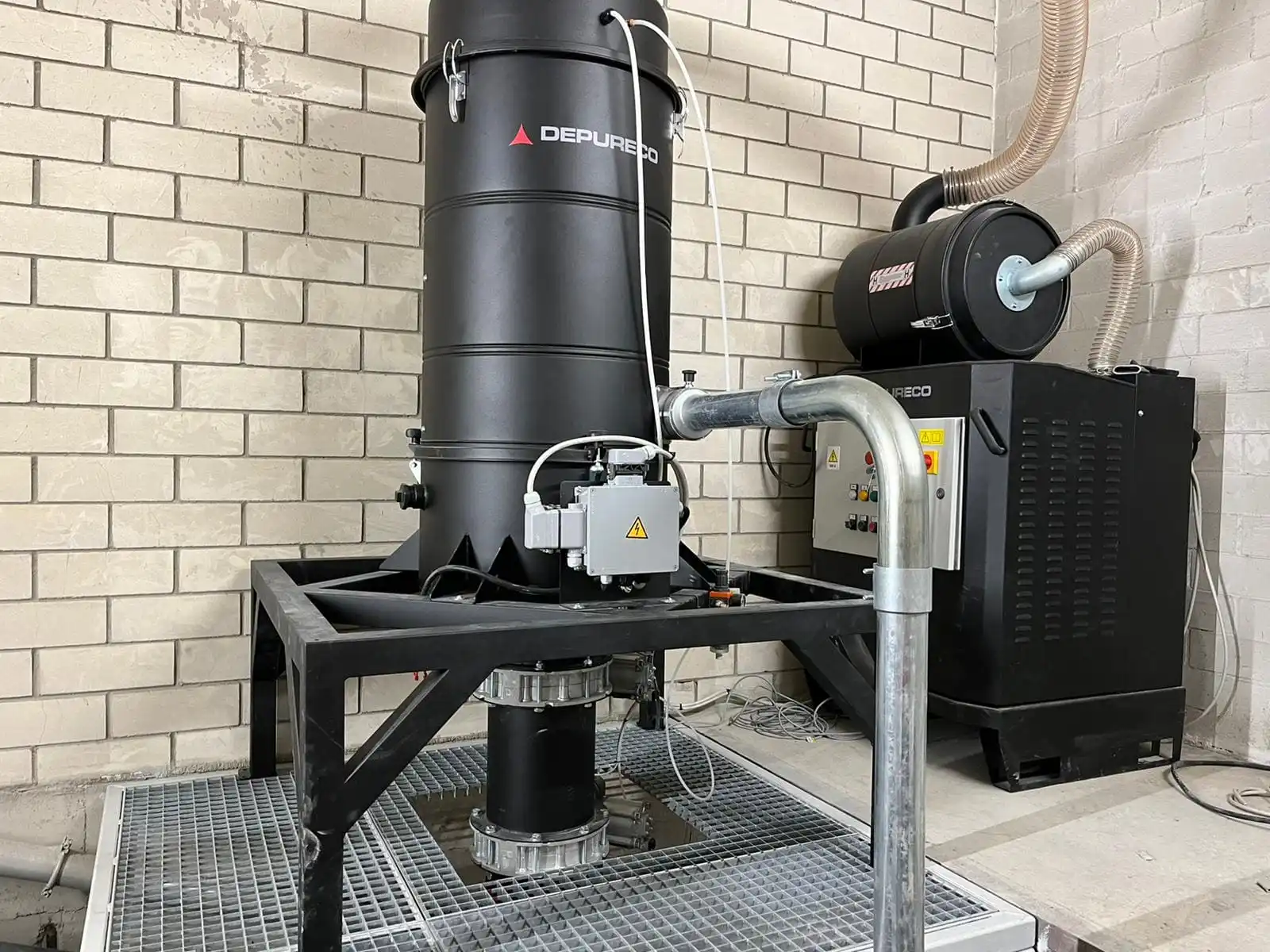
A centralised vacuum system is not a machine you take off the shelf. It is a solution designed for your specific production area, your specific dust, and the way you actually work. The pump station sits away from the production area — typically in a separate noise enclosure — so the noise stays out of where people work. From there, piping runs to fixed suction points or shutoff valves throughout the facility, where you connect a hose when you need to clean or extract.
This is the solution you choose when mobile vacuums no longer scale: when you have many extraction points, continuous operation, large volumes of dust, or when you operate in ATEX-classified zones where safety systems must be designed in from day one.
A centralised system cannot be configured on a website. It has to be designed. What we can do here is show you the components and explain how we work.
What you get from us
We deliver the entire system — from the conductive nozzle at one end to the grounding point at the other. That means one supplier to deal with, and one party responsible for making sure all the parts work together.
Control systems and automation. We work with a Danish panel builder and can PLC-program every function — as a standalone system or integrated with your BMS.
Installation by Danish trades. We use Danish electricians on site, and Danish fitters and welders for piping and equipment installation. You have Danish-speaking professionals on the floor throughout the install.
Explosion analysis of your dust. Together with Polish partner Grupa Wolff, we can have laboratory analyses performed on solid materials to determine their explosive parameters. This is the foundation for correct ATEX zone classification.
Documentation tailored to your needs. We produce full technical documentation and adapt it to what you require. Where possible, we deliver FAT and SAT — meaning the system is tested and documented before it runs at your site.
Components in a system
Complete systems
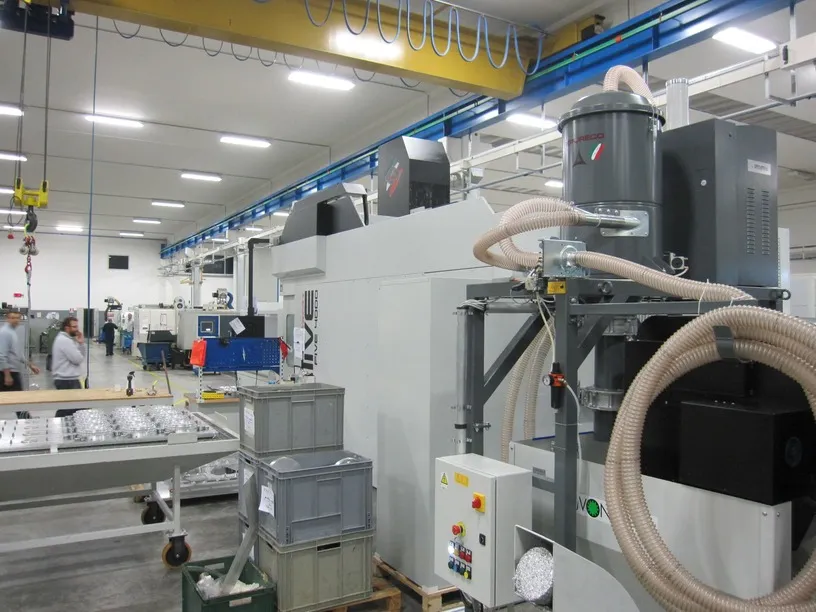
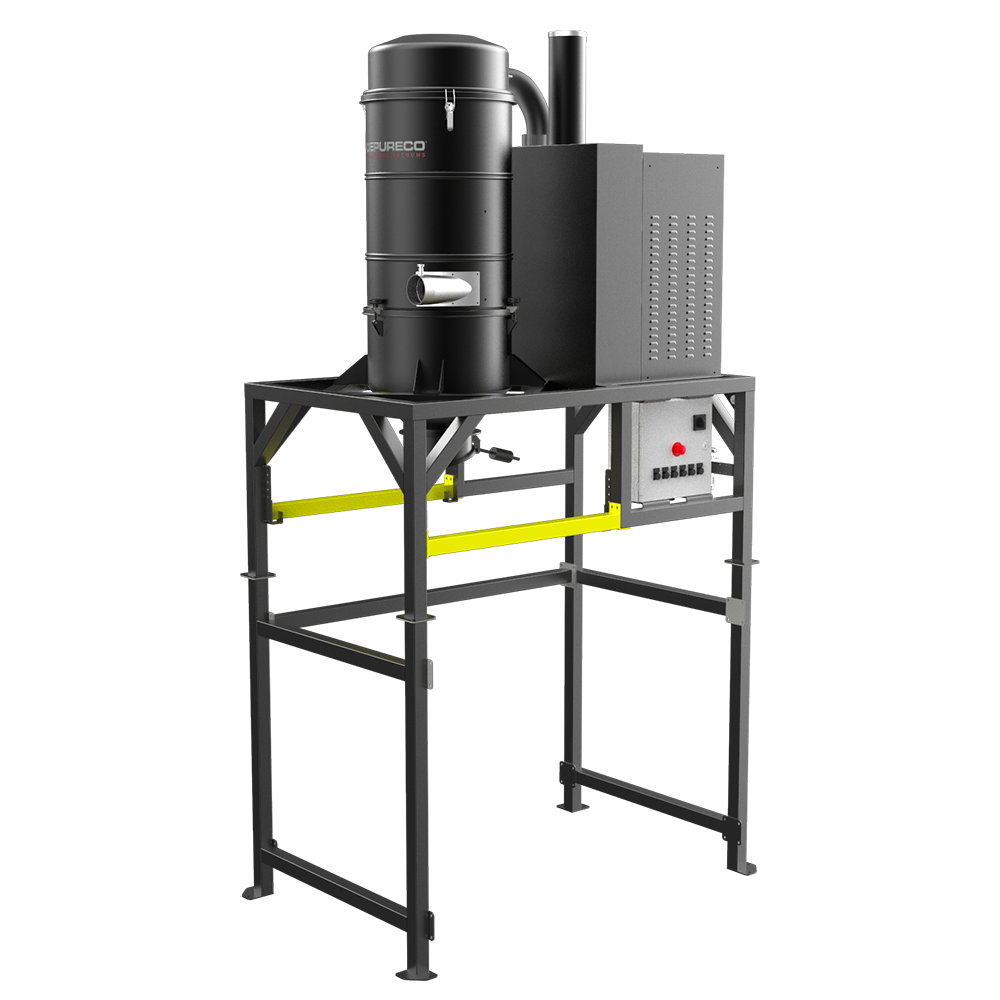
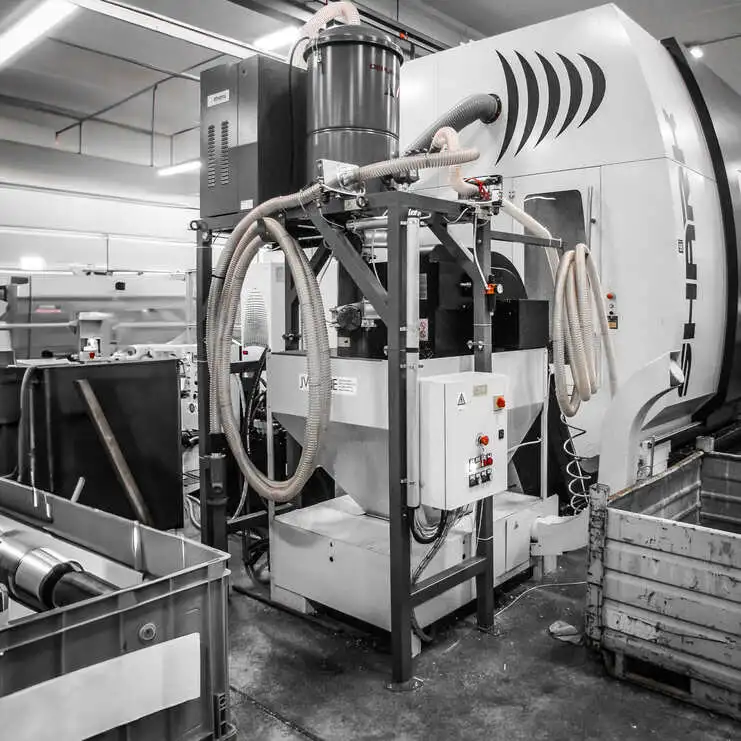
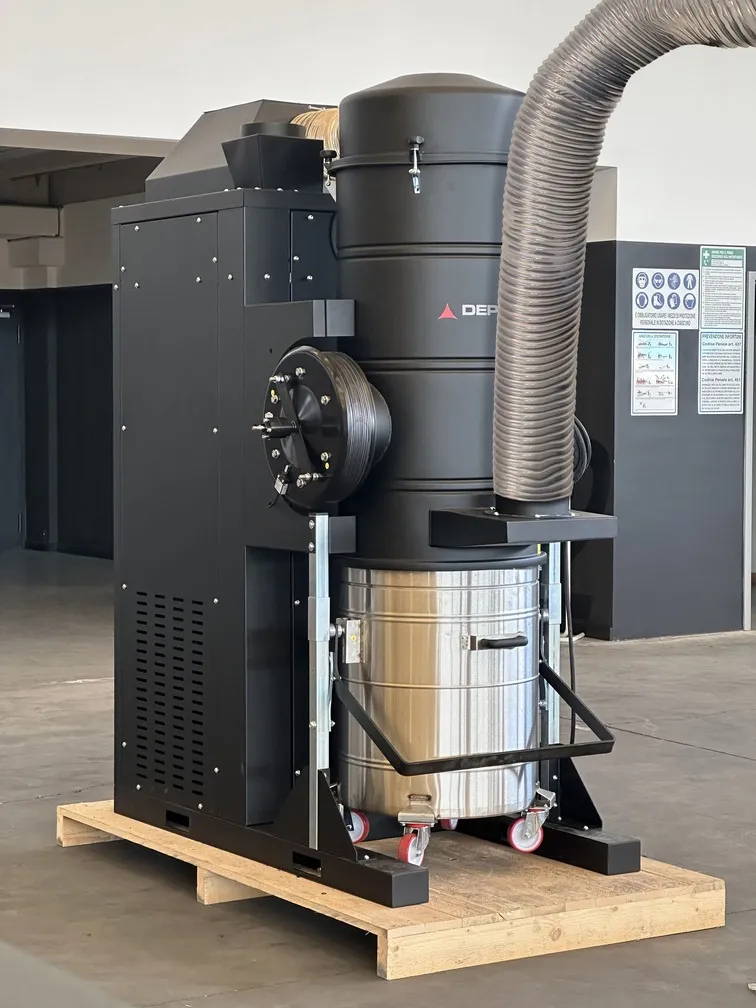
Stationary units with integrated blower and filter — a finished system in a single unit, sized for one extraction point or a small group.
8 models
HF 5,5 Z22
II 3 D Ex htc IIIB T140 Dc
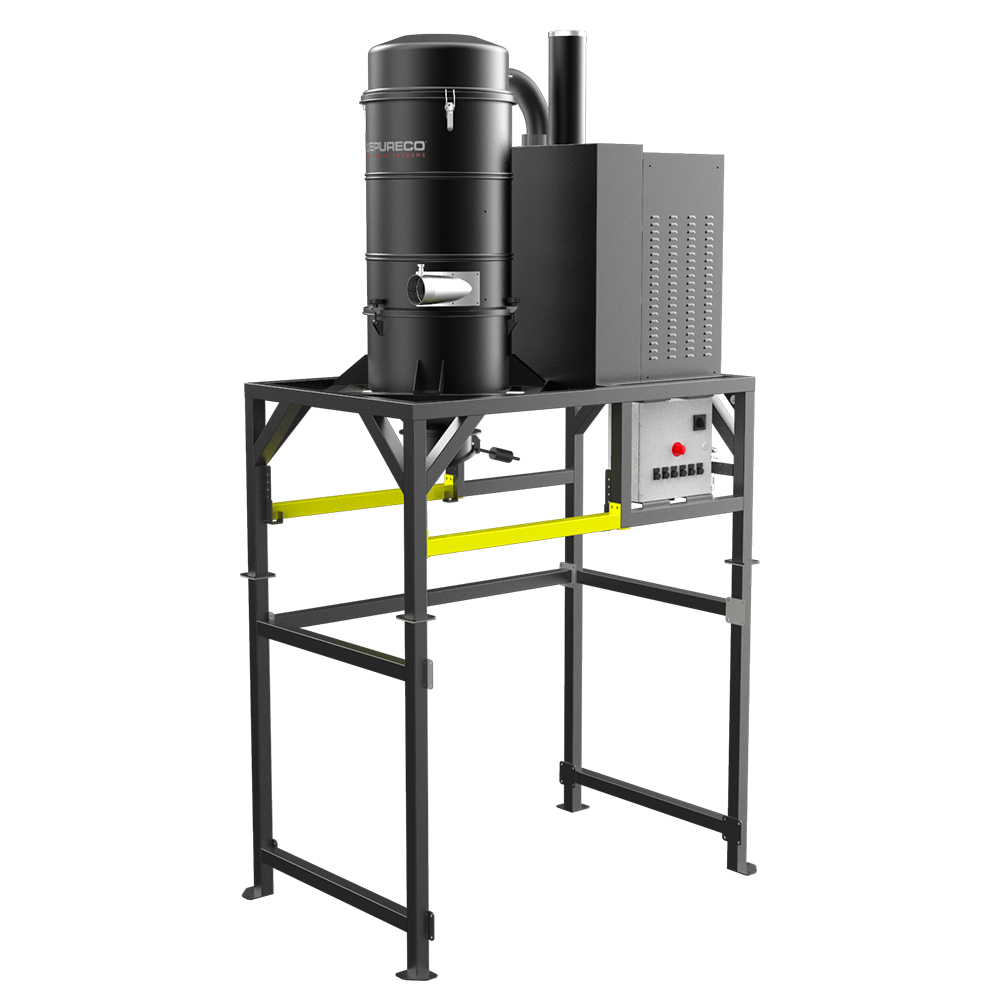
HF 7,5 Z22
II 3 D Ex htc IIIB T140 Dc
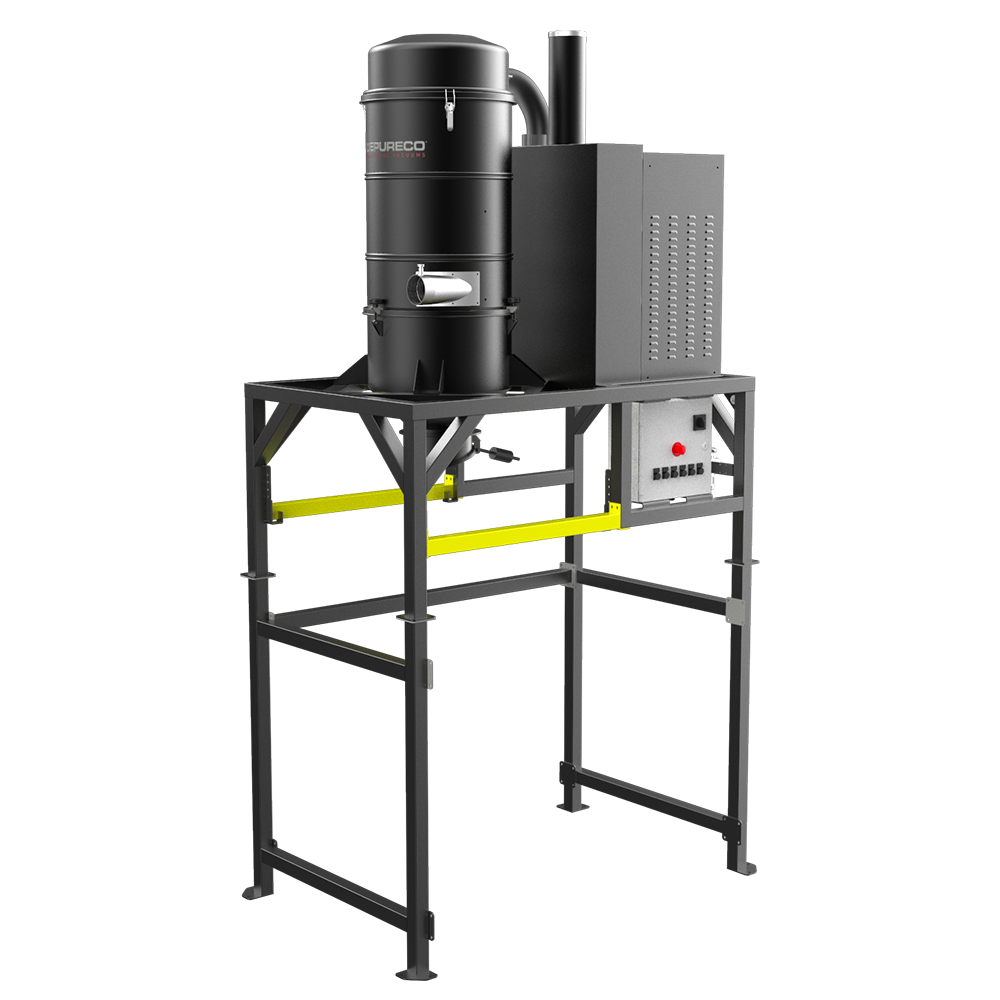
HF 10 Z22
II 3 D Ex htc IIIB T140 Dc
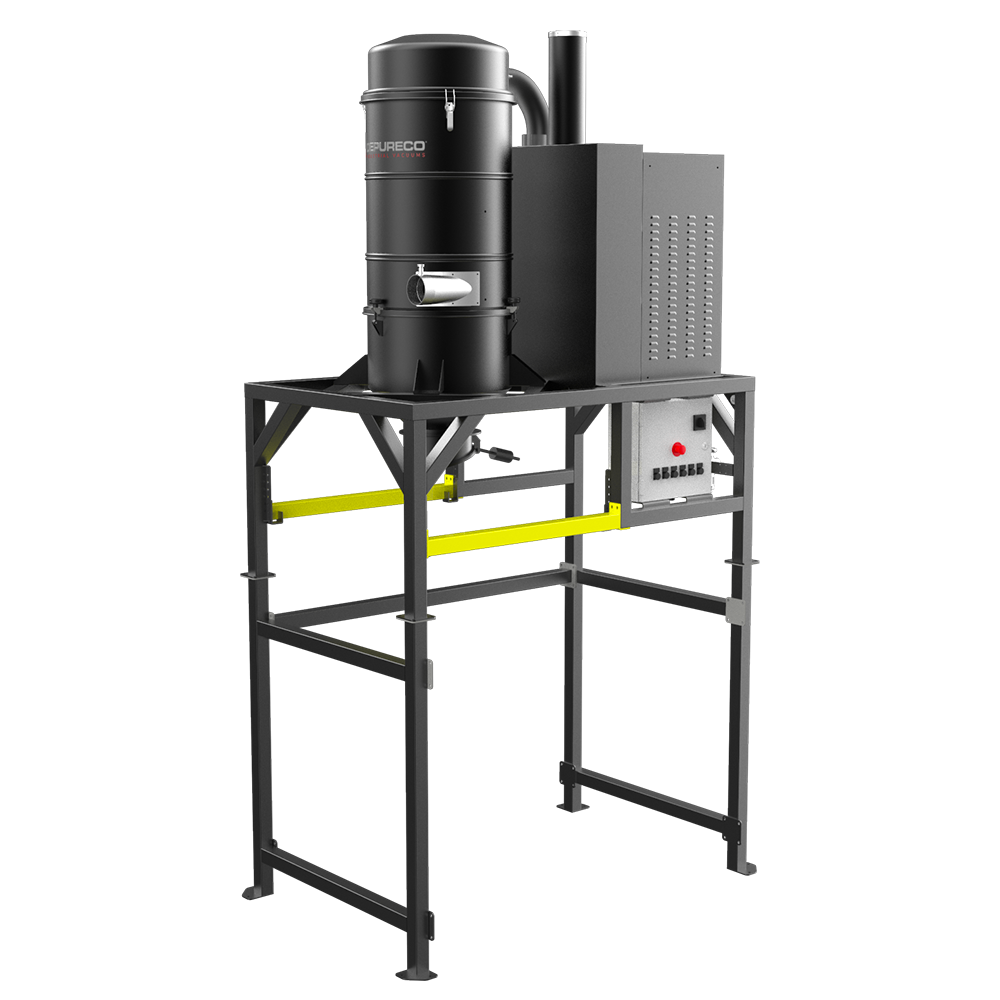
HF 15 Z22
II 3 D Ex htc IIIB T140 Dc
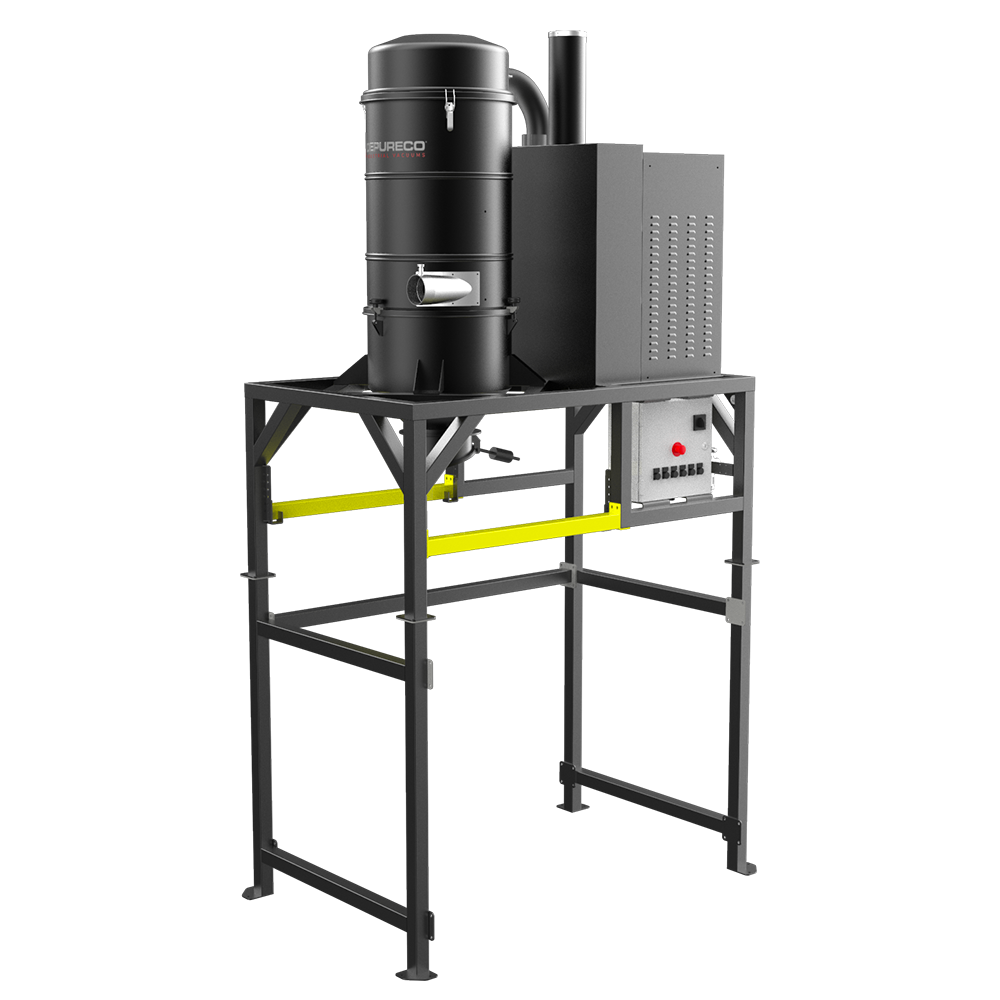
HF 20 Z22
II 3 D Ex htc IIIB T140 Dc
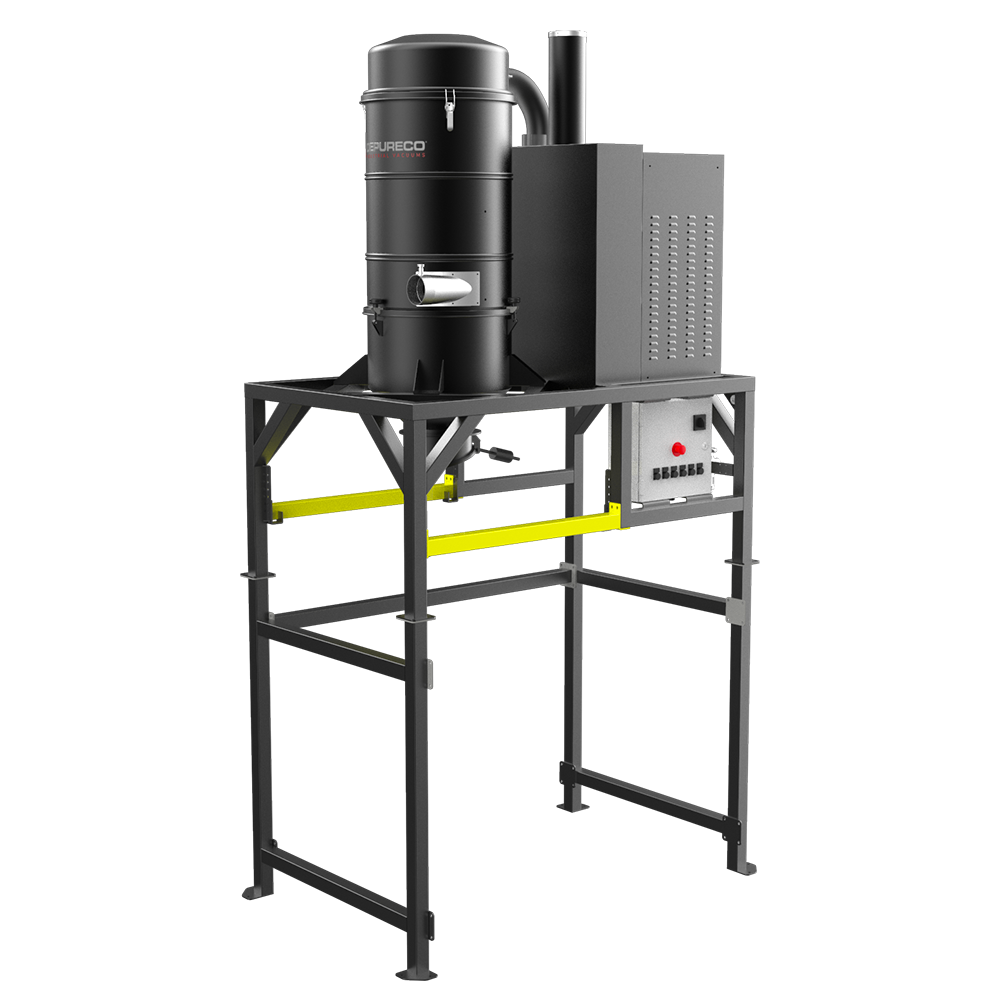
HF 25 Z22
II 3 D Ex htc IIIB T140 Dc
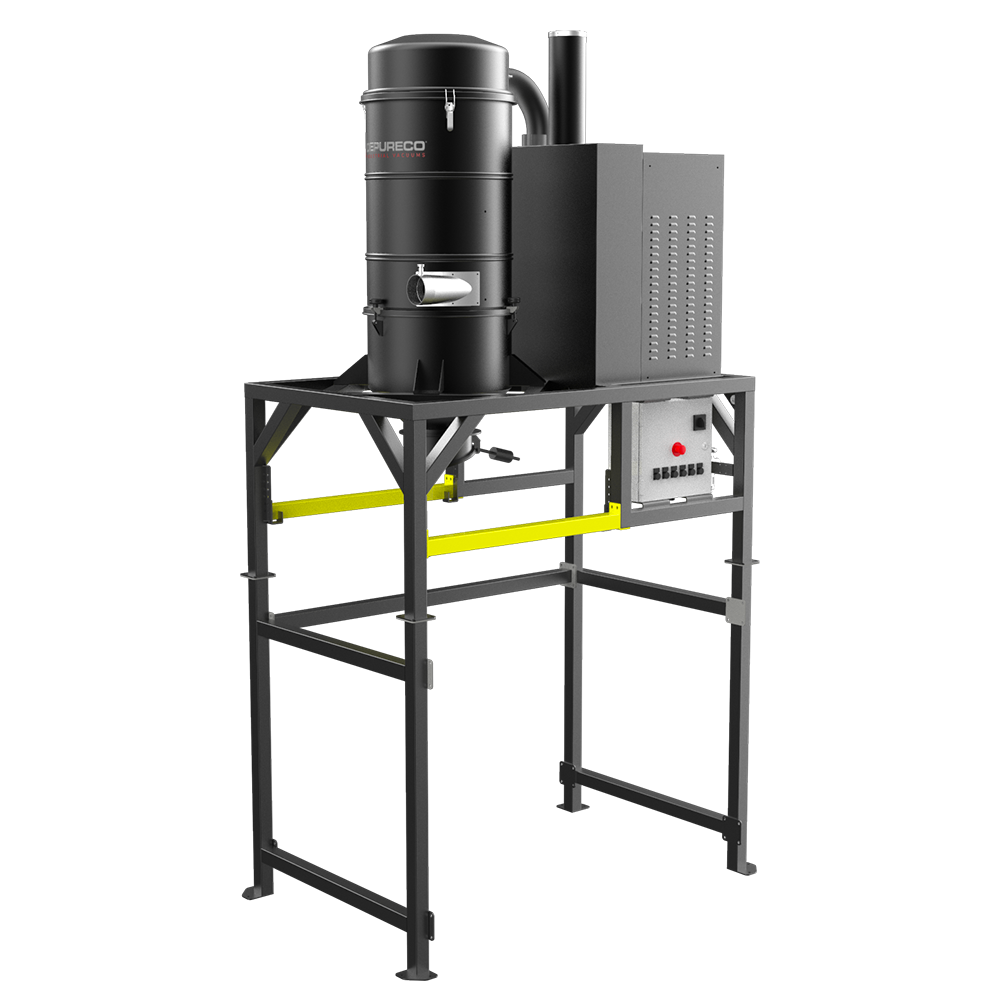
HF 30P Z22
II 3 D Ex htc IIIB T140 Dc
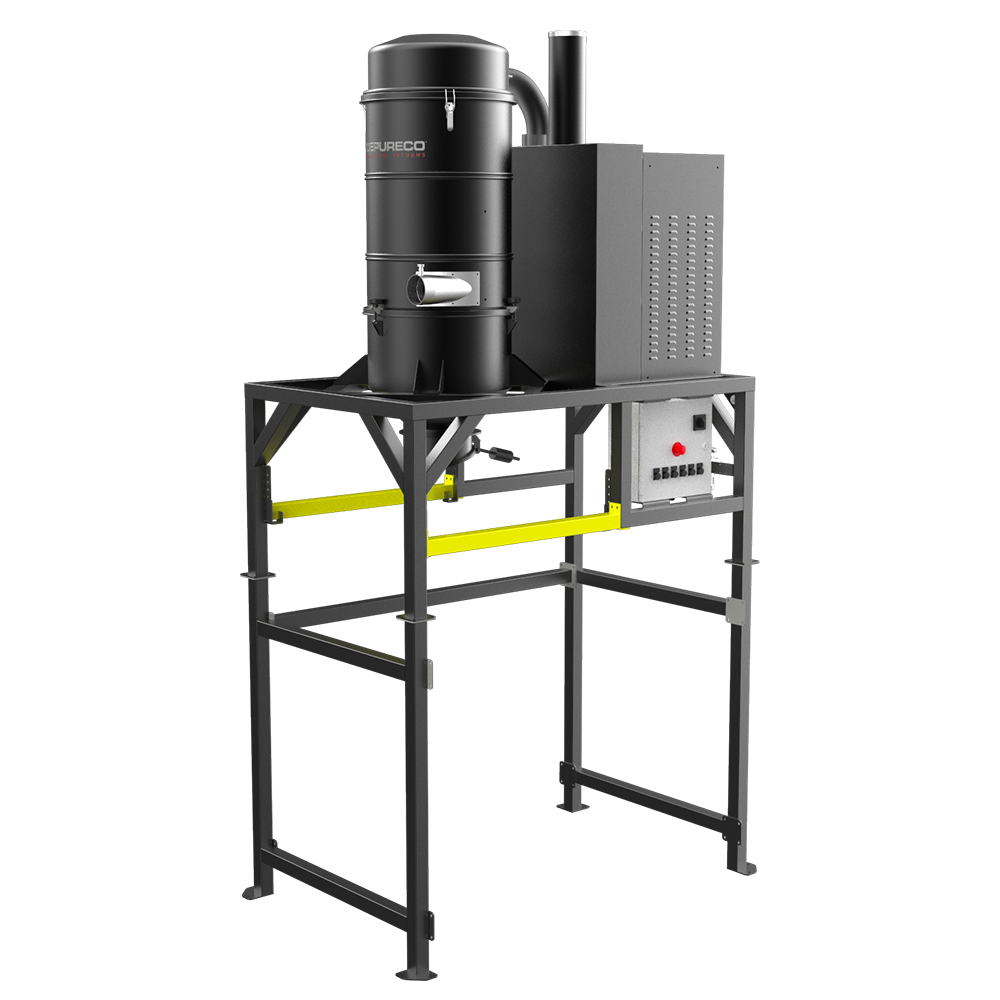
HF 30S Z22
II 3 D Ex htc IIIB T140 Dc
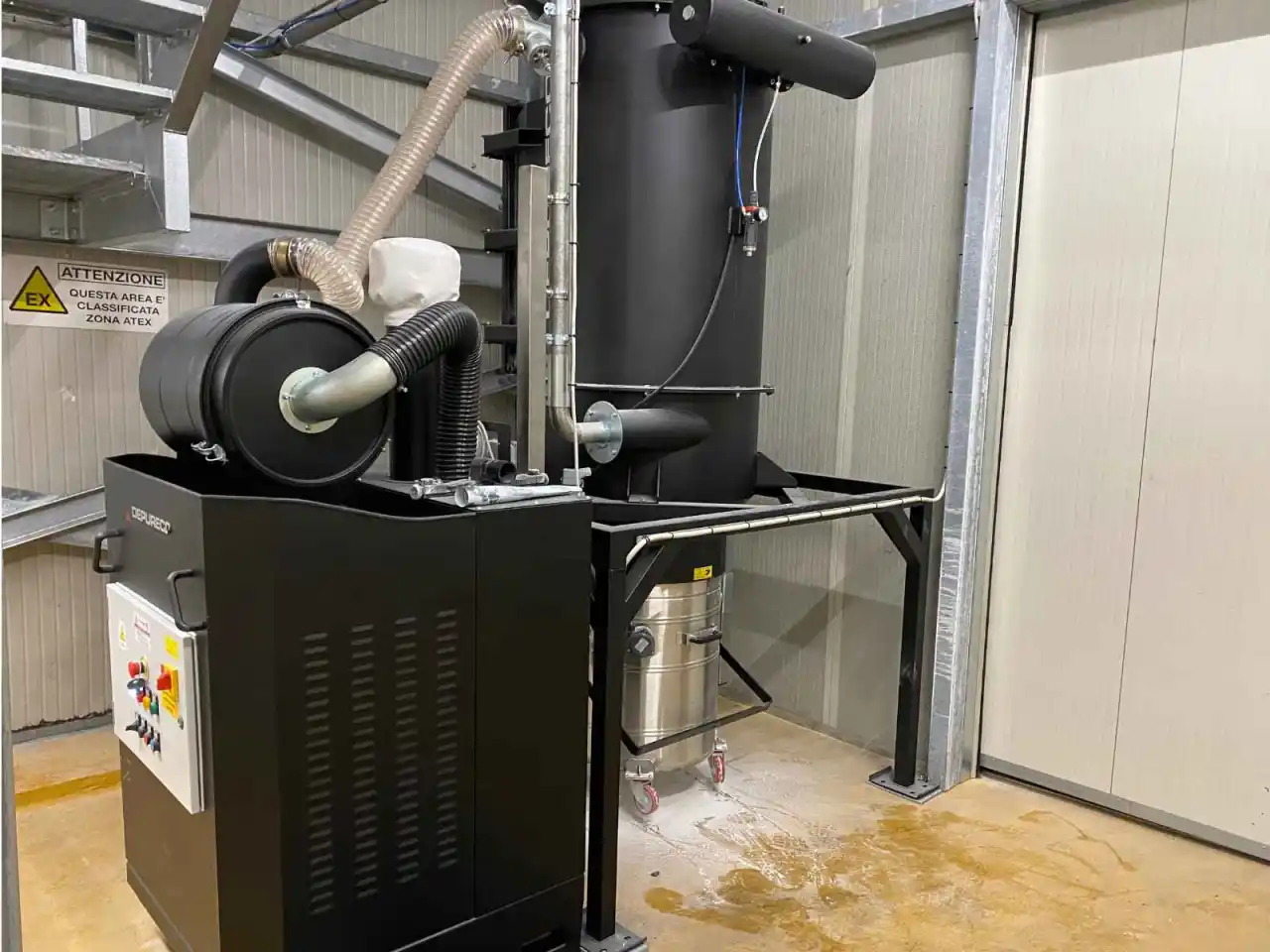
Suction stations
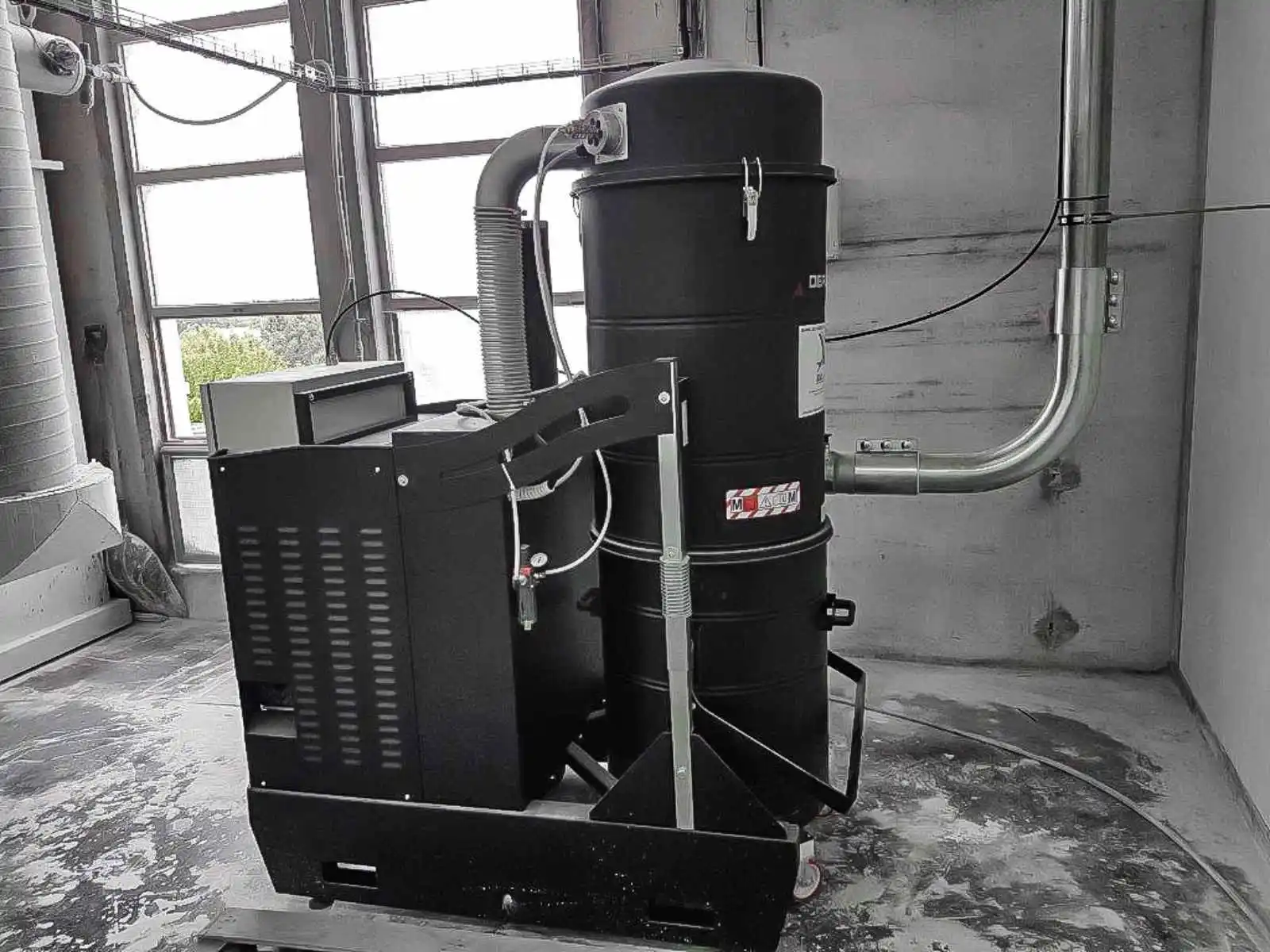
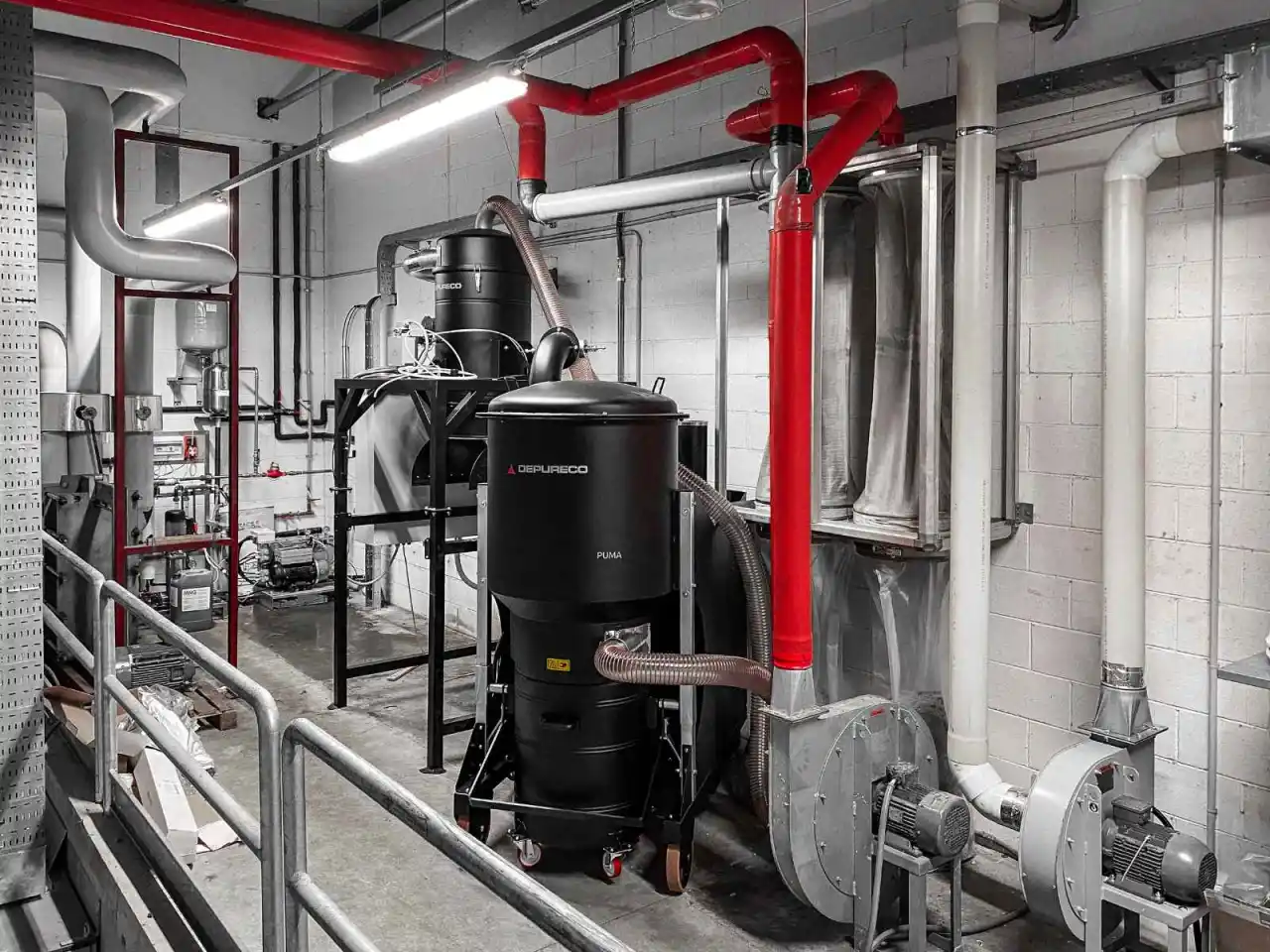
The central pump in a system, placed away from production to keep noise down — from 7.5 kW up to 37 kW Roots blower.
9 models
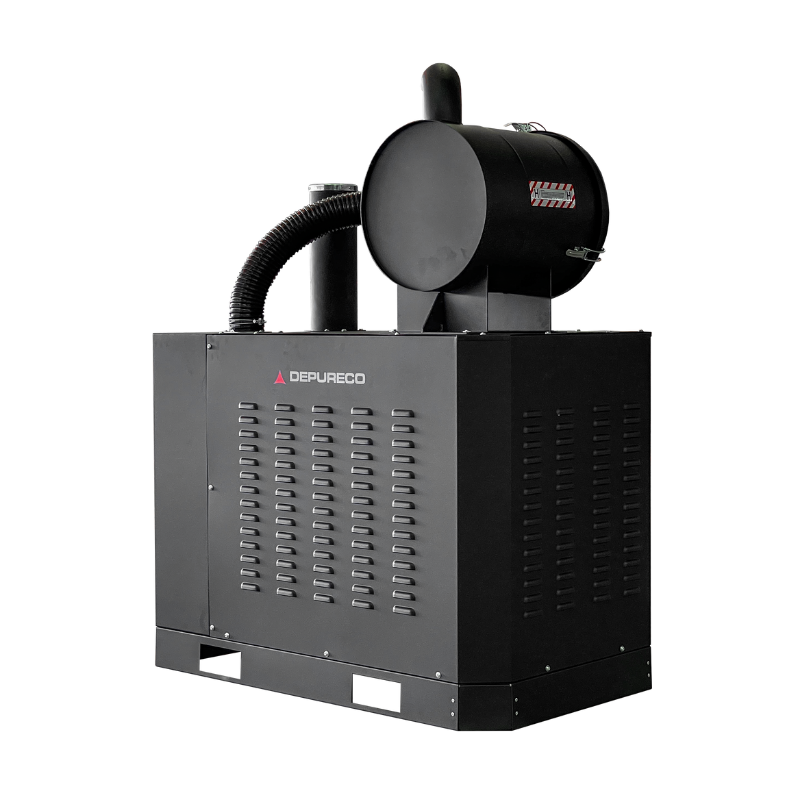
Depureco CVS 75 Z22
II 3 D Ex htc IIIB T140 Dc
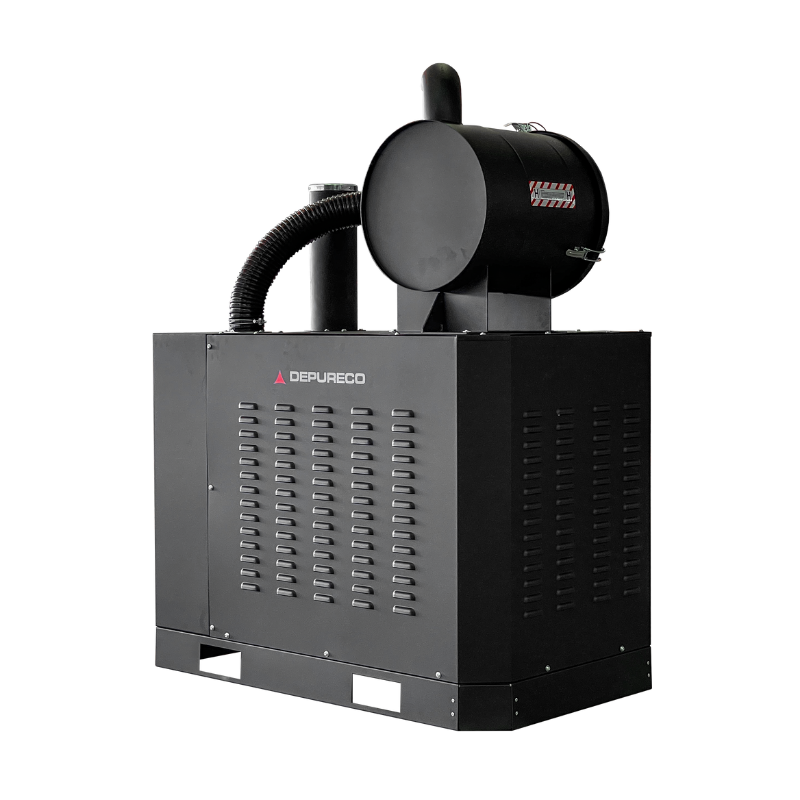
Depureco CVS 110 Z22
II 3 D Ex htc IIIB T140 Dc
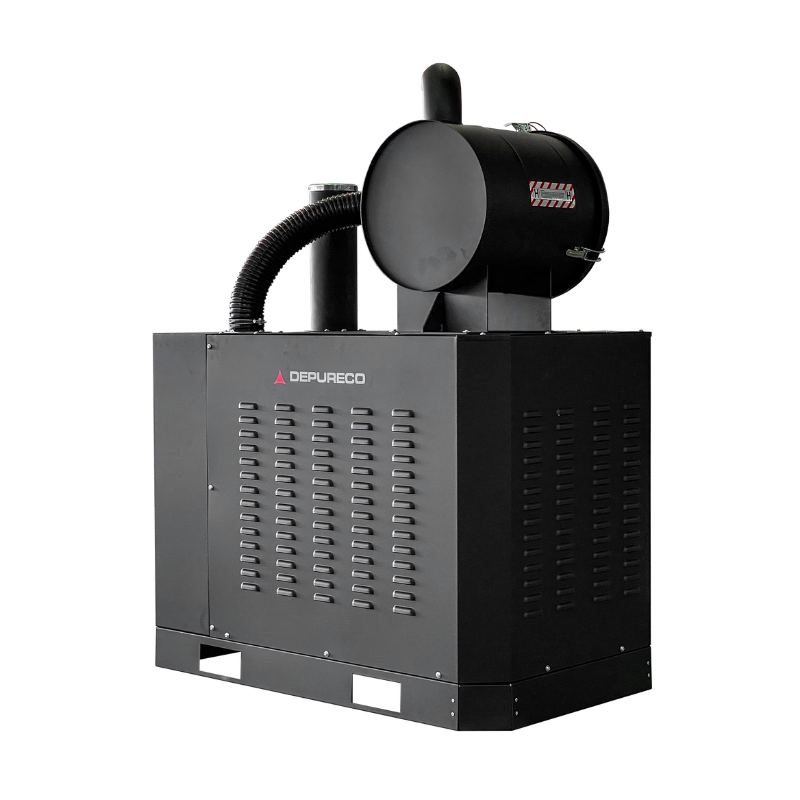
Depureco CVS 150 Z22
II 3 D Ex htc IIIB T140 Dc
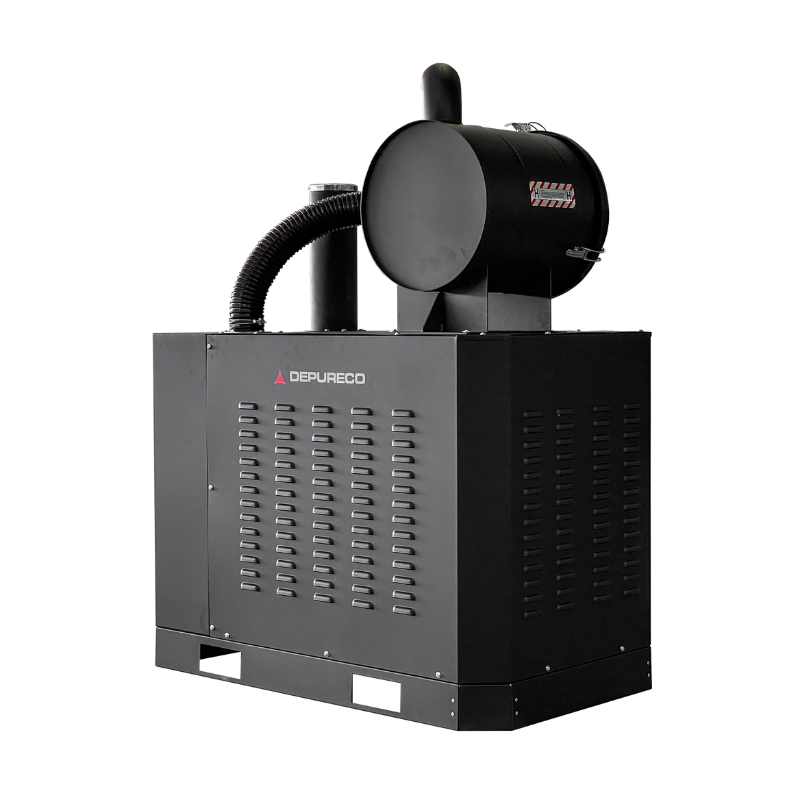
Depureco CVS 185 Z22
II 3 D Ex htc IIIB T140 Dc
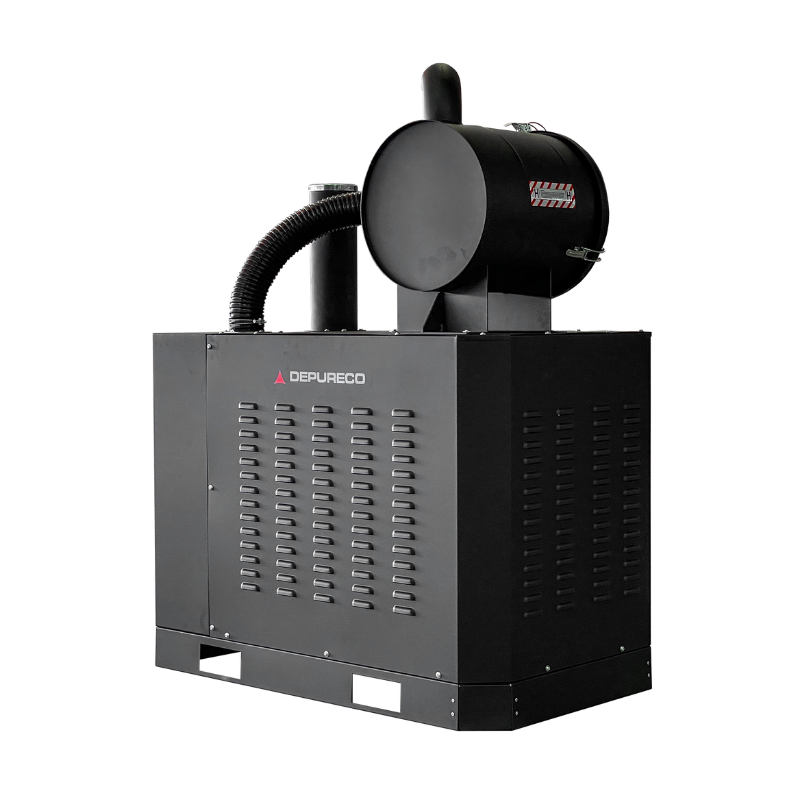
Depureco CVS 200 Z22
II 3 D Ex htc IIIB T140 Dc
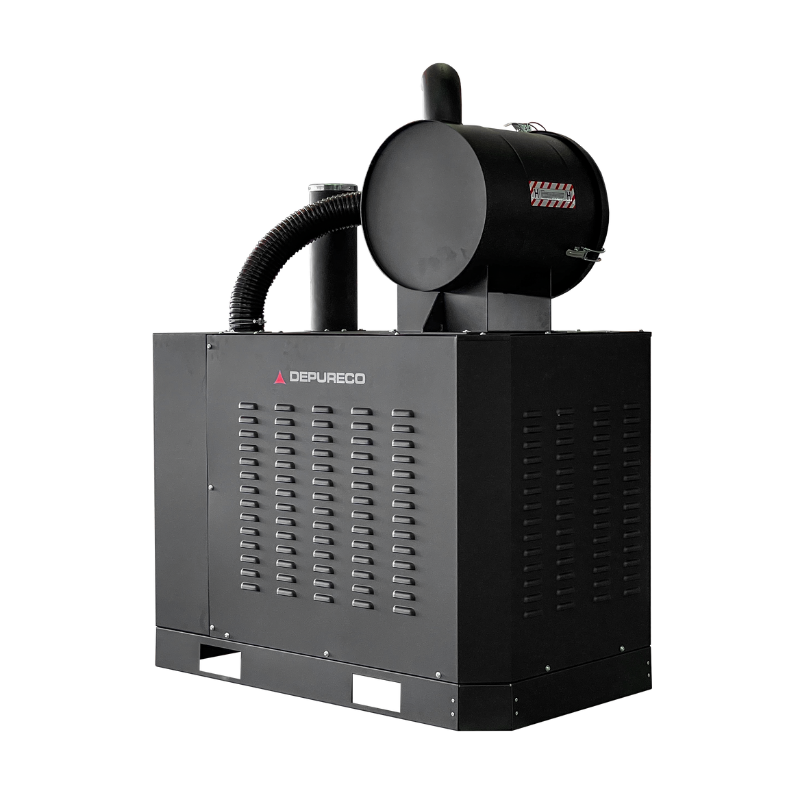
Depureco CVS 200 S Z22
II 3 D Ex htc IIIB T140 Dc
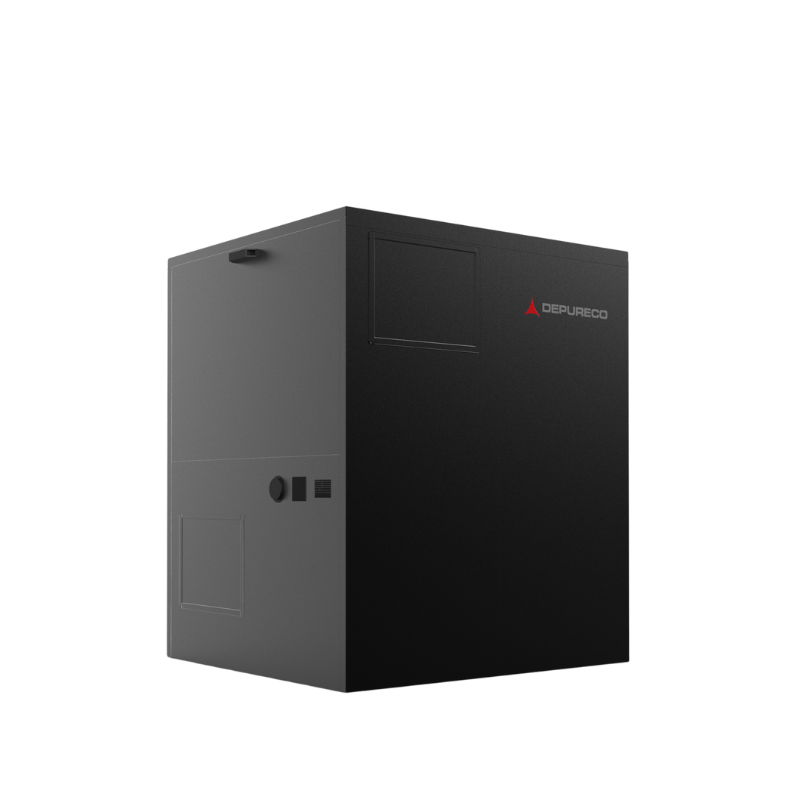
Depureco CVS 220 ROOTS Z22
II 3 D Ex h IIIC T200 Dc
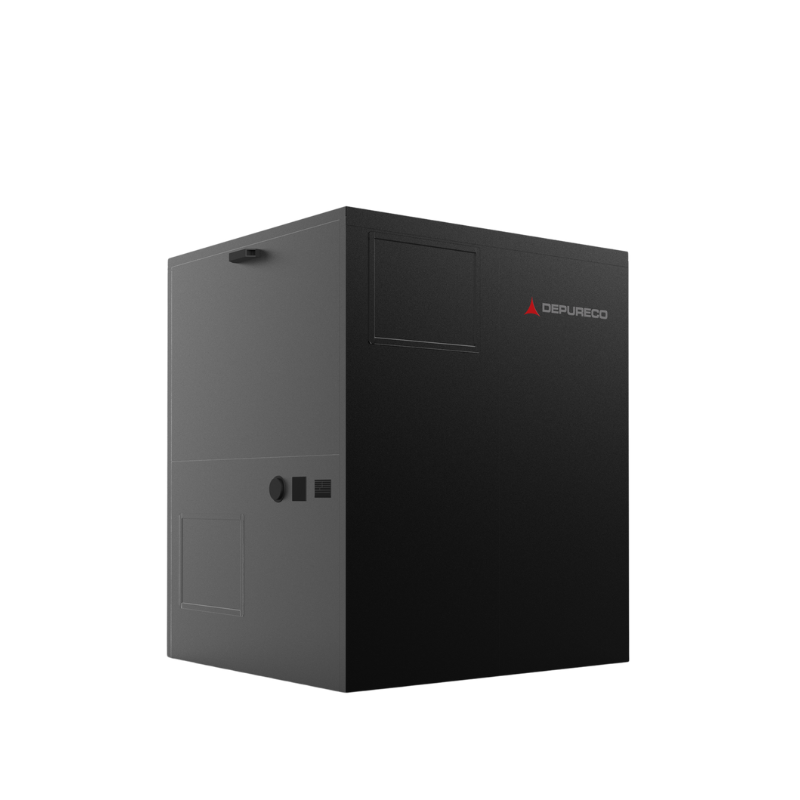
Depureco CVS 300 ROOTS Z22
II 3 D Ex h IIIC T200 Dc
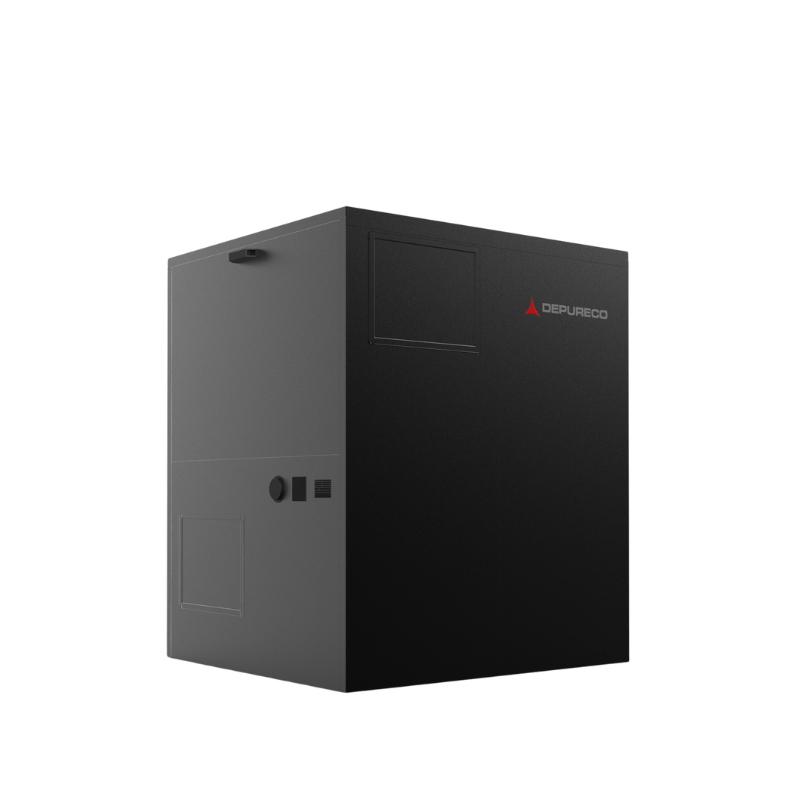
Depureco CVS 370 ROOTS Z22
II 3 D Ex h IIIC T200 Dc
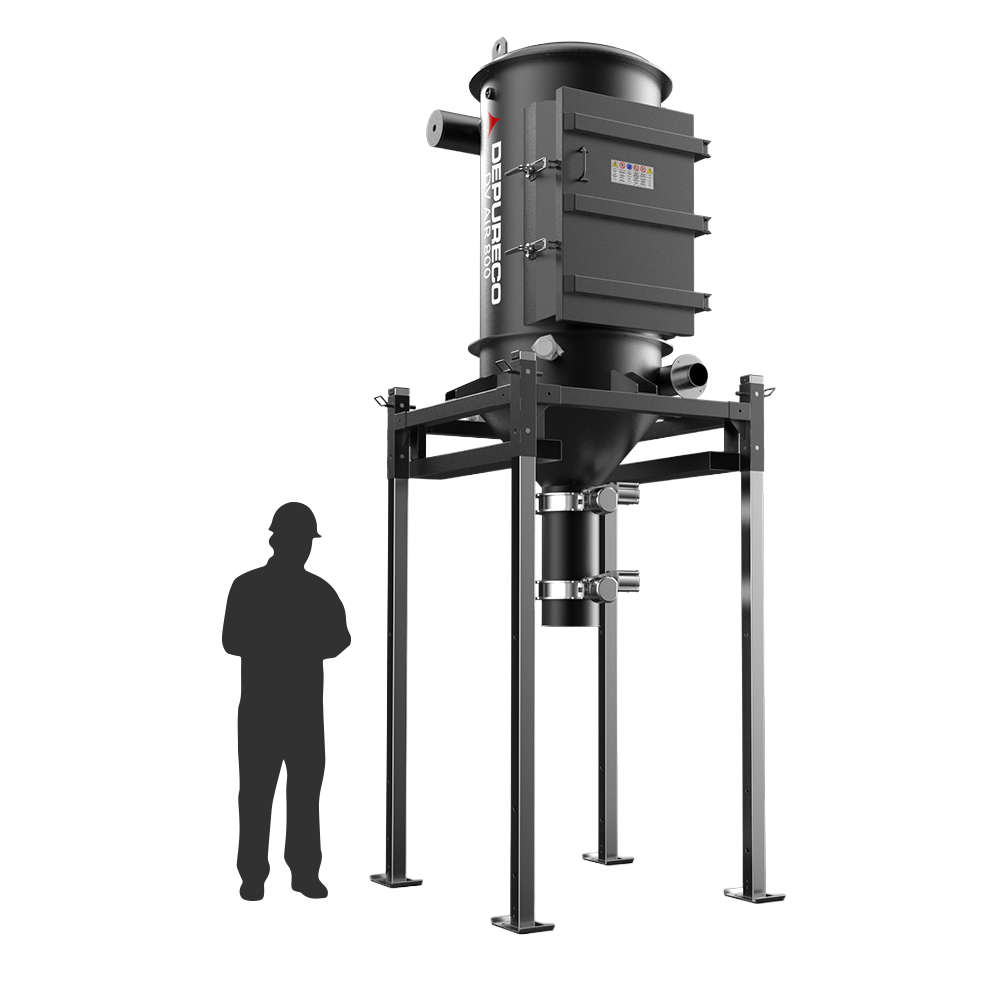
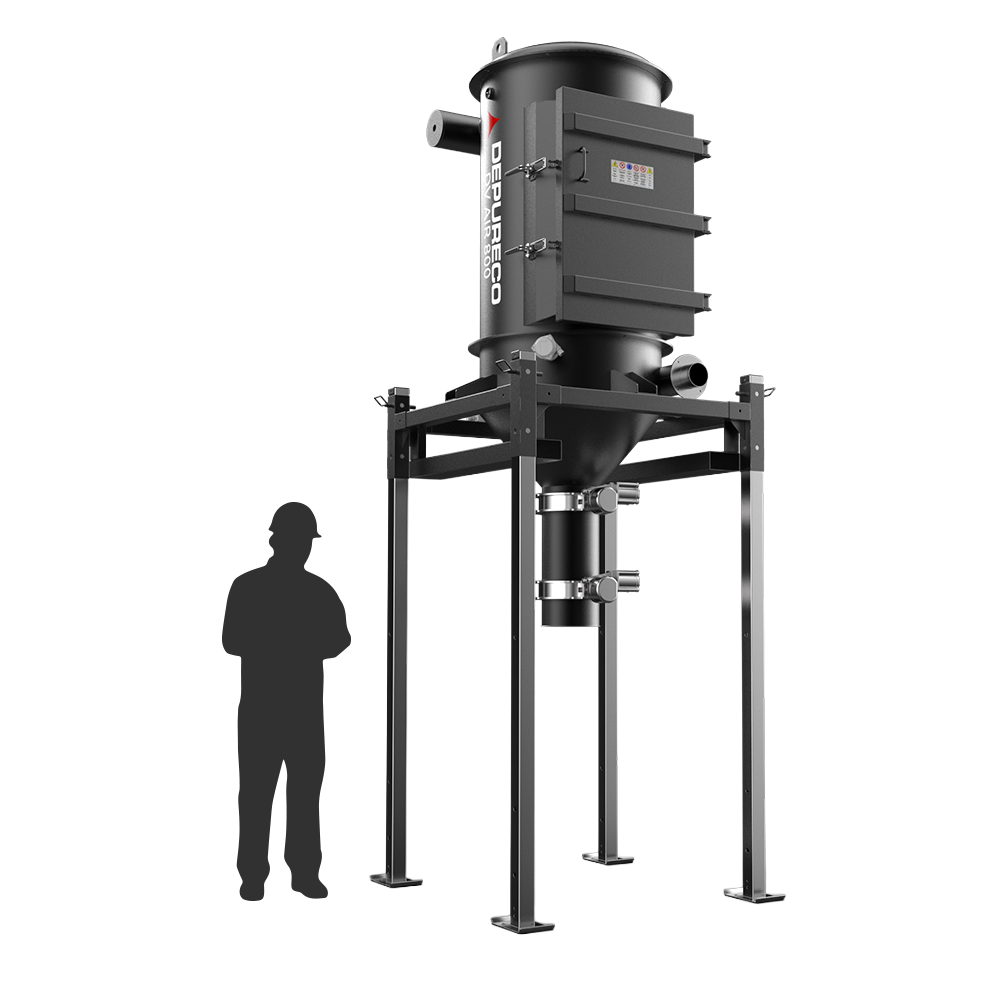
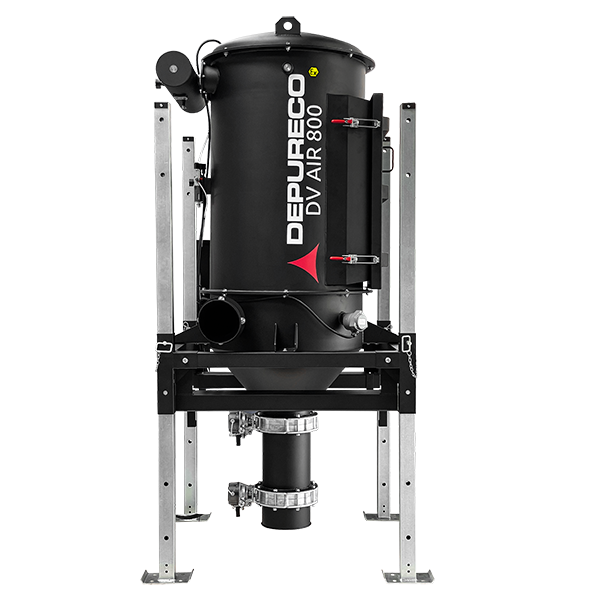
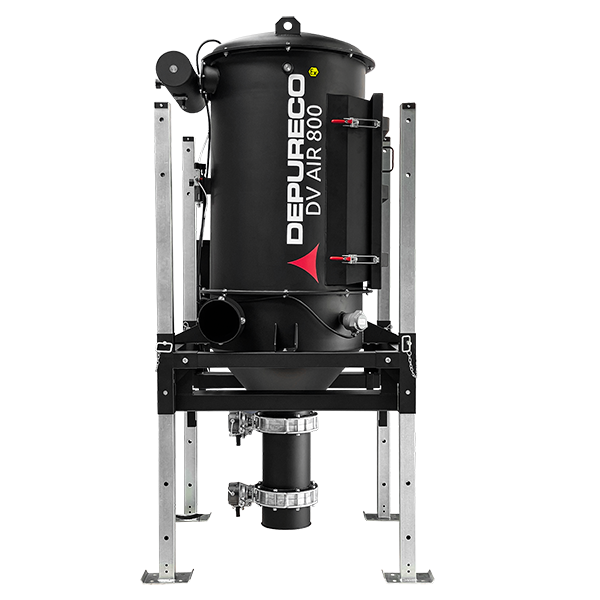
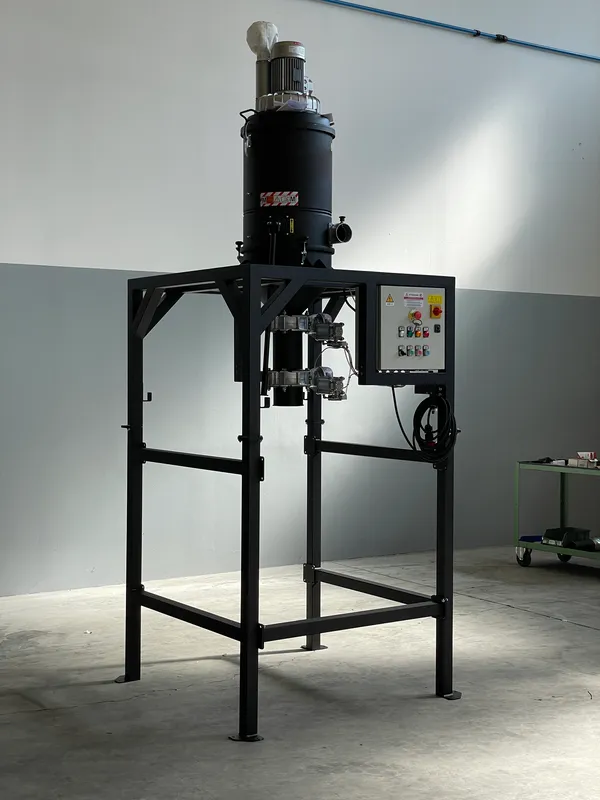
Filter units
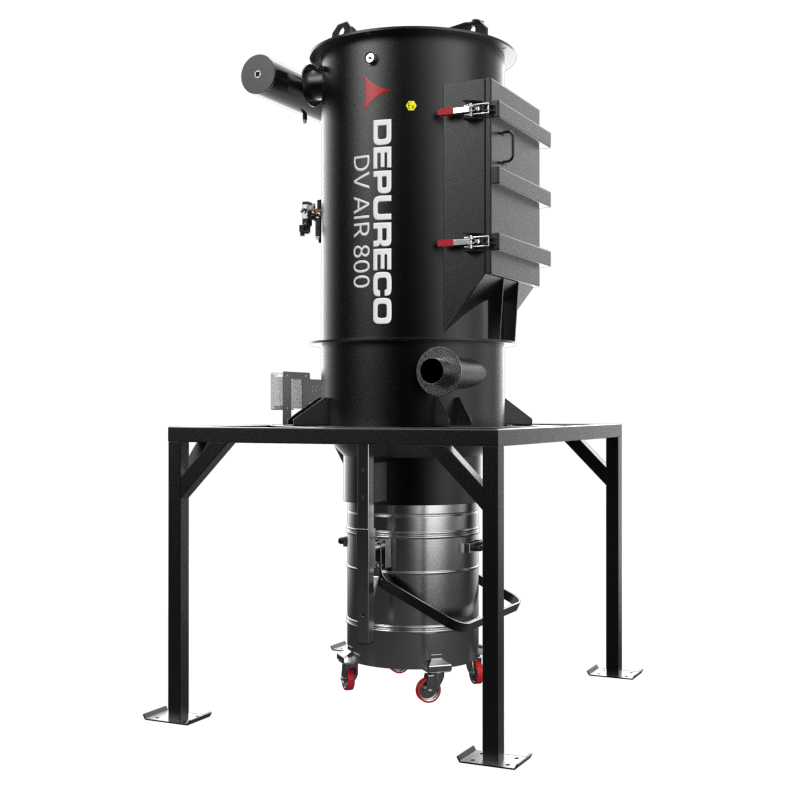
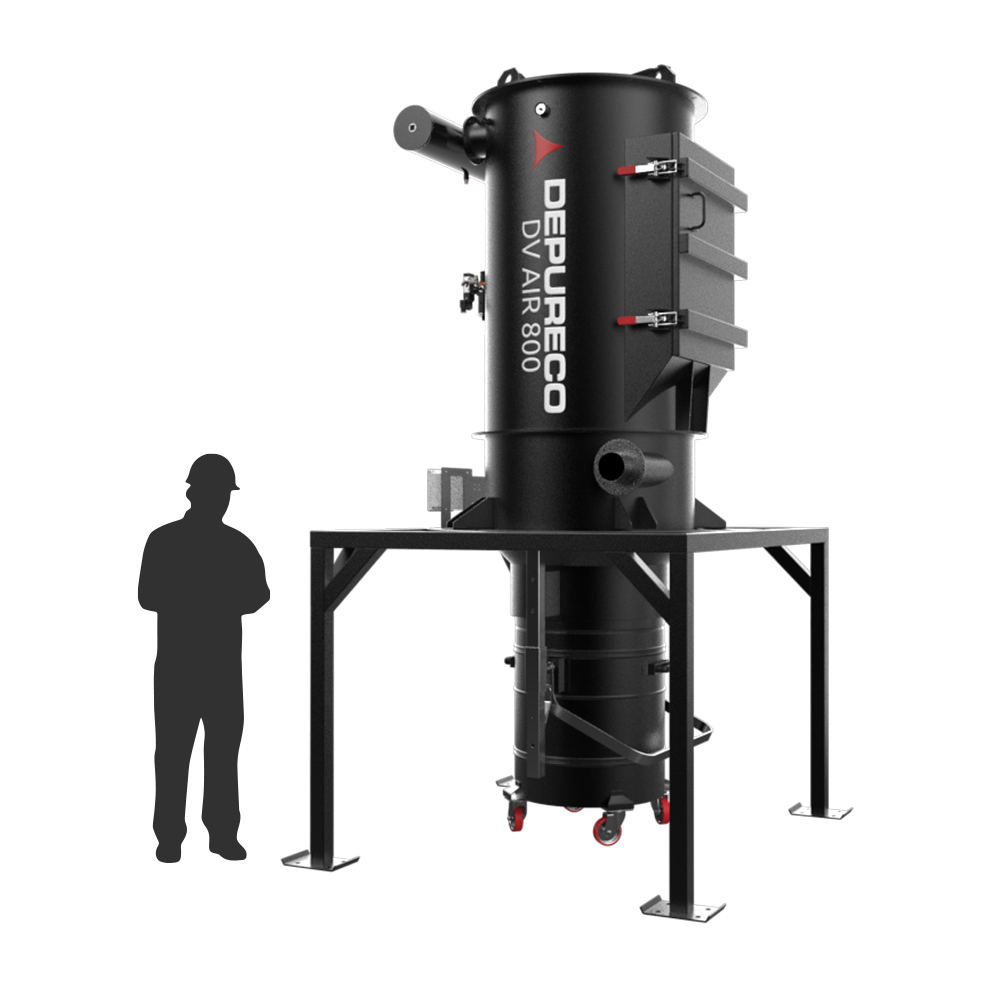
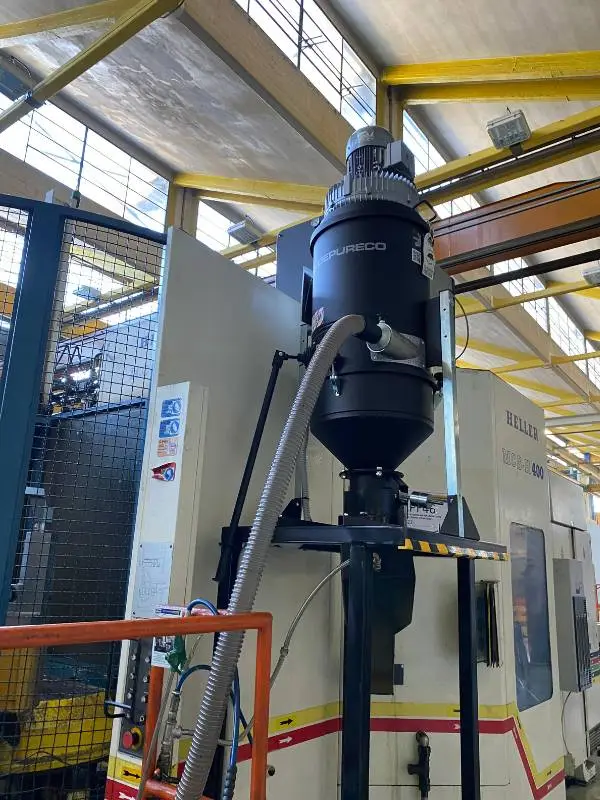
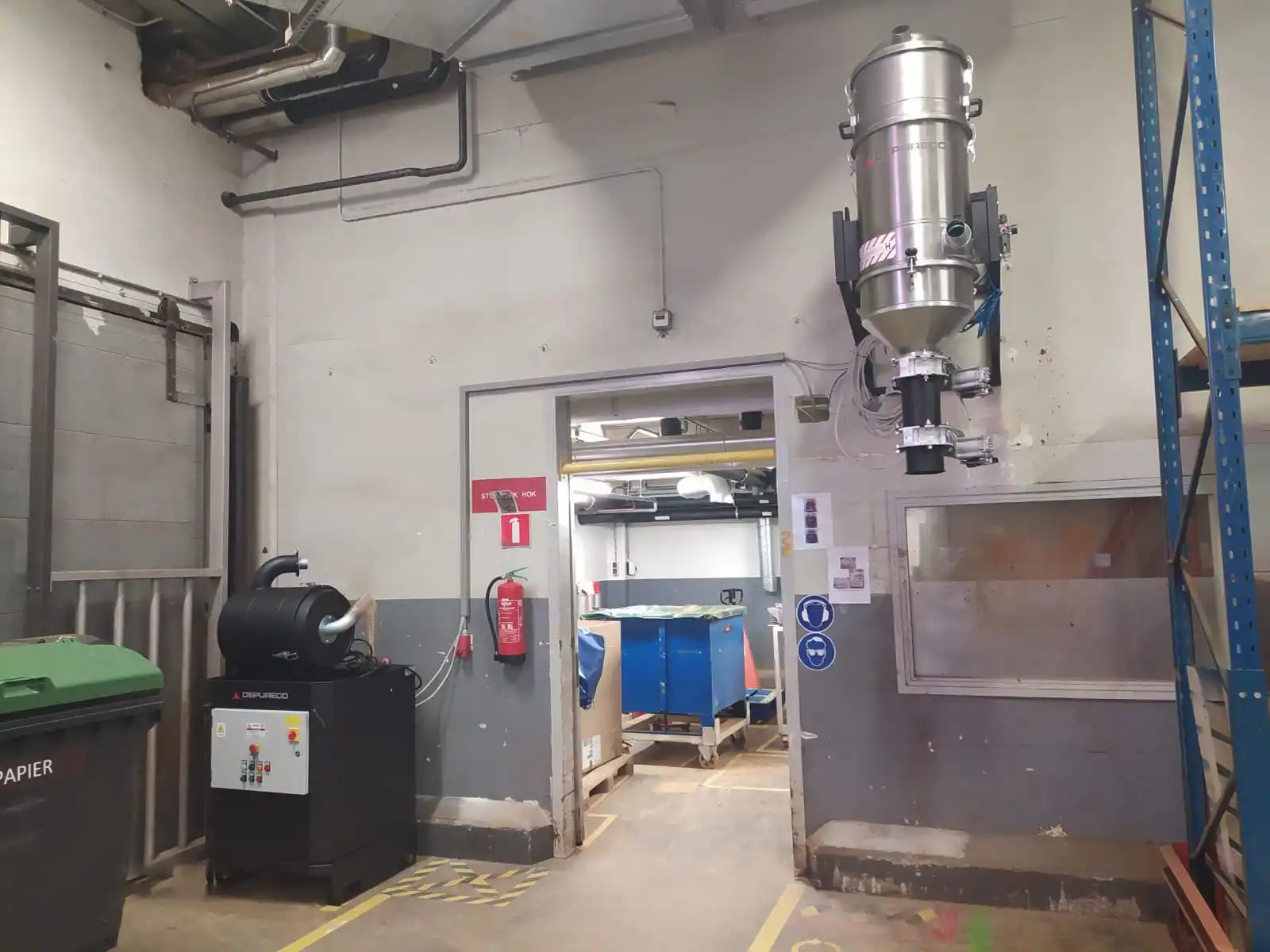
Filters without their own suction motor, drawing from a pump station — with open discharge to a pit, container or external bin, or with an integrated bin.
6 models
Separators
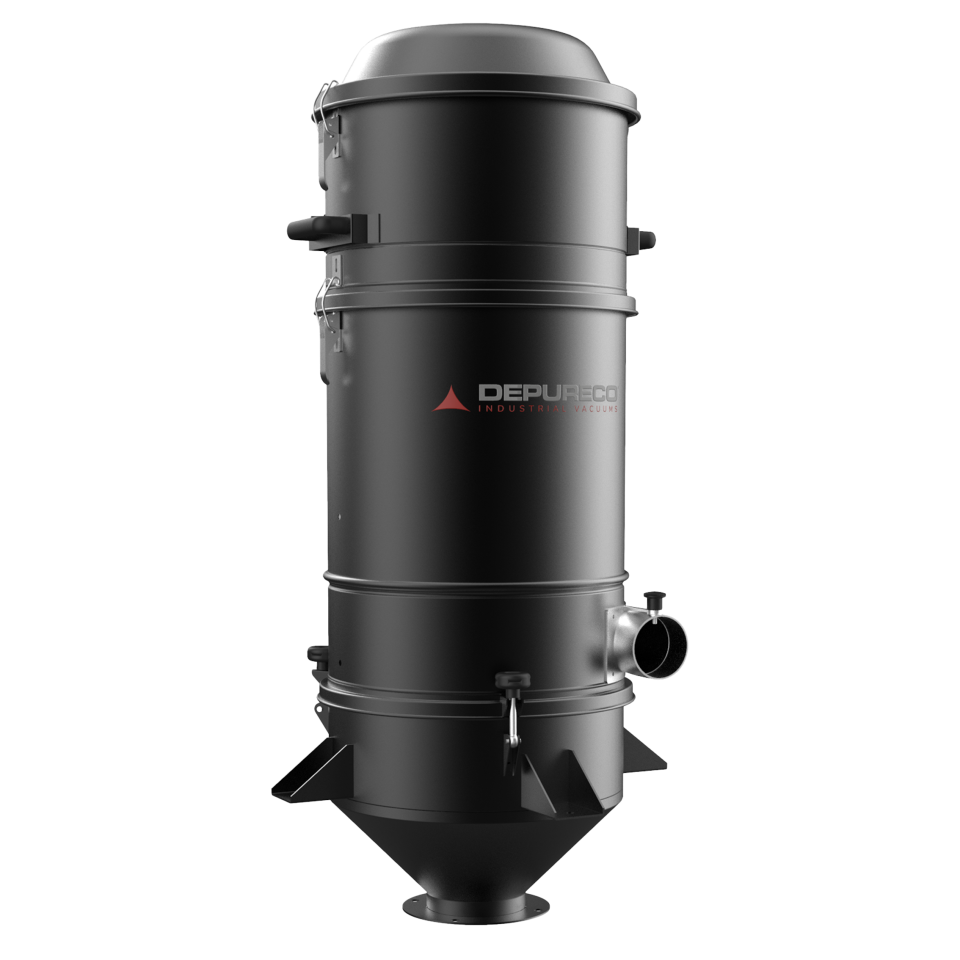
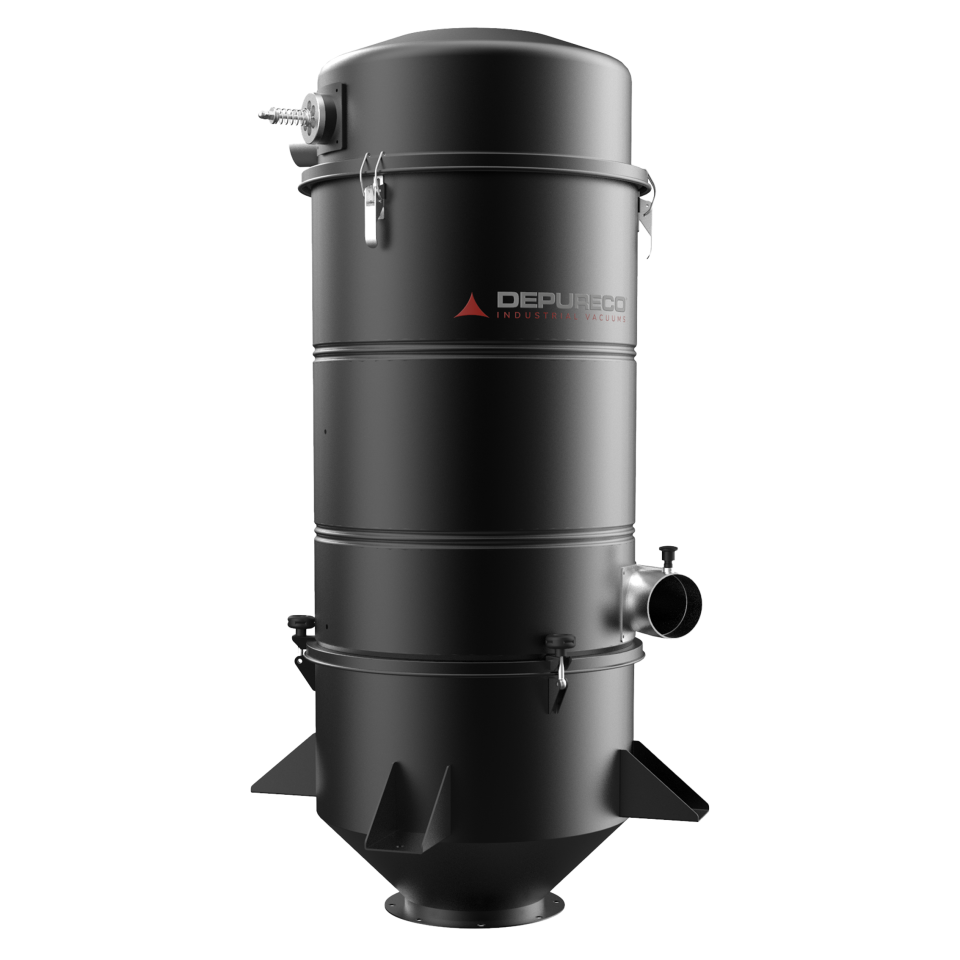
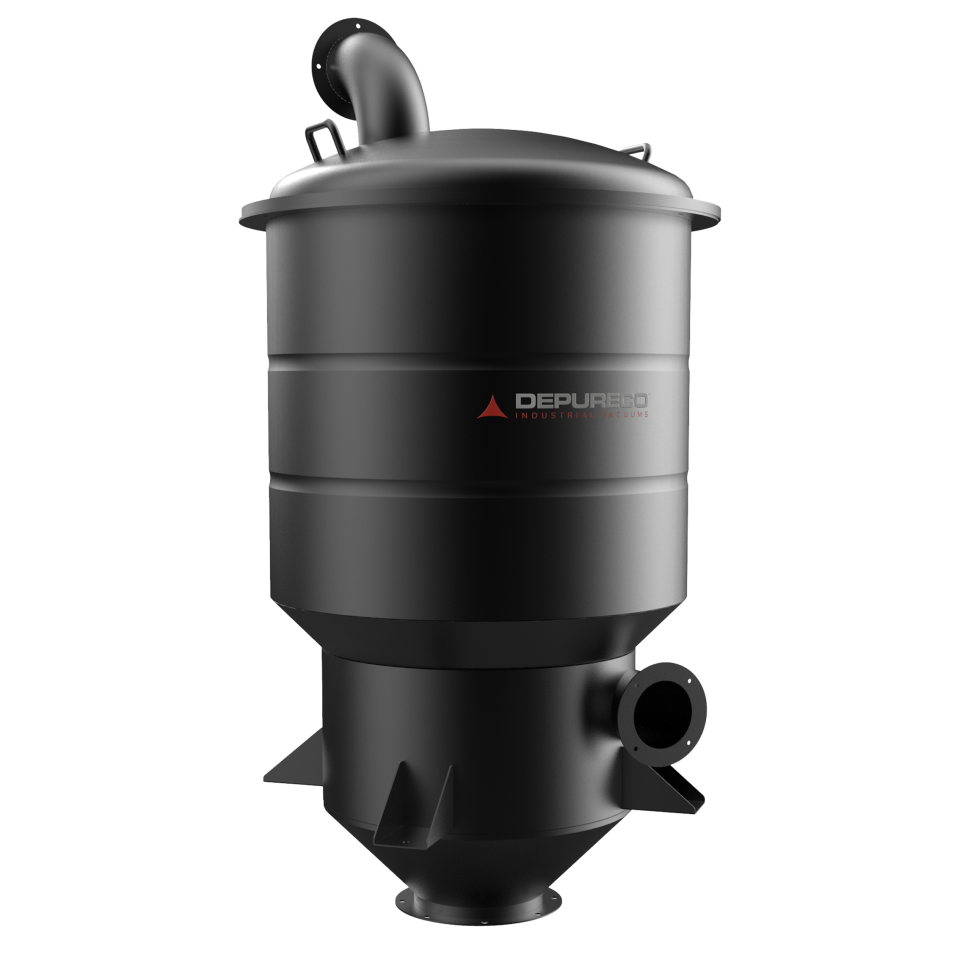
Passive pre-separators placed between the suction point and the main filter — they take out the coarse fraction and significantly extend the life of your main filter.
6 models



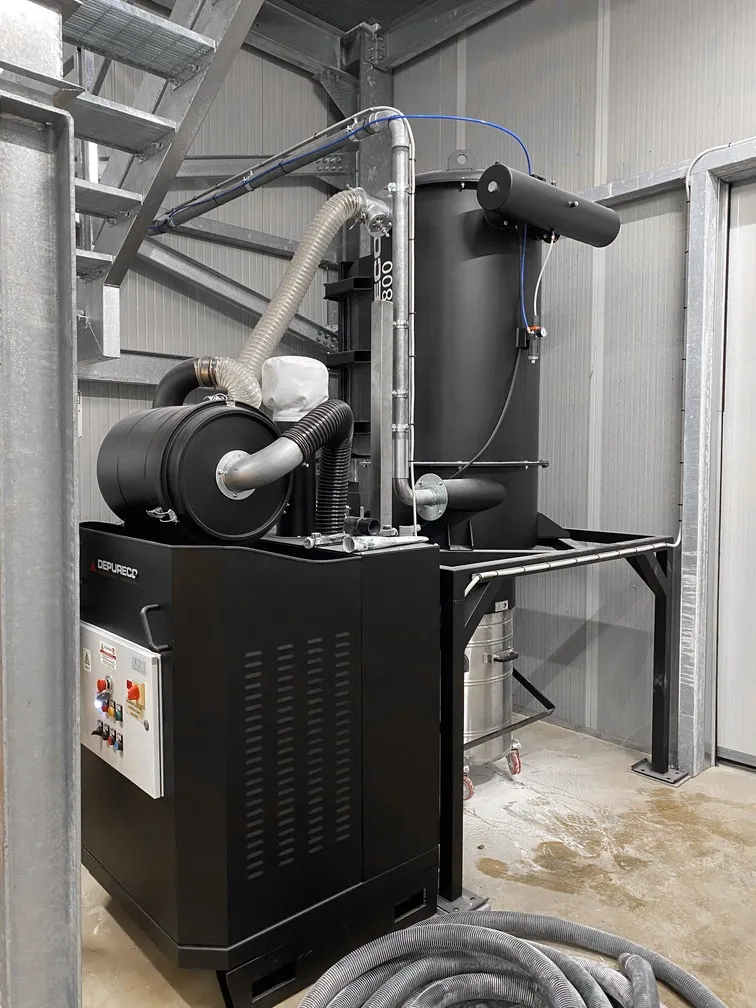
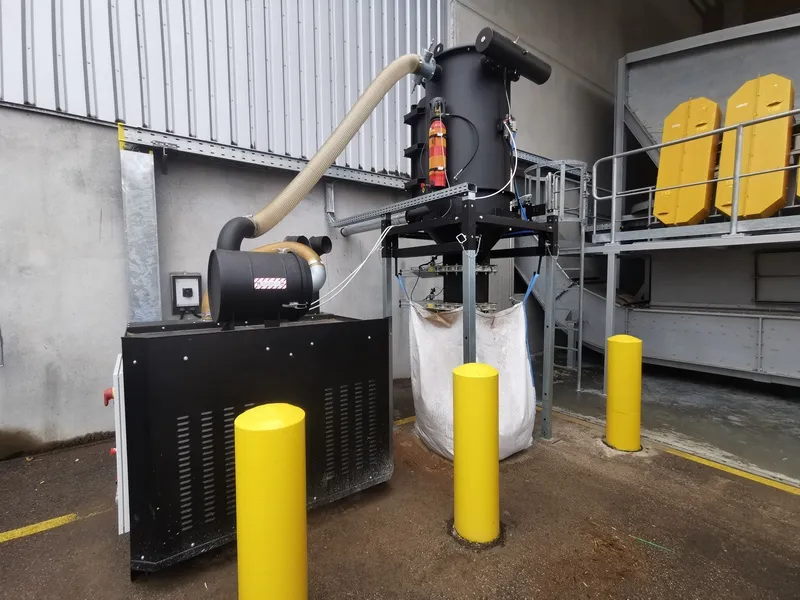
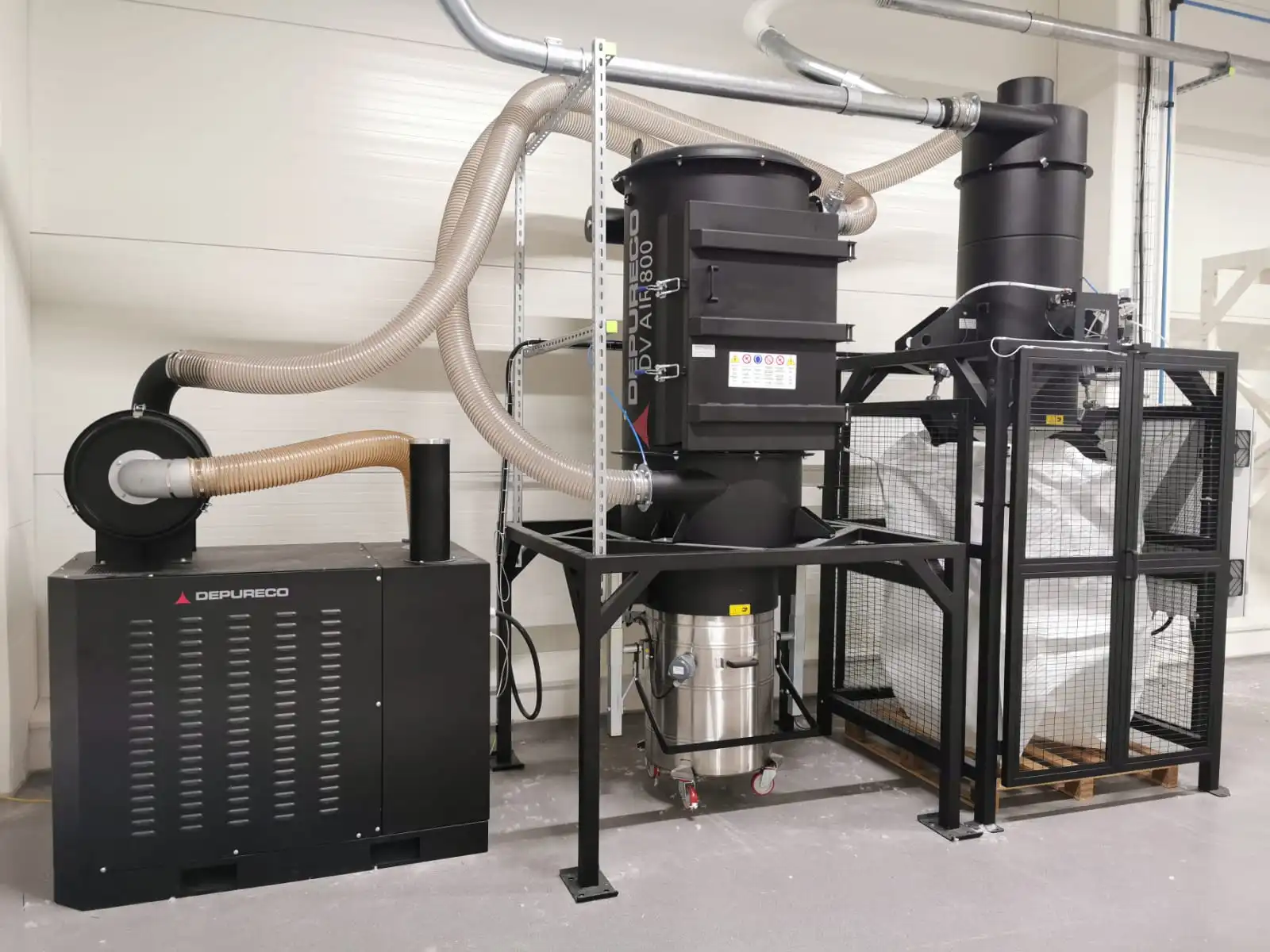
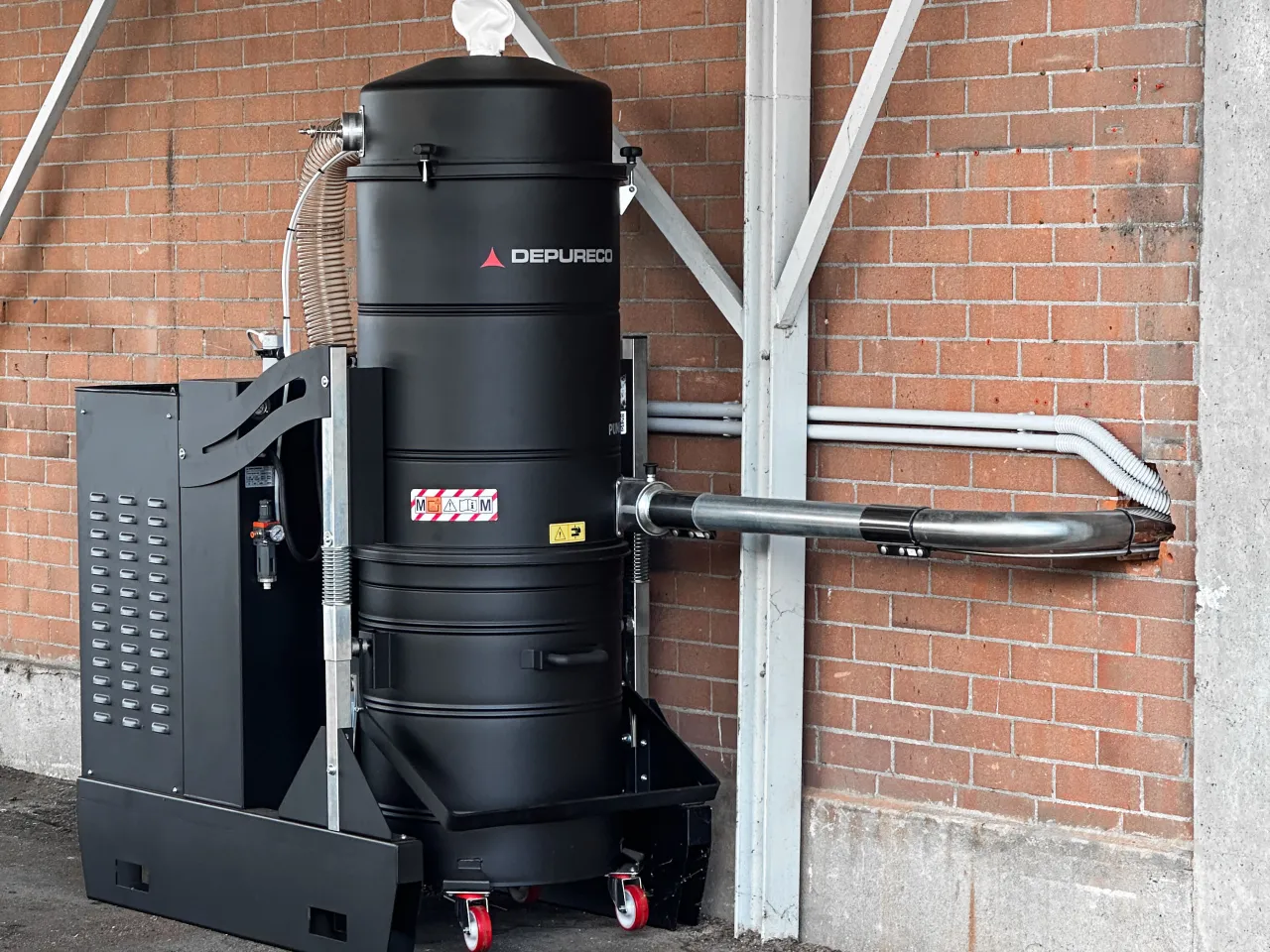
Examples of installations
Questions and answers
How long does installation take?
It varies with the scope of the project. Clarification and dimensioning typically takes 2-4 weeks. Component lead time runs 4-12 weeks depending on suppliers and specifications. Installation at your site depends on the complexity of the layout and how many extraction points need to be established.
How many extraction points can I connect?
Theoretically unlimited — as long as the pump can deliver the airflow. As a rule of thumb, allow around 200 m³/h per extraction point in simultaneous use. A pump rated at 1,000 m³/h theoretically supports about five simultaneous points; 5,000 m³/h supports around 25. In practice, pipe losses, simultaneity factors and operating patterns reduce that number. We size pump and piping to your actual usage, not to a theoretical maximum.
Can you service our existing system?
Yes — including systems from other suppliers. We offer service agreements and can come out for inspections, filter changes and troubleshooting on what you already have installed.
Which ATEX zones do these systems cover?
A centralised vacuum system rarely sits inside an ATEX zone itself — the pump station is typically housed in a separate enclosure or located outside the production area, and the surrounding environment is often unclassified or at most Zone 22. The explosive risk lies inside the system, where dust collects and moves. That is why the internal classification is the one that matters.
Most components in our range are marked II 1/3D — internal Zone 20, external Zone 22. If your system needs to handle different zones, we adapt the configuration. We advise on the right zone classification for your dust and your process.
Should the system have safety equipment such as vent panels or flameless vents?
Yes, if it operates in ATEX zones. We advise on which EN 17348- and EN 16447-compliant safety components your system needs, and we deliver them as an integrated part of the solution — from the conductive nozzle to the grounding connection.
How is the filter unit emptied?
It depends on the configuration. DV AIR filters without a bin discharge directly to whatever solution you choose — typically a container, a pit or an external bin. DV AIR WB has an integrated bin. We can also add a Big-Bag system for dust-free emptying, which is relevant for hazardous or very fine dust.