Abrasion-resistant · Abrasion-resistant
SILOFLAT
SILOFLAT is a layflat discharge hose in NR/SBR with textile plies + 2 copper wires. The hose is specifically designed for dry, abrasive bulk media - cement, lime powder, feed and similar - and can be rolled flat for compact storage. 4 bar working pressure and wear resistance confirmed with abrasion value 100 mm3 per ISO 4649. Typically used at construction sites, feed factories and chemical discharge stations where layflat storage is a logistical advantage.
- -30 to +85 C
- 4 bar pressure
- Layflat
- Abrasion 100 mm³
- Cement/feed
- Discharge hose
Why this hose?
The layflat construction is the key to SILOFLAT's logistical advantage. Unlike round-shaped hoses which always occupy physical volume, a layflat hose can be rolled flat to a coil that typically takes up 30-50% less space. For mobile installations (cement trucks, feed vehicles), this is a significant advantage - more hoses can be stored on the same vehicles.
The 2 copper wires in the textile plies layer solve two design requirements simultaneously: tensile strength (prevents the hose from stretching under pressure load) and electrical conductivity (discharges static electricity from powder flow). It is a compact design solution that replaces what we would otherwise see as separate textile layer + external grounding.
Wear resistance 100 mm3 abrasion value is a confirmed heavy-duty rating, but somewhat higher than TURBOCORD's 60-70 mm3 and BETONCORD/10's 70 mm3. SILOFLAT is built for moderate-to-high wear applications and is a compromise solution between standard industrial hoses (150-200 mm3) and the most specialised wear-resistant solutions.
Where it is used
Construction sites use the hose as standard cement discharge hose from mobile silos or cement trucks to concrete mixing plants. This is typically daily operation over several months - the hose's layflat construction allows it to be easily moved between construction sites, and the 40 m standard roll typically covers an entire installation length from silo to mixing plant.
Feed and agricultural facilities use the hose for feed distribution between silos and delivery stations. The flexible construction and layflat property are practical in small agricultural facilities where storage space is limited. The NR lining resists feed pellets' mechanical wear without the wear groove opening quickly.
Chemical powder handling at industrial facilities uses the hose to lead powder from storage to transport stations. The 2 copper wires in the construction ensure natural static discharge - a safety property often required in powder handling zones.
The hose is colloquially known as a layflat hose, cement discharge hose or silo discharge hose.
Technical specifications
The hose's key specifications are briefly summarised below. The layflat construction is specific to discharge - the hose is NOT designed for vacuum or suction applications.
| Inner material | NR (natural rubber) |
|---|---|
| Outer material | SBR/NR |
| Reinforcement | Textile plies + 2 copper wires |
| Colour | Black (both inner and outer) |
| Construction | Layflat (collapses flat when empty) |
| Temperature range | -30 to +85 C |
| Working pressure | 4 bar |
| Abrasion value | 100 mm³ per ISO 4649 (formerly DIN 53516) |
| Standard roll length | 40 m |
| Manufacturer SKU | 3540 |
Dimensions and ordering
The table shows the hose's 2 standard dimensions. Both have the same pressure rating (4 bar) and 40 m standard roll length. Burst pressure is not separately specified on the factsheet.
| Inner Ø |
Outer Ø |
Wall thickness |
Working pressure |
Max. length |
Weight |
Roll |
Article no. |
|---|---|---|---|---|---|---|---|
| 76 | 85 | 4.5 | 4 | 40 | 1.42 | 40 | 3540075000 |
| 102 | 114 | 6 | 4 | 40 | 2.46 | 40 | 3540100000 |
Fields without a value (—) are not specified in the manufacturer's factsheet. Overpressure and underpressure values are recommended operating limits; the product can be subjected to higher loads on request. Bend radius is measured along the inside of the hose bend.

Standards and compliance
The hose is qualified per the central standards for wear-resistant discharge hoses.
- ISO 4649 (formerly DIN 53516). International standard for determination of wear resistance in rubber. The hose's 100 mm3 abrasion value is tested per this standard.
- EN ISO 1307:2008. European standard for rubber and thermoplastic hoses for general use.
- EN 12115. European standard for rubber and thermoplastic hoses.
- RoHS Directive (2011/65/EU). Restriction of hazardous substances.
- REACH (EC 1907/2006). Registration of chemical substances.
- ISO 9001:2015. Quality management system at the manufacturer.
- EN ISO 8033:2016. Test of adhesion between lining and reinforcement.
Documentation and downloads
Additional documents about this hose, its compliance and installation. Click to download as PDF in a new tab.
Help with material selection
Although this hose isn't ATEX-relevant, these two articles provide useful background on electrical resistance and industrial safety — important if you later combine the hose with electrical equipment or work in mixed environments:
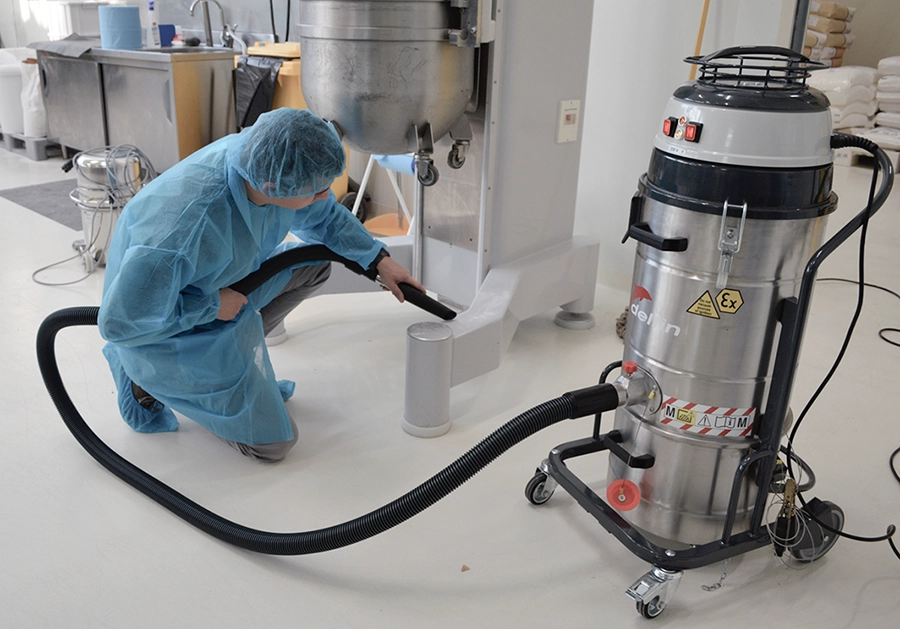
The invisible weakest link
Why a conductive or antistatic hose isn't sufficient on its own — and what grounding means for the complete system.
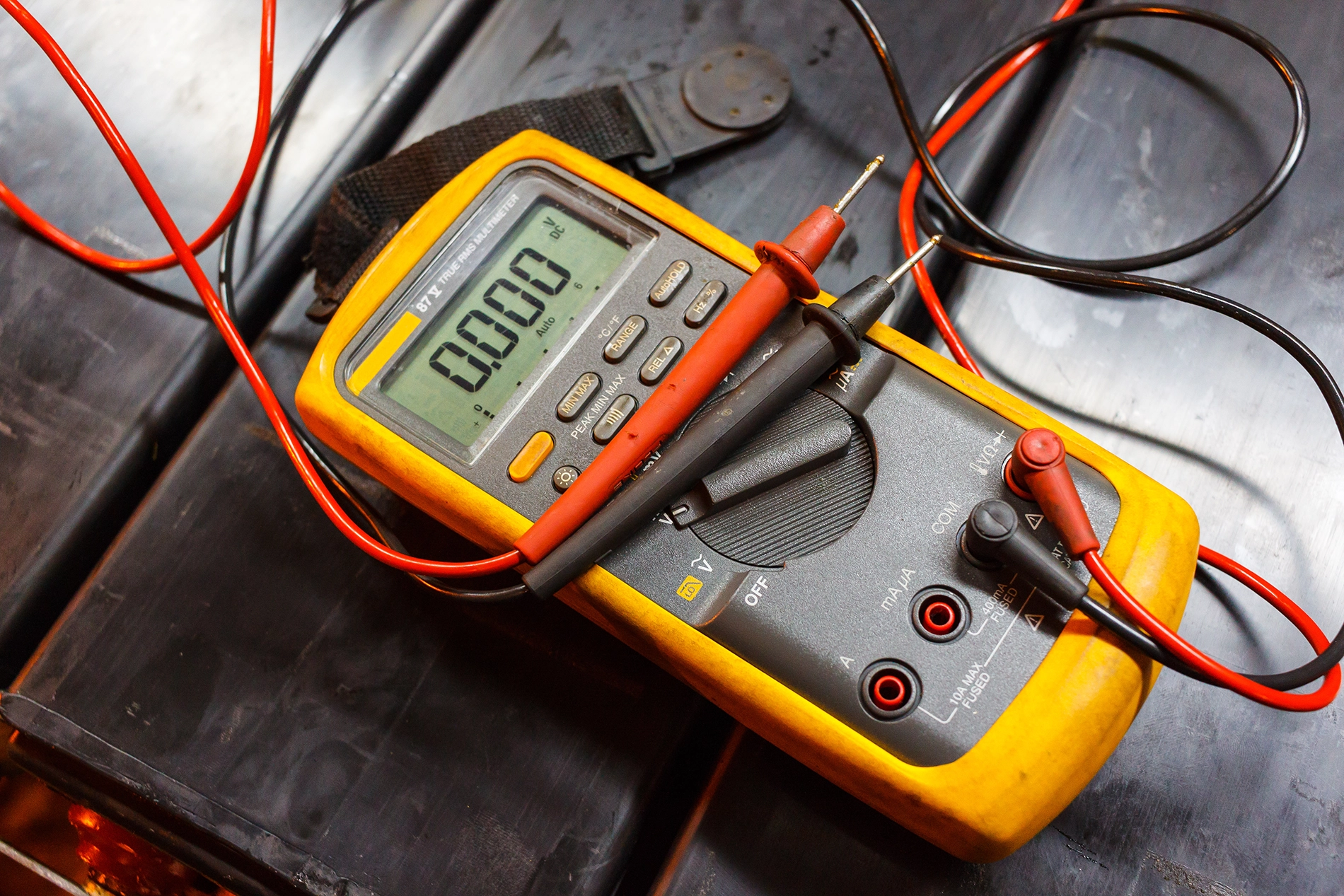
Know your ohm
The difference between antistatic and conductive, which resistance limits apply where, and how to measure them correctly.
Industries that use it
SILOFLAT is used where dry, abrasive bulk media must be pumped with pressure discharge - typically in construction, feed and silo industries where layflat storage is a practical advantage.
The construction industry uses the hose for cement discharge from mobile silos or cement trucks to concrete mixing plants at construction sites. The hose's layflat construction allows it to be stored compactly on truck or silo and rolled out at the location where it is to be used. Wear resistance (abrasion value 100 mm3) ensures the hose tolerates the sharp cement particles over several years of operation.
The feed industry uses the hose for feed pellet distribution between silos and feed trucks or directly to stable feeding. The flexibility and layflat property allow the hose to be pulled through stable structures and rolled up for storage after use. The NR lining resists mechanical wear from pellet handling.
The chemical industry uses the hose for powder discharge from storage silos to process or transport tanks. The 2 copper wires in the textile plies layer provide natural electrical conductivity, which is a safety advantage when powder flow can build static electricity and trigger dust explosions.
Custom lengths and assemblies
The hose can be delivered cut to desired lengths. The standard roll can be supplemented with shorter pieces or multiple rolls by arrangement.
At Particulair we advise on couplings and sizing. Send us a sketch of your application and we will assess the right variant and length.


Frequently asked questions
What does layflat mean?
Layflat means the hose collapses flat in empty state and rounds up when media passes. It is a compact storage solution - a 40 m hose can be rolled into a small reel, and unfolded at the location where it is to be used. Unlike suction hoses, layflat hoses have no permanent round shape and are not designed for vacuum applications.
What is SILOFLAT particularly suitable for?
The hose is built for discharge of dry, abrasive media - cement, lime powder, feed and similar. The NR lining resists sand and cement particles, and 2 copper wires in the textile plies layer contribute tensile strength and electrical conductivity. Wear resistance is confirmed with 100 mm3 abrasion value per ISO 4649.
What is the difference between SILOFLAT and SILOFLAT/DISCHARGE (Auslauf)?
SILOFLAT is the standard pressure-rated discharge hose (4 bar, no burst pressure listed on factsheet) in two dimensions (76 and 102 mm). SILOFLAT/DISCHARGE (Auslauf) is the specialised pressureless discharge hose in larger dimensions (152-305 mm) with explicit antistatic + conductive qualification. Choose SILOFLAT for smaller installations; choose DISCHARGE for large silo discharge stations.
Why 2 copper wires in the construction?
Copper wires in the textile plies layer serve two purposes: (1) tensile strength preventing the layflat hose from stretching under pressure and media passage, and (2) electrical conductivity discharging static electricity from cement and powder flow. It is a natural safety property in bulk powder discharge where dust explosions are a real risk.
How many dimensions are in the range?
2 dimensions: ID 76 mm and 102 mm. Both have 4 bar working pressure and 40 m standard roll length. Wall thickness is 4.5 mm on the 76 mm version and 6 mm on the 102 mm version.
Is the hose suitable for vacuum applications?
No. The layflat construction is specifically designed for positive pressure distribution, not vacuum. For vacuum applications we recommend a standard round-shaped suction hose (e.g. COSMO or QUADRIFLEX). SILOFLAT is only suitable for pressure-discharge from silo or pump.
Which couplings are recommended?
For layflat hoses, specialised layflat couplings that grip the hose in flat state and unfold it against the coupling surface are recommended. Standard worm-drive clamps do not function optimally on layflat hoses. For silo discharge installations, permanently mounted flange couplings are recommended.
How long does the hose last?
Service life depends primarily on wear - each powder passage wears a little from the inner wall. In typical silo discharge operation the hose can last 2-5 years depending on particle type and operating frequency. Cement and lime powder are most abrasive; feed pellets and bulk substances less so. Annual visual inspection of inner wall thickness is recommended.