Abrasion-resistant · Abrasion-resistant
SM1 STRAHLMEISTER
SM1 STRAHLMEISTER is a specialised heavy-duty sandblasting hose with particularly strong wear resistance - abrasion value 36 mm3 per ISO 4649, significantly better than other wear-resistant hoses on the market. SBR/NR/BR lining provides extreme wear resistance against quartz sand, steel shot, corundum and glass particles. Conductive inner lining (below 10⁶ ohm) + antistatic outer coating (below 10⁹ ohm) provide ATEX zone 22 suitability - a mandatory safety property in sandblasting applications. PN 12 bar working pressure and 42 bar burst pressure (3.5x safety factor). 5 dimensions (ID 13-42 mm). Typically used in industrial sandblasting, glass industry and surface renovation where maximum service life is required.
- -35 to +80 C
- 12 bar PN
- 36 mm³ abrasion
- Conductive
- Sandblasting
- Particularly wear-resistant
Why this hose?
The extruded SBR/NR/BR lining is the key to SM1's particularly low abrasion value. The three-polymer blend (SBR styrene-butadiene rubber, NR natural rubber, BR butadiene rubber) is specifically formulated to resist sharp sand and steel particles. The extruded construction is homogeneous throughout the cross-section without layer boundaries, making the wear resistance consistent from inner wall to the deepest layers.
12 bar PN / 42 bar burst (3.5x safety factor) is high-pressure sandblasting rating. Sandblasting generates pulse peaks from particle flow that briefly exceed the nominal working pressure - the safety margin is therefore critical. Wall failure under high-pressure sandblasting can be dangerous for personnel.
The dual conductive core + antistatic cover construction is designed for ATEX zone 22 installations. Sandblasting generates significant static electricity, and a conductive core discharges charge directly to ground. Antistatic cover ensures the hose's surroundings also get controlled discharge. It is a compact safety solution that eliminates the need for a separate grounding system.
Where it is used
Sandblasting workshops use the hose as primary high-pressure sandblasting gun accessory. A typical installation has 5-15 m of SM1 from compressed air tank to sandblasting gun. 12 bar working pressure and 42 bar burst margin ensure the hose can handle the pressure peaks that occur during pulse-active sandblasting.
Shipbuilding facilities use the hose for hull cleaning with steel shot - one of the most abrasive sandblasting applications. SM1's particularly low abrasion value is critical here because alternative hoses can fail after only 2-4 weeks of daily operation, while SM1 typically lasts 6-12 months.
Glass industry and specialised surface processing use the hose for glass particle transport. ATEX zone 22 suitability is typically mandatory due to dust explosion risk from fine glass particles, and SM1's conductive-antistatic construction meets this safety requirement.
The hose is colloquially known as SM1, Strahlmeister hose or heavy-duty sandblasting hose.
Technical specifications
The hose's key specifications are briefly summarised below. The 36 mm3 abrasion value is particularly low - significantly better than other wear-resistant hoses on the market.
| Inner material | SBR/NR/BR extruded (specific abrasion-resistant formulation) |
|---|---|
| Outer material | SBR (wrapped) |
| Reinforcement | Textile plies |
| Colour | Black (both inner and outer) |
| Temperature range | -35 to +80 C |
| Working pressure (PN) | 12 bar |
| Burst pressure | 42 bar |
| Abrasion value | 36 mm³ per ISO 4649 (particularly low value) |
| Electrical resistance core | <106 Ω (conductive) |
| Electrical resistance cover | <109 Ω (antistatic) |
| Imprint | SM1® - Sandstrahl-Shotblast-Strahlmeister® PN 12 bar |
| Manufacturer SKU | 3501 |
Dimensions and ordering
The table shows the hose's 5 standard dimensions. All have the same pressure rating (12 bar PN, 42 bar burst) and 40 m standard roll length.
| Inner Ø |
Outer Ø |
Wall thickness |
Working pressure |
Burst pressure |
Bend radius |
Max. length |
Weight |
Roll |
Article no. |
|---|---|---|---|---|---|---|---|---|---|
| 13 | 27 | 7 | 12 | 42 | 130 | 40 | 0.5 | 40 | 3501013027 |
| 19 | 33 | 7 | 12 | 42 | 190 | 40 | 0.65 | 40 | 3501019033 |
| 25 | 39 | 7 | 12 | 42 | 250 | 40 | 0.8 | 40 | 3501025039 |
| 32 | 48 | 8 | 12 | 42 | 320 | 40 | 1.1 | 40 | 3501032048 |
| 42 | 60 | 9 | 12 | 42 | 420 | 40 | 1.65 | 40 | 3501042060 |
Fields without a value (—) are not specified in the manufacturer's factsheet. Overpressure and underpressure values are recommended operating limits; the product can be subjected to higher loads on request. Bend radius is measured along the inside of the hose bend.

Standards and compliance
The hose is qualified per the central standards for high-pressure wear-resistant hoses with electrical properties.
- ISO 4649 (formerly DIN 53516). International standard for determination of wear resistance in rubber. The hose's 36 mm3 abrasion value is tested per this standard.
- ISO 8031. Determination of electrical and surface resistance in rubber hoses. The hose's core and cover are tested below 10⁶ Ω / 10⁹ Ω.
- EN ISO 1307:2008. European standard for rubber and thermoplastic hoses for general use.
- EN 12115. European standard for rubber and thermoplastic hoses.
- RoHS Directive (2011/65/EU). Restriction of hazardous substances.
- REACH (EC 1907/2006). Registration of chemical substances.
- ATEX 2014/34/EU. EU directive for equipment in potentially explosive atmospheres. The hose has relevant electrical properties, but explicit ATEX declaration is not in the factsheet.
Documentation and downloads
Additional documents about this hose, its compliance and installation. Click to download as PDF in a new tab.
Help with material selection
If you're choosing a hose and are unsure about the right resistance level or zone classification, these two articles are a good place to start:
The invisible weakest link
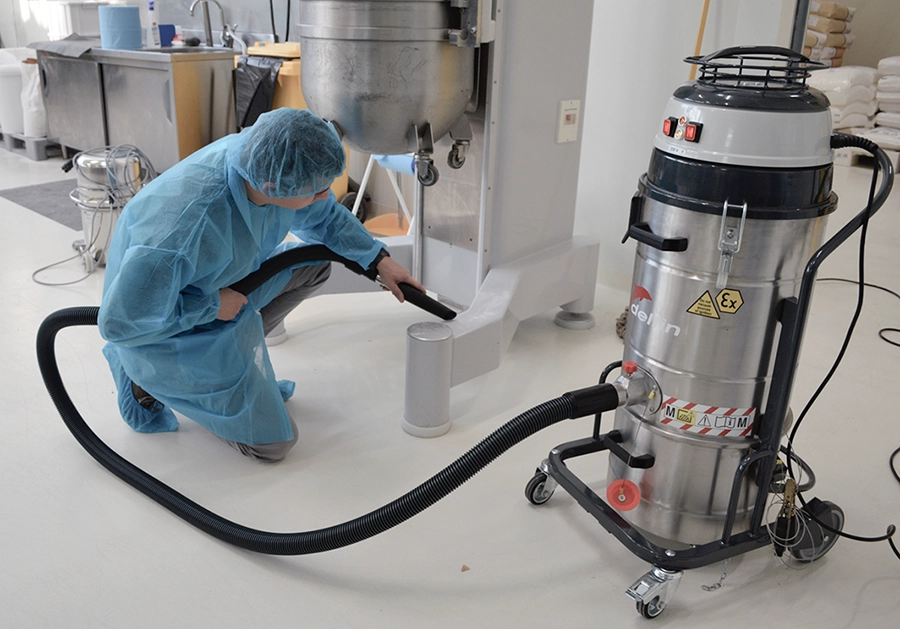
Why a conductive or antistatic hose isn't sufficient on its own — and what grounding means for the complete system.
Know your ohm
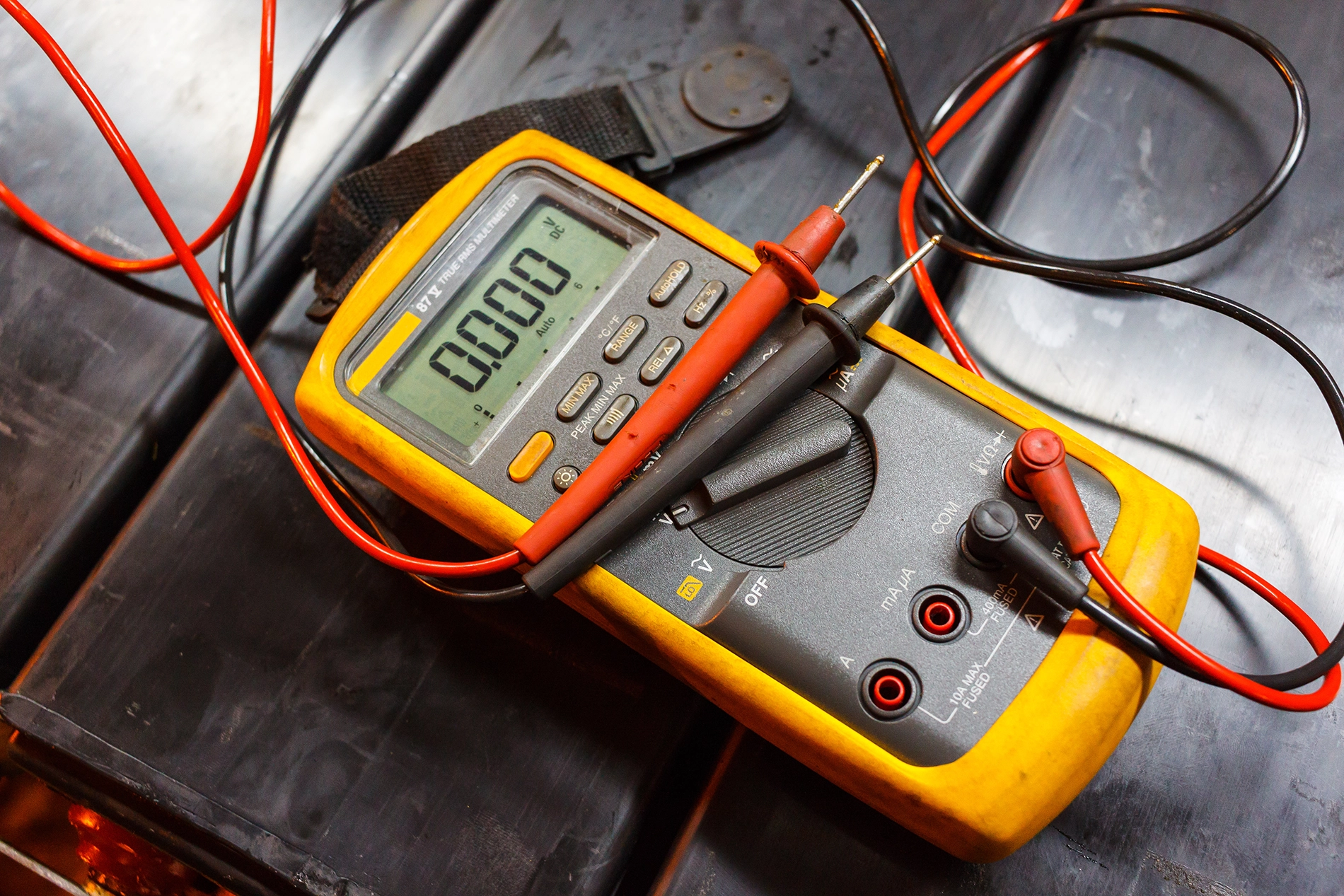
The difference between antistatic and conductive, which resistance limits apply where, and how to measure them correctly.
Industries that use it
SM1 STRAHLMEISTER is used where maximum wear resistance is required - typically in industrial sandblasting, glass industry and high-pressure surface cleaning where the hose's service life is a critical economic factor.
Industrial sandblasting is the main market. The hose leads quartz sand, corundum or steel shot from compressed air systems to the sandblasting gun at 8-12 bar working pressure. 36 mm3 abrasion value is among the lowest wear values in the market - SM1 typically lasts 2-4x longer than TURBOCORD and 5-10x longer than standard wear-resistant hoses in the same applications.
Glass industry and shipbuilding use the hose for high-pressure particle transport where heavy-duty wear resistance is critical. Shipbuilding hull cleaning with steel shot is one of the most abrasive sandblasting applications, and SM1 is a standard solution because alternative hoses would fail faster.
Foundry and industrial renovation are secondary markets. Sand handling at foundry facilities and surface restoration at industrial facilities use the hose for continuous operation over several months. The ATEX zone 22 suitability (conductive + antistatic) is mandatory in many of these applications due to dust explosion risk.
Custom lengths and assemblies
The hose can be delivered cut to desired lengths. The standard roll can be supplemented with shorter pieces or multiple rolls by arrangement.
At Particulair we advise on couplings and sizing. Send us a sketch of your application and we will assess the right variant and length.


Frequently asked questions
What is SM1 STRAHLMEISTER particularly suitable for?
SM1 is a specialised heavy-duty sandblasting hose with extreme wear resistance - abrasion value 36 mm³ per ISO 4649. This is a particularly low value for wear-resistant hoses - significantly better than TURBOCORD's 60-70 mm³ and BETONCORD/10's 70 mm³. SM1 is specifically designed for the most abrasive sandblasting applications with quartz sand, steel shot, corundum and glass.
What makes 36 mm³ abrasion a particularly low value?
Standard industrial hoses typically have 150-200 mm³ abrasion value (the lower, the better the wear resistance). 36 mm³ is a remarkable achievement - it means the hose can handle 4-5x more abrasive particle passages than ordinary industrial hoses before the wear groove reaches the same depth. In practice this means 2-4x longer service life in the most abrasive sandblasting applications.
What is the difference between SM1 and TURBOCORD?
Both are sandblasting hoses with conductive-antistatic construction. SM1 has better wear resistance (36 mm³ vs. 60-70 mm³) and is therefore preferred for the most abrasive applications. TURBOCORD has higher pressure rating (12 bar PN vs. 12 bar) but both are comparable on most parameters. Choose SM1 for extreme wear resistance; choose TURBOCORD for standard high-pressure sandblasting.
How many dimensions are in the range?
5 dimensions: ID 13, 19, 25, 32 and 42 mm. All have the same pressure rating (12 bar PN, 42 bar burst) and 40 m standard roll length. These are typical dimensions for sandblasting guns and high-pressure injector systems.
Why is conductive core + antistatic cover required?
Sandblasting generates significant static electricity from high-pressure particle flow. The conductive core (below 10⁶ ohm) directly discharges the charge to ground, and the antistatic cover (below 10⁹ ohm) ensures the hose's surroundings also get controlled discharge. This is a critical safety property in ATEX zone 22 installations where dust explosions are a risk.
Which couplings are recommended?
For 12 bar sandblasting pressure, metal crimp clamps or specialised sandblasting couplings with wear-secured rings are recommended. Standard worm-drive clamps are NOT sufficient for 12 bar cyclic operation. Sandblasting guns and injector systems typically have specific coupling configurations. We typically fit couplings to the hose by arrangement.
Which abrasive media can be transported?
The factsheet specifies quartz sand, steel shot, corundum and glass - the most standard sandblasting abrasives. The SBR/NR/BR lining is also suitable for garnet sand, garnet and other ceramic particles. For extremely heavy-duty applications (diamond grit, sintered ceramic) we recommend specialised hoses with extra-thick walls.
How long does the hose last?
Wear resistance 36 mm³ abrasion value is particularly low for wear-resistant hoses. In daily professional sandblasting the hose can last 12-30 months depending on particle size, flow rate and operating frequency - 2-4x longer than standard sandblasting hoses. Annual visual inspection of inner wall thickness is recommended.