ATEX/ESD · Antistatic
PROTAPE PVC 371 AS (HD)
PROTAPE PVC 371 AS (HD) is a flexible, fabric-reinforced ventilation hose in PVC with an antistatic wall below 10⁹ ohm and flame-retardant properties per NF P 92-507 M2. The hose is optimised for vapour extraction in galvanisation, chemical industry and general industrial ventilation where both chemical resistance and antistatic function are required. PVC has better resistance to acids and bases than PUR variants, while PUR has better wear resistance against abrasive particles - choose PVC 371 AS (HD) where the air stream contains chemical vapours.
- -20 to +90 C
- Antistatic
- Flame retardant M2
- Acid-resistant
- Galvanisation
- Chemical vapours
Why this hose?
The PVC vs. PUR choice is the fundamental decision when selecting an antistatic extraction hose. Each material has its application focus: PVC is preferred for chemical vapours and acid-base handling, where the material's molecular structure resists attack from these substances. PUR is preferred for abrasive particles where mechanical wear resistance is the dominant requirement. PROTAPE PVC 371 AS (HD) is the classic 'chemical side' of this family.
The HD designation (heavy-duty) refers to wall thickness 0.5 mm vs. LD variants' 0.4 mm or less. This gives higher collapse resistance under suction and better tear resistance under repeated bending. In daily operation this means 2-4x longer service life compared to an LD variant - a price-value advantage that typically justifies the slightly higher purchase price.
Antistatic PVC is black because the carbon-based additive in the PVC matrix is what makes the wall conductive. Black colour is also a functional advantage - PVC can become brittle under UV exposure over time (typically 2-5 years outdoor exposure), and black PVC withstands this far better than clear PVC. The hose can therefore be used in partially outdoor installations where clear PVC would discolour and become brittle.
Where it is used
Galvanisation workshops use the hose for extraction over acid and base baths. A typical installation has 5-10 extraction arms tied to each bath - chromic acid, sulfuric acid, sodium hydroxide - and the same PVC hose type is used throughout the installation due to its general chemical resistance. The hose's expected service life in continuous operation is 5-7 years for large bath extraction stations.
Chemical production facilities use the hose for reactor extraction and fume hood off-takes. Here the chemicals vary from day to day, and a hose that withstands broad chemical spectra is necessary. PVC's resistance to halogenated solvents, acids and bases covers most of reactor work - exceptions are ketones and esters which PVC can be softened by at high concentrations.
Paint shops in automotive and furniture industries use the hose for paint booth extraction. Solvent vapours from spray applications and powder overspray from electrostatic painting are both handled by the PVC hose. Black colour is advantageous here because paint overspray on the hose does not give visible discolouration - and the hose is easy to clean with standard water rinsing.
The hose is colloquially known as a galvanisation hose, acid extraction hose or chemical PVC hose.
Technical specifications
The hose's key specifications are briefly summarised below. Where PUR variants are better for abrasive particles, PVC variants are preferred for chemical vapours and acid-base handling.
| Wall material | PVC (poly-vinyl-chloride) |
|---|---|
| Spiral | Embedded spring-steel wire |
| Colour | Black |
| Wall thickness | 0.5 mm (all dimensions) |
| Temperature range | -20 to +90 C |
| Electrical resistance | <109 Ω per ISO 8031 |
| Flame retardant | NF P 92-507 M2 (France) |
| Recommended application | Chemical vapours, acid extraction, galvanisation |
| Compressibility | Highly flexible |
| Manufacturer SKU | 3713402 |
Dimensions and ordering
The table shows the hose's 23 standard dimensions. Pressure values are per ID; wall thickness is consistent 0.5 mm across the range. Larger dimensions (305+ mm) are delivered on 12 m rolls.
| Inner Ø |
Outer Ø |
Wall thickness |
Working pressure |
Vacuum |
Bend radius |
Max. length |
Weight |
Article no. |
|---|---|---|---|---|---|---|---|---|
| 50 | 53.32 | 0.5 | 0.41 | 0.175 | 40.8 | 20 | 0.27 | 37100503402 |
| 60 | 63.32 | 0.5 | 0.34 | 0.13 | 48 | 20 | 0.32 | 37100603402 |
| 70 | 73.3 | 0.5 | 0.295 | 0.11 | 56 | 20 | 0.37 | 37100703402 |
| 75 | 78.32 | 0.5 | 0.275 | 0.095 | 60.8 | 20 | 0.39 | 37100753402 |
| 80 | 83.32 | 0.5 | 0.255 | 0.095 | 64 | 20 | 0.42 | 37100803402 |
| 90 | 93.3 | 0.5 | 0.23 | 0.085 | 72 | 20 | 0.47 | 37100903402 |
| 100 | 103.72 | 0.5 | 0.205 | 0.06 | 81.6 | 20 | 0.45 | 37101003402 |
| 110 | 113.72 | 0.5 | 0.185 | 0.055 | 88 | 20 | 0.5 | 37101103402 |
| 120 | 123.7 | 0.5 | 0.17 | 0.05 | 96 | 20 | 0.54 | 37101203402 |
| 125 | 128.72 | 0.5 | 0.165 | 0.04 | 101.6 | 20 | 0.57 | 37101253402 |
| 140 | 143.7 | 0.5 | 0.145 | 0.04 | 112 | 20 | 0.92 | 37101403402 |
| 150 | 153.72 | 0.5 | 0.135 | 0.04 | 121.6 | 20 | 0.68 | 37101503402 |
| 160 | 163.72 | 0.5 | 0.13 | 0.025 | 128 | 20 | 0.72 | 37101603402 |
| 180 | 183.7 | 0.5 | 0.115 | 0.025 | 144 | 20 | 0.81 | 37101803402 |
| 200 | 204.12 | 0.5 | 0.105 | 0.025 | 162.4 | 20 | 0.91 | 37102003402 |
| 250 | 254.12 | 0.5 | 0.085 | 0.02 | 200 | 20 | 1.13 | 37102503402 |
| 300 | 304.12 | 0.5 | 0.07 | 0.01 | 240 | 20 | 1.36 | 37103003402 |
| 305 | 309.5 | 0.5 | 0.07 | 0.01 | 244 | 12 | 1.27 | 37103053402 |
| 350 | 354.5 | 0.5 | 0.04 | 0.01 | 280 | 12 | 2.58 | 37103503402 |
| 356 | 360.9 | 0.5 | 0.04 | 0.01 | 284.8 | 12 | 2.58 | 37103563402 |
| 400 | 404.9 | 0.5 | 0.035 | 0.005 | 320 | 12 | 1.78 | 37104003402 |
| 406 | 410.92 | 0.5 | 0.035 | 0.005 | 324.8 | 12 | 1.81 | 37104063402 |
| 500 | 504.9 | 0.5 | 0.03 | 0.005 | 400 | 12 | 2.23 | 37105003402 |
| 508 | 512.9 | 0.5 | 0.03 | 0.005 | 406.4 | 12 | 3.12 | 37105083402 |
| 600 | 604.9 | 0.5 | 0.02 | 0.005 | 480 | 10 | 4.95 | 37106003402 |
Fields without a value (—) are not specified in the manufacturer's factsheet. Overpressure and underpressure values are recommended operating limits; the product can be subjected to higher loads on request. Bend radius is measured along the inside of the hose bend.

Standards and compliance
The hose is qualified per the central standards for antistatic and flame-retardant industrial hoses. ISO 8031 and NF P 92-507 M2 are the primary references.
- ISO 8031. Determination of electrical and surface resistance in rubber and plastic hoses. Standard test for antistatic hoses.
- NF P 92-507 M2. French building material standard for fire resistance. M2 means 'difficult to ignite' - one grade below M1 but still a meaningful fire classification for industrial ventilation hoses.
- EN 13501-1. European harmonised classification of building materials for fire properties. NF P 92-507 M2 approximately corresponds to class C in EN 13501-1.
- EN 12115. European standard for rubber and thermoplastic hoses for liquids and chemicals. Relevant for ventilation hoses that may come into contact with chemicals in vapour form.
- RoHS Directive (2011/65/EU). Restriction of hazardous substances. Manufacturer declaration on file.
- REACH (EC 1907/2006). Registration of chemical substances. Manufacturer declaration on request.
- ISO 9001:2015. Quality management system at the manufacturer. Ensures each batch follows the same specification.
Documentation and downloads
Additional documents about this hose, its compliance and installation. Click to download as PDF in a new tab.
Help with material selection
If you're choosing a hose and are unsure about the right resistance level or zone classification, these two articles are a good place to start:
The invisible weakest link
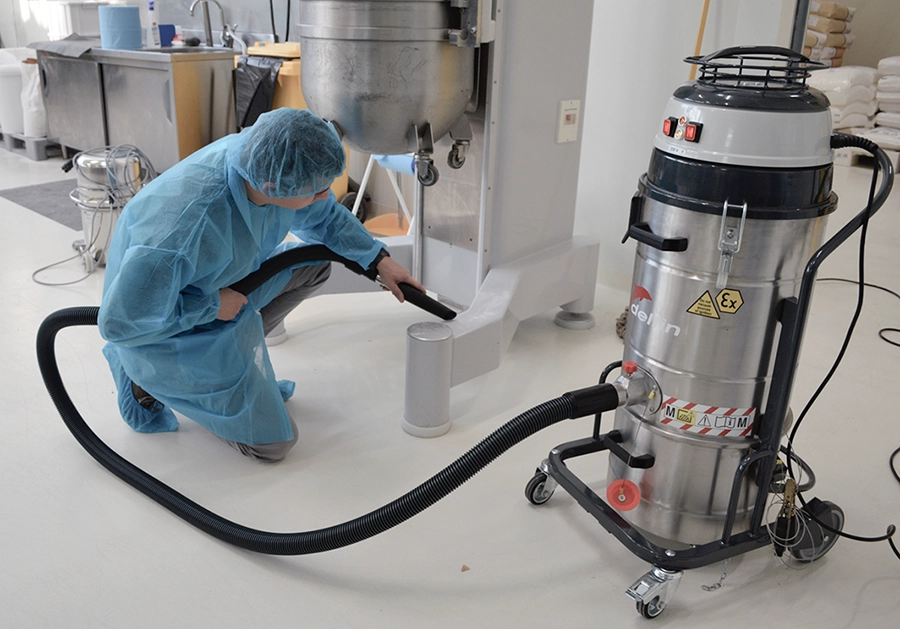
Why a conductive or antistatic hose isn't sufficient on its own — and what grounding means for the complete system.
Know your ohm
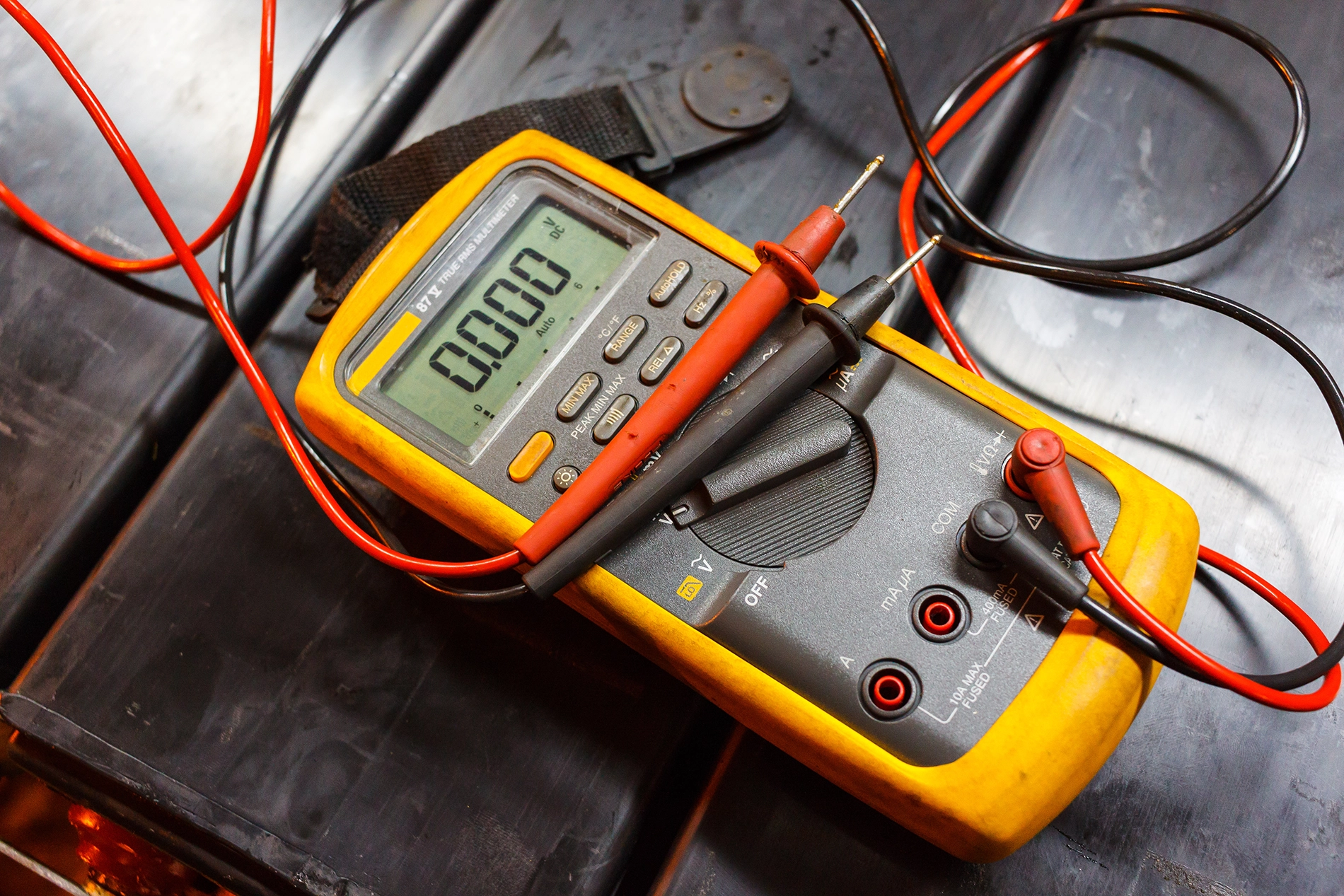
The difference between antistatic and conductive, which resistance limits apply where, and how to measure them correctly.
Industries that use it
PROTAPE PVC 371 AS (HD) is used where antistatic extraction must be combined with chemical resistance - typically in galvanisation, chemical industry and surface treatment.
Galvanisation is the main market. As soon as there are baths with sulfuric acid, chromic acid or sodium hydroxide involved, the requirement is a hose that can withstand acid-base vapours over years of continuous operation. PVC's molecular structure is strongly resistant to these chemicals - therefore PVC is the standard material in galvanisation extraction. The antistatic wall contributes to ATEX suitability in zones where flammable auxiliaries may occur.
Chemical industry and laboratories use the hose for vapour extraction from reactors and fume hoods. The PVC wall withstands the varying chemicals that may occur in these air streams - chlorinated solvents, acids, bases and solvent mixtures. The PUR wall would slowly degrade from certain chemicals, but PVC withstands them in most cases.
Surface treatment and electronics production are secondary markets. Painting and paint overspray contain solvent vapours (xylene, toluene, MEK, MIBK) typically handled by PVC extraction hoses with good service life. In electronics, the hose is used to remove soldering vapours and flux residues that also contain chemicals PVC withstands better than PUR.
Custom lengths and assemblies
The hose can be delivered cut to desired lengths. The standard roll can be supplemented with shorter pieces or multiple rolls by arrangement.
At Particulair we advise on couplings and sizing. Send us a sketch of your application and we will assess the right variant and length.


Frequently asked questions
What is the difference between PROTAPE PVC 371 AS (HD) and PROTAPE PUR 330 AS BLACK (LD)?
PVC 371 AS (HD) is an HD version (heavy-duty, 0.5 mm wall) in PVC, while PUR 330 AS BLACK is the LD version in PUR. PVC is better for acid and base handling (e.g. galvanisation extraction), but not as wear-resistant as PUR. The PUR variant is better for abrasive particle streams. Choose PVC for chemically aggressive air streams, choose PUR for abrasive dust.
Is the hose flame retardant?
Yes - the wall is flame retardant per NF P 92-507 M2 (French building standard, one grade below M1). M2 means 'difficult to ignite' - the material can ignite but supports limited self-sustained combustion. This is a standard classification for industrial ventilation hoses and covers most applications where fire resistance is required.
Which ATEX zones can the hose be used in?
The hose's wall is antistatic below 10⁹ ohm per ISO 8031 - making it suitable for zone 22 inside (dust) and zone 1+2 outside (gas). The factsheet does not specify an explicit ATEX 2014/34/EU declaration, so for critical ATEX installations we recommend cross-checking with your installation's zone assessment. For critical ATEX zones (zone 0, 1, 20, 21) we recommend a conductive variant.
How many dimensions are in the range?
23 dimensions from 50 mm to 600 mm inner diameter - one of the broadest PROTAPE ranges. Standard roll length is 20 m for most dimensions; larger dimensions (305, 350, 400, 500, 600 mm) are delivered on 10-12 m rolls. Wall thickness is 0.5 mm across the range.
What is the preferred application for PVC vs. PUR?
PVC has better chemical resistance to acids and bases than PUR - making it the preferred choice for galvanisation extraction (sulfuric acid, chromic acid and sodium hydroxide vapours), chemical extraction and acid pickling. PUR has better wear resistance against abrasive particles. In practice: PVC for chemistry, PUR for mechanical wear.
What is the operating temperature?
-20 to +90 C. This is narrower than the PUR variant (which goes to -40 C) - PVC becomes brittle at low temperatures. The hose is not suitable for frost installations or outdoor use in cold climates. For indoor ventilation in temperature-stable environments (typically 5-40 C) it is plenty.
What colour is the hose?
Black. The black colour comes from the carbon-based antistatic additive in the PVC matrix. It is also the colour that makes the hose UV-resistant over time - the black material absorbs and dissipates UV energy instead of letting it degrade the polymer chains.
Can the hose be bought with pre-fitted couplings?
Yes - we typically fit weld-type couplings or worm-drive clamps with grounding tab on larger dimensions (over 200 mm) and quick couplings on smaller. For galvanisation applications, acid-resistant coupling materials (PP or PVDF) are recommended - contact us for specific advice.