ATEX/ESD · Antistatic
PROTAPE® TPE 320 AS (XLD)
Highly flexible suction and pressure hose in thermoplastic elastomer (TPE), antistatic and heat-resistant up to +125 °C continuously and +150 °C as peak. The chemical-resistant wall makes the hose suitable for processes where PUR meets its chemical limit, such as certain solvent vapours and higher temperatures. The XLD construction keeps the hose easy to handle despite the demanding application range.
- Static dissipation ~10⁹ Ω
- Up to +125 °C
- Chemical-resistant TPE
- Highly flexible XLD
- Gas, dust
- Cut to length
Why this hose?
PROTAPE® TPE 320 AS (XLD) is built for a niche that standard PUR cannot cover: processes where the temperature exceeds +90 °C continuously, and where certain solvents or chemical vapours would weaken a PUR wall over time. The TPE construction tolerates +125 °C continuously and +150 °C as a short-term peak.
The hose is antistatic with surface resistance approximately 10⁹ Ω. That matches the NFPA 652 thresholds for antistatic components, but the factsheet does not list a formal ATEX marking. It functions as an ESD component in a grounded system, and is typically chosen for processes where temperature is the primary challenge and static-electricity risk is a secondary consideration.
The application range is characteristic: hot air and cooling air in ventilation, engine exhaust and air conditioning, drying systems in plastics industry and printing, and steam soaking at higher temperatures. The hose cross-lists in the high-temperature category because temperature tolerance is central.
TPE has lower mechanical wear resistance than PUR. If the process involves abrasive media (granulates, sand, particles), choose a PUR-based hose with MD or HD construction. TPE is chemical- and heat-resistant, but not designed for heavy mechanical loading.
Where it is used
PROTAPE® TPE 320 AS (XLD) is the right choice for processes where temperature or chemical resistance pushes the PUR hoses past their limits. That makes it well suited for engine exhaust and hot air in marine and automotive environments, where air often exceeds +90 °C, and for drying systems in the plastics industry.
In practice we see it used for air conditioning and HVAC systems operating at high temperatures, for steam soaking in the chemical industry, and for UV and IR dryers in offset printing.
It is also used for construction site drying and tent heating, for machine installations with thermal load, and for marine hoses where salt water and engine heat combine.
The formal product name is PROTAPE® TPE 320 AS (XLD). In daily use, many simply call it "TPE 320" or "the heat-resistant AS" — the right choice when temperatures exceed +90 °C.
Technical specifications
Specifications are current as of 15 April 2026 and refer to 20 °C unless otherwise stated.
| Material | Thermoplastic elastomer (TPE), permanently antistatic |
|---|---|
| Colour | Black |
| Wall construction | Extra light duty (XLD), 0.5 mm wall thickness, spiral-reinforced TPE |
| Conveying media | Gas, dust |
| Temperature range | −40 °C to +125 °C (continuous) |
| Short-term peak | +150 °C |
| Electrical resistance | Antistatic wall ~10⁹ Ω (NFPA 652 threshold: 10⁸–10⁹ Ω) |
| ATEX marking | Not formally ATEX-marked; the hose is antistatic |
| Cut to length | Yes |
| Manufacturer SKU (model group) | 3200000 |
The hose is rated for +125 °C continuous and +150 °C peak. For continuous operation above +150 °C, a silicone hose (calorform/temperform family) or a metal hose (metal_hose family) is recommended. See the FlexCore high-temperature category for alternatives.
Dimensions and ordering
The table shows the main variants from the manufacturer's factsheet. Fields without a value (—) are not specified. Diameters, pressure values and bend radii are normative; weights and roll lengths are typical production values.
| Inner Ø |
Outer Ø |
Wall thickness |
Working pressure |
Vacuum |
Bend radius |
Max. length |
Weight |
Roll |
Article no. |
|---|---|---|---|---|---|---|---|---|---|
| 25 | 31 | 0.5 | — | — | — | 18 | 0.14 | — | 32000250000 |
| 50.5 | 56.5 | 0.5 | 0.235 | 0.105 | 33 | 20 | 0.22 | 10 | 32000500000 |
| 60 | 68 | 0.5 | 0.195 | 0.09 | 38 | 20 | 0.32 | 10 | 32000600000 |
| 70 | 78 | 0.5 | 0.17 | 0.075 | 43 | 20 | 0.37 | — | 32000700000 |
| 75.6 | 83.6 | 0.5 | 0.16 | 0.07 | 46 | 20 | 0.33 | — | 32000750000 |
| 80 | 88 | 0.5 | 0.15 | 0.065 | 48 | 20 | 0.42 | — | 32000800000 |
| 101.5 | 109.5 | 0.5 | 0.12 | 0.055 | 58 | 20 | 0.61 | 10 | 32001000000 |
| 110 | 118 | 0.5 | — | 0.05 | 63 | 20 | 0.66 | — | 32001100000 |
| 126.5 | 134.5 | 0.5 | 0.095 | 0.045 | 71 | 20 | 0.75 | 10 | 32001250000 |
| 140 | 148 | 0.5 | 0.085 | 0.04 | 78 | 20 | 0.71 | — | 32001400000 |
| 151.5 | 159.5 | 0.5 | 0.08 | 0.025 | 83 | 15 | 0.76 | 10 | 32001500000 |
| 160 | 168 | 0.5 | 0.075 | 0.025 | 88 | 15 | 0.8 | 10 | 32001600000 |
| 180 | 188 | 0.5 | 0.065 | 0.02 | 98 | 15 | 0.9 | — | 32001800000 |
| 202.3 | 210.3 | 0.5 | 0.06 | 0.02 | 108 | 15 | 1.01 | 10 | 32002000000 |
| 250 | 258 | 0.5 | 0.05 | 0.015 | 133 | 15 | 1.24 | 10 | 32002500000 |
Overpressure and underpressure values are recommended operating limits; the product can be subjected to higher loads on request. Bend radius is measured along the inside of the hose bend.

Standards and compliance
The hose is documented to the following standards:
- ISO 8031. Measurement of electrical resistance in rubber and plastics hoses.
- NFPA 652. US standard on the fundamentals of combustible dust. Antistatic components have resistance in the 10⁸–10⁹ Ω range.
- REACH (EC 1907/2006) and RoHS 2011/65/EU. The manufacturer holds declarations of compliance.
- Note: The hose is not formally ATEX-marked.
Documentation and downloads
Additional documents about this hose, its compliance and installation. Click to download as PDF in a new tab.
Help with material selection
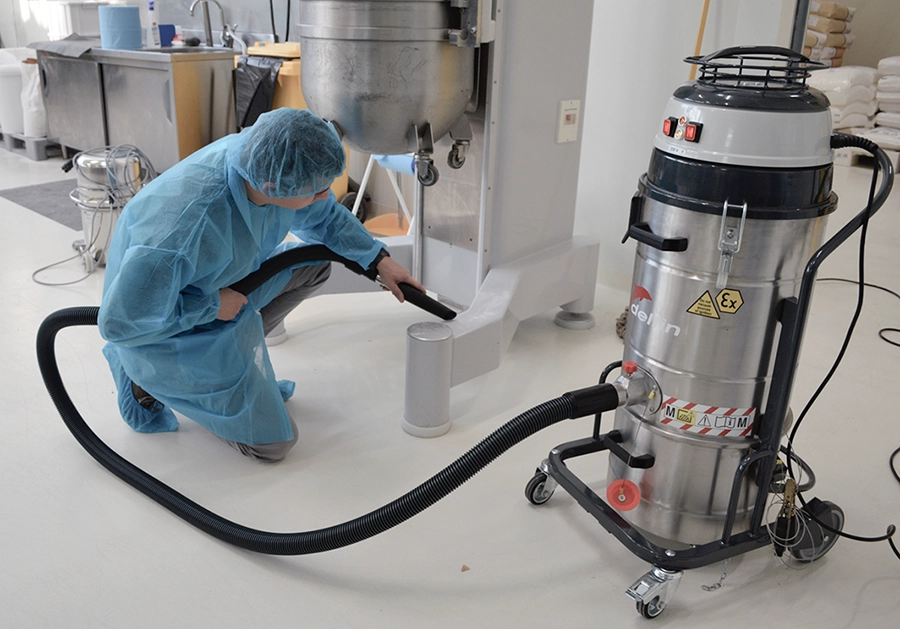
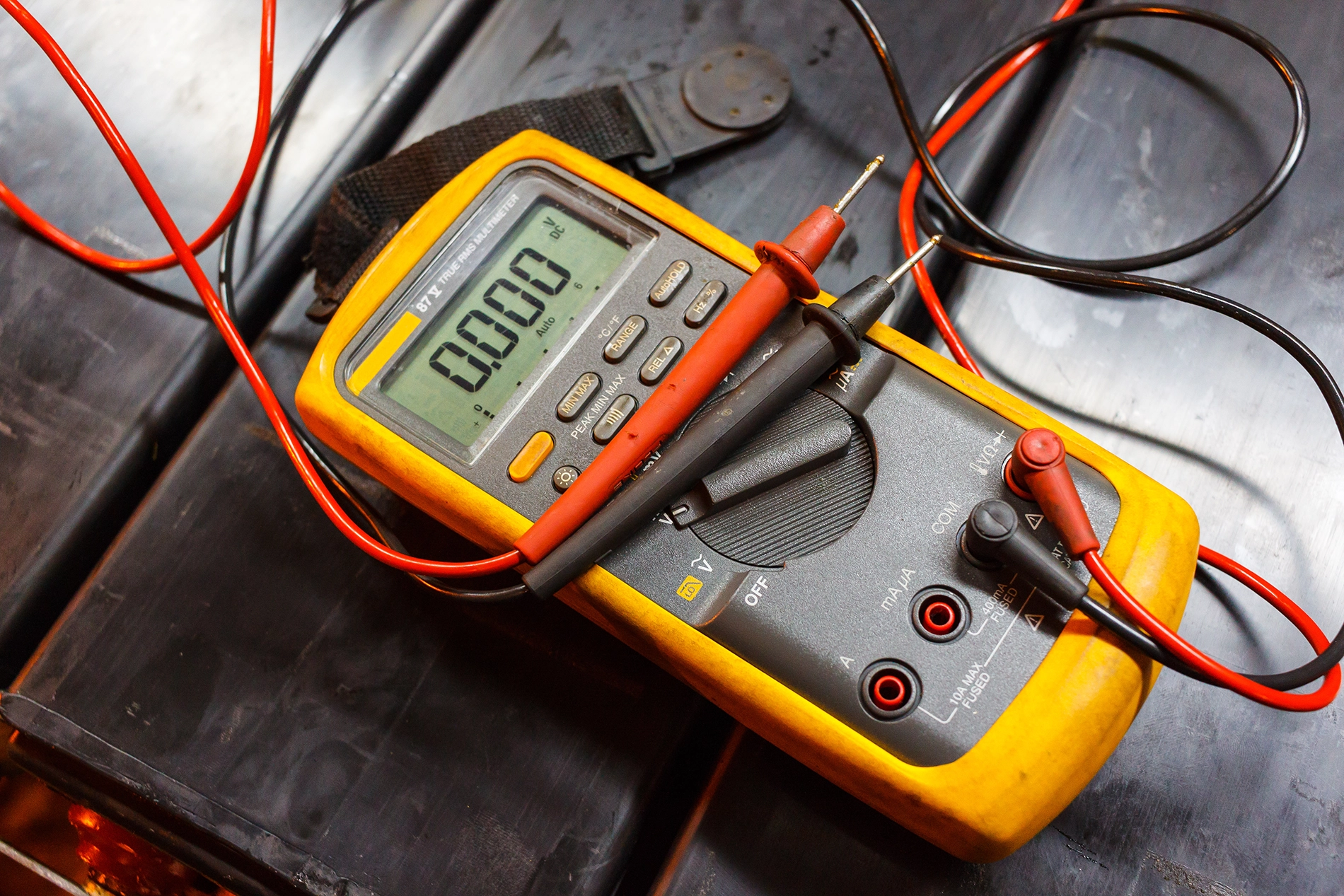
If you are choosing a hose and are uncertain about the right resistance level or zone classification, these two articles are a good place to start:
Industries that use it
The hose is used across industries where high temperature tolerance and an antistatic wall combine:
Automotive and marine industries use the hose for engine exhaust and hot air where temperatures often exceed +100 °C.
Plastics and chemical industries use it for drying systems, granulate dryers and solvent vapour handling at higher temperatures.
HVAC and printing industries use it for air conditioning and UV/IR dryers where hot-air conveyance combines with an antistatic wall.
Custom lengths and assemblies
The hose can be cut to length and assembled with couplings, cuffs and threaded fittings through Particulair's custom hose assemblies.
We offer guidance on material choice, coupling system and grounding, so the hose fits correctly into the overall system. If there is any doubt about zone classification or resistance requirements, a short conversation before ordering is well worth the time.


Frequently asked questions
What is the difference between TPE and PUR?
TPE (thermoplastic elastomer) tolerates higher continuous temperatures than PUR — typically +125 °C vs. +90 °C — and has better chemical resistance to certain solvents. On the other hand, TPE is more vulnerable to high mechanical wear and is generally more expensive. Choose TPE when temperature or chemical compatibility is the limiting factor; choose PUR for standard temperatures and high mechanical loading.
Is TPE 320 AS ATEX-approved?
No, not formally. The hose is antistatic with surface resistance approximately 10⁹ Ω, but the factsheet does not list a formal ATEX 2014/34/EU + TRGS 727 marking. It functions as an antistatic ESD component in a grounded system. If the process requires documented ATEX marking, choose a PUR variant such as PROTAPE® PUR 330 AS (LD).
How hot can the hose get?
The normal operating range is −40 °C to +125 °C. Short-term peaks up to +150 °C are permitted. That is clearly higher than the PUR constructions' +90 °C and places 320 AS in the transition between standard PUR and silicone- or metal-based hoses.
Why are there fewer pressure values in the dimensions table?
The TPE 320 AS factsheet uses a simpler dimension table that focuses primarily on diameters, vacuum and bend radius. Working pressure is not specified for all diameters — the hose is primarily intended for low-pressure applications, not high pneumatic pressures.
Can the hose be supplied cut to length with couplings?
Yes. PROTAPE® TPE 320 AS (XLD) can be cut to length and assembled with couplings, cuffs and threaded fittings through Particulair's custom hose assemblies. We provide guidance on coupling system and sealing so the hose fits correctly into the overall installation.
How do I order the hose, and where do you deliver?
The hose is ordered through Particulair (Karlslunde, Denmark). We deliver to Denmark, the EU and selected third countries such as Norway and Switzerland. Standard dimensions can typically be delivered in 1-2 weeks; custom assemblies and larger volumes require slightly longer lead time.
What is the hose's expected service life?
Service life depends on operating conditions: loading, temperature, chemical exposure, UV and mechanical movement. In standard industrial use, expected life is 3-7 years. Aggressive conditions (high temperatures, continuous flexing, chemical vapours) reduce service life. We recommend regular visual inspection for cracks, deformation or discolouration.
How is the hose best stored before use?
Store the hose dry, at room temperature (15-25 °C) and out of direct sunlight. Avoid contact with ozone-generating equipment (welding equipment, engines). If stored on a reel, the bend must be larger than the specified minimum radius to avoid permanent deformation. Proper storage significantly extends shelf life.