High-temperature · up to +70 °C
METAL HOSE PVC 102 AD
METAL HOSE PVC 102 AD is a highly flexible cable protection hose with metal core and external PVC coating. The hose is qualified to IP 68 per EN/IEC 60529 and is chemically resistant - a major advantage in galvanisation, chemical and surface treatment zones where acid and base exposure is daily. The operating range is -20 to +70 C with short-term peak +80 C (the PVC coating's limit). The hose is typically used for cable protection in chemical industry, galvanisation workshops, paint shops and automation cells where mechanical wear and chemical exposure are combined.
- -20 to +70 C
- IP 68
- Chemical-resistant
- PVC coating
- Cable protection
- Galvanisation
Why this hose?
The PVC vs. PUR choice in the metal hose family reflects the same principles as in extraction hoses: PVC for chemistry, PUR for heat and wear. PVC's molecular structure is strongly resistant to acids and bases - where PUR over time becomes softened by the same substances. This makes 102 AD the preferred choice in galvanisation zones and chemical handling.
The IP 68 level comes from the PVC coating's continuous outer surface. It fills the gaps between the inner metal construction's seams and provides a continuously water-tight outer surface. This is a major upgrade from IP 40 (dust-tight only) that pure-metal hoses provide, and is decisive in water- and chemically-exposed installations.
The grey colour is a deliberate design choice. Clear PVC would discolour over time (yellowing from UV and chemicals), and black PVC would absorb more heat. Grey PVC is a compromise colour that secures reasonable UV resistance combined with good heat dissipation - practical in typical industrial installations where visual inspection must also be possible.
Where it is used
Galvanisation workshops use the hose for cable protection over and near acid and base baths. A typical installation has 10-20 m of PVC 102 AD per processing station - cable runs to pumps, sensors and controls are continuously exposed to chemical vapours. The PVC coating can last 5-10 years in these environments, where a standard PUR coating would fail after 1-3 years.
Chemical production facilities use the hose for cable runs between reactor areas and control cabinets. The hose's combination of IP 68 and chemical resistance ensures that neither water cleaning nor accidental chemical exposure penetrates to the cable insulation. This significantly extends cable service life compared to uncoated metal conduit.
Paint shop and paint booth installations in automotive and furniture production use the hose for cable protection on robot arms. Solvent vapours (xylene, toluene, MEK) typically found in these halls would soften PUR coating, but PVC resists these substances to a much higher degree. The hose can often last 10+ years in these applications.
The hose is colloquially known as a PVC-coated metal hose, chemistry conduit or galvanisation hose.
Technical specifications
The hose's key specifications are briefly summarised below. The PVC coating is what provides both IP 68 sealing and chemical resistance - for heat zones above +70 C we recommend PUR-coated 151 AD or VA variants without coating.
| Construction | Metal core with external PVC coating |
|---|---|
| Inner steel | Galvanised steel |
| Outer coating | PVC (poly-vinyl-chloride) |
| Colour (outer coating) | Grey |
| Temperature range | -20 to +70 C (peak +80 C short-term) |
| IP rating | IP 68 per EN/IEC 60529 |
| Chemical resistance | Resistant to acids, bases and many solvents |
| Standard pack length | 50 m per roll |
| Number of dimensions | 6 (ID 7-22 mm) |
| Manufacturer SKU | 1029050 |
Dimensions and ordering
The table shows the hose's 6 standard dimensions with ID, nominal connecting-part width (outer dimension for couplings), bend radius and max production length. Weight is given per metre (converted from the factsheet's per-50m values). The factsheet also specifies a dynamic bending radius (typically 25% larger than static bend radius) - contact us for precise dynamic values per dimension.
| Inner Ø |
Outer Ø |
Bend radius |
Max. length |
Weight |
Roll |
Article no. |
|---|---|---|---|---|---|---|
| 7 | 10 | 32 | 50 | 0.079 | 50 | 10230109050 |
| 10 | 14 | 40 | 50 | 0.115 | 50 | 10230149050 |
| 13 | 17 | 45 | 50 | 0.171 | 50 | 10230179050 |
| 15 | 19 | 52 | 50 | 0.194 | 50 | 10230199050 |
| 17 | 21 | 58 | 50 | 0.234 | 50 | 10230219050 |
| 22 | 27 | 72 | 50 | 0.394 | 50 | 10230279050 |
Fields without a value (—) are not specified in the manufacturer's factsheet. Overpressure and underpressure values are recommended operating limits; the product can be subjected to higher loads on request. Bend radius is measured along the inside of the hose bend.

Standards and compliance
The hose is qualified per the central standards for cable protection conduit and IP classification. EN/IEC 60529 IP 68 is the primary reference.
- EN/IEC 60529 IP 68. International classification of enclosure sealing - 6 = dust-tight, 8 = continuous immersion in water. Highest possible IP rating.
- RoHS Directive (2011/65/EU). Restriction of hazardous substances. Manufacturer declaration on file.
- REACH (EC 1907/2006). Registration of chemical substances. Manufacturer declaration on request.
- EN 50525. European standard for flexible low-voltage cables. Relevant for cable protection.
- VDE 0282. German standard for flexible cables. Relevant for German-market installations.
- ISO 9001:2015. Quality management system at the manufacturer. Ensures each batch follows the same specification.
- EN 12115. European standard for rubber and thermoplastic hoses for liquids and chemicals. Relevant for chemically-exposed installations.
Documentation and downloads
Additional documents about this hose, its compliance and installation. Click to download as PDF in a new tab.
Help with material selection
Although this hose isn't ATEX-relevant, these two articles provide useful background on electrical resistance and industrial safety — important if you later combine the hose with electrical equipment or work in mixed environments:
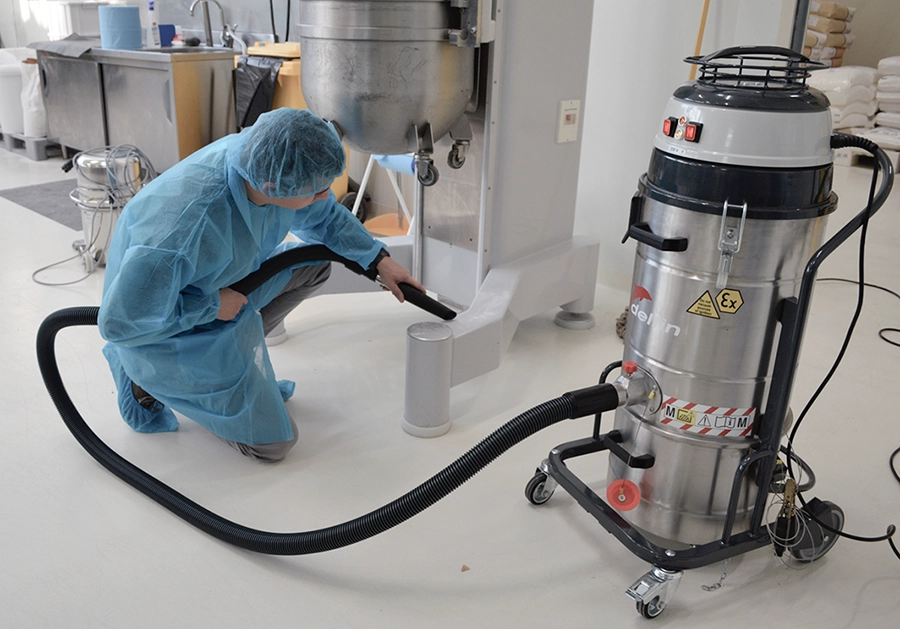
The invisible weakest link
Why a conductive or antistatic hose isn't sufficient on its own — and what grounding means for the complete system.
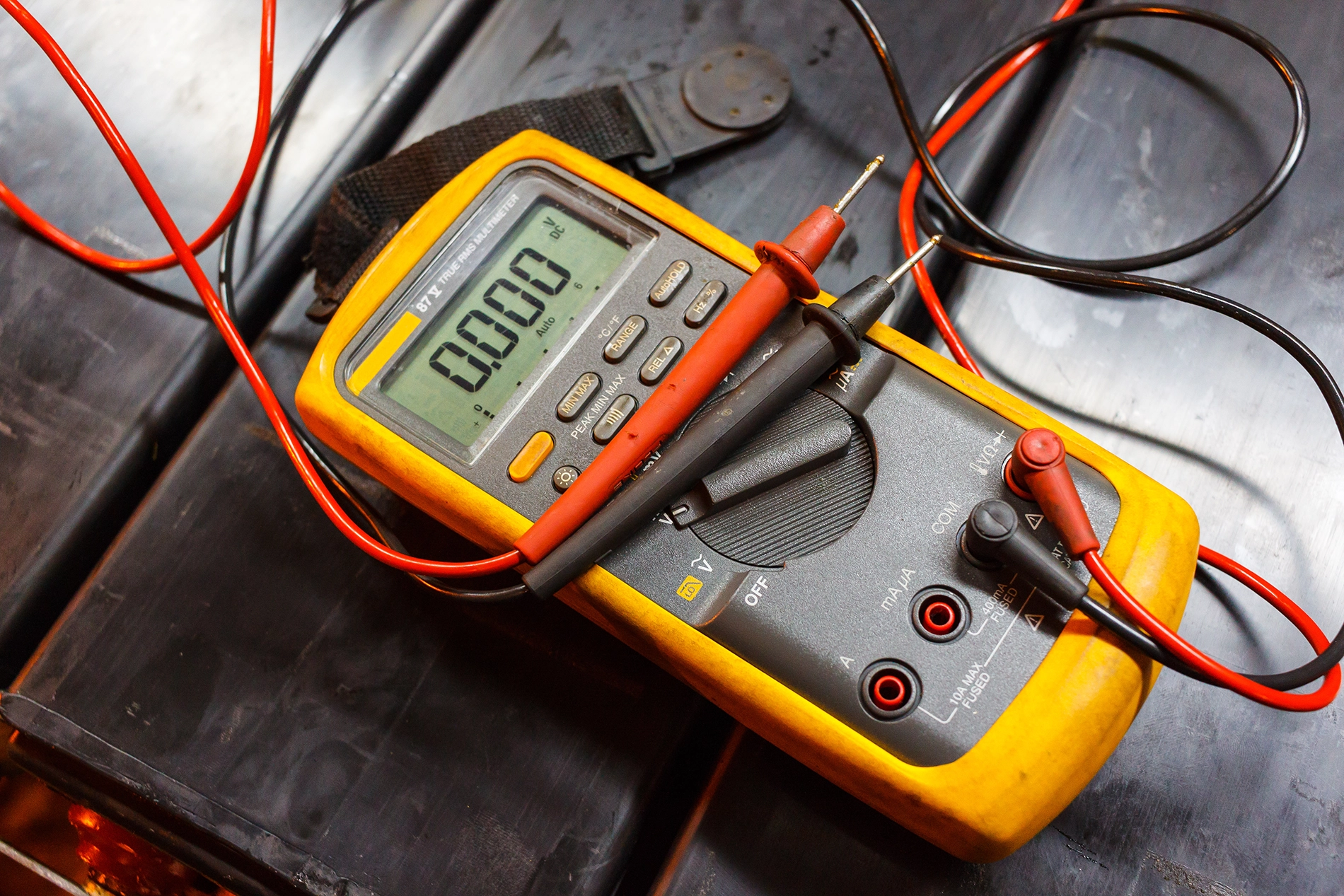
Know your ohm
The difference between antistatic and conductive, which resistance limits apply where, and how to measure them correctly.
Industries that use it
METAL HOSE PVC 102 AD is used where cable protection must combine IP 68 sealing with chemical resistance - typically in galvanisation, chemical industry and surface treatment.
Galvanisation workshops are the main market. Baths with sulfuric acid, chromic acid and sodium hydroxide create acid-base vapours that over time degrade ordinary plastic conduit. PVC's chemical resistance allows the hose to be placed close to galvanisation baths without the coating degrading - typically 5-10 years of service life in moderately chemical-exposed installations.
Chemical industry and chemical-handling facilities use the hose for cable protection in zones where regular chemical spillage or splash is reality. Unlike PUR coating (which is degraded by acids over time), PVC resists a broader portfolio of chemicals - making 102 AD a more robust solution in these environments.
Surface treatment and paint shop industry use the hose in paint booths and finishing halls where solvent vapours and paint overspray land on the cable runs. The PVC coating can be cleaned with ordinary solvents without losing its sealing, and IP 68 ensures water-based cleaning does not penetrate to the cables.
Custom lengths and assemblies
The hose can be delivered cut to desired lengths. The standard roll can be supplemented with shorter pieces or multiple rolls by arrangement.
At Particulair we advise on couplings and sizing. Send us a sketch of your application and we will assess the right variant and length.


Frequently asked questions
What makes the PVC coating different from the PUR coating in 151 AD?
PVC has better chemical resistance than PUR against acids and bases - making PVC 102 AD preferred in galvanisation zones and chemically exposed installations. In return, PVC has a slightly lower temperature limit (continuous 70 C, peak 80 C vs. PUR's 90 and 125 C). Choose PVC 102 AD for chemically exposed environments; choose PUR 151 AD where heat is the dominant requirement.
What temperature does the hose tolerate?
The operating range is -20 to +70 C continuous with short-term peak up to +80 C. This is the PVC coating's limit - the metal core itself can handle much higher temperatures, but the coating would melt. For higher temperatures we recommend PUR-coated 151 AD or VA variants without coating.
What is 'dynamic bending radius' used for?
The factsheet specifies both a static bend radius (hose centre in fixed position) and a dynamic bending radius (bending under movement, e.g. in robot arms). The dynamic bending radius is typically 20-25% larger than the static bend radius - it is the minimum radius the hose can be bent to under active movement without the seams opening or the coating cracking. Important parameter for automation installations.
Is the hose UV-resistant?
Grey PVC has moderate UV resistance - typically 3-5 years of outdoor exposure before the hose begins to show discolouration and brittleness. For long-term outdoor installations we recommend PUR-coated 151 AD which is UV-resistant. For indoor and partially outdoor installations (under cover or in cabinet), PVC 102 AD is typically acceptable.
What is the difference between 102 AD and 151 AD?
Both are PUR/PVC-coated metal hoses with IP 68. The differences: 102 AD has PVC coating (better chemical resistance, lower temperature), 151 AD has PUR coating (better temperature, broader flexibility). 102 AD is grey, 151 AD is metallic blue. Choose 102 AD for chemical zones; choose 151 AD for heat or outdoor zones.
How many dimensions are in the range?
6 dimensions from ID 7 mm to 22 mm, with corresponding nominal connecting-part width of 10-27 mm. Standard pack length is 50 m per roll on all dimensions. This covers small signal cables up to medium-sized power cable installations.
Which couplings are recommended?
Standard cable glands (PG or M thread) matching the nominal connecting-part width. For chemical zones, brass or stainless steel couplings with chemical-resistant gasket are recommended. We typically fit couplings to the hose by arrangement.
Is the hose flame retardant?
The hose has NO explicit flame-retardant qualification on the factsheet. PVC is typically self-extinguishing but not per NF P 92-507 M2 or M1. For formal fire-resistance applications we recommend a specifically flame-retardant variant.