High-temperature · up to +150 °C
NEO 390 ONE
NEO 390 ONE is the single-layered neoprene hose for hot and cold gases. Highly flexible and heat-resistant up to 150 C, ideal for hot-air drying, cooling and air conditioning in the automotive industry.
- -40 to +150 C
- Robust
- Highly flexible
- REACH/RoHS
- Industrial
- Specialised
Why this hose?
NEO 390 ONE is constructed for a specific application where material and temperature capacity must match the requirement. Neoprene (CR rubber) is chosen because it provides the right balance between flexibility, chemical resistance and temperature capacity.
Continuous industrial operation subjects the hose to daily pressure cycles, mechanical wear and temperature variation. The difference to a standard hose lies in the material's formulation and the reinforcement's dimensioning.
In daily use, the hose's life cycle is 5-10 years depending on load. Preventive maintenance with annual inspection extends the service life.
Where it is used
NEO 390 ONE is typically used in industrial contexts where a standard hose cannot handle the load. Specific application depends on the variant - see intro for details.
The hose is typically mounted between a source and a destination via metal or polymer couplings. We advise on sizing and couplings.
Industrial installation often requires pressure testing at commissioning and annually thereafter. This is documented in the installation history.
NEO is colloquially known as a neoprene hose or hot-air hose.
Technical specifications
Specifications are applicable per the manufacturer's factsheet.
| Material | Neoprene (CR rubber) |
|---|---|
| Colour | black |
| Temperature | -40 to +150 C |
| Pressure class | See dimension table |
| Construction | Neoprene (CR rubber) with reinforcement |
Dimensions and ordering
The dimension table shows the standard variants the hose is produced in.
| Inner Ø |
Outer Ø |
Working pressure |
Vacuum |
Bend radius |
Max. length |
Weight |
Roll |
Article no. |
|---|---|---|---|---|---|---|---|---|
| 13 | 15 | 1.8 | 0.58 | 9 | 4 | 0.05 | 4 | 39000130000 |
| 19 | 21 | 1.8 | 0.58 | 12 | 4 | 0.08 | 4 | 39000190000 |
| 22 | 24 | 1.8 | 0.58 | 13 | 4 | 0.09 | 4 | 39000220000 |
| 25 | 29 | 1.5 | 0.58 | 17 | 4 | 0.12 | 4 | 39000250000 |
| 32 | 35 | 1.5 | 0.58 | 19 | 4 | 0.13 | 4 | 39000320000 |
| 38 | 42 | 1.5 | 0.58 | 23 | 4 | 0.17 | 4 | 39000380000 |
| 41 | 45 | 1.5 | 0.57 | 25 | 4 | 0.18 | — | 39000410000 |
| 45 | 48 | 1.5 | 0.56 | 26 | 4 | 0.19 | 4 | 39000440000 |
| 51 | 55 | 1.5 | 0.5 | 30 | 4 | 0.25 | 4 | 39000510000 |
| 55 | 59 | 1.3 | 0.5 | 32 | 12 | 0.27 | — | 39000550000 |
| 57 | 61 | 1.3 | 0.5 | 33 | 4 | 0.28 | 4 | 39000570000 |
| 65 | 67 | 1.3 | 0.5 | 36 | 4 | 0.3 | 4 | 39000630000 |
| 70 | 74 | 1.2 | 0.5 | 39 | 4 | 0.4 | 4 | 39000700000 |
| 76 | 80 | 1.1 | 0.39 | 42 | 4 | 0.41 | 4 | 39000760000 |
| 80 | 84 | 1.1 | 0.39 | 44 | 4 | 0.43 | 4 | 39000800000 |
| 83 | 87 | 1.1 | 0.39 | 46 | 4 | 0.47 | 4 | 39000830000 |
| 90 | 93 | 1.1 | 0.38 | 49 | 4 | 0.5 | 4 | 39000890000 |
| 95 | 99 | 1.1 | 0.38 | 52 | 4 | 0.54 | 4 | 39000950000 |
| 102 | 106 | 1.1 | 0.3 | 55 | 4 | 0.57 | 4 | 39001020000 |
| 108 | 113 | 1 | 0.3 | 59 | 4 | 0.68 | 4 | 39001080000 |
| 114 | 119 | 1 | 0.3 | 62 | 4 | 0.73 | 4 | 39001140000 |
| 121 | 126 | 0.9 | 0.29 | 66 | 4 | 0.76 | 4 | 39001210000 |
| 127 | 132 | 0.9 | 0.21 | 69 | 4 | 0.81 | 4 | 39001270000 |
| 140 | 145 | 0.9 | 0.2 | 75 | 4 | 0.89 | 4 | 39001400000 |
| 152 | 157 | 0.8 | 0.18 | 81 | 4 | 1.05 | 4 | 39001520000 |
| 160 | 165 | 0.7 | 0.16 | 85 | 4 | 1.1 | — | 39001600000 |
| 165 | 170 | 0.7 | 0.15 | 88 | 4 | 1.15 | — | 39001650000 |
| 180 | 183 | 0.6 | 0.14 | 94 | 4 | 1.21 | 4 | 39001780000 |
| 203 | 208 | 0.6 | 0.1 | 107 | 4 | 1.38 | 4 | 39002030000 |
| 254 | 259 | 0.4 | 0.1 | 132 | 4 | 1.65 | 4 | 39002540000 |
| 305 | 310 | 0.1 | 0.07 | 158 | 4 | 2 | 4 | 39003050000 |
Fields without a value are not specified in the manufacturer's factsheet. Pressure values are recommended operating limits. Bend radius is measured along the inside of the hose bend.

Standards and compliance
The hose is manufactured in accordance with the following standards.
- EN ISO 1307:2008. European standard for rubber pressure hoses for general applications.
- EN 12115. Rubber and thermoplastic pressure hose standard.
- RoHS directive (2011/65/EU). Restriction of hazardous substances; manufacturer declaration available.
- REACH (EC 1907/2006). Registration of chemical substances.
- ISO 9001. The manufacturer's quality management system is certified.
- EN ISO 8031. Measurement of electrical resistance in rubber hoses.
- DIN 4815. Corrugated industrial hoses (specifically for corrugated variants).
Documentation and downloads
Additional documents about this hose, its compliance and installation. Click to download as PDF in a new tab.
Help with material selection
Although this hose isn't ATEX-relevant, these two articles provide useful background on electrical resistance and industrial safety — important if you later combine the hose with electrical equipment or work in mixed environments:
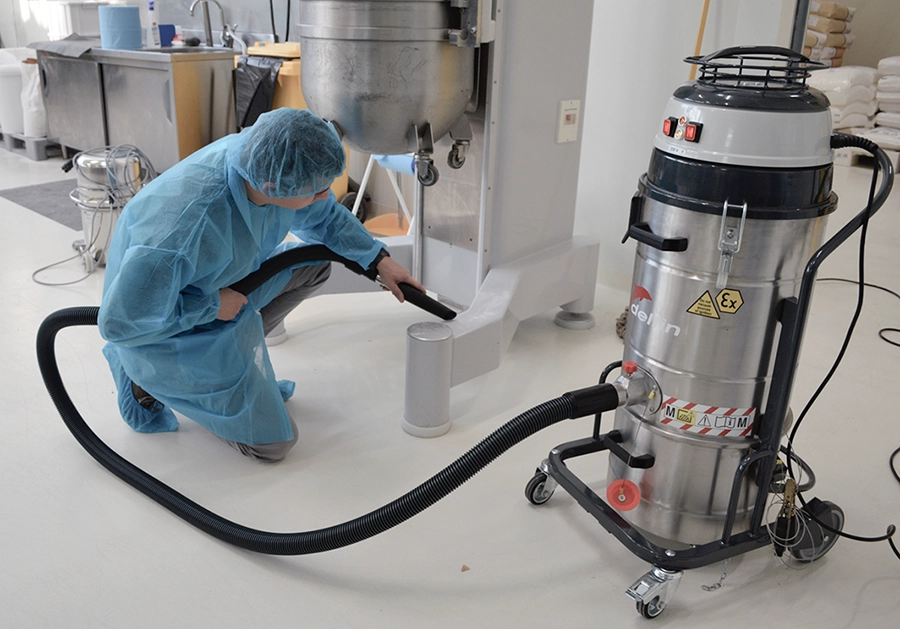
The invisible weakest link
Why a conductive or antistatic hose isn't sufficient on its own — and what grounding means for the complete system.
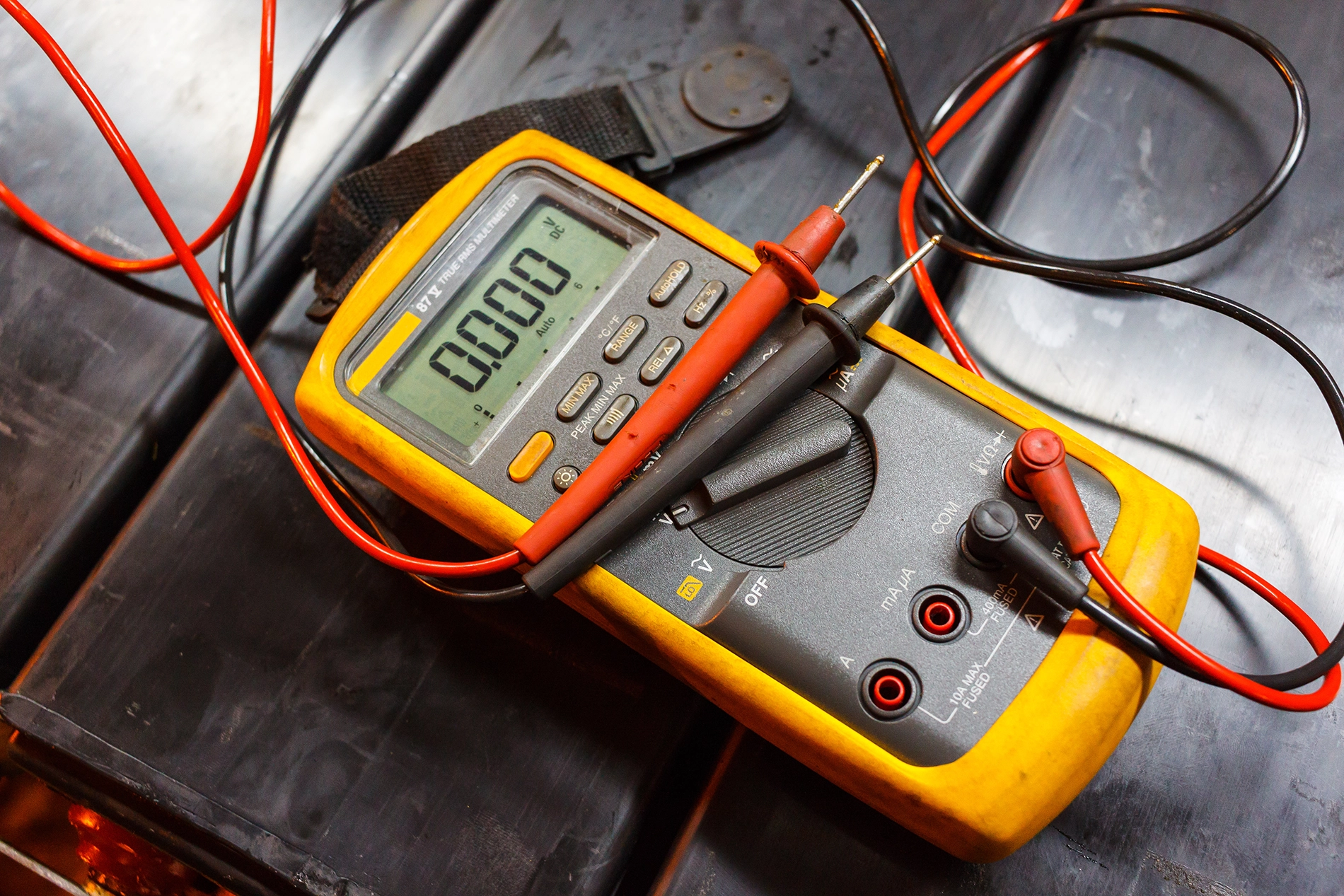
Know your ohm
The difference between antistatic and conductive, which resistance limits apply where, and how to measure them correctly.
Industries that use it
The NEO 390 and SIL 391 series are high-temperature hoses for hot-air and cooling applications. NEO in neoprene (up to 150 C), SIL in silicone (up to 280 C).
Hot-air drying is one of the most temperature-exposed applications in industry. Granulate drying before injection moulding requires 100-150 C air, while certain high-temperature processes require 200-280 C. NEO and SIL cover the entire spectrum.
Neoprene's elastic properties are retained up to 150 C - above that level the material begins to harden. Silicone retains elasticity all the way up to 280 C, making it the preferred material in pharma and clean rooms.
The ONE variants are single-layered and lighter; the TWO variants are double-layered with increased pressure and abrasion resistance. Choose variant according to the actual mechanical load in the application.
Custom lengths and assemblies
The hose can be delivered cut to desired lengths. The standard roll lengths can be supplemented with shorter pieces or continuous rolls by arrangement.
At Particulair we are happy to advise on couplings and sizing. Send us your application sketch and we will assess the right variant.


Frequently asked questions
What is the difference between NEO and SIL?
NEO 390 is a neoprene hose (CR rubber), suitable for 150 C. SIL 391 is silicone, suitable for 280 C. Choose by the highest temperature the hose will encounter - silicone gives twice the temperature capacity but is more expensive.
What do ONE and TWO mean?
ONE = single-layered construction, lighter and more flexible. TWO = double-layered construction, higher pressure and abrasion resistance. Choose ONE for normal hot-air applications, TWO for demanding industrial or high-pressure applications.
Can NEO/SIL be used for liquid transport?
Both series are primarily intended for gas/air. SIL can handle certain liquids if compatible (e.g. diluted soapy solutions). For continuous liquid transport, a specific liquid hose must be selected.
Which standards do NEO/SIL comply with?
Both series are constructed per EN ISO 1307 (rubber pressure hoses). SIL additionally has FDA 21 CFR 177 and EU 1935/2004 considered for food contact. NEO has TRGS 727 assessment for certain industrial applications.
Which couplings are recommended?
For high-temperature applications, metal couplings (stainless steel or brass) are recommended - plastic couplings can melt at temperatures near the hose's upper limit. Stainless steel worm-drive clamps are a common choice.
How long does NEO/SIL last?
Service life depends on temperature load. With continuous operation near the upper temperature limit (150 C for NEO, 280 C for SIL), 2-5 years service life is typical. At mild temperatures (below half the limit) the hose can last 10-15 years.
Is silicone food-grade?
The SIL 391 series has components meeting FDA 21 CFR 177 and EU 1935/2004 for food contact. Specific approval for the individual product is shown on the factsheet. The NEO 390 series is NOT food-grade.
Can the hose be delivered in other lengths?
Yes - the standard roll lengths can be supplemented with shorter pieces or continuous rolls by arrangement. We advise on compatible couplings for hot-air applications.