
When the vacuum becomes a barrier
In a standard industrial environment, the vacuum cleaner has a simple job: remove dust from surfaces, floors and air, and do it efficiently. But in OEB-classified facilities, it is precisely the invisible that makes the difference. Here it is not about how clean things look — it is about how little escapes into the room and out of the room. This is a critical area that deserves careful attention.
In clinical environments, the dust is often the most potent material present. It may consist of microscopic quantities of active pharmaceutical ingredients (APIs) that can affect biological systems even at nanogram doses. The vacuum cleaner therefore becomes not merely part of the cleaning process, but part of the barrier. Part of the safety system. A moat designed not to keep the enemy out — but in.
This also means that traditional solutions are not sufficient. A HEPA filter may be necessary, but not enough. A sealed container can reduce the risk, but not eliminate it. What matters is the whole picture: exposure scenarios, pressure differentials, material compatibility, and above all how the operator interacts with the equipment. A single wrong movement — one unintended vacuum drop, one open bag, one leak, one loose hose connection — can be enough to break the barrier. And that is only while the vacuum is in use. What about transport in and out of the laboratory? What about the particles it may carry — or leave behind?
A vacuum cleaner for OEB environments therefore requires more than good filtration. It requires insight. Documentation. Design choices that actively reduce the risk of exposure before, during and after use. And perhaps most importantly: an understanding of what is at stake. Not just removing dust, but defending a boundary. A boundary between safety and spread, between control and the unknown.
What is OEB – and why are there no rules?
Let us start by looking at the threat that requires a barrier.
There are substances where even one millionth of a gram can make a difference. A single grain of sugar dispersed across a classroom — that could already be too much. That is the kind of substance the OEB system addresses.
OEB stands for Occupational Exposure Band and is used to assess how little of a substance it takes before it becomes a health hazard. The higher the OEB level, the lower the exposure limit, and the stricter the requirements for equipment, work practices and controls. The system typically spans OEB 1 to OEB 5, where the highest level covers substances that can be hazardous at concentrations below one microgram per cubic metre of air — and for the most potent substances, down into the nanogram range. That is the equivalent of dividing a grain of sugar into more than a billion pieces, and still not being allowed to inhale a single one.
And yet there is no technical standard, no regulatory requirement, no official classification. OEB is not mentioned in any legislation, not codified in any ISO or EN standard. It is an industry-created assessment tool, developed by companies that needed to manage risk from highly potent compounds long before regulators were ready with requirements. It is striking to consider that something so potent and so dangerous is still handled without binding common rules.
OEB is therefore entirely dependent on professional expertise — experience, judgement and deep knowledge of both the substance and the process. There are no standardised checklists. No definitive answers. It is up to the individual company, EHSQ, adviser or operator to assess how hazardous a substance is, how low exposure must be, and what technical and organisational measures are necessary.
In practice there are strong guidelines that the industry uses. Although OEB banding is not regulated by law, related requirements are enforced through GMP and occupational health (OEL/BLV). OEB banding and equipment requirements are defined internally through risk assessments and guidance documents — such as ISPE/SMEPAC — and should be documented and followed up in practice. The most widely used guidance comes from ISPE — the International Society for Pharmaceutical Engineering — whose Baseline Guides and Good Practice Guides describe how to structure OEB assessments, establish barrier requirements and document technical solutions. ISPE functions in practice as a professional authority with more than 22,000 members globally.[1]
The OEB framework is also reflected in EU regulation, even if the term is not used directly. EMA's EU GMP Annex 1 (2022) and GMP chapters 3 and 5 set detailed requirements for risk assessment, air control, cleanability and prevention of cross-contamination — precisely the mechanisms that OEB addresses in practice. OEB thus becomes a silent bridge between GMP, occupational health and technical containment.[2]
But even where everything is well-intentioned and structured, reality can break through. A study in Nature Communications (2024) examines the challenges of translating biological containment from laboratory results to real-world implementation and concludes that the gap remains large — even with the most advanced mechanisms.[3] The idea is simple enough: the organism is designed to die if it escapes its controlled environment. But in practice, mutations, unexpected cross-reactions or small environmental changes gradually undermine the safety system. Even the most advanced kill-switch mechanisms prove difficult to translate from controlled test conditions to unpredictable reality.
This is a reminder. That technical protection is never enough on its own. That anything that can fail will fail, if no one notices in time. And that even the simplest piece of equipment — a vacuum cleaner — can become a link in a chain where the consequences are not known until it is too late.
OEB is therefore not just a number. It is a responsibility. A set of choices. A recognition that control does not begin with paperwork, but with people. And that what we do in practice matters more than what we promise in theory.
The OEB scale at a glance
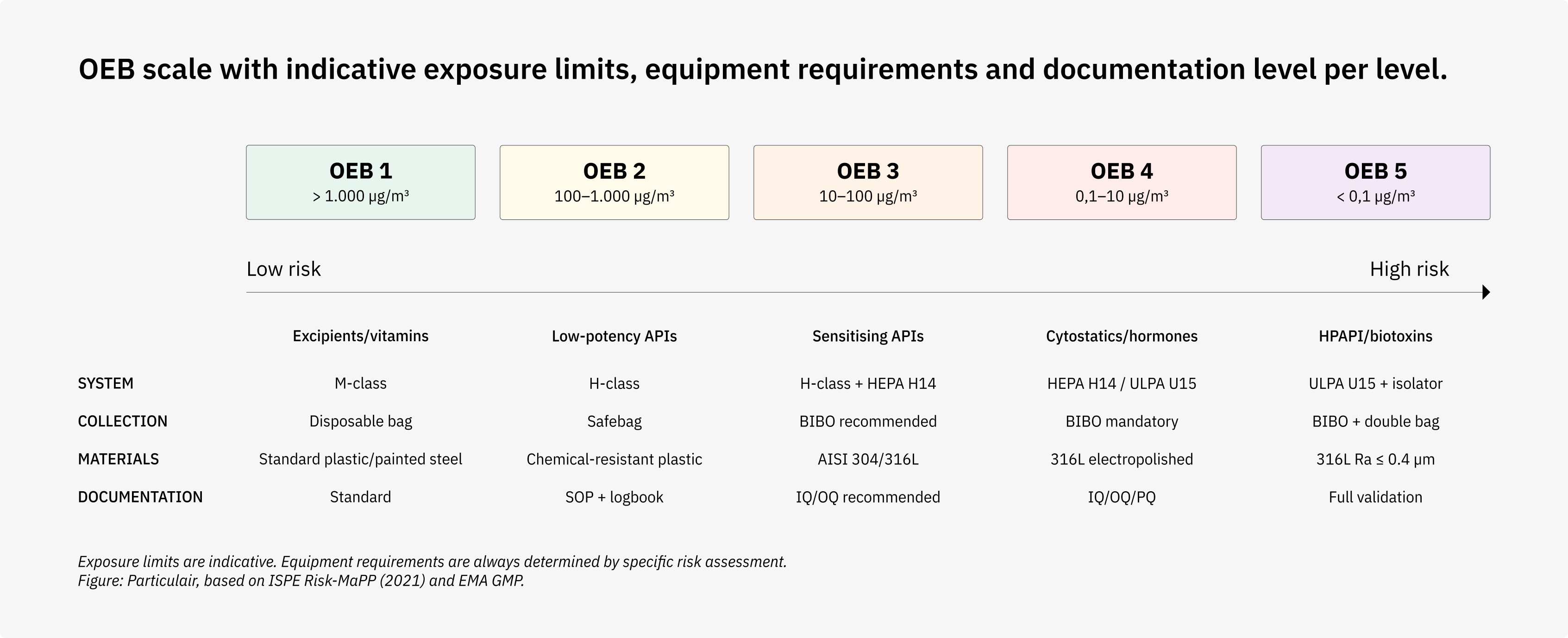
Why OEB matters for vacuum cleaners
We began by describing the vacuum cleaner as a cleaning tool. Something that removes dust and keeps surfaces clean. But when we step into an OEB environment, this changes fundamentally. The vacuum is not something brought in at the end. It is often the first and most direct line of defence against exposure. When spills, settling, or expected or accidental leaks occur, the vacuum is called upon. At that moment it is no longer peripheral equipment — it is a central part of the protection.
If the vacuum is not designed for the purpose, it can in the worst case do more harm than good. It can release particles, create turbulence or disturb pressure conditions in the room. It may be equipped with filters, hoses and joints that are not sufficiently tight, or that cannot be properly decontaminated. In some cases it can even become an ignition source leading to an explosion if the collected material is also flammable — and then the absence of an ATEX assessment becomes a real risk, overlooked in the shadow of OEB focus.
The vacuum in OEB facilities must therefore be evaluated as an integrated part of the overall protection system. Not just based on technical specifications like HEPA classes or filter data, but based on how it is used, maintained, cleaned and documented. A good vacuum in this environment is not just a powerful tool, but a controllable and validatable component in a larger system.
It is rarely one major failure that creates problems. It is the accumulation of small uncertainties: a hose reused one time too many. A nozzle that cannot be autoclaved. Documentation that is never followed up. A vacuum that causes particles to drift outward instead of inward. In an OEB 3, 4 or 5 environment, these kinds of margins can be enough to put both product and personnel at risk.
It may seem extreme from the outside that some facilities discard a brand-new hose after a single use. But if what is inside the hose is an active substance that can mutate, spread or survive unintentionally, it is no longer a vacuum hose. It is a potential source of risk. The vacuum must therefore be regarded not just as technology, but as trust.
Requirements for vacuums in OEB environments
As described, there is currently no legal standard defining how a vacuum cleaner for OEB environments must be constructed. No official requirement for how a filter must be changed, how a container must be emptied, or how a hose must be stored before disposal. It is left to the individual company, adviser or operator to assess what is safe enough and when a risk is sufficiently reduced.
In the absence of fixed requirements, we see solutions that attempt to go further than filtration alone:
- Filters in sealed filter modules that can be replaced without direct contact with the collected material
- Containers that are filled and disposed of without being opened
- Endless bag systems that seal the material in one long closed loop
- BO and BIBO systems where the entire unit is handled as controlled waste
- Integrated vacuum chambers or inerting units where the dust is encapsulated in liquid or neutralised with nitrogen during collection
All these solutions share one goal: the dust must never return to circulation. Not on surfaces, not in airways — not back into the laboratory itself.
Equipment design requirements also apply: smooth surfaces, no blind pockets, no joints where residues can hide. Materials that can withstand steam, alcohol, peroxide or autoclaving — and in many cases designed so that decontamination can occur without manual contact. In practice, standards such as ISO 10648-2 and ISPE's SMEPAC methodology require containment verification and leak testing, and in GMP-regulated environments, documentation of filter integrity and system tightness is expected. But these requirements are not always consistently implemented at installation and commissioning. What works on paper is not necessarily what works in practice.
Mobile or stationary – and where should it be placed?
Before selecting equipment, a question should be asked that is rarely raised early enough: should the vacuum be moved around the facility, or should it remain fixed? And if stationary — should it be placed inside the OEB facility, or outside, for example in a separate utility room, basement or service corridor? This is not a logistical question. It is a safety question.
Mobile units – flexibility with a safety requirement
A mobile vacuum is a common solution in OEB facilities. It can be moved to where it is needed and requires no fixed installation. It is the solution that best matches the reality most operators work in: one room, one task, one unit.
But mobility is not free. A vacuum moved between zones potentially transports contamination with it. Wheels, hoses and the exterior of the cabinet may have adsorbed particles from the zone it came from. If used in an OEB 4 area and then rolled into a cleanroom or OEB 3 area, it carries its history with it. This requires clear procedures for decontaminating the exterior before the unit may cross a zone boundary — and it requires that these procedures are actually followed, not just described.
There is also a validation consequence. A mobile unit is not always used in the same place, under the same conditions, by the same operator. This makes it harder to document consistent performance and harder to validate at a specific installation point. An OQ protocol can be tested at installation, but what does it mean when the machine has been transported, tilted, dropped or stored in a different temperature environment? Leak testing and functional checks should therefore not only occur at commissioning, but on an ongoing basis — and at minimum after every move to a new zone.
Stationary systems – two fundamentally different approaches
When selecting a stationary system, a fundamental choice arises: should the vacuum unit itself be placed inside the OEB facility, or outside?
Inside the OEB facility: Hoses are short, pressure drop is low and the operator has direct access to the equipment. Service and filter changes occur where the machine is used. The disadvantage is that the service operation — filter change, emptying, maintenance — now occurs in the contaminated zone. This requires full PPE corresponding to the zone's OEB classification, and the unit occupies space in an area that is typically costly and carefully planned.
Outside the OEB facility: The vacuum unit itself — motor, filter chamber and collection container — is placed in a utility room or machine room. Fixed pipe installations run into the OEB zone, where suction points are mounted in walls or floors. The operator simply connects a hose and uses the system. The advantage is significant: filter changes, emptying and service occur in an uncontaminated or lower-classified area. For facilities with high activity and many suction points, one centrally placed system can serve multiple rooms simultaneously. The price is system complexity. The pipe installation must be designed, validated and maintained as part of the containment concept. This decision must be made while the facility is still on the drawing board — not after the walls are cast.
Mobile units suit facilities with varying needs, campaign-based production, or where flexibility matters more than perfect zone control. Stationary systems with the unit outside the OEB facility typically offer the lowest exposure risk during service, and are easiest to integrate into a formalised risk strategy for higher OEB levels.
When is a vacuum suitable for OEB 3, 4 or 5?
The short answer is: it depends. Not only on the vacuum, but on the substance, the process and the required level of protection — during use, cleaning and disposal. Suitability does not arise in a vacuum. It depends on context, and on how one documents and controls that the equipment performs in practice.
There is no legal standard that defines when something is suitable for OEB 3, 4 or 5. This is left to professional judgement. And here it is crucial who makes the assessment, and how.
At the lower end of the scale — OEB 1 and 2 — an H-class industrial vacuum is often sufficient, provided that filtration, tightness and cleaning procedures are in order. It is about good practice: correct HEPA filter, controlled emptying and a fixed maintenance schedule. Not trivial, but manageable.
At OEB 3 the picture changes. Here we are dealing with substances that can have an effect at very small doses, and where brief exposure may be unacceptable. It is no longer sufficient for the vacuum to be classified as H-class. It must be built and documented for use in GMP environments and be capable of participating in validation and risk assessment procedures.
But technical suitability is not enough in itself. The vacuum does not exist in a sterile test environment. It is used, moved, cleaned and operated by people in a living environment. Local or company-based rules for on-site control must therefore be established: leak testing after transport, particle counting after filter changes, weight checks of collection bags, or visual inspection before and after use. Without fixed control routines, even a well-designed setup depends on luck.
At OEB 4 and 5 requirements become so stringent that a standalone vacuum is rarely sufficient. It is the complete system that must be assessed: how collection, handling and disposal occur under fully controlled conditions. This may involve solutions where the vacuum is built into an isolator — a sealed chamber where the operator works via gloves without direct contact with the material. Or systems with automatic inerting, where the hazardous dust is neutralised with liquid or nitrogen during collection. But still without any binding standard or official benchmark.
And then there is the question of responsibility. When no legal standard defines what is "suitable", the assessment becomes ultimately subjective. Who is liable if the assessment turns out to be wrong? In the absence of binding requirements, responsibility becomes a grey area. One must therefore not just ask whether the equipment fits OEB 3, 4 or 5, but whether one is capable of making that assessment — and accepting the consequences.
Who sits at the table?
In practice, the purchase and approval of vacuums for OEB environments is rarely a single person's decision. A typical pharma approval process involves four functions with independent requirements:
- QA sets requirements for documentation, traceability and GMP compliance.
- EHS assesses exposure risk and occupational health.
- Maintenance must accept serviceability and access to spare parts.
- Validation defines the framework for IQ/OQ/PQ and approves the equipment as formally ready for use.
The supplier who understands these four axes, and can document their equipment against all of them, has significantly better chances of clearing the approval process than one who merely delivers a good technical specification.
Our recommendation: what requirements should a vacuum meet at each OEB level?
Drawing on ISPE recommendations, EMA GMP guidelines and practical experience from pharma and biotech projects, Particulair has developed a professional overview of the technical requirements to expect when using vacuum cleaners in environments with OEB-classified substances.
There is no single definitive prescription, and no legislation that precisely defines the requirements. That is precisely why it is important to create transparency about what should be considered at each level — covering filtration, emptying, decontamination, documentation and maintenance, and how the equipment is tested and controlled.
Our overview is not a definitive checklist — and for good reason. Because every pharmaceutical company operates from its own internal guidelines, risk assessments and SOPs, it is essential that these are communicated to the equipment manufacturer early in the process. The right solution does not arise when a manufacturer delivers a standard product and the user adapts. It arises in the interaction where the company's requirements meet the manufacturer's knowledge of what can technically be documented and validated. Use our overview as a starting point for dialogue, not as a substitute for it.
An important distinction: filter element vs. system
When discussing filtration in vacuums for hazardous dust, two standards are encountered that classify two different things. It is important to keep them separate.
EN 1822 classifies filter elements. This is the standard behind the designations H13, H14 and U15, and it describes how effectively a given filter medium retains particles under standardised laboratory test conditions. An H14 filter element, for example, retains 99.995% of particles at the most penetrating particle size.[4]
EN 60335-2-69 classifies the vacuum as a system. This is the origin of the M-class and H-class designations, and it sets requirements for the entire construction: motor, hose, joints, container and filter considered as a whole.[5]
The distinction is crucial in practice: a vacuum system with an H14 filter module is not automatically an H-class system. The weakest link is rarely the filter medium. It is most often the hose connections, joints, the materials the vacuum is made from, and for example the container seal.
A leaking vacuum with an H14 filter is not a safe vacuum; it is merely a leaking vacuum with an expensive filter.
The same applies to material choice. A vacuum made of plastic raises questions that should be answered. Can the material withstand the cleaning agents used in your environment? Alcohol, peroxide and aldehyde-based disinfectants attack many standard plastics over time, making surfaces porous, weakening joints and causing cabinets to deform. A deformed locking mechanism is a potential leak. And a microporous surface can accumulate residues that cannot be cleaned away regardless of the protocol followed.
There is also an overlooked risk: heat. The HEPA filter is often positioned immediately after the motor, the hottest point in the vacuum. If the filter frame is made of thermoplastic material, even the heat generated during normal operation can minimally deform the frame over time. A minimal deformation at the filter edge is enough to create a bypass — a channel where air finds its way around the filter. The filter itself is intact. Its effectiveness is not. The same applies to containers sent through the autoclave at 121–134°C. Only a leak test will reveal the problem.
PEEK and PVDF are both chemical-resistant and thermally stable and are used in equipment for OEB 4 and 5. ABS and PVC are not, and the difference is not always visible at first glance. Always ask: Which plastic material — and what has it been tested against?
For procurement and qualification staff in the pharma sector, the implication is clear: request documentation for the system class under EN 60335-2-69, not just for the filter element class under EN 1822. And ask questions about the materials, not just the filter.
OEB 1 – When good industrial practice is enough
OEB 1 — > 1,000 µg/m³
If you are working with dry, dusty products that are not hazardous to health in the quantities you handle, you are most likely in an OEB 1 environment. This is the lowest protection level in the OEB scale and is typically applied to excipients, probiotic bacteria, certain vitamins and technical additives considered largely harmless under normal industrial contact.
OEB 1 is found in productions involving tablet fillers, sugar and starch transfer, or collection of harmless powder residues in food or technical environments. No advanced barriers or closed systems are required, but equipment must still be functional, easy to clean and suited to dry particles.
Surfaces and materials
At OEB 1 level, it is sufficient that equipment can be cleaned with water and mild detergents. Surfaces may be lacquered steel, ABS plastic, PVC or powder-coated metal. Stainless steel is not required but may be chosen for durability. Autoclaving and chemical sterilisation are not necessary.
Collection
Dust can be collected in disposable bags of paper or synthetic material, or in a removable container with a lid. Collection components may be reused as long as cleaning follows the company's standard procedures. No requirements for sealed collection, contamination containment or dust-tight sealing.
Filtration
No advanced filtration is required at OEB 1. A fabric or polyester main filter is normally sufficient to retain visible dust. A HEPA filter is not necessary but may be considered if the material produces fine airborne dust. ULPA filtration is not relevant at this level. An M-class vacuum under EN 60335-2-69 will in most OEB 1 situations be fully adequate.
Accessories and hoses
Accessories such as hoses, tubes and nozzles may be reused and only need to be cleaned by wiping or ordinary washing. No requirements for autoclavable or specially labelled components. Hoses may be smooth or spiral-reinforced as long as they are intact and airtight.
Service and documentation
No requirements for validation, particle leak testing or logbook entries. Filter changes and cleaning are carried out as needed or as specified by the manufacturer. Maintenance can follow standard procedures and does not require external service or inspection.
Summary
OEB 1 does not require specialist equipment. A vacuum at this level must be easy to clean, functional and capable of filtering ordinary dust. Good industrial practice is the key principle, and equipment choice should match the task — without over-engineering, but without underestimating the need for reliability either.
OEB 2 – When standard equipment is no longer enough
OEB 2 — 100–1,000 µg/m³
At OEB 2 we move into a level where standard solutions are no longer adequate. The substances handled here are not necessarily directly hazardous at brief contact, but can pose a health risk through prolonged or repeated exposure. This may include excipients with biological activity, certain plant extracts, mildly sensitising substances or older APIs with low potency but unknown long-term effects.
Typical work situations:
- Filling and blending dry powder mixtures with mild pharmaceutical activity
- Cleaning in production zones with low-activity residual dust
- Handling of unclassified but precautionary substances
- Collection in areas at risk of cross-contamination where multiple substances are used
Equipment here must do more than remove visible dust. It must actively limit the risk of fine particles escaping into the surroundings during both use and maintenance.
Surfaces and materials
Stainless steel is not required, but surfaces must be able to withstand cleaning with disinfectants. Lacquered steel is typically sufficient at this level. Plastics may be used, but the choice of plastic type matters. ABS and PVC are attacked by alcohol-based cleaning agents over time and can become porous or deform, compromising both cleanability and tightness. If plastic is chosen, compatibility with the disinfectants used in the facility should be documented. All components must be free of open joints and easy to wipe down.
Collection: bag or container?
Dust must be collected safely and transported without spreading. Disposable bags should be robust and tear-resistant, and when removed must be fully sealable — for example with an integrated closure, strips or tape. Containers must have a tight-fitting lid so they can be removed from the vacuum without leaking, which is particularly important when transporting through shared areas. Sealed collection should be considered if the machine is located in an area at risk of cross-contamination.
Filtration
Filtration must retain fine particles effectively, even at high airflow. A typical configuration would be a polyester main filter, optionally PTFE-laminated, followed by a HEPA filter module as the final filter before exhaust. H14 is recommended as the filter element at OEB 2, but the element class is only meaningful if it sits in a tight construction. The vacuum should comply with H-class requirements under EN 60335-2-69, not merely have an H14 module fitted. The filter must be changeable without dust release, for example via a sealed filter module or sealing bag.
Accessories and hoses
Standard accessories in plastic or stainless steel may be used, but cleaning and maintenance requirements apply. Hoses should have a smooth inner surface to prevent dust accumulation. PUR hoses with spiral reinforcement are a common choice. Nozzles and tubes may be reused but must be cleaned regularly. If contamination is suspected, they must be replaced or decontaminated in accordance with the company's SOP.
Service and control
Servicing now plays a more decisive role in safety. Filter replacement intervals are determined through risk assessment and supplier data — pressure drop, usage profile and substance properties — and documented in an SOP. Visual inspection should be supplemented with a logbook so changes and maintenance can be documented. Leak testing and particle control are not legally required but can usefully be carried out once a year, particularly if the machine is used in areas where product safety is at stake.
Cleaning and hygiene
The machine does not need to be sterile, but must be kept clean and free of residual dust. All surfaces should be wipeable with disinfectant without sustaining damage, and containers and accessories should be emptied and cleaned without specialist tools.
There is a dilemma here that is easier to overlook than to resolve. An egg is by nature an almost perfect surface: no joints, no crevices, nowhere for dust to hide. But a vacuum cleaner is not an egg. It must be disassembled, serviced and reassembled, and every joint, seal, coupling and locking mechanism that makes this possible is simultaneously a potential hiding place for residual dust. What makes cleaning possible is precisely what makes cleaning difficult.
In practice this is seen in hose couplings with internal threads, filter cabinet lids with seal grooves, wheel mounts with gaps that cannot be reached with a cloth, and buttons and handles with clearances to the cabinet. None of these are construction defects. They are necessary compromises. But they must be identified, described and addressed in the cleaning procedure. Ask the manufacturer: which parts cannot be cleaned without disassembly? Which surfaces are not accessible with standard wiping? And has the cleaning procedure been validated under realistic conditions, or merely described on paper?
Overall assessment
OEB 2 does not require cleanroom-grade equipment, but it does require careful thought. It is not enough that the vacuum works. It must also be constructed so that dust does not return to the environment during maintenance. If the next step in your setup involves a more critical API or a tighter zone, OEB 2 is where planning ahead should begin.
OEB 3 – When exposure requires control
OEB 3 — 10–100 µg/m³
At OEB 3 the substances handled carry a real risk of harmful effects if the operator is exposed repeatedly or even in small quantities. This is where we firmly enter the territory of controlled handling. The substances may be sensitising, endocrine-disrupting, mildly cytotoxic or immunologically active, and are often used in prescription medicines or in research and development.
Typical work situations in OEB 3 facilities:
- Weighing and pre-mixing APIs with low to moderate toxicity
- Cleaning after campaigns with bioactive compounds
- Collection of residual dust from pilot plants or laboratories
- Process cleaning in areas with potentially cross-contaminating substances
Fully closed equipment is still not required, but safety measures must be clear, documentable and effective.
Surfaces and materials
At OEB 3, stainless steel should be the minimum choice for load-bearing parts, preferably AISI 304 or AISI 316L depending on the aggressiveness of cleaning agents used. Surfaces must be smooth and resistant to alcohol-based disinfectants and aqueous cleaning. A surface finish of Ra ≤ 0.8 µm in areas with direct contact is typically applied in the industry, drawing on GMP practice for process equipment (cf. ASME BPE) — not a codified standard specifically for vacuums, but a recognised indicative value. Autoclaving is still not required but should be considered for accessories and hoses.
Collection
Collection in sealed containers or sealed bags should be standard. Bags should be multi-layer and sealable without tape or external means, for example via an integrated seal or zip closure. Containers should be designed so they do not require lifting or rotation to remove. Using BIBO collection, containment containers or disposable modules that can be transported to waste without further exposure is recommended.
Filtration
Filtration is now a critical control point, not just during operation but also during maintenance. The main filter should be PTFE-laminated polyester or equivalent high-efficiency material. HEPA H14 is typically used and positioned on the exhaust, but the choice and placement should be determined by risk assessment, process requirements and SMEPAC/containment targets. The filter module must be sealed so it can be removed without dust release. A filter after the motor is recommended to capture particles from carbon brushes — or better still, use brushless motors. ULPA may be relevant at OEB 4–5 but is not a direct requirement at OEB 3.
Accessories and hoses
Reuse is still possible — but under certain conditions. Hoses should have a smooth inner surface (PUR or antistatic rubber). Avoid profiled spiral hoses with a coarse internal structure unless discarded after each batch. Accessories should either be cleanable with alcohol-based agents or autoclavable (EPDM, stainless steel or food-grade silicone). Everything used at OEB 3 should be labelled or colour-coded and dedicated — never used across areas.
Service and control
At OEB 3, service is an active part of the safety concept. Filter replacement is documented and determined through risk assessment and supplier data (e.g. pressure drop, leak risk and usage pattern) and described in an SOP. Leak testing is recommended at least once a year. Particle measurement can be used to validate filtration at critical applications. A logbook of service, filter changes and any alarms should be maintained for at least one year.
Cleaning and hygiene
The vacuum must be constructed so it can be cleaned effectively, including internally where necessary. Surfaces must withstand alcohol or aldehyde-based disinfectants. Containers and hoses should be emptied without opening in the free zone. Accessories must be demountable without tools. Wheels and corners must not accumulate residues, and rubber parts must not become porous.
Overall assessment
At OEB 3, thinking in terms of suction power and function is no longer enough. Barriers, cleaning and handling must be central. The vacuum begins to function as part of your safety equipment, alongside gloves and masks. It must not leak, and it must not become a source of spreading the very substance it was meant to collect. This is also where SOPs, testing programmes and formalised procedures should begin to be considered. A good vacuum can protect your employees — but only if used correctly and maintained properly.
Unsure which OEB level your environment belongs to?
At Particulair we help define, verify and document what "safe vacuuming" actually means in practice for your specific environment — whether you are at OEB 1 or OEB 5.
Contact us for adviceOEB 4 – When even small quantities require maximum control
OEB 4 — 0.1–10 µg/m³
OEB 4 covers substances that can be harmful to health even at very low exposure levels. This includes hormone-active compounds, strongly sensitising substances, antiviral drugs, cytotoxic compounds and certain biotherapeutic preparations. It is not enough that the vacuum does not release dust during use. It must also not release dust during filter changes, transport or service.
Typical OEB 4 facilities:
- Cleaning and collection after campaigns with highly potent APIs (HPAPI)
- Maintenance in isolator-adjacent zones
- Pharmaceutical development and manufacturing in GMP Grade C/B areas
- Research with new, biologically active compounds without a known OEL
There is still no official OEB standard, but the requirements for technical and organisational control are high, and equipment is regarded as part of operator protection.
Surfaces and materials
All load-bearing and visible surfaces should be AISI 316L stainless steel. A surface finish of Ra ≤ 0.6 µm and electropolished surface is the industry's typical indicative requirement at this level, drawing on GMP practice for product contact surfaces. The construction must be completely sealed, without gaps or dead corners. Plastic parts may only be used if autoclavable or antistatic — typically EPDM or PEEK. Wheels, handles and joints must be smooth, tight and easy to clean. In short, equipment must be suited to systematic cleaning and documented disinfection.
Collection
Collection must occur in a sealed unit, typically a bag-in/bag-out bag or a sealable containment container. Containers must be closeable without lifting, rotating or manually emptying. The bag or container must be removable without opening the unit, for example via an integrated closing and carrying system. Waste handling is an overlooked risk factor where many exposures occur. Downstream containment — protection against exposure when discarding filters and dust — should be a fixed item in procedures and risk assessments.
Filtration
At OEB 4, filtration must be documentable and validatable. The main filter must be PTFE-laminated and replaceable without dust loss. HEPA H14 is commonly used, but the final filter choice and test basis are determined by risk assessment and documented, typically with reference to EN 1822/ISO 29463. ULPA U15 is used when the risk assessment indicates it (e.g. very fine particles/HPAPI). For U15, EN 1822-1 requires a mandatory scan test (PAO/DOP method) to verify filter integrity. The oil thread test, which is alternatively permitted for H13 and H14, is not acceptable for U15 and above — this is a specific requirement in EN 1822-1 with direct consequences for what you can accept as documentation in an OQ protocol.[4]
Accessories and hoses
Reuse is only acceptable if accessories can be sterilised. Hoses must have a smooth inner surface in EPDM, FDA-approved silicone or electropolished stainless steel. Nozzles must be autoclavable or decontaminable by a validated method. All equipment, including wheels and seals, should be chemically resistant and documented as cleanable. Accessories must be labelled or colour-coded and dedicated — never used across zones. In some cases, single-use equipment is required, particularly in closed barrier environments.
Service and control
Service is part of risk management and must follow a validated plan. A logbook of filter changes, leak tests and cleaning must be maintained. Annual leak testing (pressure/vacuum test) must be carried out. Particle measurement is recommended quarterly or after major service. Filter integrity testing (DOP/PAO) must be carried out at filter changes. When introducing the unit to a new zone, it should be validated on site, for example via wipe test or aerosol control.
IQ, OQ and PQ – formal equipment qualification
When the vacuum must be formally qualified as GMP equipment, a structured qualification programme is typically required: IQ (Installation Qualification) documents that the equipment is correctly installed. OQ (Operational Qualification) verifies that it functions as intended under defined operating conditions, including tightness, filtration and alarms. PQ (Performance Qualification) confirms that it delivers the required performance under realistic production conditions over time. IQ/OQ/PQ is a standard requirement under EU GMP Annex 15 for process equipment, and the QA function will typically require completed and approved qualification before the equipment enters routine use.[6]
Cleaning and hygiene
Equipment must be capable of participating in a validated cleaning protocol. Surfaces must withstand alcohol, hydrogen peroxide, aldehydes and chlorine compounds. All contact surfaces must be smooth and free of hidden cavities. Accessories and hoses must be cleaned or destroyed after use, depending on the protocol. The machine should be demountable without tools, and all openings must be disinfectable. When in doubt, decontamination should take priority over cleaning alone.
Overall assessment
At OEB 4 it is no longer sufficient for equipment to work well. It must be safe, demonstrably safe and easy to keep safe. The vacuum is no longer cleaning equipment but part of the active contamination control system. Its function must be documented. Its weaknesses must be known. And its use must be managed. At Particulair we are happy to help define, verify and document what "safe vacuuming" actually means in practice.
OEB 5 – When equipment becomes a barrier between life and risk
OEB 5 — < 0.1 µg/m³
OEB 5 covers substances where even nanogram levels can pose a significant health risk upon unintended exposure. The OEL is typically below 0.1 to 1 µg/m³, and for the most potent compounds even lower. This includes cytostatics, certain hormones, biotoxins, advanced biotherapeutic compounds and highly mutagenic substances. This is typically found in pharmaceutical production of highly potent APIs (HPAPI) and in clinical development facilities where both personnel safety and environmental protection depend on equipment performance.
Typical environments:
- Production in closed systems (isolators or barriers)
- Clean-up and handling of cytotoxic or biologically active materials
- Research centres with unclassified but highly potent substances
- Facilities operating under GMP Annex 1 or ISPE OSD Control Strategy
Surfaces and materials
All equipment must be designed for high-level decontamination and capable of withstanding validated cleaning procedures. Construction in AISI 316L stainless steel with electropolished surface. Ra ≤ 0.4 µm is typically used as an indicative requirement at OEB 5 level, inspired by GMP practice for high-potency product contact surfaces, but is not codified in a single standard for vacuum cleaners. Absolutely no joints, screws or seams in exposed areas. Plastic parts must be autoclavable, antistatic and chemically resistant (e.g. PEEK, PVDF). No porous materials anywhere, including seals, wheels or fittings. Everything must be validated for use in contaminated environments and capable of being decontaminated to a defined endpoint.
Collection
There must be no risk of exposure during collection, transport, service or waste handling. Sealed, integrated collection system (BIBO, double bag or vacuum transfer). Single-use collection in sealed multi-layer bags with integrated sealing mechanism. Automatic bag sealing upon removal. Containers must be pressure-tight, replaceable without opening and with the option of double packaging. Active transfer systems are often used, where waste is transferred directly to a controlled waste system without exposure.
Filtration
The filtration system is one of the most important safety functions and must be documentable with high precision. Exhaust is typically filtered with ULPA U15. Efficiency is documented under EN 1822 or ISO 29463-5 (MPPS), and integrity verified with PAO/DOP testing under IEST-RP-CC034.[7] HEPA H14 as pre-filter or in redundancy. Filter modules must be encapsulated and sealed with BIBO change capability. Individual laser testing and aerosol testing of each filter is standard. Motor exhaust must pass through filter stages to remove carbon and particle residues. Filter integrity is documented continuously, at commissioning, during service and at filter changes.
Accessories and hoses
All accessories must either be sterilisable or safely disposable. Hoses in FDA-approved silicone, EPDM or electropolished stainless steel. Nozzles, extensions and couplings must be autoclavable or single-use. Hoses and accessories must be labelled, dedicated and validated. Single-use components must be packaged, handled and disposed of according to local procedure. In practice, dedicated accessory kits for one campaign or batch are commonly used.
Service and documentation
Service of an OEB 5 unit requires procedures, documentation and certification. Leak testing and filter integrity testing (DOP/PAO) must occur at least once annually. A logbook with date, method, operator and result must be maintained. All equipment must be visually inspected, decontaminated and approved before use in a new batch. At filter changes, validated sealing technique (BIBO or isolator) must be used. All controls must be traceable and retained per SOP — typically 1–5 years or longer. Many companies require trained service personnel with documented competence in handling OEB equipment.
Cleaning and decontamination
Everything must be brought to a defined, validated status after use. Wet decontamination with a validated disinfectant (peroxide, aldehyde, etc.). The machine must be demountable without tools. Hoses, containers and filters must be decontaminatable before removal. If equipment cannot be safely decontaminated, it must be destroyed as contaminated waste. Some companies choose single-use or batch-dedicated equipment for high-risk products — there is good reason for this.
Conclusion
OEB 5 is not just a technical level, but a safety level where equipment replaces personal protective equipment and forms part of the company's risk management system. It is no longer about vacuuming, but about controlled handling of toxic waste in an environment where a single error can have serious consequences. When addressing OEB 5, we do not start with product selection. We start with questions: What is being handled? How does the work proceed? What procedures are defined? Only then do we select equipment that can document, maintain and uphold safety. There is no room for guesswork in OEB 5 — only for documentation, traceability and control.
Do you work with OEB 4 or OEB 5 substances?
At Particulair we do not start with product selection — we start with questions. What is being handled? How does the work proceed? What procedures are defined? Only then do we select equipment that can document, follow and uphold safety.
Ask an expertAccessories: the overlooked weak link
When assessing a vacuum for OEB use, attention naturally falls on the unit itself: motor, filter, container, construction materials. But it is the accessories — hoses, nozzles, extensions, couplings and adapters — that are most often the weak link in practice. This is where leaks occur. This is where cleaning protocols slip. And this is where suppliers struggle more than with the vacuum unit itself when it comes to documentation and quality.
Hoses must have a smooth inner surface and be free of porous materials that can accumulate substance. The coupling points — where the hose meets the vacuum and where the nozzle meets the hose — are where leaks most often appear during tightness testing. Nozzles and tube extensions must be made of materials that can withstand the decontamination specified for the relevant OEB level. And accessories must be labelled, dedicated and handled as an integrated part of the system — not as loose accompanying equipment.
Always ask: is the accessory specified and documented to the same level as the vacuum itself? Are material data sheets available? Is there performance data from accessories under realistic use? And is the accessory included in the overall system assessment under EN 60335-2-69, or tested separately as if it were only a component and not part of the barrier concept?
Summary
As the OEB levels illustrate, safety is not determined by a single parameter, but by the sum of many. Technical filtration is only one part. Operational behaviour, service routines and the barriers created during use and emptying are at least equally important. A system can be perfectly constructed but still fail if the operator creates a leak during filter replacement or approaches without correct PPE. Risk management must always be conceived as an interplay between equipment, training, control and routine.
There is also a risk of over-engineering. Requiring BIBO and double ULPA for OEB 2 substances can create a false sense of control while generating frustration among operators. Equipment should always match both the hazard of the substance and the realities of how it is used.
An often-overlooked approach is the platform concept: selecting one or two base platforms that, with different configurations, can cover multiple OEB levels across a facility. This simplifies operator training, reduces spare parts inventories and makes service and validation more consistent since IQ/OQ/PQ protocols can be reused with zone-relevant adaptations. Standardisation is not merely a logistical advantage, but a safety gain.
What should service and testing include for OEB vacuums?
When a vacuum is used for OEB-classified substances, it is not sufficient for it to technically meet requirements at delivery. It must be able to document its function and tightness over time. Service should not be a routine, but a validated control.
At higher OEB levels, on-site service should include:
- Filter integrity testing (DOP/PAO test) — Verifies that HEPA/ULPA filters still retain particles effectively. Carried out with an aerosol generator and photometer on site. Acceptance criteria are determined by filter class and risk assessment and must appear in the SOP.
- Leak testing and pressure testing — Checks whether the vacuum maintains negative pressure without leaks. Carried out with a vacuum gauge and optionally smoke.
- Visual leak detection — Use of particle smoke or UV-sensitive equipment to identify leaks around joints, lids and hoses.
- Wipe test (surface control) — Wiping of defined surface areas with a validated method, typically following NIOSH NMAM Surface Sampling Guidance[8] in combination with internal SOPs or ASTM D6661. Checks for residues of potent substances after use or filter changes.
- Functional check of key components — Inspection of seals, lids, bags, valves and automatic closing systems.
- Documentation — All tests and assessments should be recorded with date, method, batch number and signature, and retained as part of QA or EHS documentation.
These tests are not based on one unified OEB standard, but are drawn from other high-safety areas including GMP Annex 15, ISO 14644-3, EN 1822, EN 14042, and methods recommended by NASA, IEST and ISPE. The point is: without fixed rules, it is your responsibility to define how safety is controlled and documented. Without testing — no proof.
What does it mean in practice: Containment or OEB?
When faced with a specific substance and the need to select the right equipment, reading a brochure or looking at filtration class is not enough. One must understand which exposure level is acceptable and how to ensure it is not exceeded.
Some equipment manufacturers talk about containment. Others about OEB. In sales brochures these often sound like two words for the same thing. They are not. OEB describes how hazardous a substance is and how little is needed before it becomes a problem. Containment describes how one physically prevents the substance from escaping. One describes the need. The other describes the solution.
It is worth emphasising that cleanroom requirements (ISO 14644) and OEB requirements operate on two separate axes. An ISO 4 classified cleanroom sets strict requirements for particle counts in the air, but says nothing about how hazardous those particles are. A vacuum in an ISO 4 environment must be tight and particle-free enough not to impair the cleanroom classification, but need not necessarily be suitable for OEB 4 unless the substance also requires it. Conversely, a vacuum may be fully qualified for OEB 5 substances but unsuitable in an ISO 5 cleanroom because it generates vibrations, particles from wheels or pressure disturbances. When a facility is both cleanroom-classified and handles highly potent substances, equipment must satisfy both sets of requirements — and a product designed for one is not automatically suitable for the other.
There are no rules defining when a manufacturer can claim equipment is approved for a specific OEB level. At best, a manufacturer can declare that equipment retains particles according to a specific test and standard. Any such documentation should always be verified and tested on site when the equipment is implemented — preferably under a Site Acceptance Test (SAT).
When development outpaces regulation
It is not new for industry to take the lead. Pharmaceutical companies have long been accustomed to finding solutions before regulators formulate rules. But something has changed. The development of new active substances — particularly in biologics, ADCs and RNA-based compounds — is moving so fast that regulation cannot keep pace.
DrugBank 6.0 (2024) registers more than 4,500 FDA-approved drugs and more than 6,200 investigational compounds — and that is only the tip of the iceberg.[9] Beyond that come thousands of intermediates, in-house compounds and pre-clinical substances handled daily in laboratories and production facilities around the world, without ever appearing in a public database. For the vast majority of them, no official OEL value exists.
This is not because industry lacks tools. It is because the tools being used are neither uniform nor sufficient. Companies must apply alternative methods — tiered banding systems, internal risk assessments, read-across and qualitative schemes — to classify substances and equipment needs. This is practice-based, experience-driven and often both defensible and well-documented. But it is not uniform. And it is not legally anchored.
ISPE notes in their 2021 guidance that "no single unified system for assessment and limit-setting exists" and that companies must therefore choose and combine methods according to their own criteria.[10] This is a structural challenge: regulation works backwards, requiring data, time and documentation. Development works forwards, seeking effect, innovation and speed. Between the two, the user must make concrete decisions: What does the substance require? What does the room require? And what does responsibility require?
What does it require — and who decides?
Once a substance has been placed in an OEB category, the next question follows quickly: what does that mean for the equipment? What filtration? What design? What requirements apply? There is no official standard that states: "This equipment is suitable for OEB 5." It cannot be looked up in any law. There is no directive. There is not even an EN standard to lean on. And yet thousands of companies make exactly that decision every day.
The answer typically comes from a combination of frameworks. ISO 14644 addresses particle levels and cleanroom classification — not substance hazard. GMP goes further, setting requirements for cleanability, material selection, validatability and documentation. EN 17348 adds a third layer on explosion safety — relevant because many substances requiring OEB 4 or 5 are also flammable.
Beyond these, the industry draws on ISPE guidance, SMEPAC methods, WHO reports, ASTM standards and recommendations from NASA, IEST and USP — but there is no single definitive reference. Of these, SMEPAC is the method most commonly requested as concrete documentation evidence:
SMEPAC — Standardized Measurement of Equipment Particulate Airborne Concentration — is the only widely recognised industry method for measuring a vacuum or process equipment system's actual containment performance under realistic operating conditions. The method was developed by ISPE and is used to quantify how many particles escape into the air when equipment is in use. It is not a design requirement, it is a measurement method. This means that "SMEPAC-tested" is not in itself an approval stamp, but documented evidence that the equipment, under the specified test conditions, has achieved a defined containment target. When this article refers to SMEPAC targets, that is precisely what is meant: a measured and documentable performance level — not a regulatory requirement, but a professional reference that enables objective comparison and assessment of equipment.
That is precisely why it is so difficult. There is no single authority to consult. Instead, one must build a solution on an interplay of toxicology, process requirements, exposure limits and equipment specifications — and document the assessment, even when rules do not require it.
This is also why we recommend reading our article From herbs to ultrafiltration — it does not just explain where we stand today. It explains why things look the way they do.
When equipment becomes a responsibility
It would be simple if one rule existed. One document to follow from A to Z, like a Machinery Directive or an ATEX directive. But that is not how reality works.
OEB classification is not yet tied to a single standard. It builds on experience, guidance and practice — from ISPE in the US, regional guidelines in Japan and Asia, GMP and ATEX in the EU and beyond. And because no manufacturer can follow all of them simultaneously, there is rarely a single piece of equipment that fulfils everything. Either documentation is missing. Or cleanability. Or inerting capability. Or something as simple as the possibility of validated filter replacement.
At Particulair we do not have the solution to everything. But we know what works and where things fall short. We know both the pitfalls and the compromises. And we know how to adapt a solution so that it matches what matters: safety, usability and documentation that will withstand critical scrutiny.
Because even though the equipment stands on the floor, it is never just a technical component. It is part of a greater responsibility. If documentation fails, if filtration does not hold, or if procedures are not followed, it is not just the machine — but the entire working environment — that is at risk.
It is therefore not enough to ask: "What can it do?" One must also ask: "How do we know, and who has thought through the consequences?"
That is the responsibility we take on. And the responsibility we are glad to help others carry.
- ISPE — International Society for Pharmaceutical Engineering. Good Practice Guide: SMEPAC and Baseline Guide Vol. 7: Risk-MaPP. ispe.org
- ISPE. Risk-Based Manufacture of Pharmaceutical Products (Risk-MaPP), 2021. ispe.org/publications/guidance-documents/risk-mapp-management-plan
- EMA. EudraLex Volume 4 — EU GMP Guidelines, including Annex 1 (2022). health.ec.europa.eu
- EMA. EU GMP Annex 15: Qualification and Validation. Annex 15 (PDF)
- George, D.R. et al. (2024). A bumpy road ahead for genetic biocontainment. Nature Communications, 15, 650. doi:10.1038/s41467-023-44531-1
- NIOSH. NMAM Surface Sampling Guidance. cdc.gov/niosh
- Knox, C. et al. (2024). DrugBank 6.0: the DrugBank Knowledgebase for 2024. Nucleic Acids Research, 52(D1), D1265–D1275. PMID: 37953279
- Graham, J.C. et al. (2020). Considerations for setting occupational exposure limits for novel pharmaceutical modalities. Regulatory Toxicology and Pharmacology, 118. PMC7605856
- Gerding, J. et al. (2022). A simple approach to assess the cancer risk of occupational exposure to genotoxic drugs in healthcare settings. Journal of Occupational Medicine and Toxicology, 17(8). doi:10.1186/s12995-022-00349-z
- Mehta, M. et al. (2024). Applied occupational hygiene in pharmaceutical industries. Annals of Work Exposures and Health, 68(S1). doi:10.1093/annweh/wxae035.272
- Aachimi, A. et al. (2023). A control banding method for chemical risk assessment in occupational settings in France. Frontiers in Public Health, 11. doi:10.3389/fpubh.2023.1282668
- EMA: ema.europa.eu
- ECHA (OEL values): echa.europa.eu/oel
- NIOSH: cdc.gov/niosh
- WHO: who.int
- FDA: fda.gov
- IEST: iest.org