Abrasion-resistant · Abrasion-resistant
ARIACORD/YELLOW
ARIACORD/YELLOW is a heavy-duty compressed air and water hose in EPDM with 25 bar working pressure (PN) and 80 bar burst pressure. The hose is weather and UV-resistant, making it well-suited to outdoor use at construction sites, in agriculture and municipal services. The yellow outer coating is functionally visible at workplaces, and the EPDM lining tolerates compressed air, water, biogas and many process liquids. Typically used on large compressors, water trucks, irrigation systems and general industrial compressed air.
- -30 to +80 C
- 25 bar PN
- 80 bar burst
- UV-resistant
- Compressed air and water
- Weather-resistant
Why this hose?
EPDM is the key to ARIACORD/YELLOW's weather and UV resistance. Unlike NR (natural rubber) and SBR which over time become brittle under UV exposure, EPDM retains its elastic properties through many years of outdoor exposure. This is a significant service life advantage at construction sites and in agricultural installations where hoses are typically exposed to weather.
PN 25 bar / BP 80 bar is an industry-standard heavy-duty compressed air rating. This is above what most hobby and light-duty hoses deliver, and typically covers compressor applications where 7-15 bar is operating pressure but short-term peaks up to 20-25 bar may occur. The safety margin to burst is 3.2x - above the standard 2.5x the industry normally expects.
The yellow colour is not cosmetic - it is functional. At construction sites and industrial facilities, quick visibility of supply hoses is a safety advantage. Yellow is easy to see against backgrounds of soil, concrete and steel, reducing the risk of vehicles or machines running over the hose. EPDM can be coloured stably in this shade - a property not all rubber types have.
Where it is used
Construction sites use the hose for compressed air and water distribution from central supply to work stations. Typical installation: 25-50 m hose from compressor or water tank to pneumatic tool or spray boom. The EPDM wall tolerates the hose lying on ground, on concrete and under changing weather conditions without becoming brittle.
Agricultural facilities use the hose for irrigation systems, slurry spreading and general water distribution in fields and production facilities. The long standard roll (40 m) allows the hose to cover larger areas without joints, reducing leak risk and simplifying installation.
Municipal services (water trucks, sewerage, street cleaning) use the hose for high-pressure water and chemical distribution. Weather resistance allows the hose to be stored on water trucks without need for cover protection, and the yellow colour simplifies quick identification on racks of municipal equipment.
The hose is colloquially known as a compressed air hose, construction site hose or yellow EPDM hose.
Technical specifications
The hose's key specifications are briefly summarised below. EPDM provides weather and UV resistance, and the yellow outer wall is functionally visible in industrial installations.
| Material | EPDM (ethylene-propylene-diene monomer) inner and outer |
|---|---|
| Reinforcement | Textile plies |
| Colour | Yellow outer wall, black inner |
| Temperature range | -30 to +80 C |
| Working pressure (PN) | 25 bar |
| Burst pressure | 80 bar |
| Imprint on hose | Ariacord® Air/Water Luft/Wasser PN 25 bar - BP 80 bar |
| UV resistance | Weather and age-resistant EPDM |
| Standard roll length | 40 m |
| Manufacturer SKU | 3225 |
Dimensions and ordering
The table shows the hose's 5 standard dimensions. All have the same pressure rating (25 bar PN, 80 bar burst) and 40 m standard roll length. Wall thickness increases with dimension from 7 mm to 9.5 mm.
| Inner Ø |
Outer Ø |
Wall thickness |
Working pressure |
Burst pressure |
Bend radius |
Max. length |
Weight |
Roll |
Article no. |
|---|---|---|---|---|---|---|---|---|---|
| 32 | 46 | 7 | 25 | 80 | 260 | 40 | 1.2 | 40 | 3225032000 |
| 38 | 52 | 7 | 25 | 80 | 350 | 40 | 1.4 | 40 | 3225038000 |
| 51 | 66 | 7.5 | 25 | 80 | 400 | 40 | 1.9 | 20, 40 | 3225050000 |
| 63.5 | 82.5 | 9.5 | 25 | 80 | 480 | 40 | 2.9 | 40 | 3225063000 |
| 76 | 95 | 9.5 | 25 | 80 | 610 | 40 | 3.3 | 40 | 3225075000 |
Fields without a value (—) are not specified in the manufacturer's factsheet. Overpressure and underpressure values are recommended operating limits; the product can be subjected to higher loads on request. Bend radius is measured along the inside of the hose bend.

Standards and compliance
The hose is qualified per the central European standard for industrial rubber hoses. EN ISO 1307:2008 is the primary reference.
- EN ISO 1307:2008. European standard for rubber and thermoplastic hoses for general use. Defines dimensions, pressure tolerance and marking.
- EN 12115. European standard for rubber and thermoplastic hoses for liquids and chemicals. Relevant for hoses in combined pressure and chemistry applications.
- EN ISO 8033:2016. Test of adhesion between lining, wall material and reinforcement. Critical for high-pressure hose integrity.
- RoHS Directive (2011/65/EU). Restriction of hazardous substances. Manufacturer declaration on file.
- REACH (EC 1907/2006). Registration of chemical substances. Manufacturer declaration on request.
- ISO 9001:2015. Quality management system at the manufacturer. Ensures each batch follows the same specification.
- EN 13501-1. European classification of building materials for fire properties. The hose is not specifically fire-classified; EPDM has generally good heat resistance.
Documentation and downloads
Additional documents about this hose, its compliance and installation. Click to download as PDF in a new tab.
Help with material selection
Although this hose isn't ATEX-relevant, these two articles provide useful background on electrical resistance and industrial safety — important if you later combine the hose with electrical equipment or work in mixed environments:
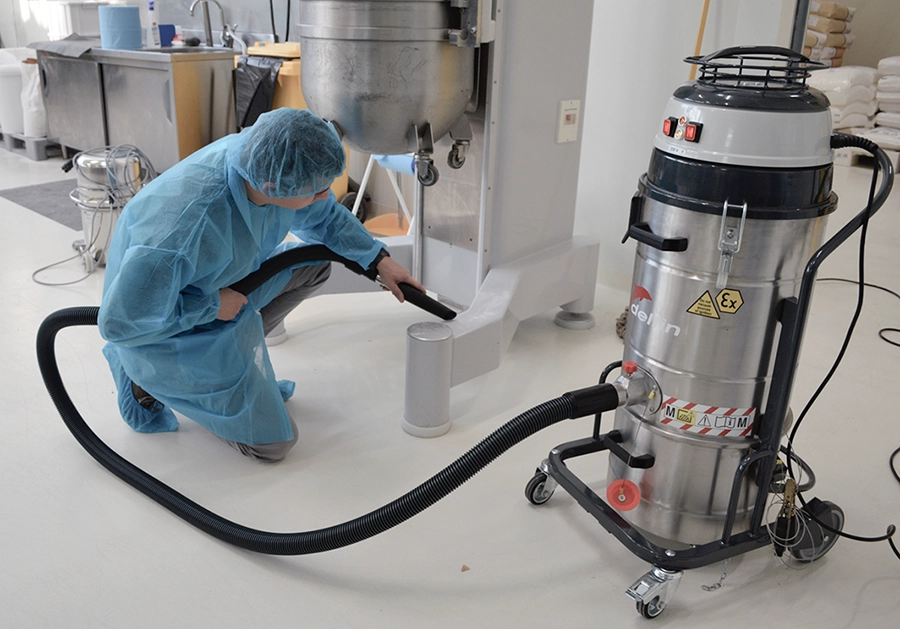
The invisible weakest link
Why a conductive or antistatic hose isn't sufficient on its own — and what grounding means for the complete system.
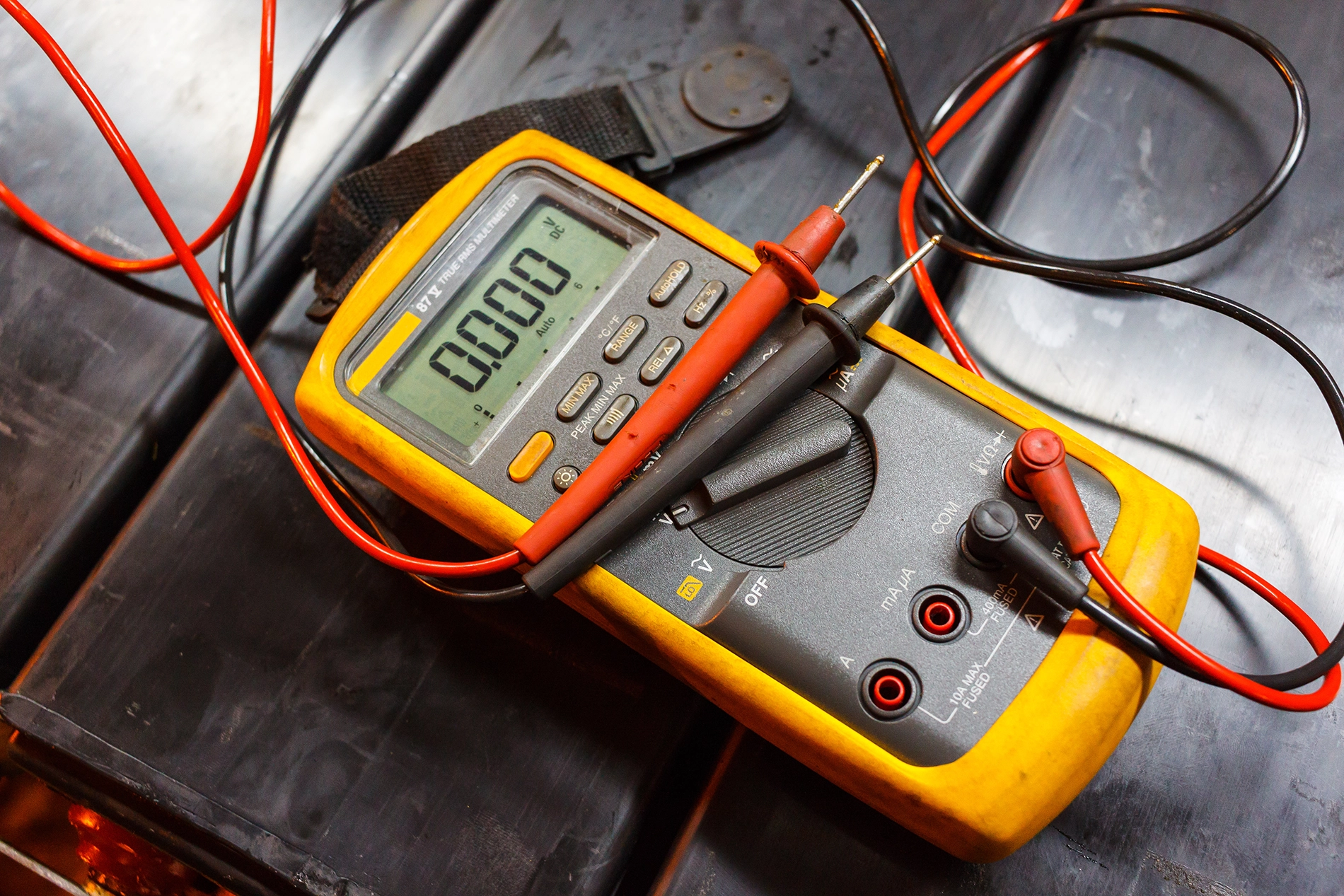
Know your ohm
The difference between antistatic and conductive, which resistance limits apply where, and how to measure them correctly.
Industries that use it
ARIACORD/YELLOW is used where a heavy-duty EPDM hose must tolerate both compressed air and water in outdoor or exposed environments - typically at construction sites, in agriculture and municipal services.
The construction industry is the main market. Compressed air for pneumatic tools (hammers, sanders, sandblasting equipment) and water supply for concrete mixing, cleaning and dust control are both daily applications. The EPDM wall tolerates changing temperatures, weather exposure and mechanical wear from construction site handling.
Agriculture and municipal services use the hose for irrigation, slurry spreading and general water distribution. The yellow outer coating makes the hose visible in fields or on roads, reducing the risk of vehicle damage. EPDM resists ammonia vapours from slurry and municipal sewage better than PVC-based hoses.
Industrial and municipal compressor applications use the hose for compressed air distribution from central compressors to pneumatically-driven machines. The wide pressure margin (3.2x safety factor between PN and burst) provides good robustness for transient pressure peaks during compressor cycling.
Custom lengths and assemblies
The hose can be delivered cut to desired lengths. The standard roll can be supplemented with shorter pieces or multiple rolls by arrangement.
At Particulair we advise on couplings and sizing. Send us a sketch of your application and we will assess the right variant and length.


Frequently asked questions
What is ARIACORD/YELLOW particularly suitable for?
The hose is built for combined compressed air and water applications in heavy-duty industry. PN 25 bar working pressure and BP 80 bar burst pressure make it well-suited to large compressors and high-pressure water applications. The EPDM wall tolerates weather and UV, making the hose stable in outdoor use.
What does PN 25 and BP 80 mean?
PN is Pressure Nominal - the maximum working pressure the hose is qualified for at 20 C. BP is Burst Pressure - the pressure at which the hose will rupture under standardised test conditions. The safety factor is 80/25 = 3.2x, which is typical for industrial rubber hoses and provides good margin for transient pressure peaks.
Can the hose be used for biogas?
Yes - the factsheet notes biogas as a specific application. The EPDM lining is resistant to methane, CO2 and trace H2S typically found in biogas. For higher concentrations of corrosive H2S we recommend a specialised biogas hose.
How many dimensions are in the range?
5 dimensions from ID 32 mm to 76 mm. All dimensions have the same pressure rating (25 bar PN, 80 bar burst) and 40 m standard roll length. Wall thickness is 7-9.5 mm depending on dimension.
What colour is the hose?
Yellow outer coating with black EPDM inner core. The yellow colour is functional - it is easily visible on construction sites and in industrial installations where hoses must be quickly recognisable by workers. EPDM maintains colour stability under UV exposure better than most other rubber types.
Which couplings are recommended?
For 25 bar working pressure, metal crimp clamps or standard hydraulic couplings with wear-secured rings are recommended. Standard worm-drive clamps work at low pressures but provide lower leak safety in cyclic operation above 15-20 bar. We typically fit couplings to the hose by arrangement.
Is the hose suitable for ATEX installations?
The hose has NO explicit ATEX declaration on the factsheet. The EPDM wall is insulating - there is no antistatic or conductive specification. For ATEX zones with combustible gases or dust we recommend a conductive or antistatic variant.
Can the hose be delivered with compressor quick-couplings?
Yes - typical compressor applications use Storz or GeKa couplings on standard dimensions. We fit these by arrangement. For lower pressure applications (under 16 bar), regular hose-end couplings and worm-drive clamps are sufficient.