Abrasion-resistant · Abrasion-resistant
ARMOFLEX/OIL
ARMOFLEX/OIL is a highly flexible suction and pressure hose for transporting oil, petrol and solvents. The NBR lining is resistant to mineral oils and fuels, and the steel spiral provides collapse resistance under vacuum. The hose is typically used in mechanical engineering, waste oil treatment and oil change systems where the same hose must be able to suck from a tank and pump under pressure.
- -15 to +65 C
- NBR resistance
- 5-8 bar pressure
- 0.8 bar vacuum
- Suction and pressure
- Oil/fuel
Why this hose?
ARMOFLEX/OIL combines two materials that each address a challenge: the NBR lining is resistant to mineral oils and fuels (one of the most restrictive elastomer properties), and the PVC outer wall provides mechanical wear resistance without being brittle. The internal steel spiral provides collapse resistance under suction.
It is rare that the same hose must both suck and pump - but in oil change and waste oil handling it is precisely the combination that is critical. ARMOFLEX/OIL is built for this dual role, where a suck-to-empty-tank is followed by pump-to-filled-tank without switching hoses.
The pressure class falls gradually with dimension (8 bar at 25 mm, 5 bar at 51 mm) - a consequence of collapse and burst strength depending on wall thickness relative to circumference. Wall thickness increases from 4 mm on the smallest to 5.5 mm on the largest to compensate partially.
Where it is used
Workshops and car dealerships use ARMOFLEX/OIL as a standard oil change hose. The hose is connected between collection pan and pump, and the same hose is subsequently used to pump waste oil to storage. The dual function is a large part of the hose's value.
Industrial lubrication systems use the hose for distribution between central tank and machines. The NBR lining's resistance to mineral oils ensures the hose does not degrade over years of continuous contact.
Petrochemical transport at tank installations, refineries and distribution centres uses the hose for ad-hoc connection and service. Here the strength is that the same hose can be used for many different media (oil, diesel, petrol, solvents) within the chemical resistance range.
ARMOFLEX/OIL is colloquially known as an oil hose or waste oil hose.
Technical specifications
The hose's key specifications are summarised briefly below. Pressure values vary per dimension - see the dimensions table for precise specifications per ID.
| Inner lining material | NBR (nitrile-butadiene rubber) |
|---|---|
| Outer wall material | PVC |
| Spiral | Steel |
| Colour | Black |
| Temperature range | -15 to +65 C |
| Working pressure | 5-8 bar (depending on dimension) |
| Vacuum | 0.8 bar (all dimensions) |
| Construction | Smooth outer, smooth inner, integrated steel spiral |
| Standard roll length | 30 m |
| Manufacturer SKU | 4481 |
Dimensions and ordering
The table shows the available standard dimensions. Pressure and wall thickness values are per ID. Pressure values refer to 20 C; at higher operating temperatures the effective working pressure is reduced.
| Inner Ø |
Outer Ø |
Wall thickness |
Working pressure |
Vacuum |
Max. length |
Weight |
Roll |
Article no. |
|---|---|---|---|---|---|---|---|---|
| 25 | 33 | 4 | 8 | 0.8 | 30 | 0.52 | 30 | 4481025000 |
| 32 | 40 | 4 | 7 | 0.8 | 30 | 0.72 | 30 | 4481032000 |
| 38 | 47 | 4.5 | 7 | 0.8 | 30 | 0.87 | 30 | 4481038000 |
| 51 | 62 | 5.5 | 5 | 0.8 | 30 | 1.32 | 30 | 4481050000 |
Fields without a value (—) are not specified in the manufacturer's factsheet. Overpressure and underpressure values are recommended operating limits; the product can be subjected to higher loads on request. Bend radius is measured along the inside of the hose bend.

Standards and compliance
The hose is manufactured to European standards for industrial rubber and chemical hoses. EN ISO 1307:2008 is the primary construction standard.
- EN ISO 1307:2008. European standard for rubber and thermoplastic hoses for general use. Defines dimensions, pressure tolerance and marking.
- EN 12115. European standard for rubber and thermoplastic hoses for liquids and chemicals - relevant for hose construction with chemical-resistant lining.
- ISO 6803:2017. Hydraulic hose test under hydraulic impulse. Used as a reference for cyclic pressure load.
- EN ISO 8033:2016. Test of adhesion between lining, wall material and reinforcement. Critical for hose leak protection.
- RoHS Directive (2011/65/EU). Restriction of hazardous substances. Manufacturer declaration on file.
- REACH (EC 1907/2006). Registration of chemical substances. Manufacturer declaration on request.
- ISO 9001:2015. Quality management system at the manufacturer. Ensures each batch follows the same specification.
Documentation and downloads
Additional documents about this hose, its compliance and installation. Click to download as PDF in a new tab.
Help with material selection
Although this hose isn't ATEX-relevant, these two articles provide useful background on electrical resistance and industrial safety — important if you later combine the hose with electrical equipment or work in mixed environments:
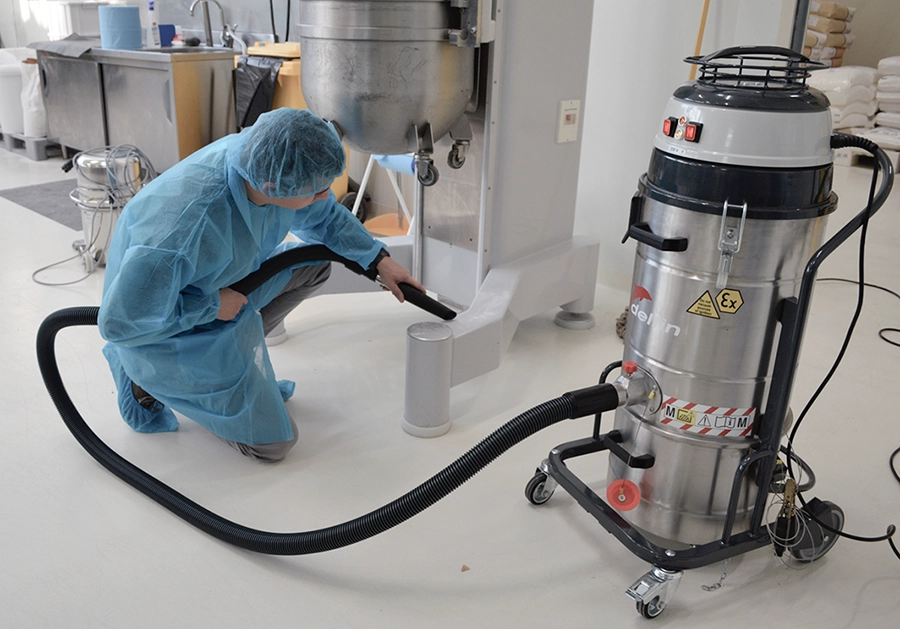
The invisible weakest link
Why a conductive or antistatic hose isn't sufficient on its own — and what grounding means for the complete system.
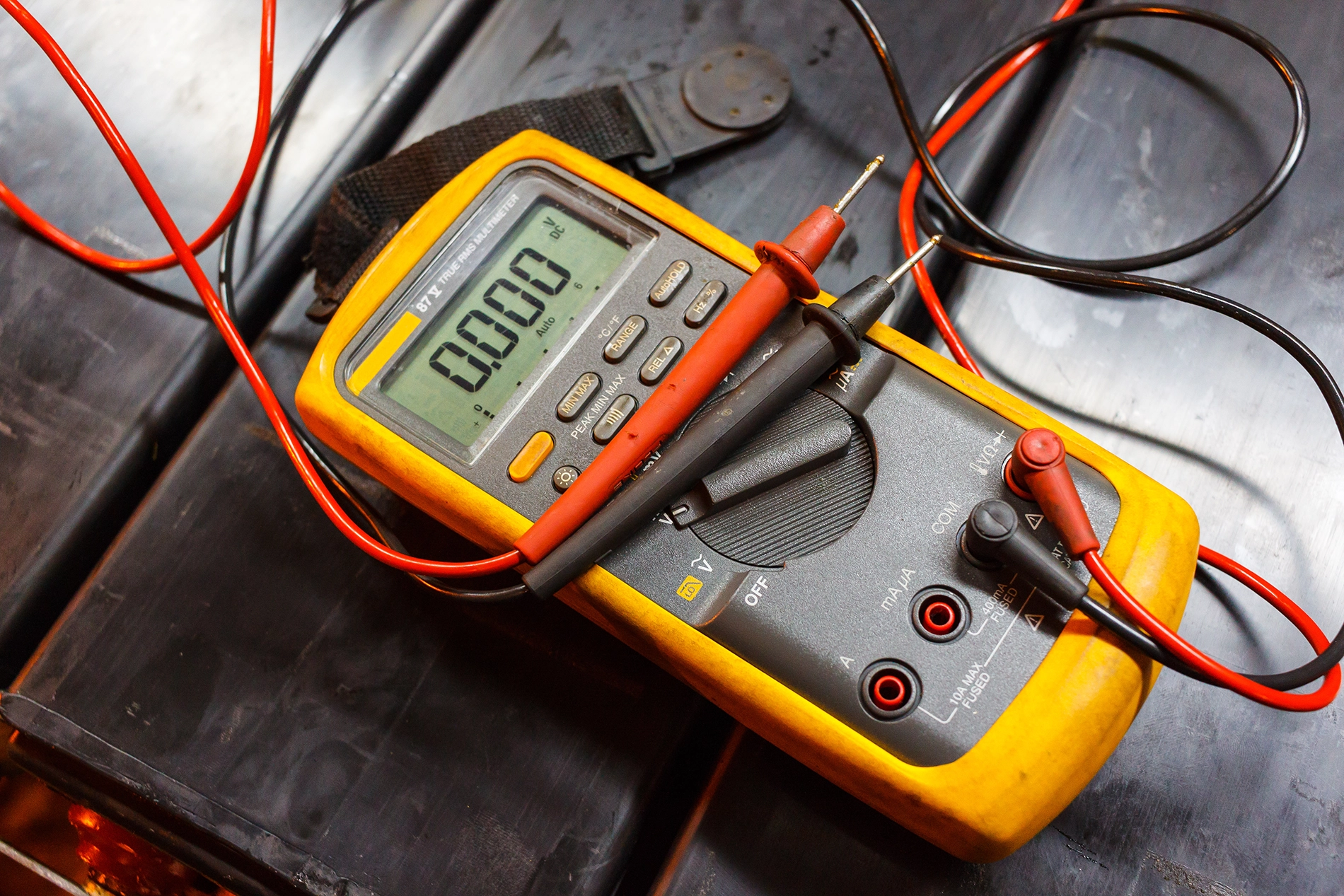
Know your ohm
The difference between antistatic and conductive, which resistance limits apply where, and how to measure them correctly.
Industries that use it
ARMOFLEX/OIL is used where an oil and fuel resistant suction and pressure hose is necessary - typically in mechanical engineering, workshops and waste oil treatment.
Automotive and workshops use the hose for oil change, hydraulic oil handling and lubrication systems. The NBR lining tolerates the mineral-based oils that dominate these applications, and the steel spiral ensures the hose does not collapse when sucking from a tank.
Waste oil treatment and the recycling industry are secondary markets. Here resistance to contaminated oils and solvents is important - the NBR/PVC combination is a standard solution. Annual inspection for crack formation is recommended due to the varying media's impact.
Mechanical engineering and industrial hydraulics use ARMOFLEX/OIL as an auxiliary hose for oil distribution between tanks, pumps and machines. The hose is typically used in installation - not in critical high-pressure circuits where specialised hydraulic hoses are required.
Custom lengths and assemblies
The hose can be delivered cut to desired lengths. The standard roll can be supplemented with shorter pieces or multiple rolls by arrangement.
At Particulair we advise on couplings and sizing. Send us a sketch of your application and we will assess the right variant and length.


Frequently asked questions
Which liquids can ARMOFLEX/OIL handle?
The NBR/PVC construction is resistant to mineral oils, lubrication and hydraulic oils, diesel and petrol as well as many solvents. The hose is NOT suitable for strong acids, bases or halogenated solvents - contact us for chemical resistance assessment at specific media.
What makes ARMOFLEX/OIL a suction and pressure hose?
The internal steel spiral provides collapse resistance under vacuum (up to 0.8 bar negative pressure) while the NBR lining and PVC outer wall withstand the positive working pressure (5-8 bar depending on dimension). This means the same hose can be used both to suck from a tank and pump under pressure - typical oil change scenario.
Which dimensions does ARMOFLEX/OIL come in?
Four standard dimensions: ID 25, 32, 38 and 51 mm. The pressure class drops gradually with increasing ID (8 bar at 25 mm, down to 5 bar at 51 mm). For larger dimensions or different pressure class we recommend specialised oil and fuel hoses - contact us for advice.
Is the hose suitable for heated oil?
Operating temperature is limited to 65 C. That is sufficient for most oil applications (engine oil can be up to 90 C in operation, but the hose is normally used under return where temperature is lower). For hot-oil applications (above 80 C) we recommend an EPDM or silicone-based hose.
Which couplings are recommended?
For oil and fuel applications metal crimp clamps or hydraulic couplings with integrated check valve are recommended. Standard worm-drive clamps work, but provide lower leak safety in cyclic operation. We are happy to advise on coupling choice.
Is ARMOFLEX/OIL ATEX-approved?
The hose has NO explicit ATEX marking on the factsheet. Zones with combustible gases (zone 1-2) typically require a conductive or antistatic variant - contact us for ATEX-suitable alternatives if your installation requires zone classification.
How long does the hose last?
Service life depends on usage frequency, storage and which liquids are handled. Daily professional use typically gives 3-7 years service life. Annual leak test and visual inspection for crack formation is recommended. With visible wear or discolouration the hose must be replaced.
Can the hose be delivered in special lengths?
Yes - 30 m is the standard roll, but shorter cut pieces are available by arrangement. Specific coupling configurations can also be delivered pre-assembled. Contact us if you have a large installation requiring multiple identical units.