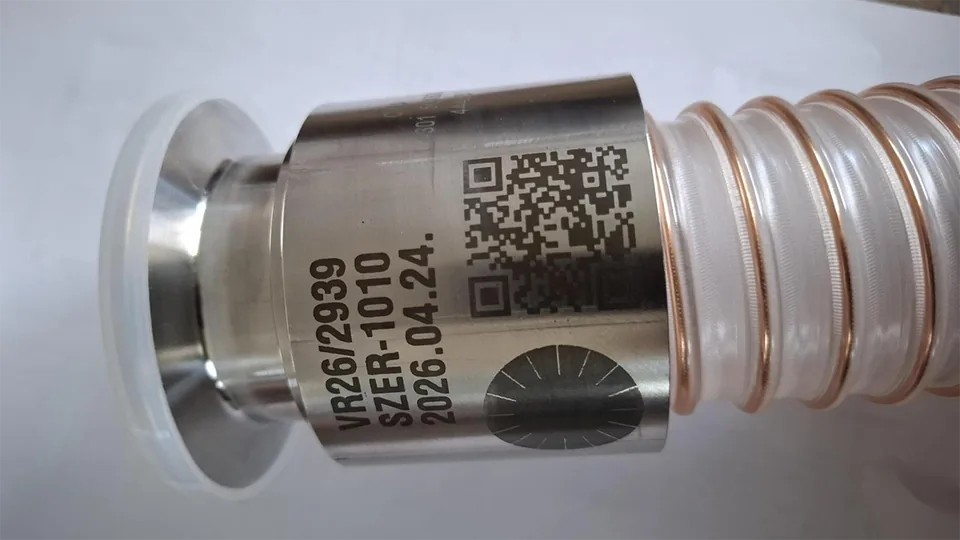
At Particulair we supply industrial hoses for specific applications, including where requirements are especially demanding: food and pharmaceutical production, ATEX installations, conveying abrasive materials and working with chemicals. You can order the hose on its own or as a finished assembly with couplings. We help you work out which solution fits your installation.
How do you choose the right industrial hose?
It helps to start with a few technical questions. What will flow through the hose? At what temperature? Will it work under pressure or on the suction side? Will it be bent and moved often? These questions matter because two hoses that look alike can have completely different properties.
The material alone is not enough to decide on. Construction, wall thickness, bend radius and operating conditions count as well. A hose for granulate has to withstand different loads than a hose for extracting hot air, even if both have the same diameter.
That is why at Particulair we choose the hose based on the process. We take into account the medium, the temperature, pressure or vacuum and the requirements of the industry in question. If the installation is in an ATEX zone, or the hose will be in contact with food, we also look at the documentation that belongs to the specific model.
Cost over time
The cheapest hose does not always cost the least
The price per metre is only the beginning. The total cost also depends on how often the hose has to be replaced, on service work, downtime and the amount of waste.
Choosing a hose is a lot like choosing tyres for your car. If you only drive on Sundays, cheap tyres may be enough. If you drive many kilometres and safety matters to you, you choose durable tyres, even if they cost more. Industrial hoses work the same way: it is not the price per metre that decides the total cost, but how long the hose lasts in your installation.
The difference starts with the material. An abrasion test to DIN ISO 4649 measures how much material a sample loses under abrasive load. The smaller the loss, the more slowly the hose wears. According to data from the manufacturer NORRES BAGGERMAN, a soft PVC hose wears roughly 3.5 times faster than a Pre-PUR® polyurethane hose under the same load. That is the difference between a hose that lasts one season and one that lasts four.
Hose chosen mainly on price
May be enough under light load. In a highly abrasive process, however, fast wear means repeated replacements.
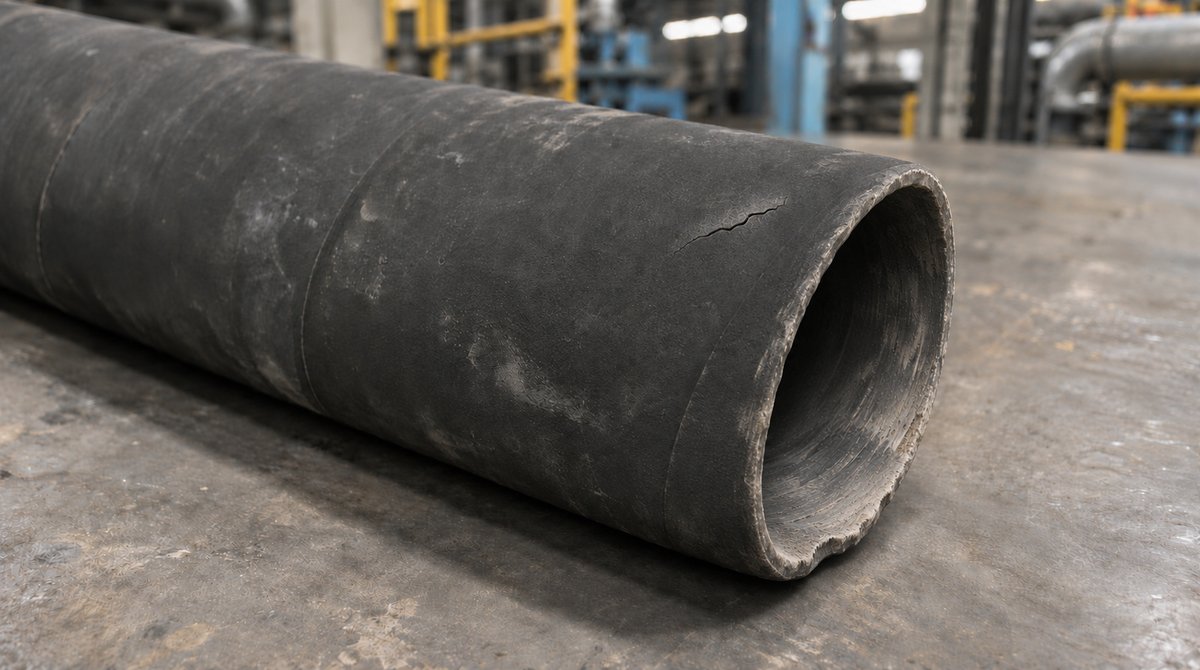
12 months of operation
Application example: 2–4 weeks
Each segment is one hose at 4 weeks of operation, i.e. 13 replacements a year. At 2 weeks it would be 26.
Hose built for the real load
A higher purchase price can pay for itself if the hose lasts longer and reduces unplanned replacements.
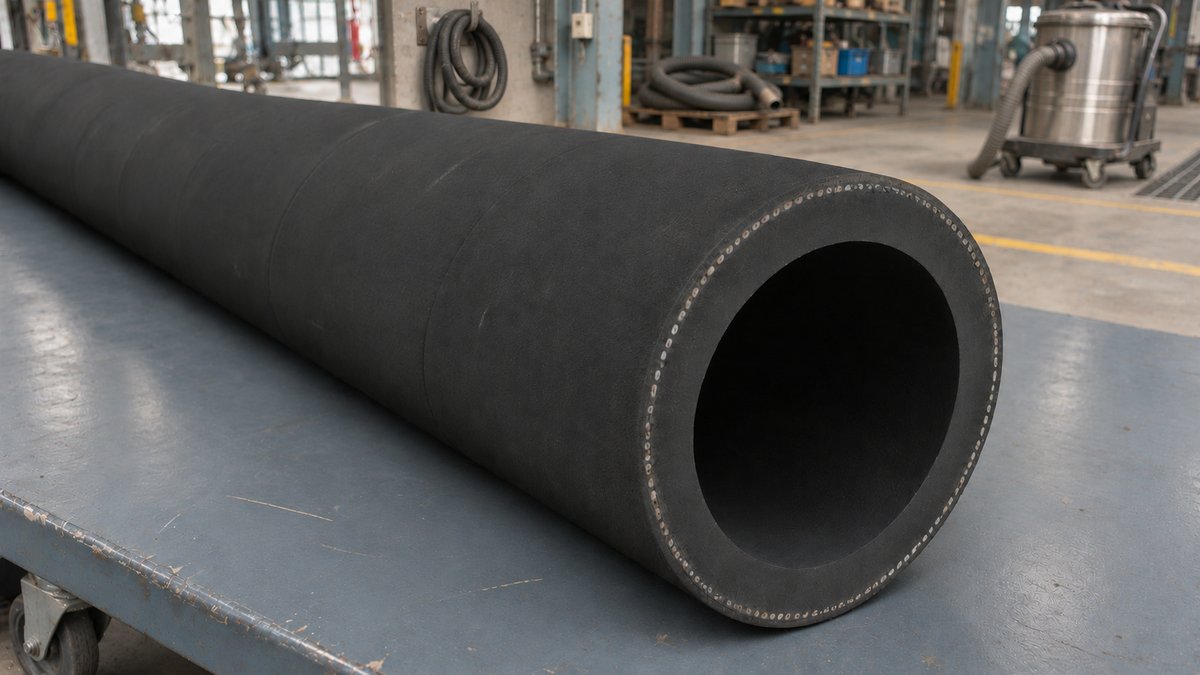
12 months of operation
SM1 STRAHLMEISTER: 6–12 months
The dark part of the bar is 6 months, the light part is the range up to 12 months.
Example from practice
Blasting with steel shot
Typical service life compared in one particularly demanding application.
Other hoses
2–4 weeks
SM1 STRAHLMEISTER
6–12 months
A more expensive hose is not always better. Polyurethane performs best where abrasion is the main load. Rubber can have the advantage with chemicals, high temperatures or where elasticity counts. That is why the material is chosen for the process, not on price alone.
› Abrasion resistance in PU hoses: why material choice decides service life
Not sure which hose will pay off in your installation?
Describe the medium, temperature, pressure and mode of operation. We will help you compare the options.
Actual service life depends on, among other things, the type and velocity of the conveyed material, temperature, pressure, bend radius and installation. The figures in the blasting example come from the SM1 STRAHLMEISTER product page and are not a guarantee of service life in every installation. The hose images are illustrations.
Can you buy a hose cut to length with couplings that fit your installation?
Yes. At Particulair you can buy the hose cut to length, with ends that fit your installation. You do not always need a whole roll. Sometimes it is a short piece that has to connect two machines and fit the couplings already installed on site.
You can order the hose cut to the length you need, or as an assembly with couplings such as Tri-Clamp, Camlock or threaded couplings. We match the hose, couplings, ferrules and seals to the conditions the whole assembly will work under.
You receive a product that is ready to install. You do not have to source matching parts yourself or work out on site how to put them together. We agree the configuration before the order goes into production.
› Custom-made hoses with couplings
Why does an industrial hose need documentation?
Right after installation, everyone involved knows which hose was fitted and where it came from. A few years later that is not always the case. The paperwork goes into the archive, staff change, and the marking on the old hose is hard to read.
Project ID
One ID for the whole assembly
PDF data sheet, 4 pages
Specification and materials list
QR code
On the hose and in the documentation
At Particulair every custom hose assembly receives a project ID and a 4-page PDF data sheet with specification, materials list and QR code. The code is also on the hose itself and leads to the data for that specific assembly.
When you reorder, you can quote the project ID or use the QR code. Because the specification is kept on file, you can return to the earlier configuration without defining all dimensions, couplings and materials again. That saves time, especially on sites with many different hoses.
Which hoses does Particulair sell?
Particulair supplies technical and industrial hoses for many different applications and industries. In the FlexCore catalogue you will find, among others:
The catalogue makes it easier to narrow down the choice by property and application. If several models seem suitable, it is worth going through the operating conditions with a specialist. That makes it easier to decide which parameters really matter in your installation.
Do ATEX and hygiene requirements have to be checked for each hose?
Yes, such requirements must always be confirmed. Terms such as “antistatic”, “conductive” or “food grade” do not tell the whole story. What matters is which properties the specific model has and under which conditions it may be used.
When we select a hose for an ATEX installation, we review the manufacturer’s documentation and the requirements for installation and earthing. For food contact, the type of product, the temperature and the contact time matter, among other things. A correct choice requires these conditions to be checked against the hose documentation.
For pharma and life science we also agree the requirements for preparation, cleanliness, packaging and documentation of the assembly. The scope has to be defined for the specific order so that the delivery matches the procedures that apply at your site.
How long is the delivery time at Particulair?
Standard hoses are stocked in Gelsenkirchen, Germany, and typically ship the same or the next day. Shipping does not mean next-day delivery everywhere, though. Transit time comes on top.


Special hoses and custom assemblies ship from production sites in Denmark, Italy, Hungary and Switzerland. The lead time depends on component availability, the configuration and the quantity. We confirm it once we know the requirements, so you can plan installation or replacement.
Particulair does not import hoses from China.
Where is Particulair based?
Particulair is a Danish company based at Højtoften 12 in Karlslunde, Denmark. As a specialist distributor we prioritise direct dialogue. You speak with people who know the products in detail and understand what is at stake in a critical environment.
You do not need to know the product code or have a finished specification. You can start by describing the problem: the hose wears quickly, kinks in the bend or has to be adapted to a new installation. We then help you establish the data needed for selection and a quotation.
If you already know what you need, send us the medium, operating temperature, pressure or vacuum, hose diameter and length, end connections and quantity. Also tell us whether the hose will be used in an ATEX zone, in contact with food or in a process with special hygiene requirements.
Looking for a hose for your installation?
Write to us or use the form. We will select the solution and prepare a quotation.
Questions about buying industrial hoses from Particulair
Can I order a hose cut to length?
Yes. At Particulair you can order a hose cut to the agreed length. We can also supply an assembly with couplings that fit your installation. We agree the scope based on the requirements of the order.
Do you help choose a hose for the installation?
Yes. We select the hose based on the medium, temperature, pressure or vacuum, the flexibility needed and the process requirements. If you do not know all the parameters, we help you work out which information is needed.
What documentation do I get with a custom hose assembly?
The assembly receives a project ID and a 4-page PDF data sheet with specification, materials list and QR code. Further documents are matched to the requirements of the specific application.
How do I reorder the same assembly?
Quote the project ID or use the QR code on the hose and in the documentation. From that we retrieve the specification of the earlier order.
How long does it take to deliver an order?
Standard hoses from stock typically ship the same or the next day. Lead times for special and custom orders are agreed case by case. Transit time comes on top of shipping.