Liquid hoses for industry and agriculture
Hoses for water, antifreeze and low-pressure liquids in industry, agriculture and municipal installations. Suitable for irrigation systems, cooling circuits, drainage and pump applications where temperature, ATEX and food approval are not the primary requirements.
Liquid hoses are the category where requirements are rarely extreme, yet the wrong material choice still costs. Water, coolant and low-pressure fluids make three quiet demands: tightness over time, resistance to the medium that actually runs in the hose, and a construction that matches the pressure and suction conditions.
The programme spans light PVC lay-flat hoses for irrigation and drainage, robust EPDM water hoses for cooling circuits and antifreeze, and special types with their own standards: air brake hoses per DIN 74310, coolant hoses per DIN 73411, Lloyd's-certified marine hoses and steam hoses for saturated steam.
On this page you will find the hoses we recommend for water and light fluids in industry, agriculture and municipal installations. Filter on material, max temperature and inner diameter in the left column to narrow the list to the hoses that match your task.
Products

AIRBRAKE
EPDM compressed air brake hose per DIN 74310:1993, -40 to +70 C
- Inner Ø: 11-13 mm
- Temp: −40°C to +70°C

EUROLON
PVC lay-flat hose for water supply, drainage and irrigation
- Inner Ø: 25-203 mm
- Temp: −20°C to +60°C

GOLDSCHLANGE
Robust EPDM water hose with CR outer layer - kink, impact and drive-over resistant
- Inner Ø: 13-25 mm
- Temp: −30°C to +100°C
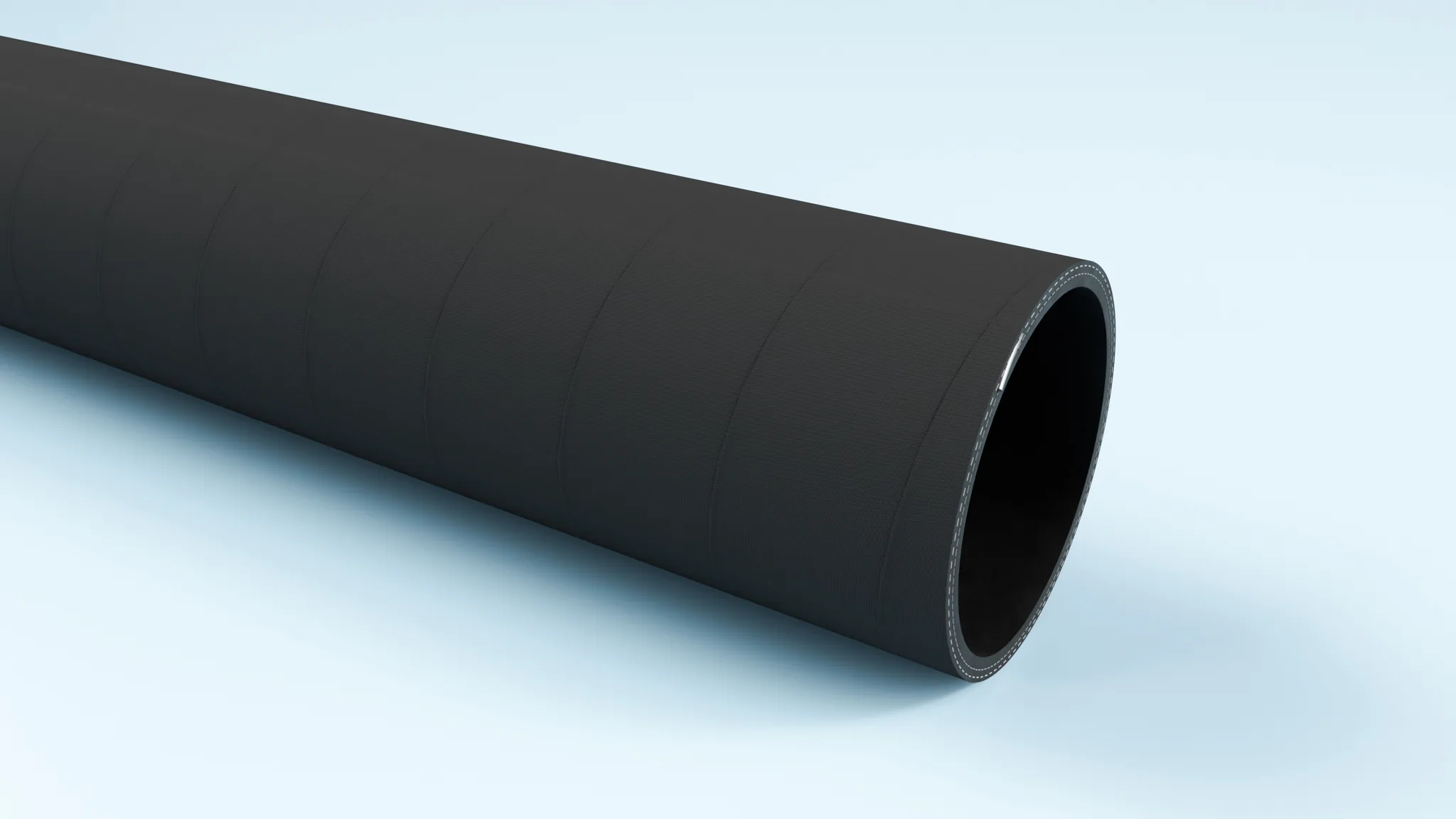
HEDUFLEX
Heavy-duty suction and pressure hose for water and slurry in industry, construction and agriculture
- Inner Ø: 19-305 mm
- Temp: −30°C to +80°C

LAVAFORM
Thermoplastic water hose for washing machines and cold-water applications
- Inner Ø: 10-13 mm
- Temp: −20°C to +60°C

LAVAFORM/EXTRA
Thermoplastic water hose for hot-water applications in washing machines and pumps
- Inner Ø: 10-13 mm
- Temp: −20°C to +95°C

PYTHON
Robust EPDM water hose with conductive wall, up to +110 C, marine-suitable
- Inner Ø: 13-32 mm
- Temp: −40°C to +110°C

RADIACORD
EPDM cooling water hose with antifreeze resistance for closed cooling circuits
- Inner Ø: 10-110 mm
- Temp: −30°C to +100°C

RADIACORD®/DIN
Cooling water hose — per DIN 73411, for hot and cold water applications
- Inner Ø: 10-120 mm
- Temp: −30°C to +130°C

SUPER AIR
Lightweight PVC compressed air and water hose, 20 bar PN, weather and UV-resistant
- Inner Ø: 6-25 mm
- Temp: −20°C to +60°C

TEMPERFORM/BLUE
Extremely flexible EPDM cooling hose for temperature control up to 100 C
- Inner Ø: 9.5-12.7 mm
- Temp: −20°C to +100°C

TEMPERFORM/RED
Extremely flexible EPDM cooling hose (red) for temperature control up to 100 C
- Inner Ø: 9.5-12.7 mm
- Temp: −20°C to +100°C

TRICOTECH
Smooth torsion-free PVC water hose for irrigation, garden and construction
- Inner Ø: 12.5-50 mm
- Temp: −10°C to +60°C

TUBIMAR/LLOYDS
Lloyd's-certified marine exhaust hose for yachts up to 24 m
- Inner Ø: 40-127 mm
- Temp: −30°C to +100°C

TWIN HOSE/PVC
Twin control hose for sandblasting guns, 20 bar PN, blue/grey
- Inner Ø: 6-6 mm
- Temp: −20°C to +60°C

VAPORCORD
Flexible steam hose for hot water up to 95 C and saturated steam up to 164 C
- Inner Ø: 10-76 mm
- Temp: −35°C to +164°C
The material must match the medium, not just the water
EPDM: the workhorse for water and coolant
EPDM rubber tolerates water, glycol-based antifreeze, ozone and weathering, and typically covers -40 °C to +100 °C, with DIN 73411 coolant hose types reaching +130 °C. It is the default choice for cooling circuits, temperature control and outdoor water installations where PVC stiffens and ages.
PVC: light and economical for irrigation and drainage
PVC hoses are light, inexpensive and easy to handle. Lay-flat hoses roll up completely flat and take minimal storage space, but they are pure pressure hoses: under vacuum they collapse. The typical service range is -20 °C to +60 °C, which places them in frost-free seasonal or indoor use.
Suction and pressure hoses are two different constructions
A pressure hose is held open by the medium; a suction hose must hold its own shape when the pump pulls vacuum. Pump suction, emptying and slurry duty therefore require a spiral- or textile-reinforced wall. Check both the PN rating and whether the datasheet states a vacuum value at all before putting a hose on the suction side.
Special requirements come with their own standards
Some liquid duties are regulated: brake air per DIN 74310, coolant per DIN 73411, marine exhaust with Lloyd's approval, and saturated steam requiring a dedicated steam hose with an EPDM liner. If the requirement sits in a rulebook, it must sit in the datasheet, not in the sales copy.
Questions we are asked often
Can I use an ordinary water hose for glycol coolant?
Not as a matter of course. Glycol-based antifreeze attacks several rubber and plastic types over time. Choose an EPDM hose with documented glycol resistance; for cooling circuits, typically a coolant hose per DIN 73411, which is tested precisely for water/glycol mixtures at elevated temperature.
What is the difference between a lay-flat hose and a form-stable hose?
A lay-flat hose rolls up completely flat and takes minimal space, which makes it ideal for mobile irrigation, drainage and fire readiness. In return it is a pure pressure hose: it collapses under vacuum and is unsuited to fixed installations with tight bends. A form-stable hose keeps its cross-section and can be used on the suction side if it is reinforced for it.
When do I need a suction/pressure hose instead of a plain pressure hose?
As soon as the pump pulls the medium rather than pushing it: pump suction from tanks or excavations, emptying duties and slurry work. Vacuum makes an unreinforced hose collapse. Suction/pressure hoses have an embedded spiral or heavy reinforcement that keeps the bore open, and the datasheet states an explicit vacuum value.
Do the hoses tolerate frost?
Several types are specified down to -20 °C or -40 °C in service, but that covers the material, not the contents: water freezing inside the hose expands and can burst it regardless of material. Drain the hose or use antifreeze if the installation stands outside in winter.
May the liquid hoses be used for drinking water or food?
This category covers technical service water and similar fluids. Drinking water, food and pharma require documented food-contact approval (EU 1935/2004, FDA). You will find the approved types in the Food & Pharma category, where the approvals appear on each datasheet.
See also
- High-temperature hoses — for hot water, steam and media above 100 °C.
- Abrasion-resistant hoses — for liquid mixes with abrasive particles or heavy industrial applications.
- Food/Pharma hoses — when the liquid must be in contact with foodstuffs or pharmaceutical products.