ATEX/ESD · Antistatic
AIRDUC® PUR 350 AS BLACK (MD)
Antistatic polyurethane hose in black, medium-duty construction for conveying abrasive media in explosion hazard zones. Surface resistance below 10⁹ Ω meets the TRGS 727 and NFPA 652 thresholds. The black outer cover makes it easy to identify on a worksite with several hose types, and the abrasion-resistant wall handles typical industrial and municipal vehicle applications.
- Static dissipation <10⁹ Ω
- Zone 0/1/2 + 20/21/22
- Abrasion-resistant PUR wall
- Flexible medium-duty
- Gas, dust, solid
- Cut to length
Why this hose?
This is the classic AIRDUC® PUR 350 AS, but with a black outer cover instead of transparent. Functionally the two hoses are nearly identical: same medium-duty PUR wall, same antistatic formulation with surface resistance below 10⁹ Ω, same ATEX and TRGS 727 approval for zones with combustible dust or gas.
The difference is purely visual and practical. On a worksite with several hose types in the same size — for example a municipal vehicle with both a suction and a blower hose — it pays to tell them apart without reading the imprint. A black outer cover marks this hose as the antistatic one, and UV exposure does not show as discolouration the way it can on transparent PUR.
The wall construction is the same medium-duty (MD) build we know from the rest of the AIRDUC® 350 family: spring steel spiral embedded in the PUR wall, wall thickness from 0.7 mm in the smaller diameters up to roughly 1.5 mm in the largest, abrasion-resistant and flexible. It handles pneumatic conveyance of granulates, dust and bulk materials in ATEX zones — the workhorse many industrial and municipal vehicles need.
The hose is one part of a system. The ATEX approval assumes the entire system is correctly grounded, and that the resistance through the whole chain (hose, couplings, fittings and machine) is low enough to dissipate static electricity. A hose with an antistatic wall in a system without proper grounding offers a false sense of safety.
We always recommend measuring the loop resistance after installation. Read more about the weakest link in an ESD chain.
Where it is used
The black AIRDUC® PUR 350 AS (MD) is built for the everyday worksites where you need both explosion protection and visible differentiation between hose types. That makes it well suited for municipal vehicles and sweepers where several hoses often run together, and for industrial extraction systems where the hose needs to be easy to identify.
In practice, we see it most often used for pneumatic conveyance of combustible dust in Zone 20/21/22, for extraction of wood dust and grinding particles in classified production halls, and for granulate conveying in the plastics industry.
It is also used for bulk-bag handling, industrial vacuum cleaners, and ventilation and aeration systems where an antistatic wall is a formal requirement.
The formal product name is AIRDUC® PUR 350 AS BLACK (MD). In daily use, many simply call it "the black AS hose" or "AS-MD in black" — to distinguish it from the standard variant with transparent cover.
Technical specifications
Specifications are current as of 15 April 2026 and refer to 20 °C unless otherwise stated.
| Material | Polyurethane (PUR), permanently antistatic |
|---|---|
| Colour | Black |
| Wall construction | Medium duty (MD), spiral-reinforced polyurethane |
| Conveying media | Gas, dust, solid |
| Temperature range | −40 °C to +90 °C |
| Short-term peak | +125 °C |
| Electrical resistance | Antistatic wall with surface resistance <10⁹ Ω (TRGS 727 <2.5×10⁸ Ω·m) |
| ATEX marking | In accordance with ATEX 2014/34/EU (1999/92/EC) and German TRGS 727: for conveying flammable liquids (interior zone 0, 1, 2), for conveying non-flammable liquids, for use in zone 1 and 2 (gases), for use in zone 0 (gases). Pneumatic conveyance of combustible dust and bulk materials (zone 20, 21, 22 interior), aspiration of combustible dust (zone 22 interior). |
| Cut to length | Yes |
| Manufacturer SKU (model group) | 3503030 |
The hose is approved for interior conveyance of combustible dust in zone 20, 21 and 22. Proper grounding is a prerequisite for the antistatic function to work in practice. We always recommend measuring the loop resistance after installation.
Dimensions and ordering
The table shows the main variants from the manufacturer's factsheet. Fields without a value (—) are not specified. Diameters, pressure values and bend radii are normative; weights and roll lengths are typical production values.
| Inner Ø |
Outer Ø |
Wall thickness |
Working pressure |
Working pressure |
Vacuum |
Vacuum |
Bend radius |
Max. length |
Weight |
Roll |
Article no. |
|---|---|---|---|---|---|---|---|---|---|---|---|
| 20 | 27 | 0.7 | 2.445 | 5.45 | 0.755 | 1 | — | 10 | 0.18 | — | 35000203030 |
| 25.1 | 32.1 | 0.7 | 2.445 | 5.45 | 0.755 | 1 | — | 25 | 0.2 | — | 35000253030 |
| 26 | 33 | 0.7 | 2.445 | 5.45 | 0.755 | 1 | — | 10 | 0.21 | — | 35000263030 |
| 32 | 39 | 0.7 | 1.93 | 4.29 | 0.59 | 1 | — | 25 | 0.25 | — | 35000323030 |
| 40 | 47 | 0.7 | 1.555 | 3.46 | 0.47 | 1 | 32 | 30 | 0.31 | 10 | 35000403030 |
| 45 | 52 | 0.7 | 1.39 | 3.08 | 0.42 | 1 | — | 30 | 0.34 | — | 35000453030 |
| 50.5 | 57.5 | 0.7 | 1.25 | 2.78 | 0.38 | 1 | 38 | 30 | 0.38 | 10 | 35000503030 |
| 60 | 67 | 0.7 | 1.05 | 2.33 | 0.315 | 0.83 | 44 | 30 | 0.45 | 10 | 35000603030 |
| 70 | 78 | 0.7 | 0.9 | 2 | 0.185 | 0.83 | 50 | 30 | 0.52 | 10 | 35000703030 |
| 75.6 | 83.6 | 0.7 | 0.84 | 1.87 | 0.175 | 0.72 | 53 | 30 | 0.56 | 10 | 35000753030 |
| 80 | 88 | 0.7 | 0.79 | 1.75 | 0.16 | 0.64 | 56 | 30 | 0.59 | 10 | 35000803030 |
| 101.5 | 109.5 | 0.7 | 0.635 | 1.41 | 0.135 | 0.66 | 68 | 25 | 0.87 | 10 | 35001003030 |
| 120 | 128 | 0.7 | 0.53 | 1.17 | 0.115 | 0.46 | 80 | 25 | 1.02 | 10 | 35001203030 |
| 126.5 | 134.5 | 0.7 | 0.51 | 1.13 | 0.11 | 0.42 | 83 | 25 | 1.07 | 10 | 35001253030 |
| 140 | 148 | 0.7 | 0.455 | 1.01 | 0.095 | 0.33 | 92 | 25 | 1.18 | 10 | 35001403030 |
| 151.5 | 159.5 | 0.7 | 0.425 | 0.94 | 0.075 | 0.36 | 98 | 20 | 1.3 | 10 | 35001503030 |
| 160 | 168 | 0.7 | 0.4 | 0.88 | 0.07 | 0.31 | 104 | 20 | 1.37 | 10 | 35001603030 |
| 180 | 188 | 0.7 | 0.355 | 0.78 | 0.06 | 0.24 | — | 20 | 1.54 | — | 35001803030 |
| 202.3 | 210.3 | 0.7 | 0.32 | 0.71 | 0.055 | 0.19 | 128 | 15 | 1.73 | 10 | 35002003030 |
| 250 | 258 | 0.7 | 0.255 | 0.57 | 0.045 | 0.12 | 158 | 15 | 2.13 | 10 | 35002503030 |
| 300 | 308 | 0.7 | 0.215 | 0.47 | 0.035 | 0.07 | 188 | 10 | 2.54 | — | 35003003030 |
Overpressure and underpressure values are recommended operating limits; the product can be subjected to higher loads on request. Bend radius is measured along the inside of the hose bend.

Standards and compliance
The hose is certified or documented to the following standards:
- ATEX 2014/34/EU (1999/92/EC). The directive for equipment and protective systems intended for use in potentially explosive atmospheres. The hose is approved for zone 0/1/2 (gases, interior) and zone 20/21/22 (dust, interior).
- TRGS 727. The German technical rules framework for combustible dust and static electricity. Antistatic hoses have surface resistance <2.5×10⁸ Ω·m and volume resistance <10⁹ Ω.
- DIN 26057 Type 2. Standard for suction and pressure hoses with spring-steel spiral; defines pressure classes and dimensions.
- NFPA 652. US standard on the fundamentals of combustible dust. Antistatic components have resistance in the range 10⁸–10⁹ Ω.
- ISO 8031. Measurement of electrical resistance in rubber and plastics hoses; the method used to verify antistatic thresholds.
- REACH (EC 1907/2006). The EU regulation on chemicals. The manufacturer holds a declaration of compliance.
- RoHS 2011/65/EU. Restriction of hazardous substances. The manufacturer holds a declaration of compliance.
Documentation and downloads
Additional documents about this hose, its compliance and installation. Click to download as PDF in a new tab.
Help with material selection
If you are choosing a hose and are uncertain about the right resistance level or zone classification, these two articles are a good place to start:
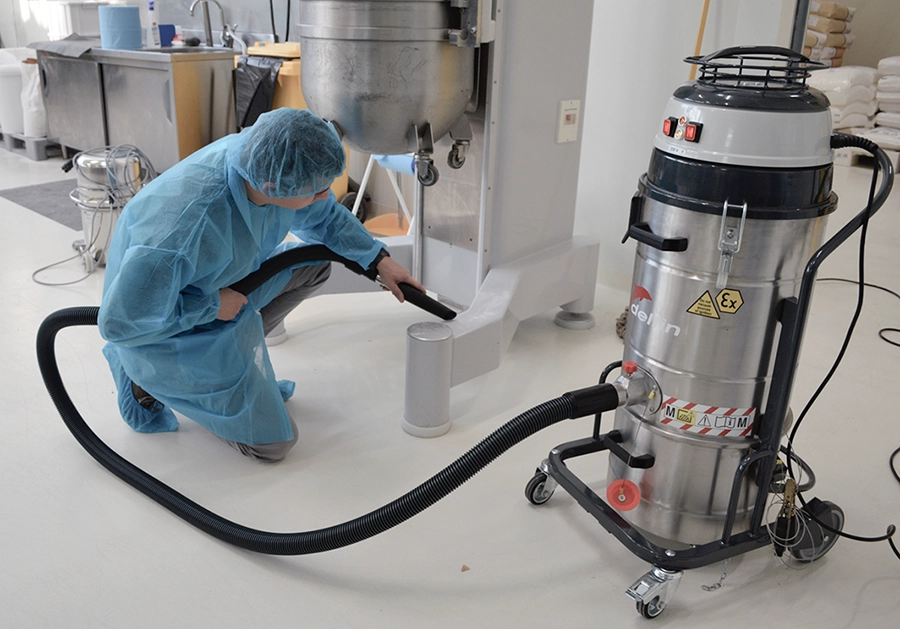
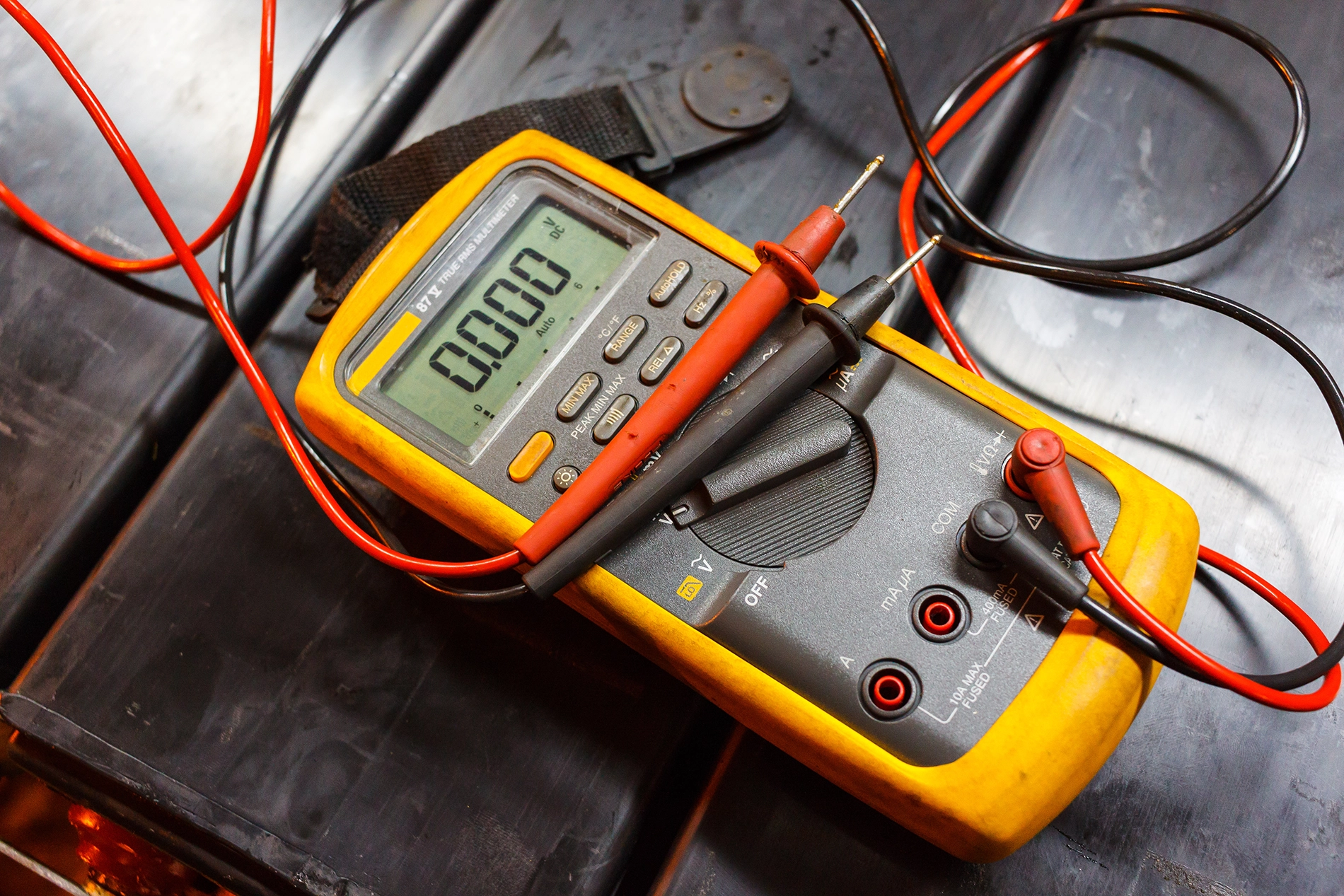
Industries that use it
The hose is used across the industries where antistatic conveyance of dust and granulate is a formal requirement:
Plastics and chemical industries use the hose for granulate conveying between silos and processing machines, and for extraction of powder and dust. The ATEX approval is central when the granulate is combustible or production runs in a classified zone.
Wood industry and construction use it for extraction of wood dust and grinding residues in classified production halls. That covers both stationary extraction systems and mobile vacuum cleaners on the building site.
Municipal and environmental technology have the hose as a standard choice on suction trucks, sweepers and cleaning equipment — the black outer cover makes it easy to distinguish from other hose types on the same vehicle.
Custom lengths and assemblies
The hose can be cut to length and assembled with couplings, cuffs and threaded fittings through Particulair's custom hose assemblies. Maximum production length varies from 10 to 30 m depending on diameter.
We offer guidance on material choice, coupling system and grounding, so the hose fits correctly into the overall ATEX system. If there is any doubt about zone classification or resistance requirements, a short conversation before ordering is well worth the time.


Frequently asked questions
What is the difference between AIRDUC® PUR 350 AS (MD) and AIRDUC® PUR 350 AS BLACK (MD)?
The two hoses share the same wall construction and the same antistatic properties. The difference is colour: the BLACK variant has a black outer cover, whereas the standard 350 AS is transparent. The black hose is easier to distinguish from other hose types on a worksite, and is often preferred on municipal vehicles and outdoor applications where UV exposure should not show as discolouration.
Can the hose be used in Zone 20?
The hose is antistatic and complies with the TRGS 727 and NFPA 652 thresholds for antistatic components. That means it is approved for pneumatic conveyance of combustible dust and bulk materials in Zone 20, 21 and 22 (interior zone). Proper grounding is a prerequisite. For particularly critical Zone 0 applications a fully conductive (EC) variant is recommended instead.
What temperature range does the hose tolerate?
The normal operating range is −40 °C to +90 °C, and short-term peaks up to +125 °C are permitted. For higher continuous temperatures, silicone-based or metallic hose constructions are available in the FlexCore range.
Does the hose need to be grounded to be safe?
Yes. The antistatic wall dissipates static electricity, but only when the hose is connected to ground at both ends. Without proper grounding the antistatic function is ineffective, and the hose is no longer ATEX-compliant in practice. We recommend measuring the loop resistance after installation.
Can the hose be supplied in custom lengths?
Yes. The hose can be cut to length and assembled with couplings, cuffs and threaded fittings through Particulair's custom hose assemblies. Maximum production length varies from 10 to 30 m depending on diameter.
What is the hose's expected service life?
Service life depends on operating conditions: loading, temperature, chemical exposure, UV and mechanical movement. In standard industrial use, expected life is 3-7 years. Aggressive conditions (high temperatures, continuous flexing, chemical vapours) reduce service life. We recommend regular visual inspection for cracks, deformation or discolouration.
How is the hose best stored before use?
Store the hose dry, at room temperature (15-25 °C) and out of direct sunlight. Avoid contact with ozone-generating equipment (welding equipment, engines). If stored on a reel, the bend must be larger than the specified minimum radius to avoid permanent deformation. Proper storage significantly extends shelf life.
What is the minimum bend radius, and what happens if I go below it?
Minimum bend radius is the smallest radius the hose can be bent to without permanent deformation or internal damage. The table above shows specific values for each dimension. Bending the hose below this limit can collapse the wall, kink the spiral or damage the inner coating. The result is reduced flow, increased pressure loss and shorter service life. Always use bend radius as a design constraint in installation.