ATEX/ESD · Conductive
AIRDUC® PUR 351 EC (MD)
Electrically conductive polyurethane hose for conveying abrasive media in explosion hazard zones. Abrasion-resistant and flexible with a medium-duty (MD) wall, with surface resistance below 10³ Ω, well below the TRGS 727 threshold.
- Static dissipation <103 Ω
- Zone 0/1/2 + 20/21/22
- Abrasion-resistant PUR wall
- Highly flexible, lightweight
- Gas, dust, liquid, granulate
- Cut to length
Why this hose?
Conveying abrasive media in an explosion hazard zone presents two challenges at once. The hose must resist mechanical wear from granulates, dust and particles. It must also prevent static electricity from building up to the point where it can trigger a spark discharge. AIRDUC® PUR 351 EC (MD) addresses both in a single construction.
The hose wall is made from electrically conductive polyurethane with a measured surface resistance below 103 Ω. That is well below the 106 Ω threshold defined by NFPA 652 for conductive components, and far below the TRGS 727 requirement for antistatic hoses. In practice this means static electricity is dissipated effectively. It does require the hose to be grounded at both ends.
"MD" stands for medium duty. It is the practical middle ground: thick enough to handle abrasive media such as granulates and dust at industrial volumes, while still flexible and easy to handle. For more extreme abrasion, the hose is also available as a heavy-duty (HD) variant. For lighter applications, lighter wall constructions are available.
The hose is one part of a system. The ATEX approval assumes the entire system is correctly grounded, and that the resistance through the whole chain (hose, couplings, fittings and machine) is low enough to dissipate static electricity. A hose with a conductive wall in a system without proper grounding offers a false sense of safety.
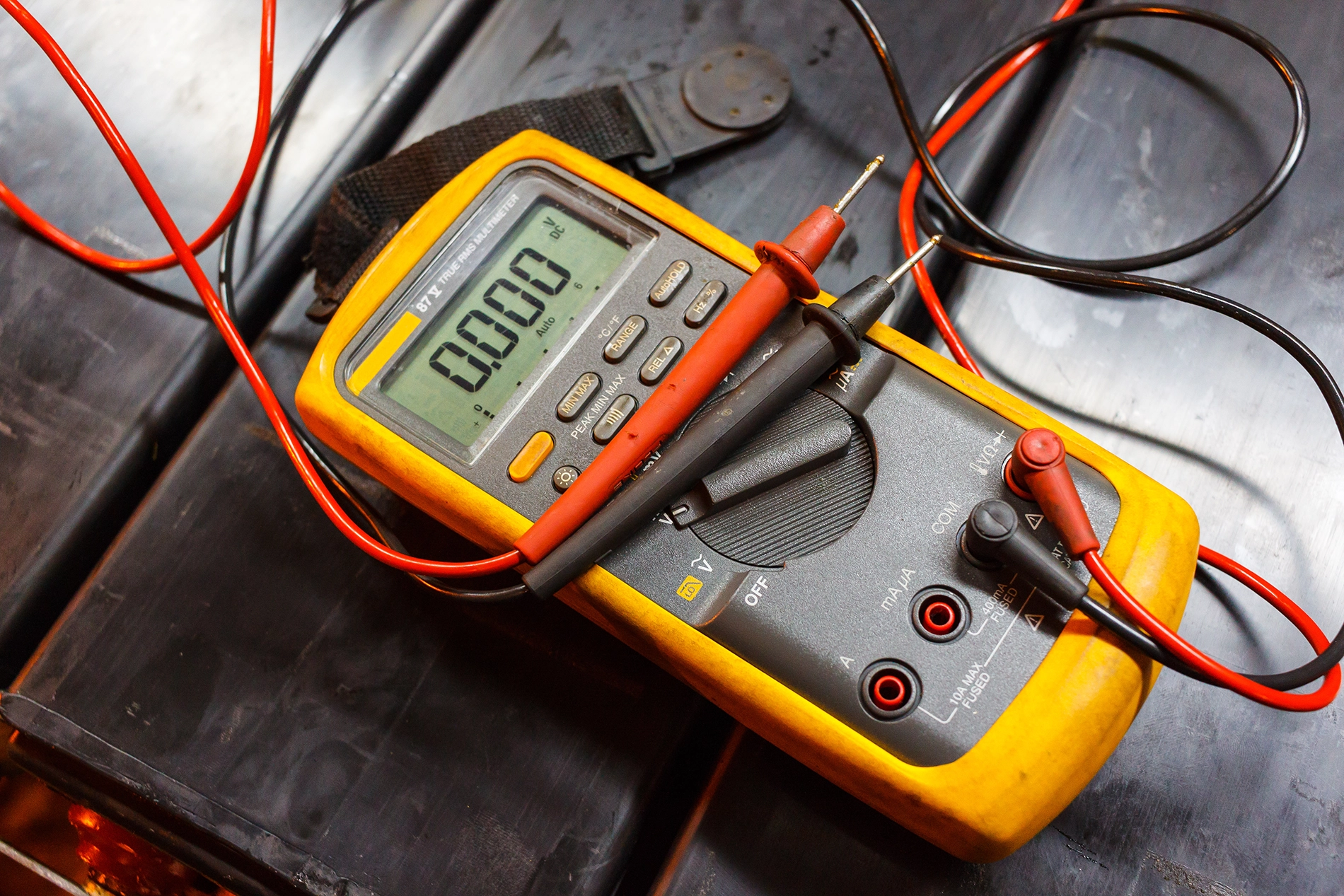
We always recommend measuring the loop resistance after installation. Read more about the weakest link in an ESD chain.
Where it is used
AIRDUC® PUR 351 EC (MD) is built for applications where a hose is exposed to wear and must also meet formal requirements for explosion protection. That makes it a workhorse across industrial dust and granulate processes.
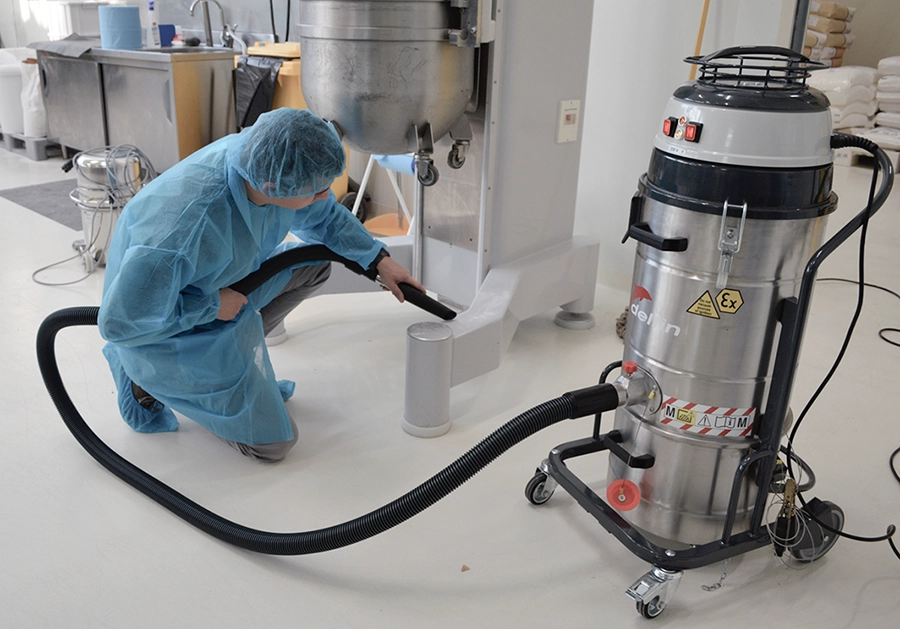
In practice, it is most often used for extraction and aspiration of industrial dust from production machinery, for granulate conveying in the plastics industry where dried granulates need to move between silos and injection-moulding machines, and for industrial vacuum cleaners where the collected material is either combustible or handled in a combustible environment.
It is also used for bulk-bag filling and discharging (FIBCs), for oil mist extraction, for gas transport in ATEX-classified environments, and for general conveyance of abrasive media where wear resistance matters more than peak pressure.
The formal product name is AIRDUC® PUR 351 EC (MD). In daily use, many simply call it "the conductive PUR hose" or "the ATEX hose". Both work.
Technical specifications
Specifications are current as of 15 April 2026 and refer to 20 °C unless otherwise stated.
| Material | Polyurethane (PUR), electrically conductive |
|---|---|
| Colour | Black |
| Wall construction | Medium duty (MD), spiral-reinforced conductive polyurethane |
| Conveying media | Gas, dust, liquid, solids (granulates, particles) |
| Temperature range | −40 °C to +90 °C |
| Short-term peak | +90 °C |
| Electrical resistance | Conductive wall with surface and electrical resistance <103 Ω (NFPA 652 threshold: <106 Ω) |
| ATEX classification | In compliance with ATEX 2014/34/EU (1999/92/EC) and German TRGS 727: for conveying flammable liquids (interior zone 0, 1, 2), for conveying non-flammable liquids, for use in zone 1 and 2 (gases), for use in zone 0 (gases).
Pneumatic conveyance of combustible dust and bulk materials (zone 20, 21, 22 interior), aspiration of combustible dust (zone 22 interior). |
| Cut to length | Yes |
| Manufacturer SKU (model group) | 3511003 |
The hose is approved for interior conveyance of flammable liquids in zone 0, 1 and 2. That is a strong specification, but the use of flammable liquids places particular requirements on chemical compatibility, grounding and installation. We always recommend consultation before selecting a hose for this type of application.
Dimensions and ordering
AIRDUC® PUR 351 EC (MD) is supplied in 27 standard sizes from inner Ø 25.1 mm to 315 mm. Each size has its own article number from the manufacturer. Standard roll length is typically 10 m, and the hose can be cut to length.
| Inner Ø |
Outer Ø |
Working pressure |
Working pressure |
Vacuum |
Vacuum |
Bend radius |
Max. length |
Weight |
Roll |
Article no. |
|---|---|---|---|---|---|---|---|---|---|---|
| 25.1 | 32.1 | 2.445 | 4.06 | 0.46 | 1 | 23 | 20 | 0.22 | 10 | 35100251003 |
| 30 | 37.5 | 1.945 | 3.22 | 0.44 | 1 | 26 | 20 | 0.26 | 10 | 35100301003 |
| 32 | 39.5 | 1.83 | 3.03 | 0.43 | 1 | 27 | 20 | 0.27 | 10 | 35100321003 |
| 35 | 42.5 | 1.55 | 2.56 | 0.4 | 1 | 29 | 20 | 0.29 | — | 35100351003 |
| 38 | 45.5 | 1.55 | 2.56 | 0.4 | 1 | 31 | 25 | 0.32 | 10 | 35100381003 |
| 40 | 47.5 | 1.475 | 2.44 | 0.39 | 1 | 32 | 30 | 0.33 | 10 | 35100401003 |
| 45 | 52.5 | 1.315 | 2.18 | 0.36 | 1 | 35 | 30 | 0.37 | 10 | 35100451003 |
| 50.5 | 58 | 1.19 | 1.96 | 0.34 | 1 | 38 | 30 | 0.41 | 10 | 35100501003 |
| 60 | 67.5 | 0.995 | 1.64 | 0.265 | 0.84 | 44 | 30 | 0.48 | 10 | 35100601003 |
| 64.5 | 72 | 0.92 | 1.52 | 0.235 | 0.71 | 47 | 30 | 0.52 | 10 | 35100651003 |
| 70 | 79 | 0.855 | 1.41 | 0.195 | 0.84 | 50 | 25 | 0.57 | 10 | 35100701003 |
| 75 | 84 | 0.8 | 1.32 | 0.18 | 0.73 | 53 | 25 | 0.6 | 10 | 35100751003 |
| 80 | 89 | 0.75 | 1.24 | 0.165 | 0.64 | 56 | 25 | 0.64 | 10 | 35100801003 |
| 90 | 99 | 0.67 | 1.1 | 0.145 | 0.51 | 62 | 25 | 0.72 | 10 | 35100901003 |
| 101.5 | 110.5 | 0.605 | 1 | 0.115 | 0.41 | 68 | 25 | 0.78 | 10 | 35101001003 |
| 105 | 114 | 0.55 | 0.91 | 0.1 | 0.34 | 71 | 25 | 0.81 | — | 35101051003 |
| 110 | 119 | 0.55 | 0.91 | 0.1 | 0.34 | 74 | 25 | 0.84 | 10 | 35101101003 |
| 120 | 129 | 0.505 | 0.83 | 0.085 | 0.28 | 80 | 25 | 0.92 | 10 | 35101201003 |
| 126.5 | 135.5 | 0.485 | 0.8 | 0.075 | 0.26 | 83 | 25 | 0.97 | 10 | 35101251003 |
| 130 | 139 | 0.43 | 0.71 | 0.075 | 0.21 | 85 | 25 | 0.99 | — | 35101301003 |
| 140 | 149 | 0.43 | 0.71 | 0.075 | 0.21 | 92 | 25 | 1.07 | 10 | 35101401003 |
| 151.5 | 160.5 | 0.405 | 0.67 | 0.07 | 0.37 | 98 | 20 | 1.51 | 10 | 35101501003 |
| 160 | 169 | 0.38 | 0.63 | 0.06 | 0.32 | 104 | 20 | 1.59 | 10 | 35101601003 |
| 180 | 189 | 0.335 | 0.56 | 0.05 | 0.24 | 116 | 20 | — | 10 | 35101801003 |
| 202.3 | 211.3 | 0.305 | 0.5 | 0.05 | 0.19 | 128 | 15 | 2 | 10 | 35102001003 |
| 250 | 260 | 0.245 | 0.4 | 0.02 | 0.11 | 158 | 15 | 2.28 | 10 | 35102501003 |
| 315 | 324 | — | — | — | — | 190 | 10 | 2.85 | — | 35103151003 |
Note: Fields without a value (—) are not specified in the manufacturer's factsheet. Additional SKUs are available as special variants (article numbers 35100551003 with outer Ø 63 mm and 35104001003 with outer Ø 409 mm). Contact us for full specifications on these. Overpressure and underpressure values are recommended operating limits; the product can be subjected to higher loads on request. Bend radius is measured along the inside of the hose bend.

Standards and compliance
The hose is tested and documented in compliance with the following European and international standards.
- ATEX 2014/34/EU (1999/92/EC). European directive covering equipment and protective systems intended for use in potentially explosive atmospheres.
- TRGS 727. German technical rules for hazardous substances, addressing the avoidance of ignition sources when handling combustible dust and liquids.
- DIN 26057 Type 2. German industry standard for hoses for pneumatic conveyance, defining types, dimensions and requirements.
- NFPA 652. American standard for the management of combustible dust. The hose's surface resistance of <103 Ω sits well below the specified threshold of <106 Ω.
- REACH. EU Regulation 1907/2006 on the registration, evaluation and authorisation of chemicals.
- RoHS. EU Directive 2011/65/EU on the restriction of hazardous substances in electrical and electronic equipment.
The hose is not approved for food contact. For food and pharmaceutical applications, a sister product called AIRDUC® PUR 351 FOOD (MD) is available. It complies with EU 1935/2004, EU 10/2011 and FDA 21 CFR 177.2600.
Documentation and downloads
Additional documents about this hose, its compliance and installation. Click to download as PDF in a new tab.
Help with material selection
When selecting a conductive hose, the hose itself does not determine whether the system is safe. These two articles go into depth on two concepts that are often misunderstood, and that are decisive for whether a hose will actually function as intended.
The invisible weakest link
A certified hose is only as safe as the system it is part of. On why grounding is often the weakest link in an ESD chain.
Know your ohm
The difference between antistatic and conductive comes down to numbers. On why 106, 109 and 103 Ω matter, even when nobody is talking about them.
Industries that use it
The hose is used across many different industrial settings. What they have in common is the combination of abrasive media and explosion-protection requirements.
In the plastics industry, it is used to convey granulates and powders between silos, dryers and injection-moulding machines. In the chemical industry, it is used for extraction of powders and dust from production machinery, and for conveying flammable liquids in classified zones. In the construction industry, it is part of mobile vacuum systems and the conveyance of building materials in powder form.
In mechanical engineering and machine tooling, it is used in centralised vacuum systems and for extracting wear dust and particles from processing machinery. In environmental and cleaning technology, it is used for dust removal from processes that handle hazardous or combustible material. In waste management, it is part of suction trucks and pneumatic conveyance systems.
It is also used in silo and pneumatic conveying technology, in the metal industry (wear dust and grinding particles), and in the mining industry where dust and particles must be removed from work areas with explosion risk.
Custom lengths and assemblies
AIRDUC® PUR 351 EC (MD) can be cut to length and assembled with couplings, cuffs and threaded fittings to fit your installation exactly. We supply finished hose assemblies with crimped ferrules, clamping cuffs or threaded connections, depending on what the process requires.
For ATEX installations, it is particularly important that couplings and assemblies preserve the hose's electrical continuity. The point is that the entire system dissipates static electricity, not only the hose itself.


Frequently asked questions
Can AIRDUC® PUR 351 EC (MD) be used in Zone 20?
Yes. The hose is approved for pneumatic conveyance of combustible dust and bulk materials in Zone 20, 21 and 22 (interior zone) in compliance with ATEX 2014/34/EU and TRGS 727. Proper grounding is a prerequisite. Without it, the conductive function of the hose is ineffective.
Does the hose need to be grounded to be safe?
Yes. The conductive wall dissipates static electricity, but only when the hose is connected to ground at both ends. Without proper grounding the conductive function is ineffective, and the hose is no longer ATEX-compliant in practice. We recommend measuring the loop resistance after installation.
What is the difference between electrically conductive (EC) and antistatic (AS)?
EC hoses have a surface resistance below 10³ Ω and actively conduct static electricity to ground. AS hoses have a resistance between 10⁶ and 10⁹ Ω, and are antistatic but not fully conductive. EC is typically required in Zone 20 and Zone 0, while AS is sufficient in less critical zones.
Is the hose food-grade?
No. AIRDUC® PUR 351 EC (MD) is not food-grade. For food and pharmaceutical applications, a sister product called AIRDUC® PUR 351 FOOD (MD) is available. It complies with EU 1935/2004, EU 10/2011 and FDA 21 CFR 177.2600.
What temperature range does the hose tolerate?
The normal operating range is −40 °C to +90 °C. Short-term peaks up to +90 °C are permitted. For higher temperatures, other hose types in the FlexCore range are available, typically silicone-based or metallic constructions.
Can AIRDUC® PUR 351 EC (MD) be supplied in custom lengths?
Yes. The hose can be cut to length and assembled with couplings, cuffs and threaded fittings through Particulair's custom hose assemblies. Maximum production length varies from 10 to 30 m depending on diameter.
Can the hose be used for flammable liquids?
Yes, the hose is approved for interior conveyance of flammable liquids in zone 0, 1 and 2. However, flammable liquids place particular requirements on chemical compatibility, grounding and the entire installation. We always recommend consultation before selecting a hose for this type of application.