ATEX/ESD · Conductive
AIRDUC® PUR 355 EC (HD)
Electrically conductive heavy-duty polyurethane hose for pneumatic transport of abrasive and flammable media. Heavy-duty (HD) wall construction, fully conductive surface (<10³ Ω) meets TRGS 727 and is ATEX-approved for Zone 0/1/2 and 20/21/22 internally. PUR liner provides high wear resistance for powder and granulate transport.
- Static dissipation <103 Ω
- ATEX Zone 0/1/2/20/21/22
- Abrasion-resistant PUR wall
- Highly flexible
- Gas, dust, liquid, granulate
- Cut to length
Why this hose?
AIRDUC® PUR 355 EC (HD) is the heavy-duty version of the conductive AIRDUC family. It combines two gold-standard properties: full ATEX conductivity (<103 Ω) as in the sister product 351 EC (MD), and a heavy-duty wall (Type 3 to DIN 26057, 1-1.4 mm) as in the sister product 355 AS (HD). The result is a product that both withstands heavy abrasion loads and delivers the highest ATEX zone approval.
Full ATEX conductivity (<103 Ω) means the hose is approved for Zone 0/20 interior — that is, for conveying flammable liquids (zones 0, 1, 2) and pneumatic conveying of explosive dust types (zones 20, 21, 22). The NFPA 652 limit for conductive components is <106 Ω, so the hose sits several orders of magnitude below that limit.
In practice this product is the correct technical solution where the process both has large media fractions at high volumes and requires Zone 0/20 approval. For lower abrasion loads, 351 EC (MD) is sufficient; for extreme loads a 356 EC (XHD) would be the next step — although that variant is not currently in the FlexCore range, and 355 EC (HD) is typically the pragmatic top tier.
The hose is one part of a system. ATEX approval requires that the whole system is correctly grounded, and that the resistance through the entire chain (hose, couplings, connections and machine) is low enough to conduct static electricity away. A hose with antistatic or conductive wall in a system without correct grounding gives a false sense of security.
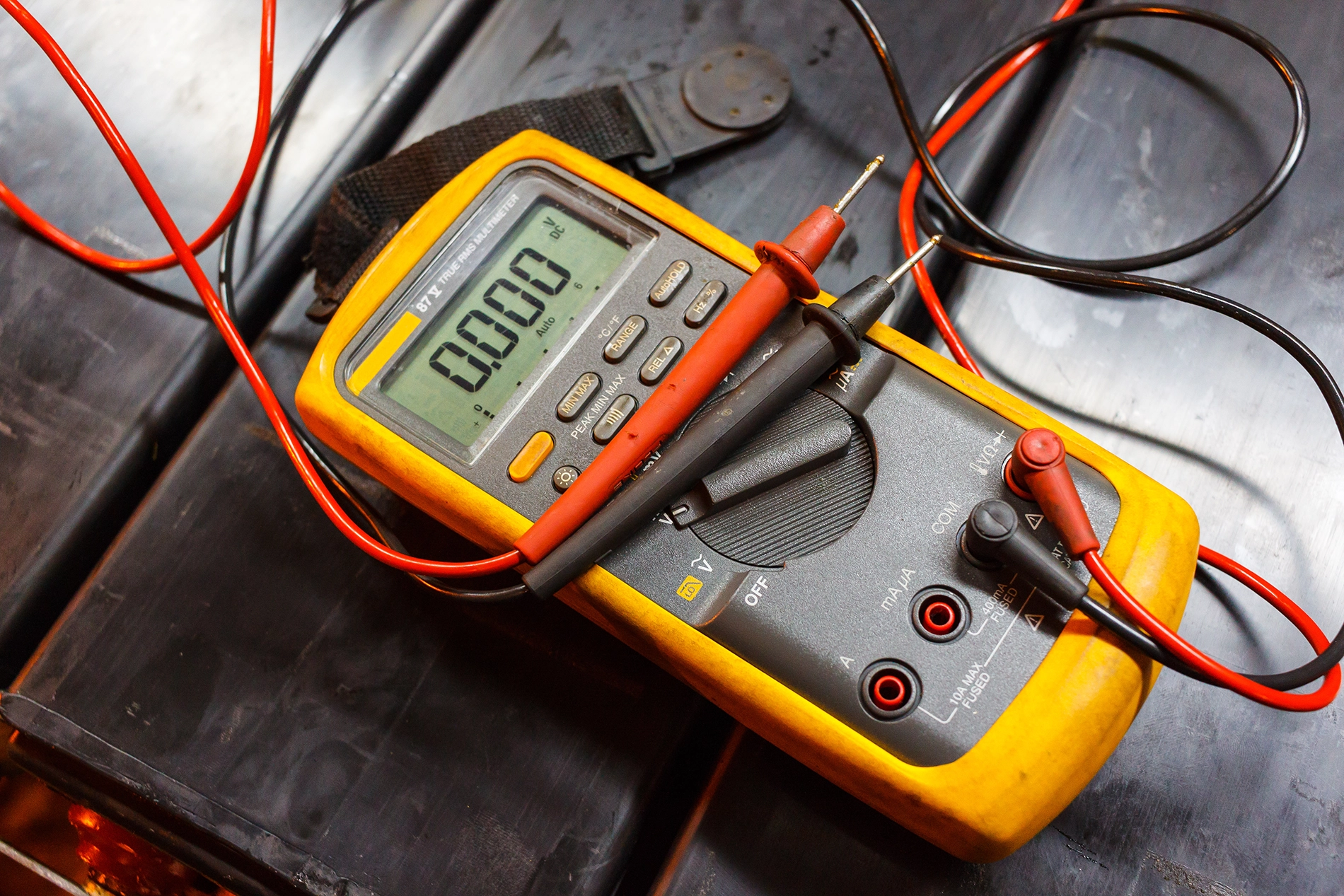
We always recommend a continuity resistance measurement after installation. Read more about the weakest link in an ESD chain.
Where it is used
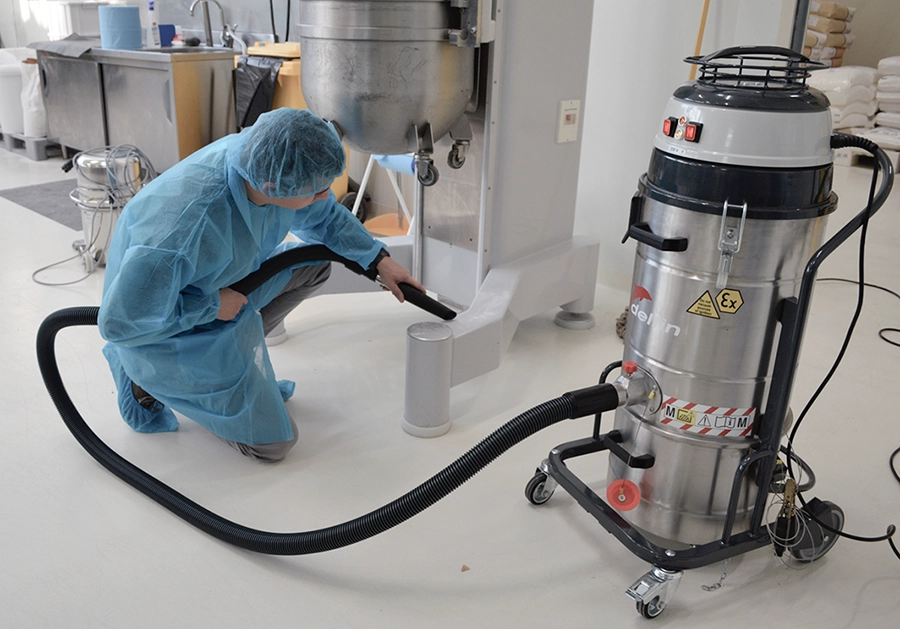
The hose is used in pneumatic transport of powders and granulates in chemical process plants, plastics industry, food factories and pharma production — wherever combustible dust is present in ATEX zones.
Typical systems include central extraction installations, filling and dosing stations, and pneumatic transport systems between silos and process reactors. ATEX approval is required for installation in Zone 21 and 22.
In plastics industry, chemical industry, printing industry the hose is part of an overall grounded system. Correct grounding is critical — without grounding, the antistatic property does not function in practice.
The formal name is AIRDUC® PUR 355 EC (HD). In daily use it is referred to as "the conductive heavy-duty PUR hose" or simply the "EC-HD hose" — it sits above 351 EC (MD) in abrasion class and covers higher throughput.
Technical specifications
Specifications are valid as of 2026-04-15. Fields without a value are not specified in source data.
| Material | Polyurethane (PUR) with conductive surface |
|---|---|
| Colour | Black, transparent interior |
| Wall construction | Heavy-duty PUR wall with internal conductive coating, embedded steel spiral |
| Conveyed media | Gas, dust, liquid, granulates and particles |
| Temperature range | −40 °C to +90 °C |
| Short-term peak | +125 °C |
| Smooth surface | Smooth interior |
| Electrical resistance | Conductive wall with surface and electrical resistance <103 Ω. Method: EN 60079-32-1, < 10³ Ω; surface resistivity per TRGS 727 |
| ATEX marking | II 1/2GD (interior zone 0/20, exterior zone 1/21) — fully conductive per TRGS 727 |
| Cut to length | Yes — Particulair cuts the hose to your dimensions |
Both variants are fully conductive (<103 Ω) and have identical ATEX approval (Zone 0/1/2 gas, Zone 20/21/22 dust, interior flammable liquids in zones 0/1/2). The difference is wall thickness: 351 EC has an MD wall (Type 2), 355 EC has an HD wall (Type 3). Choose 351 EC for light to medium abrasion loads; choose 355 EC where the medium is particularly abrasive and the process demands the higher abrasion tolerance.
Dimensions and ordering
AIRDUC® PUR 355 EC (HD) is supplied in 16 standard sizes from inner Ø 20 mm to 110 mm. Each size has its own article number at the manufacturer. Standard roll length is typically 10 m, and the hose can be cut to length.
| Inner Ø |
Outer Ø |
Wall thickness |
Working pressure |
Working pressure |
Vacuum |
Vacuum |
Bend radius |
Max. length |
Weight |
Roll |
Article no. |
|---|---|---|---|---|---|---|---|---|---|---|---|
| 20 | 27 | 1 | 2.93 | 4.74 | 1 | 1 | 20 | 25 | 0.21 | — | 35500201003 |
| 22 | 29 | 1 | 2.93 | 4.74 | 1 | 1 | 20 | 25 | 0.23 | — | 35500221003 |
| 25.1 | 32.1 | 1 | 2.93 | 4.74 | 0.95 | 1 | 20 | 25 | 0.26 | 10 | 35500251003 |
| 26 | 33 | 1 | 2.47 | 3.99 | 0.95 | 1 | 22 | 25 | 0.27 | — | 35500261003 |
| 30 | 40.5 | 1.4 | 2.47 | 3.99 | 0.95 | 1 | 25 | 25 | 0.46 | 10 | 35500301003 |
| 32 | 42.5 | 1.4 | 2.325 | 3.75 | 0.95 | 1 | 26 | 25 | 0.49 | — | 35500321003 |
| 33 | 43.5 | 1.4 | 1.975 | 3.19 | 0.915 | 1 | 30 | 25 | 0.5 | — | 35500331003 |
| 38 | 48.5 | 1.4 | 1.975 | 3.19 | 0.915 | 1 | 29 | 25 | 0.56 | 10 | 35500381003 |
| 40 | 50.5 | 1.4 | 1.88 | 3.03 | 0.905 | 1 | 30 | 30 | 0.59 | 10 | 35500401003 |
| 42 | 52.5 | 1.4 | 1.515 | 2.45 | 0.783 | 1 | 32 | 30 | 0.62 | — | 35500421003 |
| 48 | 58.5 | 1.4 | 1.515 | 2.45 | 0.783 | 1 | 34 | 30 | 0.69 | — | 35500481003 |
| 50.5 | 61 | 1.4 | 1.515 | 2.45 | 0.783 | 1 | 35 | 30 | 0.73 | 10, 15, 20 | 35500501003 |
| 55 | 65.5 | 1.4 | 1.385 | 2.23 | 0.712 | 1 | 38 | 30 | 0.79 | — | 35500551003 |
| 60 | 70.5 | 1.4 | 1.27 | 2.05 | 0.65 | 1 | 40 | 30 | 0.85 | 10 | 35500601003 |
| 64.5 | 74 | 1.4 | 1.175 | 1.9 | 0.603 | 1 | 43 | 30 | 0.9 | — | 35500651003 |
| 110 | 121 | 1.4 | 0.98 | 1.58 | 0.98 | 0.77 | 90 | 20 | 1.57 | 10 | 35501101003 |
Note: Fields without a value (—) are not specified in the manufacturer's factsheet. Overpressure and underpressure are recommended operating limits; the product can be subjected to higher loads on request. Bend radius is measured along the inside of the hose. Contact us for full specifications or special variants.

Standards and compliance
The hose is tested and certified to the following standards:
- ATEX 2014/34/EU (1999/92/EC). European directive for equipment and protective systems intended for use in potentially explosive atmospheres. The hose is certified under this legislation and may be used in the zones specified by the ATEX marking.
- TRGS 727. German technical rules for hazardous substances, avoidance of ignition sources when handling combustible dusts and liquids. The hose's electrical conduction meets TRGS 727's limit values.
- DIN 26057 Type 2. German industrial standard for hoses used in pneumatic transport. Defines types, dimensions, pressure and vacuum requirements, and test procedures for industrial pneumatic hoses.
- NFPA 652. American standard for the handling of combustible dust. The hose's surface resistance meets the specified limit for safe use in installations with ignitable dust.
- REACH (EC 1907/2006). EU regulation on registration, evaluation, authorisation and restriction of chemicals. The hose's materials are REACH-compliant; manufacturer's declaration is available for download.
- RoHS (Directive 2011/65/EU). Restriction of Hazardous Substances — restriction on the use of certain hazardous substances in electronic products. The hose's components comply with RoHS limit values.
Documentation and downloads
Additional documents about this hose, its compliance and installation. Click to download as PDF in a new tab.
Help with material selection
When you select a conductive or antistatic hose, it is not only the hose itself that determines whether the system is safe. These two articles go in depth with two concepts that are often misunderstood, and which are crucial for understanding whether a hose actually works as intended.
The invisible weakest link
A certified hose is only as safe as the system it is part of. About why grounding is often the weakest link in an ESD chain.
Know your ohm
The difference between antistatic and conductive is about numbers. About why 106, 109 and 103 Ω matter, even when nobody talks about it.
Industries that use it
The hose is used across a wide range of industries — below is an overview of the most typical industries where AIRDUC® PUR 355 EC (HD) is used:
In the chemical industry, the hose sits in pneumatic conveying systems where the medium is especially abrasive (granulates, powders, fine fractions) while the process is Zone 0 or Zone 20 — for instance in refineries, chemical production halls and injection-moulding installations.
In plastics, paper and textile industries, it is used for conveying granulates, paper dust and fibres in central systems. In construction and mining, it appears on mobile vacuum systems collecting flammable dust types, where a standard variant would not meet the Zone 20 requirement.
In mechanical engineering, machine tooling and surface technology, it features in local extractions on processes with static-electricity-generating media. In waste and recycling, it is used in sorting and pneumatic conveying. What unites these applications is that full conductivity combined with a heavy-duty wall is required — no other construction covers both dimensions.
Custom lengths and assemblies
AIRDUC® PUR 355 EC (HD) can be cut to length and assembled with couplings, cuffs and threads to fit your installation precisely. We produce complete hose assemblies with crimped ferrules, clamp collars or threaded connections, depending on what the process requires.
For ATEX installations it is particularly important that couplings and assemblies preserve the hose's electrical continuity. It's about the whole system conducting static electricity away, not just the hose itself.


Frequently asked questions
What's the difference between the AS and EC variant?
AS and EC concern electrical resistance: the AS variant is antistatic (surface resistance <10⁹ Ω), the EC variant is fully conductive (<10⁶ Ω). EC is required in Zone 20 and high-energy ESD; AS is sufficient for Zone 21 and 22.
Can the hose be used with flammable liquids?
It depends on the marking. The hose's full ATEX marking specifies which zones and which media it may be used for. Correct grounding is a prerequisite for the antistatic or conductive property to function in practice.
Is the hose flame-retardant?
Yes. The hose is specified to UL94-V2 and DIN 4102-B1 where indicated in the factsheet. This means it is self-extinguishing, but flame retardance does not replace ATEX compliance — they are two distinct safety properties.
Must the hose be grounded?
Yes, ALWAYS. The antistatic or conductive property only conducts charges if the hose is correctly grounded at both ends. Missing grounding is the most common cause of ATEX incidents.
How long does the hose last?
Service life depends heavily on the medium, flow velocity and grounding. Heavy-duty variants typically last 2-4 years under continuous operation with abrasive media; lighter variants half as long. Monthly visual inspection is recommended.