High-temperature · up to +100 °C
TEMPERFORM/BLUE
TEMPERFORM/BLUE is an EPDM cooling water hose for temperature control in injection moulding machines and industrial cooling circuits. The outer layer is ozone and UV resistant, and the blue colour identifies the hose in parallel installations with multiple circuits. Extreme flexibility and kink resistance make it well-suited to frequently bent installations.
- -20 to +100 C
- EN ISO 1307:2008
- Highly flexible
- REACH/RoHS
- Industrial
- Water/coolant medium
Why this hose?
TEMPERFORM/BLUE is built on EPDM elastomer as both outer and inner layer. EPDM is chosen because it combines three properties: ozone and UV resistance, glycol resistance (critical for cooling circuits with antifreeze), and high cycle resistance between -20 and 100 C.
The extreme flexibility and kink resistance come from the thin but heavily reinforced wall (4.65 mm with textile plies). Injection moulding machines often require compact installation where the hose must route around equipment without collapsing - exactly what TEMPERFORM is optimised for.
The blue colour is not only visual: in an injection moulding shop with 4-8 cooling circuits per machine, mis-connection is a real risk. Standard convention uses blue for supply and red for return (or cold vs hot). The TEMPERFORM series offers both colours from the same construction platform.
Where it is used
Injection moulding and plastics processing is the core market. Each machine typically has 2-8 cooling circuits that must fluctuate between cold and hot water in sync with the production cycle. TEMPERFORM/BLUE and /RED are used in parallel to identify circuits visually.
Aluminium smelters and surface treatment use the hose for cooling of moulds and tanks. The EPDM construction tolerates high surface temperatures at brief contact - relevant when the hose can come close to hot metal surfaces.
Textile and paper industries use TEMPERFORM as process water distribution. Long operating times and continuous temperature shifts are typical - exactly what the elastomer construction is built to withstand.
TEMPERFORM is colloquially known as an injection-moulding hose or cooling hose.
Technical specifications
The hose's key specifications are summarised briefly below. Contact us if you need explicit values at a specific operating temperature or application scenario.
| Outer wall material | EPDM |
|---|---|
| Inner lining material | EPDM |
| Reinforcement | Textile plies (polyester or textile reinforcement) |
| Outer wall colour | blue |
| Temperature range | -20 to +100 C |
| Working pressure | 20 bar |
| Outer wall construction | Smooth |
| Inner lining | Smooth extruded |
| Standard roll length | 40 m |
| Manufacturer SKU | 3128 |
Dimensions and ordering
The table shows the available standard dimensions. Contact us if your application scenario requires a specific wall thickness or coupling surface. Pressure values refer to 20 C; at higher operating temperatures the effective working pressure is reduced.
| Inner Ø |
Outer Ø |
Wall thickness |
Working pressure |
Burst pressure |
Bend radius |
Max. length |
Weight |
Roll |
Article no. |
|---|---|---|---|---|---|---|---|---|---|
| 9.5 | 18 | 4.65 | 20 | 60 | 75 | 40 | 0.265 | 40 | 3128009001 |
| 12.7 | 22 | 4.65 | 20 | 60 | 100 | 40 | 0.368 | 40 | 3128013001 |
Fields without a value (—) are not specified in the manufacturer's factsheet. Overpressure and underpressure values are recommended operating limits; the product can be subjected to higher loads on request. Bend radius is measured along the inside of the hose bend.

Standards and compliance
The hose is manufactured to European and international standards for industrial rubber and thermoplastic hoses. EN ISO 1307:2008 is the primary construction standard; other directives and certificates follow the manufacturer's quality system.
- EN ISO 1307:2008. European standard for rubber and thermoplastic hoses for general applications. Defines dimensions, pressure tolerance, durability and marking.
- EN ISO 8031:2020. Determination of electrical resistance in rubber and thermoplastic hoses. Used to confirm the hose's insulating character (water hoses are normally not conductive).
- EN ISO 8033:2016. Test of adhesion between lining, wall material and reinforcement. Ensures the hose's layers stay bonded under pressure and flexing.
- EN ISO 7233:2016. Determination of vacuum resistance. Relevant for water hoses operating with short-term negative pressure.
- RoHS Directive (2011/65/EU). Restriction of hazardous substances in electrical/electronic equipment. Manufacturer declaration on file.
- REACH (EC 1907/2006). Registration, Evaluation and Authorisation of Chemicals. Manufacturer declaration on request.
- ISO 9001:2015. Quality management system at the manufacturer. Ensures each production batch follows the same specification.
Documentation and downloads
Additional documents about this hose, its compliance and installation. Click to download as PDF in a new tab.
Help with material selection
Although this hose isn't ATEX-relevant, these two articles provide useful background on electrical resistance and industrial safety — important if you later combine the hose with electrical equipment or work in mixed environments:
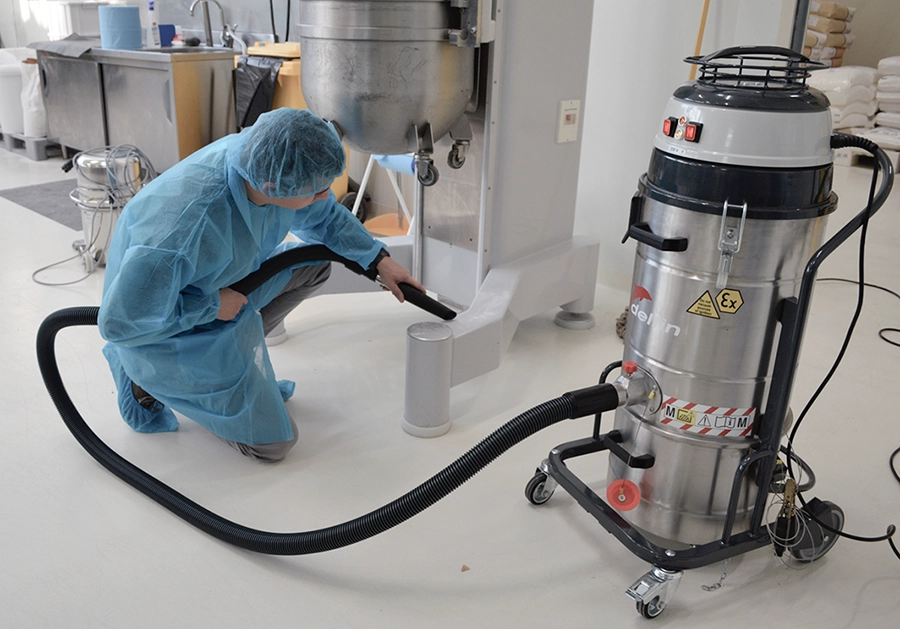
The invisible weakest link
Why a conductive or antistatic hose isn't sufficient on its own — and what grounding means for the complete system.
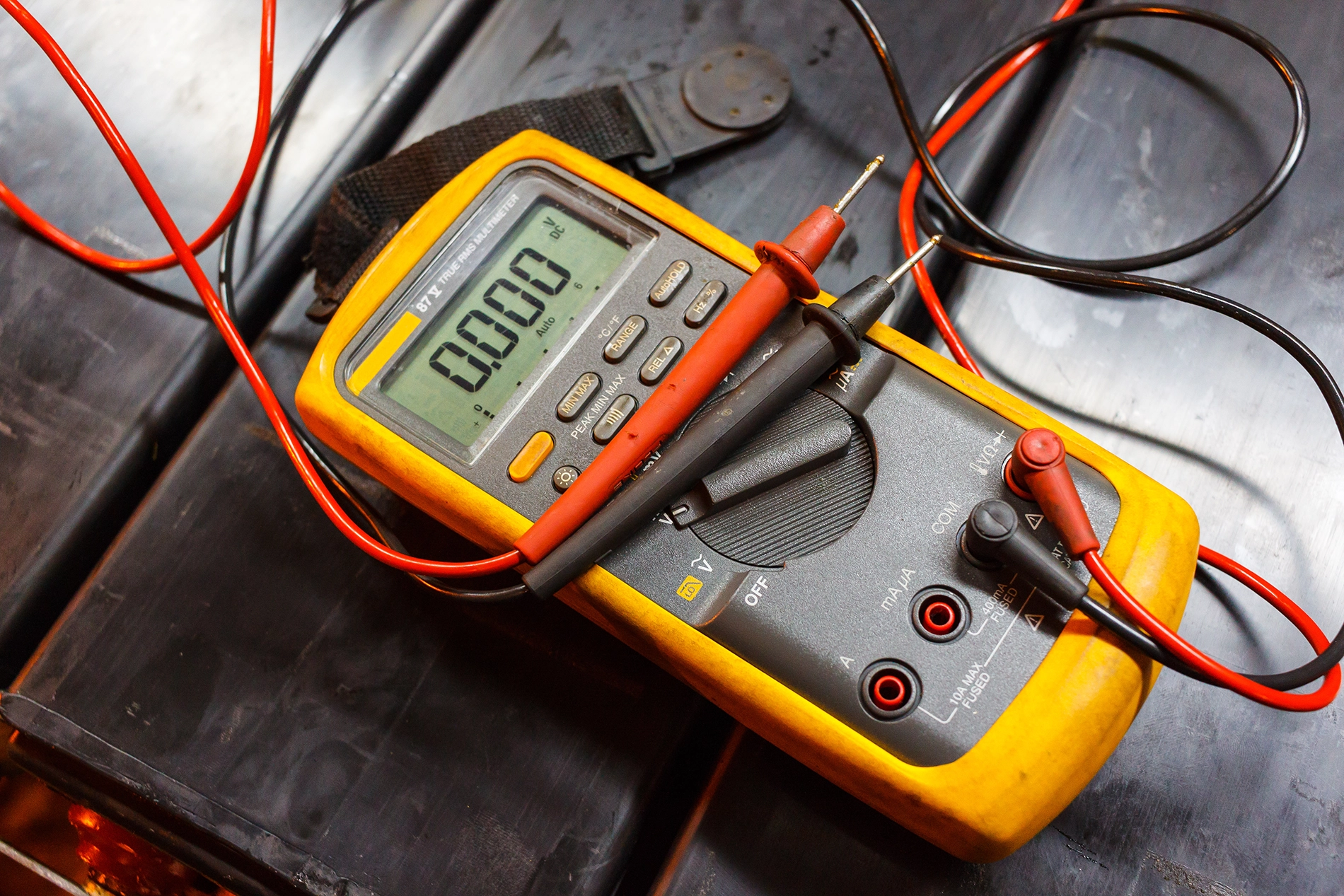
Know your ohm
The difference between antistatic and conductive, which resistance limits apply where, and how to measure them correctly.
Industries that use it
TEMPERFORM is typically used where a standard water hose must withstand both high pressure and continuous temperature shifts - most widespread in plastics processing and mechanical engineering.
Injection moulding and plastics processing is the primary market. Mould temperature control requires cold water in the cooling phase and hot water in the heating phase, often with switches every 30-60 seconds. EPDM tolerates this cycling for thousands of cycles.
Mechanical engineering (presses, hydraulics, motor units) and automotive production use TEMPERFORM in cooling circuits where temperature stability is critical for the process result. The blue or red colour is used to differentiate between supply and return.
Process industry (paper, textile, metal) uses the hose for cooling water distribution in production lines. EPDM is resistant to glycol-based antifreeze, making the hose well-suited to closed systems.
Custom lengths and assemblies
The hose can be delivered cut to desired lengths. The standard roll is 40 m, and shorter pieces or multiple rolls can be supplied by arrangement.
At Particulair we advise on couplings and sizing. Send us a sketch of your application and we will assess the right variant and length.


Frequently asked questions
What is the difference between TEMPERFORM/BLUE and TEMPERFORM/RED?
The two variants are functionally identical: same EPDM construction, same temperature and pressure class (-20 to 100 C, 20 bar working pressure). The primary difference is the colour of the outer layer - blue (SKU 3128) and red (SKU 3127). The colour is often used to differentiate several parallel cooling circuits in the same installation.
Which standards does TEMPERFORM comply with?
The hose is constructed per EN ISO 1307:2008 (rubber and thermoplastic hoses for general use). REACH and RoHS declarations are available from the manufacturer. The outer layer is ozone and UV resistant per the EPDM material's standard profile.
How high a pressure does the hose tolerate?
20 bar continuous working pressure, 60 bar burst pressure - a 3:1 safety margin. Pressure values are measured at 20 C; at higher operating temperatures (up to 100 C) the effective working pressure is reduced. Contact us for derating assessment at temperatures above 80 C.
Can the hose handle antifreeze and glycol?
Yes - EPDM is resistant to glycol-based antifreeze, which makes TEMPERFORM suitable for closed cooling circuits. EPDM is NOT compatible with mineral oil or petrol; for oil-bearing media you must use an NBR or PUR-based hose.
What is the minimum bend radius?
75 mm for the ID 9.5 mm variant, 100 mm for the ID 12.7 mm variant. Going below the bend radius can result in kink damage to the hose's reinforcement and thereby reduced service life. Use support bends or curved metal pipe transitions at sharp angles.
Which applications are typical?
Injection moulding machines (mould temperature control), aluminium smelters (cooling circuits), municipal vehicles (engine cooling), dyeworks (process water). The hose is built for a mix of cold and hot water that cycles - much more demanding than constant flow.
Can TEMPERFORM be used outdoors?
Yes - the EPDM outer layer is resistant to ozone, UV and weathering. The hose can lie visibly on factory floors or outdoor equipment without degradation. Annual inspection is recommended regardless of location to catch initial wear or crack formation.
Are there larger dimensions than 12.7 mm?
The TEMPERFORM series is limited to two dimensions (9.5 and 12.7 mm). For larger cooling circuits (up to 50 mm ID) we recommend the RADIACORD series with similar EPDM construction for water and antifreeze use, or industrial rubber hoses - contact us for advice.