Liquid hoses
TRIX ROTSTRAHL
TRIX ROTSTRAHL is a hose in black EPDM rubber with textile plies and six red longitudinal stripes. The manufacturer lists water, cooling water, process water, irrigation, compressed air and tank cleaning among its uses. The normal temperature range is −40 to +100°C. The hose is supplied in seven sizes from inner Ø 13 to 50 mm with working pressure from 20 bar in the smallest to 10 bar in the largest.
- Water and cooling water
- −40 to +100°C
- EPDM, UV and ozone resistant
- Up to 20 bar
- Ø 13 to 50 mm
- Cut to length
Why this hose?
TRIX ROTSTRAHL has an EPDM rubber inner tube and cover, textile plies and six red longitudinal stripes. The manufacturer describes the cover as ageing, ozone, UV and weather resistant.
Working pressure is 20 bar up to inner Ø 25 mm, 15 bar at Ø 32 and 38 mm and 10 bar at Ø 50 mm.
Where it is used
The manufacturer lists water, cooling water and process water, irrigation, roof drainage, pressure pumps, compressed air, rock drills, swimming pool cleaning, filling systems, wastewater, tank and plant cleaning, injection moulding machines and tunnel construction.
The formal name is TRIX ROTSTRAHL.
Technical specifications
Specifications are current as of 30 October 2026 and come from the manufacturer's data sheet. Fields without a value are not stated by the manufacturer.
| Inner tube and cover | EPDM rubber, black |
|---|---|
| Plies | Textile |
| Marking | Six red longitudinal stripes |
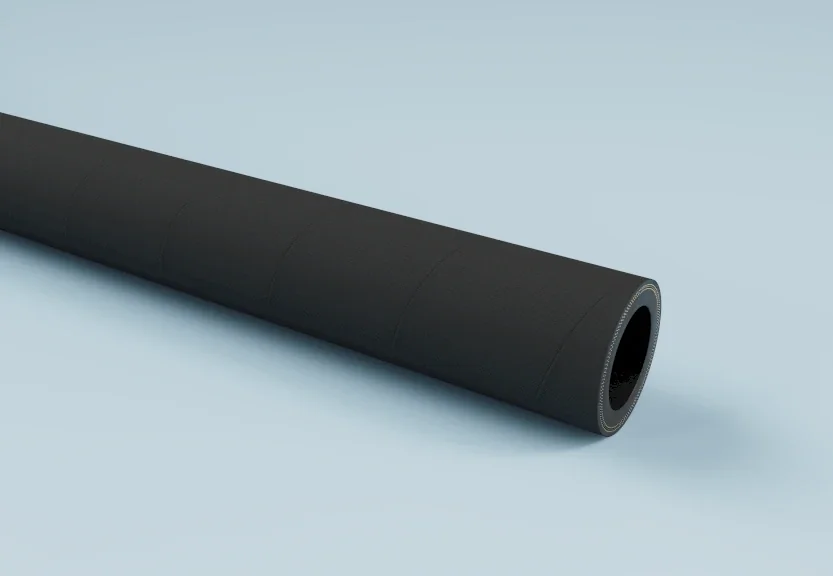
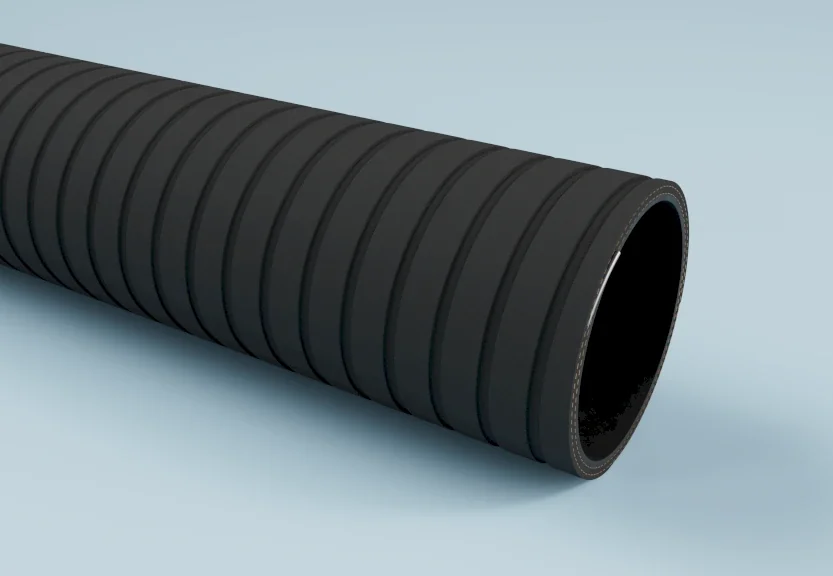
| Cover | Smooth up to inner Ø 25 mm, fabric-patterned from Ø 32 mm |
| Resistance | Ageing, ozone, UV and weather resistant |
| Conveying media | Liquid |
| Temperature range | −40°C to +100°C |
| Manufacturer SKU (model group) | 3025 |
Dimensions and ordering
The table shows the standard sizes from the manufacturer's data sheet. Fields without a value (—) are not stated.
| Inner Ø |
Outer Ø |
Wall thickness |
Working pressure |
Burst pressure |
Bend radius |
Max. length |
Weight |
Roll |
Article no. |
|---|---|---|---|---|---|---|---|---|---|
| 13 | 19 | 3 | 20 | 60 | 50 | 40 | 0.245 | 40 | 3025013000 |
| 16 | 23 | 3.5 | 20 | 60 | 60 | 40 | 0.33 | 40 | 3025016000 |
| 19 | 27 | 4 | 20 | 60 | 65 | 40 | 0.435 | 40 | 3025019000 |
| 25 | 34 | 4.5 | 20 | 60 | 110 | 40 | 0.58 | 40 | 3025025000 |
| 32 | 43 | 5.5 | 15 | 45 | 170 | 40 | 0.89 | 40 | 3025032000 |
| 38 | 50 | 6 | 15 | 45 | 200 | 40 | 1.1 | 40 | 3025038000 |
| 50 | 64 | 7 | 10 | 30 | 300 | 40 | 1.565 | 40 | 3025050000 |
Fields without a value (—) are not specified in the manufacturer's factsheet. Overpressure and underpressure values are recommended operating limits; the product can be subjected to higher loads on request. Bend radius is measured along the inside of the hose bend.

Standards and compliance
The manufacturer documents the following:
- EN ISO 1307:2008.
The manufacturer states no electrical resistance for the hose, so it must not be used for combustible dust.
Documentation and downloads
Additional documents about this hose, its compliance and installation. Click to download as PDF in a new tab.
Help with material selection
Although this hose isn't ATEX-relevant, these two articles provide useful background on electrical resistance and industrial safety — important if you later combine the hose with electrical equipment or work in mixed environments:
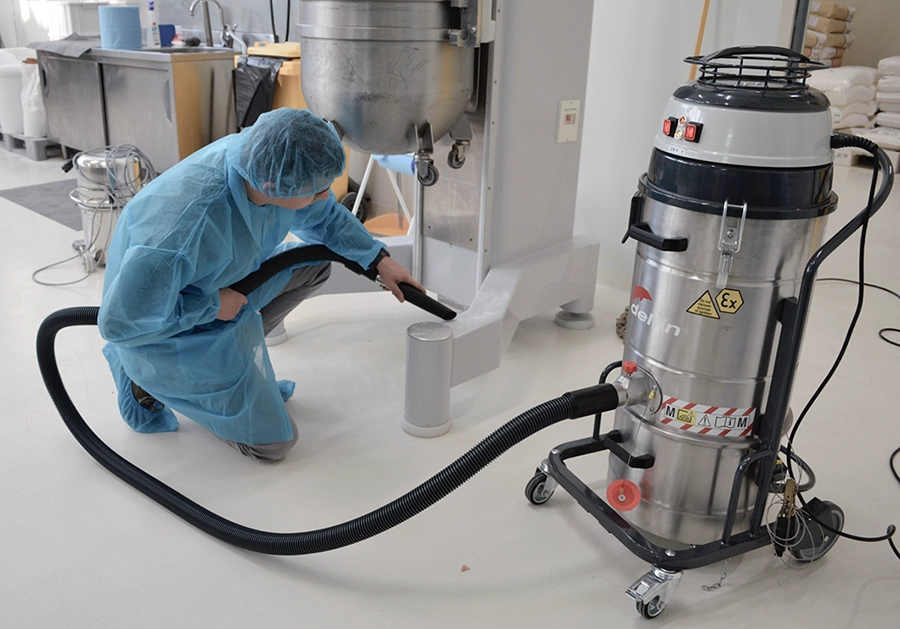
The invisible weakest link
Why a conductive or antistatic hose isn't sufficient on its own — and what grounding means for the complete system.
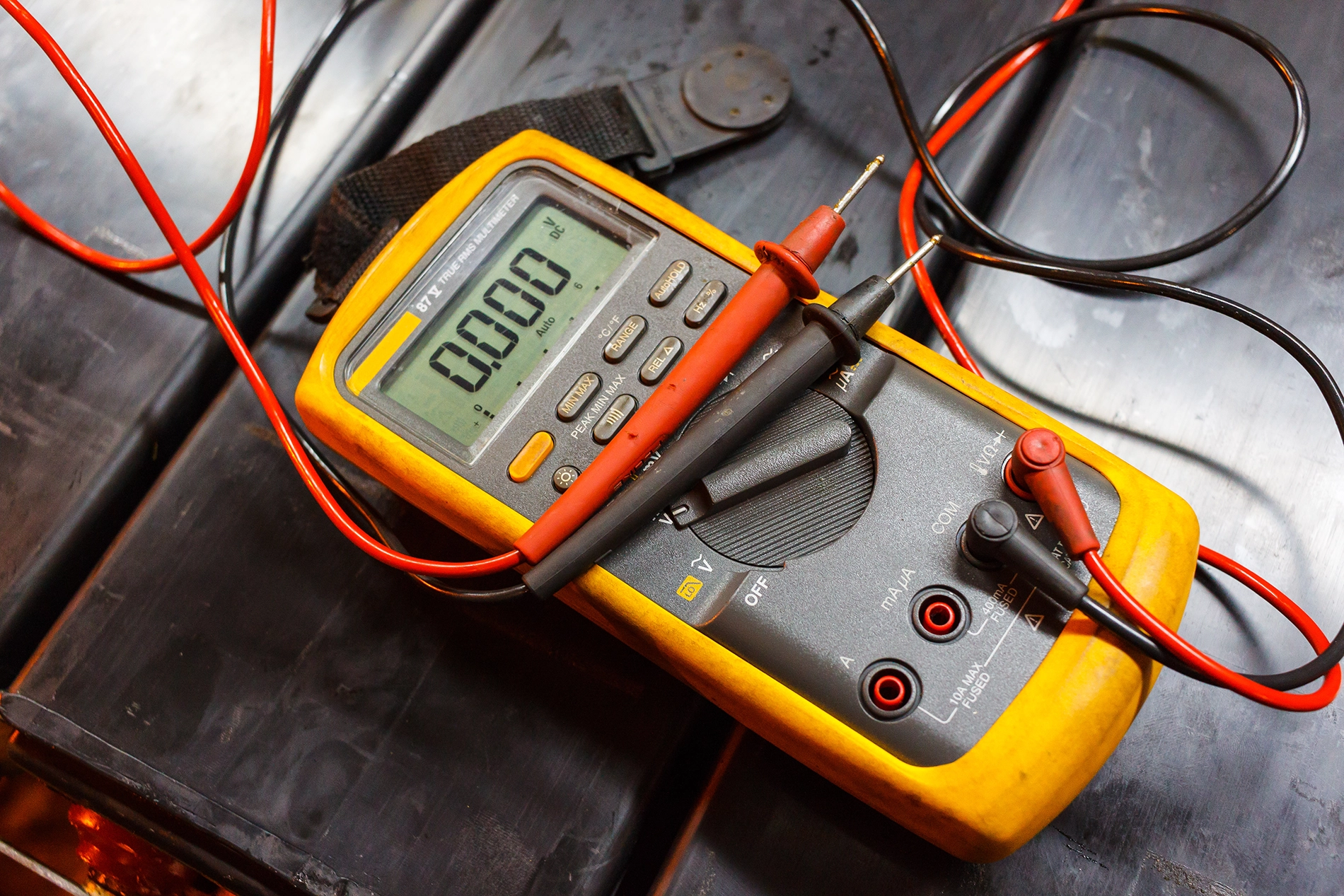
Know your ohm
The difference between antistatic and conductive, which resistance limits apply where, and how to measure them correctly.
Industries that use it
The hose is used in:
The manufacturer lists among others the chemical, ceramic, paper, textile, glass and plastics industries, construction, agriculture, horticulture and aquaculture, energy, machinery and automotive and municipal and environmental technology.
Custom lengths and assemblies
The hose can be cut to length and assembled with couplings. We advise on the assembly so the hose fits your installation.

Frequently asked questions
Why does the cover look different across sizes?
The manufacturer states that the cover is smooth up to inner Ø 25 mm and fabric-patterned from inner Ø 32 mm.