Abrasion-resistant · Abrasion-resistant
AIRDUC PVC 345 (HD)
AIRDUC PVC 345 (HD) is a heavy-duty (HD) PVC suction and pressure hose for industrial extraction of gas, dust, powder and fibres. The thicker wall (1.4 mm) and elevated pressure resistance set it apart from standard PVC hoses. Fire-modified per UL94-HB. Typically used in chemical industry, paper industry and general industrial filtration.
- -20 to +70 C
- UL94-HB
- 1.4 mm wall
- Heavy-duty
- Suction and pressure
- Dust/powder
Why this hose?
AIRDUC PVC 345 (HD) builds on a simple idea: if you take standard PVC suction and pressure hose and increase the wall thickness, you get higher collapse and burst resistance. That is precisely what the HD designation indicates - 1.4 mm wall thickness across the entire dimension spectrum gives more robust performance than 0.7-1.0 mm wall on standard PVC.
The fire modification per UL94-HB is a mild improvement that does not come at the cost of the material's flexibility or operating temperature. UL94-HB is the easiest fire test - the hose can burn, but flame spread is limited. This is enough to meet many general-purpose industrial requirements.
PVC is chosen as the material because it is cost-effective, has a broad chemical resistance spectrum and is easy to produce in consistent qualities. For specific applications (food, ATEX, railway) PUR or silicone are better alternatives - but for standard industrial extraction PVC is the proven solution.
Where it is used
Industrial extraction installations use the hose as a standard solution. Typical position is between suction point (above a process, dust filter or aeration system) and main filter or cyclone. The high vacuum resistance is decisive because industrial fans can create negative pressure above 0.5 bar.
Chemical and pharma industry use the hose for powder and granulate extraction. The hose's smooth outer and inner sides reduce particle accumulation, which is important to avoid contamination risk at batch changes.
General industry (shipbuilding, waste handling, process industry) use the hose as a general-purpose suction and pressure solution. The thicker wall thickness means lower replacement frequency than standard PVC - a commercially important aspect in installations running 24/7.
AIRDUC PVC 345 (HD) is colloquially known as a heavy-duty PVC hose or industrial extraction hose.
Technical specifications
The hose's key specifications are summarised briefly below. Pressure and vacuum values vary per dimension - see the dimensions table for precise values.
| Outer wall/lining material | PVC (polyvinyl chloride) |
|---|---|
| Wall thickness | 1.4 mm (all dimensions) |
| Reinforcement | Textile plies |
| Fire modification | UL94-HB |
| Colour | Black |
| Temperature range | -20 to +70 C (peak 80 C) |
| Working pressure | 0.6 to 2.67 bar (depending on dimension) |
| Vacuum | Up to 1 bar (smallest dimensions) |
| Standard roll length | 25-30 m (depending on dimension) |
| Manufacturer SKU | 3450000 |
Dimensions and ordering
The table shows the available standard dimensions. Pressure and vacuum values fall gradually with increasing ID. Wall thickness is consistent 1.4 mm across the entire spectrum.
| Inner Ø |
Outer Ø |
Wall thickness |
Working pressure |
Vacuum |
Bend radius |
Max. length |
Weight |
Roll |
Article no. |
|---|---|---|---|---|---|---|---|---|---|
| 20 | 28 | 1.4 | 2.665 | 1 | 18 | 25 | 0.3 | 10 | 34500200000 |
| 25.1 | 33.1 | 1.4 | 2.33 | 1 | 21 | 25 | 0.38 | 10 | 34500250000 |
| 30 | 40 | 1.4 | 1.97 | 0.97 | 25 | 25 | 0.44 | 10 | 34500300000 |
| 32 | 42 | 1.4 | 1.86 | 0.91 | 26 | 25 | 0.47 | 10 | 34500320000 |
| 35 | 45 | 1.4 | 1.71 | 0.83 | 28 | 25 | 0.51 | — | 34500350000 |
| 38 | 48 | 1.4 | 1.585 | 0.765 | 29 | 25 | 0.54 | — | 34500380000 |
| 40 | 50 | 1.4 | 1.51 | 0.725 | 30 | 30 | 0.57 | 10 | 34500400000 |
| 42 | 52 | 1.4 | 1.365 | 0.86 | 31 | 30 | 0.6 | 10 | 34500420000 |
| 50.5 | 60.5 | 1.4 | 1.22 | 0.84 | 35 | 30 | 0.67 | 10, 15 | 34500500000 |
| 60 | 70 | 1.4 | 1.025 | 0.485 | 40 | 30 | 0.82 | 10 | 34500600000 |
| 64.5 | 74.5 | 1.4 | 0.95 | 0.45 | 43 | 30 | 0.88 | 10 | 34500650000 |
| 70 | 82 | 1.4 | 0.885 | 0.38 | 63 | 30 | 1.06 | 10 | 34500700000 |
| 75 | 87 | 1.4 | 0.83 | 0.33 | 67 | 30 | 1.13 | 10 | 34500750000 |
| 80 | 92 | 1.4 | 0.78 | 0.31 | 70 | 30 | 1.2 | 10 | 34500800000 |
| 85 | 97 | 1.4 | 0.735 | 0.44 | 74 | 30 | 1.27 | — | 34500850000 |
| 90 | 102 | 1.4 | 0.695 | 0.275 | 77 | 30 | 1.34 | — | 34500900000 |
| 100 | 112 | 1.4 | 0.625 | 0.255 | 84 | 25 | 1.48 | 10 | 34501000000 |
| 105 | 117 | 1.4 | 0.6 | 0.32 | 88 | 25 | 1.55 | — | 34501050000 |
| 110 | 122 | 1.4 | 0.57 | 0.23 | 91 | 25 | 1.62 | 10 | 34501100000 |
| 112 | 124 | 1.4 | 0.545 | 0.22 | 92 | 25 | 1.65 | — | 34501120000 |
| 115 | 127 | 1.4 | 0.545 | 0.22 | 95 | 25 | 1.69 | — | 34501150000 |
| 120 | 132 | 1.4 | 0.525 | 0.21 | 98 | 25 | 1.76 | — | 34501200000 |
| 126.5 | 138.5 | 1.4 | 0.505 | 0.205 | 102 | 25 | 1.85 | 10 | 34501250000 |
| 130 | 142 | 1.4 | 0.485 | 0.195 | 105 | 25 | 1.9 | 10 | 34501300000 |
| 140 | 152 | 1.4 | 0.45 | 0.18 | 112 | 25 | 2.04 | 10 | 34501400000 |
| 151.5 | 163.5 | 1.4 | 0.42 | 0.17 | 119 | 20 | 2.36 | 10 | 34501500000 |
| 160 | 172 | 1.4 | 0.395 | 0.16 | 126 | 20 | 2.49 | — | 34501600000 |
| 180 | 192 | 1.4 | 0.35 | 0.14 | 140 | 20 | 2.79 | — | 34501800000 |
| 202.3 | 215.3 | 1.4 | 0.315 | 0.1 | 156 | 15 | 3.03 | 10 | 34502000000 |
| 225 | 238 | 1.4 | 0.28 | 0.095 | 174 | 15 | 3.36 | — | 34502250000 |
| 250 | 263 | 1.4 | 0.255 | 0.085 | 191 | 15 | 3.73 | — | 34502500000 |
| 300 | 313 | 1.4 | 0.21 | 0.075 | 226 | 10 | 4.45 | — | 34503000000 |
| 315 | 328 | 1.4 | 0.18 | 0.06 | 238 | 10 | 5.16 | — | 34503150000 |
| 320 | 333 | 1.4 | 0.18 | 0.06 | 245 | 10 | 5.24 | — | 34503200000 |
| 350 | 363 | 1.4 | 0.18 | 0.06 | 261 | 10 | 5.72 | — | 34503500000 |
Fields without a value (—) are not specified in the manufacturer's factsheet. Overpressure and underpressure values are recommended operating limits; the product can be subjected to higher loads on request. Bend radius is measured along the inside of the hose bend.

Standards and compliance
The hose is manufactured to European standards for industrial PVC hoses.
- EN ISO 1307:2008. European standard for rubber and thermoplastic hoses for general use.
- UL94-HB. American fire test standard. The hose is classified as 'horizontal burning' - flame spread is limited.
- EN ISO 8033:2016. Test of adhesion between lining, wall material and reinforcement.
- EN ISO 7233:2016. Determination of vacuum resistance.
- RoHS Directive (2011/65/EU). Restriction of hazardous substances.
- REACH (EC 1907/2006). Registration of chemical substances.
- ISO 9001:2015. Quality management system at the manufacturer.
Documentation and downloads
Additional documents about this hose, its compliance and installation. Click to download as PDF in a new tab.
Help with material selection
Although this hose isn't ATEX-relevant, these two articles provide useful background on electrical resistance and industrial safety — important if you later combine the hose with electrical equipment or work in mixed environments:
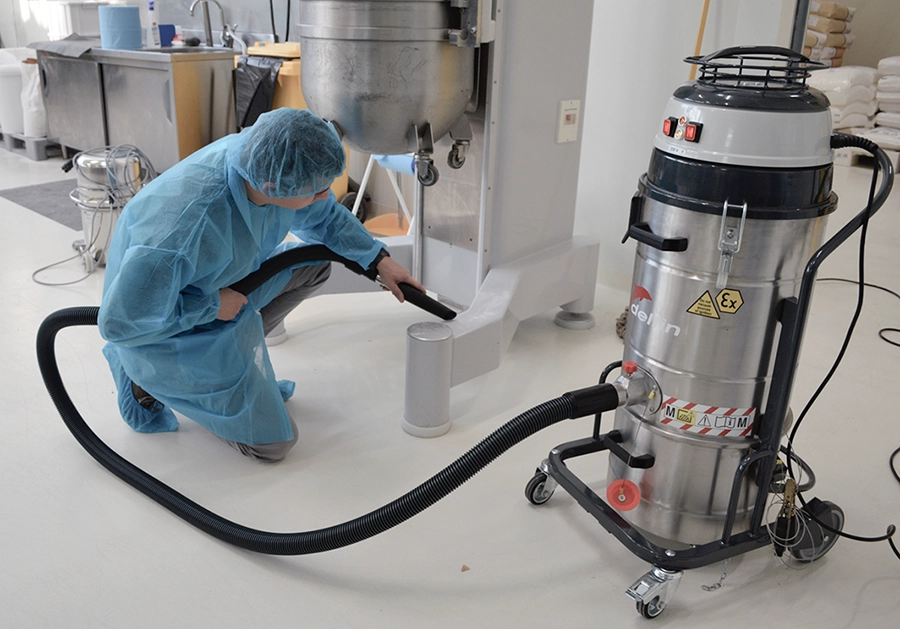
The invisible weakest link
Why a conductive or antistatic hose isn't sufficient on its own — and what grounding means for the complete system.
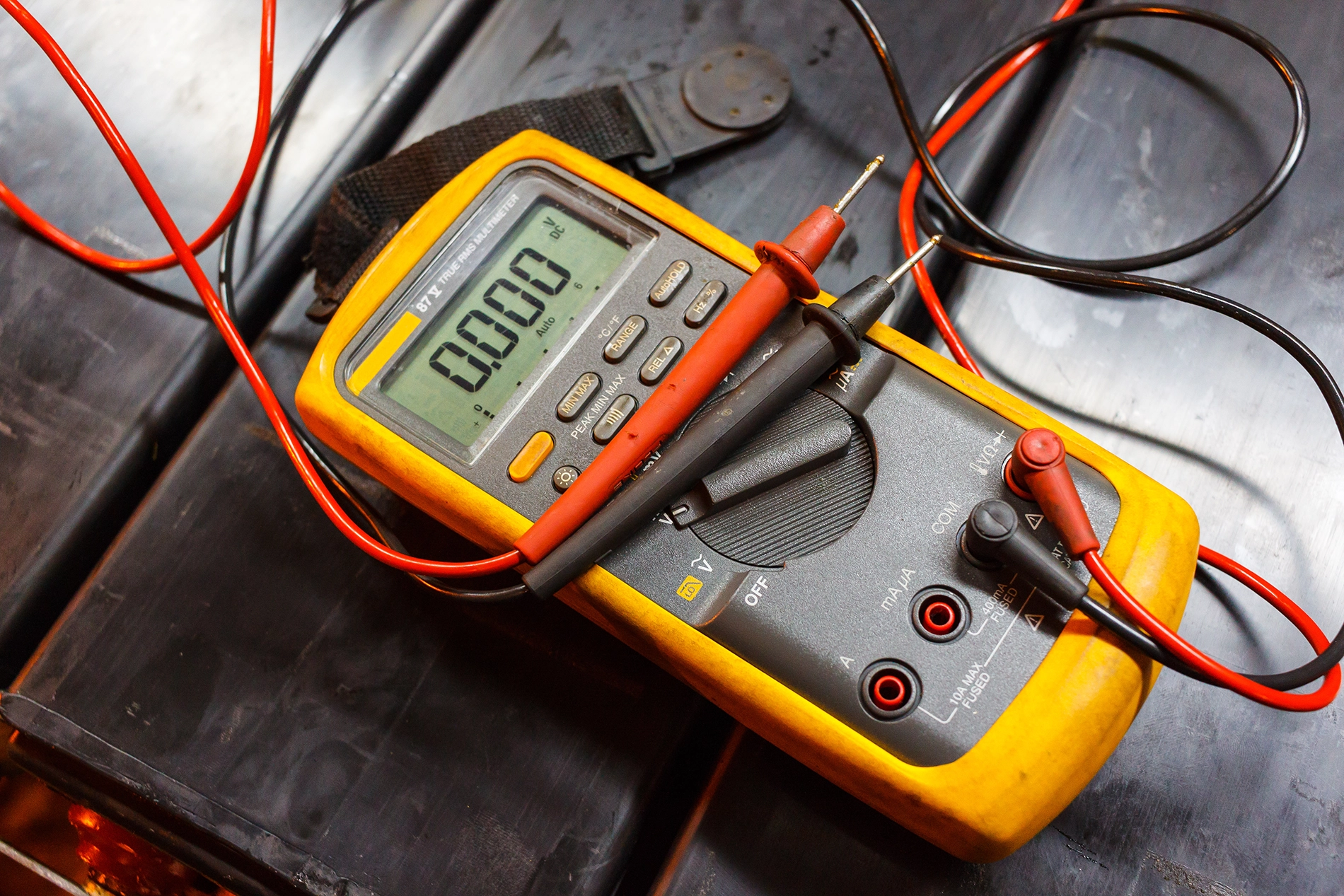
Know your ohm
The difference between antistatic and conductive, which resistance limits apply where, and how to measure them correctly.
Industries that use it
AIRDUC PVC 345 (HD) is used where a heavy-duty PVC suction and pressure hose must withstand extreme pressure load - typically in industrial extraction and filtration.
Industrial extraction and filtration is the main market. The hose is typically mounted between suction point and main filter or cyclone, where powerful fans create both high negative pressure and high positive pressure in line with operating cycles. The thicker wall thickness is decisive for collapse resistance.
Chemical and pharma industry use the hose for powder and granulate extraction. PVC's chemical resistance is broader than many think - covers far most typical industrial dusts. For reactive media (acids, bases) we recommend PUR or EPDM-based alternatives.
Shipbuilding and general industry use the hose as a standard solution for ad-hoc extraction and service functions. The fire-modified formulation (UL94-HB) is a mild reassurance in industrial environments - although not strong enough for strict fire approval.
Custom lengths and assemblies
The hose can be delivered cut to desired lengths. The standard roll can be supplemented with shorter pieces or multiple rolls by arrangement.
At Particulair we advise on couplings and sizing. Send us a sketch of your application and we will assess the right variant and length.


Frequently asked questions
What is the difference between AIRDUC PVC 345 (HD) and standard PVC hoses?
HD = heavy duty. AIRDUC PVC 345 (HD) has thicker wall (1.4 mm) and higher pressure resistance than standard PVC suction and pressure hoses. This gives higher collapse resistance under suction and higher pressure resistance - relevant in industrial extraction installations with powerful fan systems.
Is the hose fire-approved?
The hose is fire-modified per UL94-HB - a mild fire resistance class. UL94-HB means the hose can burn, but the flame spreads slowly - not enough to be approved for railway (EN 45545-2) or marine. For strict fire requirements we recommend a variant with EN 45545-2 approval.
Which media can the hose handle?
Dust, powder, fibres and particulate solid material, plus gas and vapors. PVC is resistant to most industrial dusts, but NOT to strong acids, bases or halogenated solvents. For these media we recommend a PUR or EPDM-based hose.
What are the available dimensions?
A wide range from ID 20 mm to ID 100+ mm. The pressure class and vacuum resistance vary per dimension - smaller hoses tolerate higher pressure. For extreme forces (above the specified values) we recommend a variant with spiral reinforcement - contact us.
How warm does the hose tolerate?
Standard operation is -20 to +70 C. Brief peaks up to 80 C are allowed. This covers most industrial extraction applications where air temperature is moderate. For warmer media (above 90 C) we recommend a silicone or TPE-based hose like NORFLEX SIL 408 or VENTILAZIONE/CALOR.
What is the minimum bend radius?
The bend radius starts at 18 mm for the 20 mm ID variant and increases gradually to over 80 mm for the largest dimensions. Going below the bend radius can result in kink damage to the hose's wall and thereby reduced service life. Use support bends or curved metal pipe transitions at sharp angles.
Is the hose suitable for continuous operation?
Yes - the hose is constructed for continuous operation within the specified pressure and temperature range. Daily industrial use typically gives 5-10 years service life if the hose is not subjected to extreme bends or chemicals beyond its resistance spectrum.
Can the hose be delivered in specific lengths?
Yes - 25-30 m is the standard roll, but shorter cut pieces are available by arrangement. The hose can also be delivered pre-assembled with couplings and support pipework - contact us for specific installation configuration.