Abrasion-resistant · Abrasion-resistant
NORPLAST® PUR 387 ANTIABRASIVO®/AS
Abrasion-resistant suction and pressure hose with PU inner lining and antistatic cover (resistance <10⁹ Ω per ISO 8031). Designed for transport of heavy, abrasive media — gravel, mud, cement, grain, sand and similar. Internal abrasion value is from 30 mm³, which is a low value for the category. Service from −15 °C to +60 °C. EN ISO 1307:2008 standard.
- Abrasion 30 mm³ (PU)
- Antistatic <10⁹ Ω
- Suction + pressure
- −15 to +60 °C
- ISO 8031
- Cut to length
Why this hose?
NORPLAST® PUR 387 ANTIABRASIVO®/AS is specialised for the toughest transport tasks: gravel, sand, cement, mud and grain. The PU inner lining is what makes the difference — internal abrasion value is from 30 mm³, which is a low value for the category of flexible hoses.
The antistatic property (resistance <10⁹ Ω per ISO 8031) is important because dry granulate flow through an insulating hose builds up static electricity — at worst enough to give the user a shock or ignite fine dust. The hose's antistatic cover dissipates the charge safely, provided the hose is correctly grounded.
Where it is used
On construction sites it typically sits on cement pumps and concrete mixers — where the medium is aggressively abrasive and where mobility is needed. The PU inner lining combined with the PVC outer cover's stiffness gives a good balance between abrasion resistance and flexibility.
In agriculture it's used for grain transport during unloading from silo or tanker to handling equipment. The antistatic property is particularly important here because dry grain dust can be explosive in closed systems.
In everyday talk we call it a "PU antiabrasivo" or "slid hose" — it's the most robust of the antistatic suction hoses.
Technical specifications
Technical specifications for NORPLAST® PUR 387 ANTIABRASIVO®/AS.
| Material | PU inner lining, PVC antistatic outer cover |
|---|---|
| Abrasion value | From 30 mm³ (DIN 53516) |
| Resistance | <109 Ω (ISO 8031) |
| Temperature | −15 to +60 °C |
| Conformity | EN ISO 1307:2008, ISO 8031, REACH, RoHS |
| Cut to length | Yes |
| Manufacturer SKU group | 4660 |
Dimensions and ordering
Standard dimensions for NORPLAST® PUR 387 ANTIABRASIVO®/AS.
| Inner Ø |
Outer Ø |
Wall thickness |
Working pressure |
Vacuum |
Bend radius |
Max. length |
Weight |
Roll |
Article no. |
|---|---|---|---|---|---|---|---|---|---|
| 76 | 92 | 8 | 6.5 | 0.8 | 456 | 50 | 2.3 | 50 | 4660075000 |
| 102 | 120 | 9 | 4 | 0.8 | 612 | 30 | 3.28 | 30 | 4660100000 |
| 127 | 147 | 10 | 3.5 | 0.8 | 762 | 30 | 4.5 | 30 | 4660125000 |
| 152 | 173 | 10.5 | 3 | 0.8 | 912 | 20 | 6.1 | 20 | 4660150000 |
Fields without a value (—) are not specified in the manufacturer's factsheet. Overpressure and underpressure values are recommended operating limits; the product can be subjected to higher loads on request. Bend radius is measured along the inside of the hose bend.

Standards and compliance
NORPLAST® PUR 387 ANTIABRASIVO®/AS conforms to:
- EN ISO 1307:2008. International standard for hose dimensions.
- ISO 8031. Test standard for electrical resistance in hoses; the antistatic value <10⁹ Ω is measured per this standard.
- REACH and RoHS. EU directives for chemicals and hazardous substances.
Documentation and downloads
Additional documents about this hose, its compliance and installation. Click to download as PDF in a new tab.
Help with material selection
If you're choosing a hose and are unsure about the right resistance level or zone classification, these two articles are a good place to start:
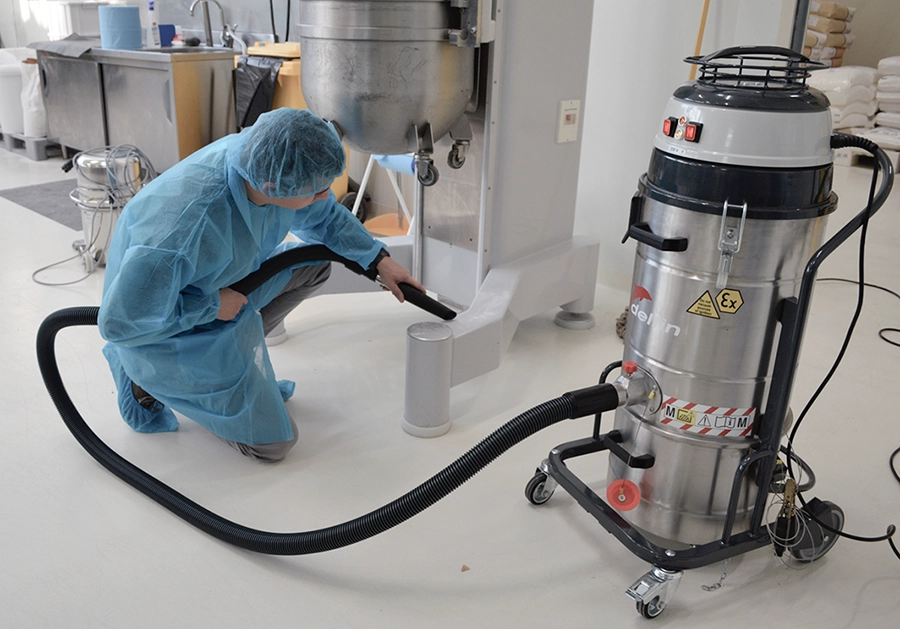
The invisible weakest link
Why a conductive or antistatic hose isn't sufficient on its own — and what grounding means for the complete system.
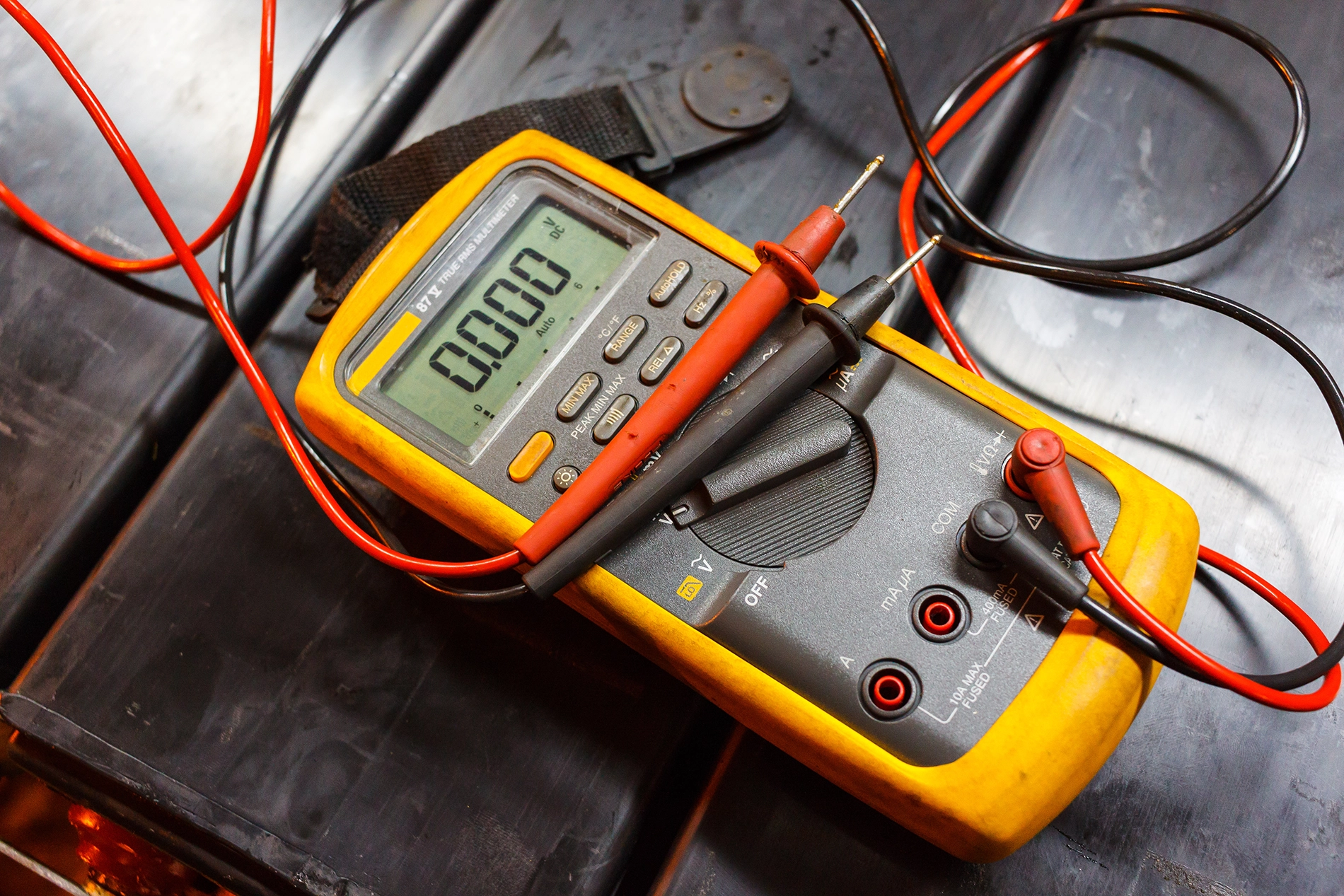
Know your ohm
The difference between antistatic and conductive, which resistance limits apply where, and how to measure them correctly.
Industries that use it
NORPLAST® PUR 387 ANTIABRASIVO®/AS is used in industries where abrasion and static electricity are both challenges:
In construction it's standard on cement and concrete handling. The PU inner lining's abrasion resistance means the hose can handle thousands of pump cycles before replacement.
In agricultural grain and feed handling, the combination of abrasion resistance and the antistatic property is ideal — especially on closed pneumatic transport systems where dust explosion is a real risk.
Custom lengths and assemblies
The hose is delivered on 50 m rolls. We cut to length and fit Camlock, clamp ring or flange couplings as a finished assembly.
For serial deliveries we can establish consistent assembly across the delivery.


Frequently asked questions
How abrasion-resistant is the PU inner lining?
Abrasion value is from 30 mm³ measured per DIN 53516. It's a low value among flexible hoses and means the hose can handle thousands of pump cycles with abrasive media like gravel or sand before visible wear on the inner lining.
What's the difference between antistatic and conductive?
Antistatic: resistance 10⁶-10⁹ Ω, dissipates charge slowly. Conductive: resistance <10⁶ Ω, dissipates quickly. Antistatic is sufficient for most dust and granulate applications; conductive is required in higher ATEX zones and where high-energy static is a risk.
Does the hose need to be grounded?
Yes. The antistatic property only works if the hose is correctly grounded. Without grounding, charge just builds up in the hose instead of being dissipated — and can trigger an explosion or give a static shock.
Is it ATEX-approved?
It's antistatic-marked but not formally ATEX-marked. For Zone 22 (occasional dust) the antistatic property is often sufficient after risk assessment. For Zone 20 and 21 choose a formally ATEX-marked hose (e.g. metal-hose-inox-376).
Does it tolerate wet cement and concrete?
Yes. The PU inner lining is chemically neutral toward cement pH and abrasion-resistant toward the aggressive particles in mortar and concrete. It's a standard application for the hose.
Can I get it with Camlock couplings?
Yes. For construction sites and mobile installations Camlock couplings are practical — we fit them permanently as a finished assembly. We can also fit clamp ring or flange according to your specific setup.