Chemical-resistant · Chemical-resistant
CP HYP 450
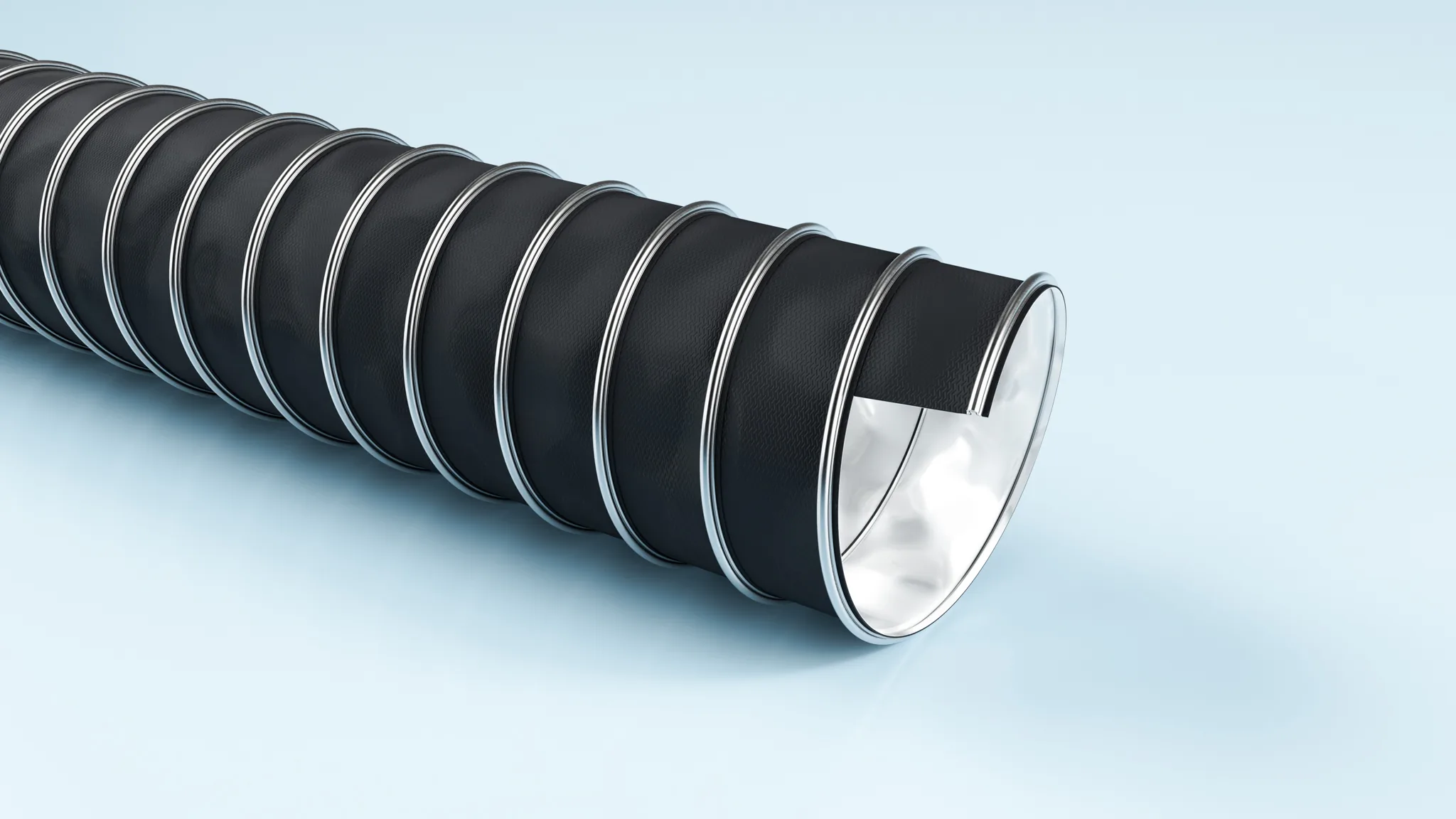
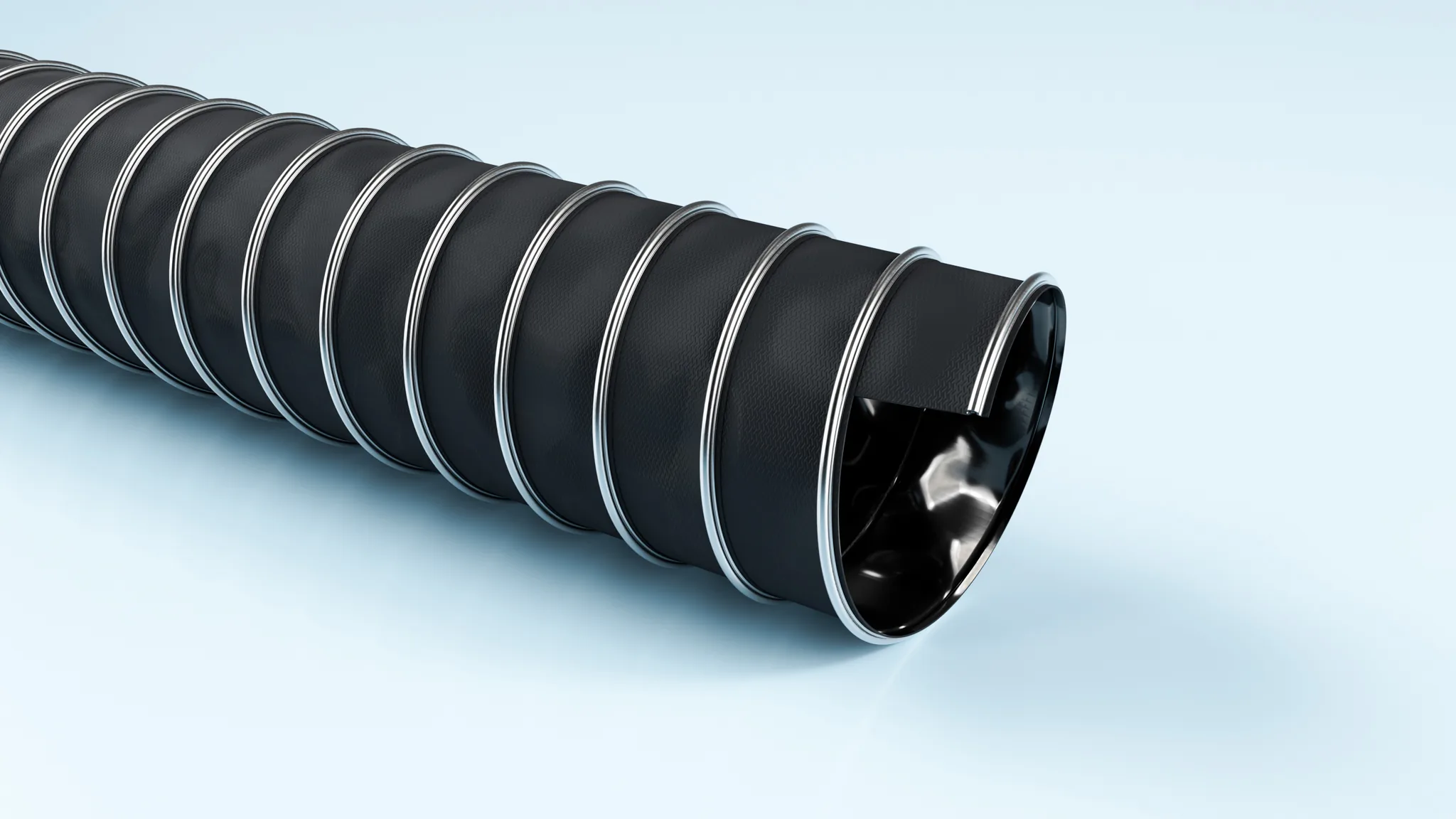
Highly flexible clamp profile hose in HYP (Hypalon, chlorosulfonated polyethylene), heat-resistant up to +170 °C, vibration-resistant and chemical-resistant. Designed for extraction of hot and cold gases as well as vapour and aerosol handling. The HYP formulation combines chemical resistance with higher temperature tolerance than PE-based hoses.
- +150 °C / +170 °C peak
- Chemical-resistant HYP
- Vibration-resistant + compressible 4:1
- Gas, dust, vapours
- Galvanised steel clamp
- Cut to length
Why this hose?
CP HYP 450 fills a niche between PE- and aramid-based CP hoses. The Hypalon construction handles up to +170 °C peak — higher than PE's +80 °C but below aramid's +300 °C. That range fits many classical exhaust and extraction applications where temperature is moderate-high.
Vibration resistance is a tangible advantage on machine installations where the hose is exposed to constant vibration over long-term operation. Combined with chemical resistance, it is the preferred choice when chemical media combine with moderate-high temperatures.
Where it is used
In practice CP HYP 450 is seen on vapour and chemical vapour extraction, oil mist on machinery and aerosol handling in hot processes.
The formal product name is CP HYP 450. In daily use: "the HYP hose" or "450".
Technical specifications
Specifications are current as of 15 April 2026 and refer to 20 °C unless otherwise stated.
| Material | Hypalon (chlorosulfonated PE) with galvanised steel clamp |
|---|---|
| Wall construction | Clamp profile, vibration-resistant |
| Temperature range | −40 °C to +150 °C (continuous) |
| Short-term peak | +170 °C |
| Durability | Vibration-resistant, chemical-resistant |
| Cut to length | Yes |
| Manufacturer SKU (model group) | 4500000 |
Dimensions and ordering
The table shows the main variants from the manufacturer's factsheet. Fields without a value (—) are not specified. Diameters, pressure values and bend radii are normative; weights and roll lengths are typical production values.
| Inner Ø |
Outer Ø |
Working pressure |
Vacuum |
Bend radius |
Max. length |
Weight |
Roll |
Article no. |
|---|---|---|---|---|---|---|---|---|
| 38 | 50 | 0.785 | 0.45 | 21 | 20 | 0.57 | 3, 6 | 45000380000 |
| 40 | 52 | 0.765 | 0.44 | 22 | 20 | 0.59 | 6 | 45000400000 |
| 45 | 57 | — | — | — | 20 | 0.66 | — | 45000450000 |
| 50.5 | 62.5 | 0.63 | 0.38 | 25 | 20 | 0.63 | 3, 6 | 45000500000 |
| 55 | 67 | 0.6 | 0.35 | 27 | 20 | 0.69 | 6 | 45000550000 |
| 60 | 72 | 0.57 | 0.32 | 28 | 20 | 0.74 | 6 | 45000600000 |
| 64.5 | 76.5 | 0.545 | 0.29 | 30 | 20 | 0.79 | 6 | 45000650000 |
| 70 | 82 | 0.525 | 0.26 | 31 | 20 | 0.85 | 6 | 45000700000 |
| 75.6 | 87.6 | 0.5 | 0.23 | 33 | 20 | 0.92 | 6 | 45000750000 |
| 75.6 | 87.6 | — | — | — | 20 | 0.92 | — | 45000760000 |
| 80 | 92 | 0.485 | 0.2 | 34 | 20 | 0.97 | 6 | 45000800000 |
| 90 | 102 | 0.45 | 0.14 | 37 | 20 | 1.08 | 6 | 45000900000 |
| 101.5 | 113.5 | 0.3 | 0.12 | 28 | 20 | 0.93 | 6 | 45001000000 |
| 105 | 117 | — | — | — | 20 | 0.96 | — | 45001050000 |
| 110 | 122 | 0.285 | 0.105 | 30 | 20 | 1 | 3, 6 | 45001100000 |
| 115 | 127 | 0.275 | 0.098 | 32 | 20 | 1.04 | 3, 6 | 45001150000 |
| 120 | 132 | 0.27 | 0.09 | 32 | 20 | 1.09 | 3, 6 | 45001200000 |
| 126.5 | 138.5 | 0.26 | 0.085 | 34 | 20 | 1.14 | 3, 6 | 45001250000 |
| 130 | 142 | 0.255 | 0.075 | 34 | 20 | 1.17 | 3, 6 | 45001300000 |
| 140 | 152 | 0.245 | 0.06 | 36 | 20 | 1.26 | 3, 6 | 45001400000 |
| 151.5 | 163.5 | 0.165 | 0.05 | 38 | 20 | 0.98 | 3, 6 | 45001500000 |
| 155 | 167 | — | — | — | 20 | 1.01 | — | 45001550000 |
| 160 | 172 | 0.16 | 0.045 | 40 | 20 | 1.04 | 3, 6 | 45001600000 |
| 165 | 177 | 0.155 | 0.04 | 41 | 20 | 1.07 | 3, 6 | 45001650000 |
| 170 | 182 | 0.155 | 0.04 | 42 | 20 | 1.1 | 3, 6 | 45001700000 |
| 175 | 187 | 0.15 | 0.04 | 44 | 20 | 1.13 | 3, 6 | 45001750000 |
| 180 | 192 | 0.15 | 0.04 | 44 | 20 | 1.16 | 3, 6 | 45001800000 |
| 185 | 197 | — | — | — | 20 | 1.19 | — | 45001850000 |
| 202.3 | 214.3 | 0.14 | 0.03 | 48 | 20 | 1.3 | 3, 6 | 45002000000 |
| 202.3 | 214.3 | — | — | — | 20 | 1.3 | — | 45002030000 |
| 215 | 227 | 0.135 | 0.03 | 52 | 20 | 1.38 | 3, 6 | 45002150000 |
| 225 | 237 | 0.13 | 0.025 | 54 | 20 | 1.44 | 3, 6 | 45002250000 |
| 228.5 | 240.5 | 0.13 | 0.025 | 57 | 20 | 1.47 | 3, 6 | 45002280000 |
| 230 | 242 | — | — | — | 20 | 1.48 | — | 45002300000 |
| 250 | 262 | 0.1 | 0.025 | 58 | 20 | 1.6 | 3, 6 | 45002500000 |
| 254 | 266 | 0.095 | 0.025 | 60 | 20 | 1.63 | 3, 6 | 45002540000 |
| 275 | 287 | 0.09 | 0.02 | 64 | 20 | 1.76 | 3, 6 | 45002750000 |
| 280 | 292 | 0.09 | 0.02 | 65 | 20 | 1.79 | 3, 6 | 45002800000 |
| 300 | 312 | 0.085 | 0.015 | 68 | 20 | 1.91 | 3, 6 | 45003000000 |
| 305 | 317 | 0.085 | 0.015 | 69 | 20 | 1.94 | 3, 6 | 45003050000 |
| 315 | 327 | 0.085 | 0.015 | 71 | 20 | 2.01 | 3, 6 | 45003150000 |
| 325 | 337 | 0.08 | 0.015 | 74 | 20 | 2.07 | 3, 6 | 45003250000 |
| 330 | 342 | 0.08 | 0.015 | 75 | 20 | 2.1 | 3, 6 | 45003300000 |
| 350 | 362 | 0.065 | 0.015 | 78 | 20 | 2.23 | 3, 6 | 45003500000 |
| 355 | 367 | — | — | — | 20 | 2.26 | — | 45003550000 |
| 360 | 372 | — | — | — | 20 | 2.29 | — | 45003600000 |
| 400 | 412 | 0.06 | 0.01 | 88 | 20 | 2.54 | 3, 6 | 45004000000 |
| 406 | 418 | 0.055 | 0.01 | 90 | 20 | 2.58 | 3, 6 | 45004060000 |
| 410 | 422 | — | — | — | 20 | 2.6 | — | 45004100000 |
| 415 | 427 | — | — | — | 20 | 2.63 | — | 45004150000 |
| 450 | 462 | 0.055 | 0.01 | 98 | 20 | 2.85 | 3, 6 | 45004500000 |
| 457 | 469 | 0.05 | 0.01 | 100 | 15 | 2.9 | 3, 6 | 45004570000 |
| 470 | 482 | — | — | — | 15 | 2.98 | — | 45004700000 |
| 500 | 512 | 0.05 | 0.005 | 108 | 15 | 3.16 | 3, 6 | 45005000000 |
| 508 | 520 | 0.035 | 0.005 | 110 | 10 | 3.21 | 3 | 45005080000 |
| 550 | 562 | — | — | — | 10 | 3.48 | — | 45005500000 |
| 560 | 572 | — | — | — | 10 | 3.54 | — | 45005600000 |
| 600 | 612 | 0.03 | 0.005 | 128 | 10 | 3.79 | 3 | 45006000000 |
| 610 | 622 | 0.03 | 0.005 | 130 | 6 | 3.85 | 3 | 45006100000 |
| 615 | 627 | — | — | — | 6 | 3.88 | — | 45006150000 |
| 630 | 642 | — | — | — | 6 | 3.98 | — | 45006300000 |
| 635 | 647 | — | — | — | 6 | 4.01 | — | 45006350000 |
| 650 | 662 | — | — | — | 6 | 4.1 | — | 45006500000 |
| 700 | 712 | 0.025 | 0.002 | 148 | 6 | 4.42 | 3 | 45007000000 |
| 800 | 812 | 0.025 | 0.002 | 168 | 6 | 5.04 | 3 | 45008000000 |
| 900 | 912 | 0.02 | 0.001 | 188 | 6 | 5.67 | 3 | 45009000000 |
| 1000 | 1012 | 0.02 | 0.001 | 208 | 6 | 6.29 | 3 | 45010000000 |
Overpressure and underpressure values are recommended operating limits; the product can be subjected to higher loads on request. Bend radius is measured along the inside of the hose bend.

Standards and compliance
The hose is certified or documented to the following standards:
- REACH (EC 1907/2006) and RoHS 2011/65/EU. The manufacturer holds declarations of compliance.
- Chemical resistance. Consult the manufacturer's chemical resistance table.
Documentation and downloads
Additional documents about this hose, its compliance and installation. Click to download as PDF in a new tab.
Help with material selection
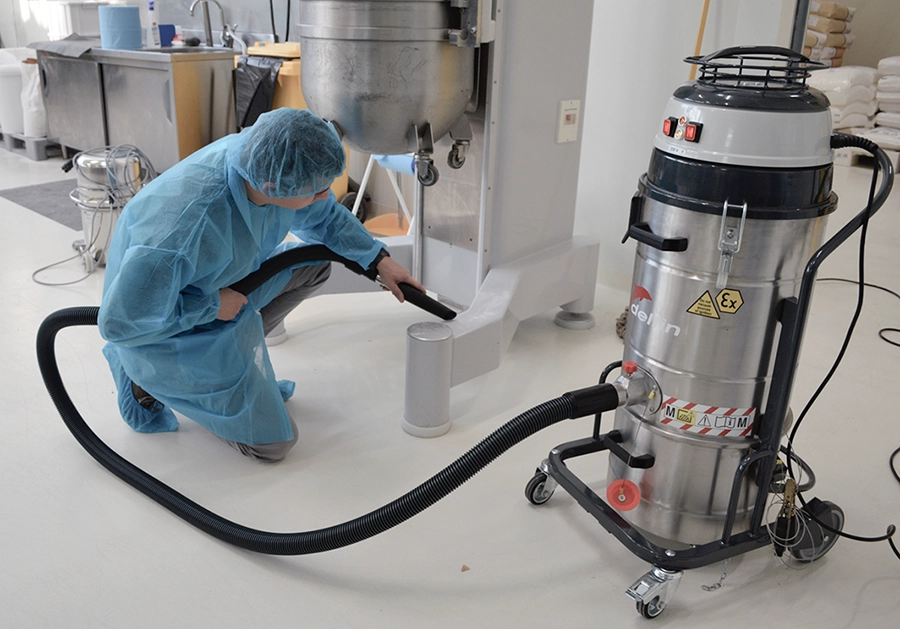
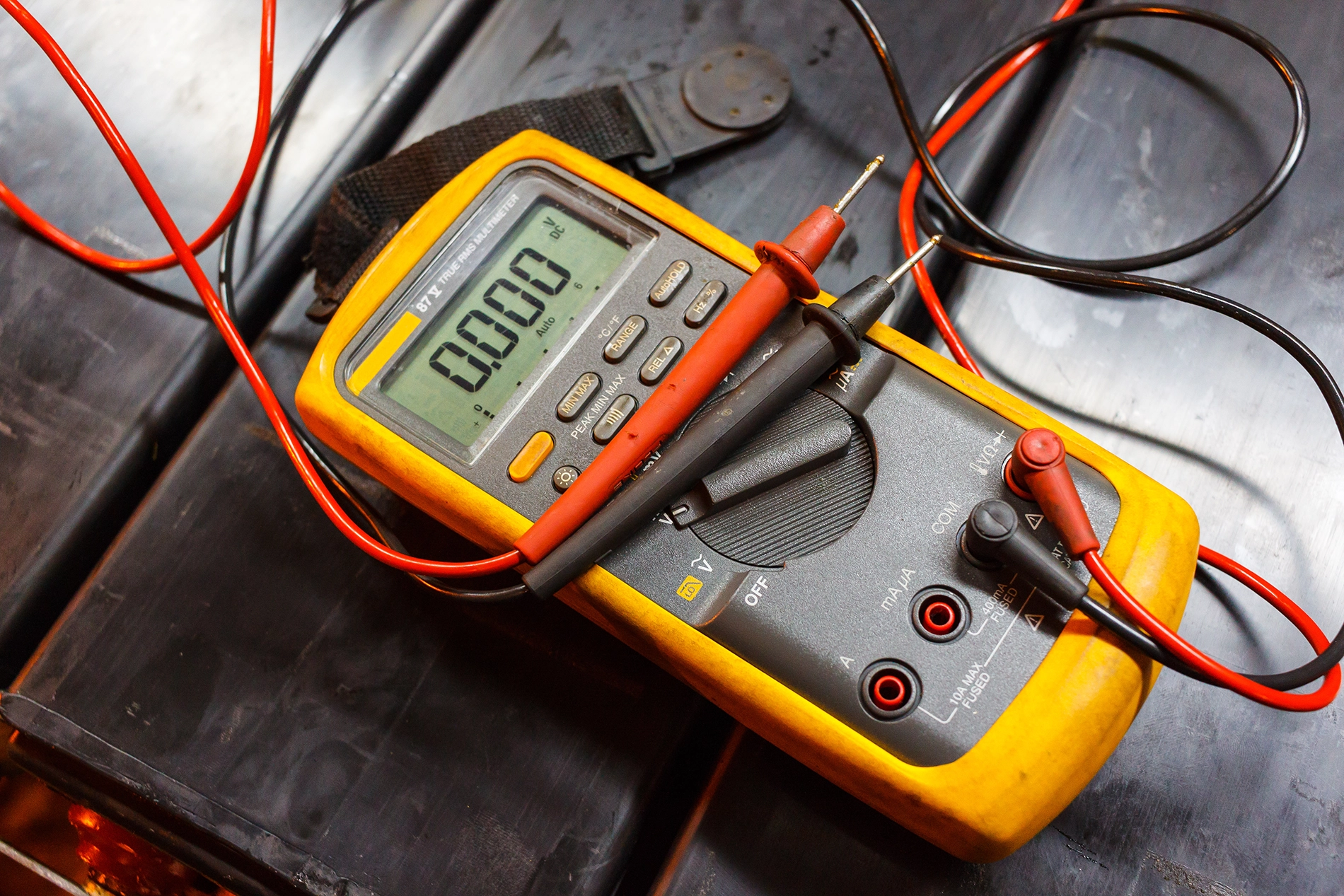
Even though this hose is not ATEX-relevant, these two articles provide useful background on electrical resistance and industrial safety — important if you later combine the hose with electrical equipment or work in mixed environments:
Industries that use it
The hose is used in chemical industry at moderate-high temperatures:
Chemical, ceramic and glass industries use the hose for vapour, aerosol and chemical extraction.
Custom lengths and assemblies
The hose can be cut to length and assembled with couplings, cuffs and threaded fittings through Particulair's custom hose assemblies.
We offer guidance on material choice, coupling system and grounding, so the hose fits correctly into the overall system. If there is any doubt about zone classification or resistance requirements, a short conversation before ordering is well worth the time.

Frequently asked questions
What is Hypalon?
Hypalon is a brand name for chlorosulfonated polyethylene (CSPE), a synthetic rubber formulation with good chemical and heat resistance plus vibration stability. It covers a middle niche between standard PE and aramid-based CP hoses.
Can the hose be supplied cut to length with couplings?
Yes. CP HYP 450 can be cut to length and assembled with couplings, cuffs and threaded fittings through Particulair's custom hose assemblies. We provide guidance on coupling system and sealing so the hose fits correctly into the overall installation.
How do I order the hose, and where do you deliver?
The hose is ordered through Particulair (Karlslunde, Denmark). We deliver to Denmark, the EU and selected third countries such as Norway and Switzerland. Standard dimensions can typically be delivered in 1-2 weeks; custom assemblies and larger volumes require slightly longer lead time.
What is the hose's expected service life?
Service life depends on operating conditions: loading, temperature, chemical exposure, UV and mechanical movement. In standard industrial use, expected life is 3-7 years. Aggressive conditions (high temperatures, continuous flexing, chemical vapours) reduce service life. We recommend regular visual inspection for cracks, deformation or discolouration.
How is the hose best stored before use?
Store the hose dry, at room temperature (15-25 °C) and out of direct sunlight. Avoid contact with ozone-generating equipment (welding equipment, engines). If stored on a reel, the bend must be larger than the specified minimum radius to avoid permanent deformation. Proper storage significantly extends shelf life.
What is the minimum bend radius, and what happens if I go below it?
Minimum bend radius is the smallest radius the hose can be bent to without permanent deformation or internal damage. The table above shows specific values for each dimension. Bending the hose below this limit can collapse the wall, kink the spiral or damage the inner coating. The result is reduced flow, increased pressure loss and shorter service life. Always use bend radius as a design constraint in installation.
Which chemicals is the hose resistant to?
Specific chemical resistance depends on material selection, concentration and temperature. The manufacturer maintains an extensive chemical resistance table showing compatibility for hundreds of chemicals. It can be downloaded from the Documentation section above. If in doubt about a specific chemical or mixture, contact Particulair — we can advise based on your concrete process.
Does temperature affect the hose's chemical resistance?
Yes, significantly. Higher temperatures accelerate chemical attack and reduce the material's resistance. A hose fully compatible with a chemical at 20 °C may be underrated at 60 °C. The manufacturer's chemical resistance table typically lists values at 20 °C; at higher operating temperatures, compatibility must be reassessed. We always recommend a consultation before choosing a hose for chemical transport at elevated temperatures.