Chemical-resistant · Chemical-resistant
CP PTFE/HYP-INOX 472
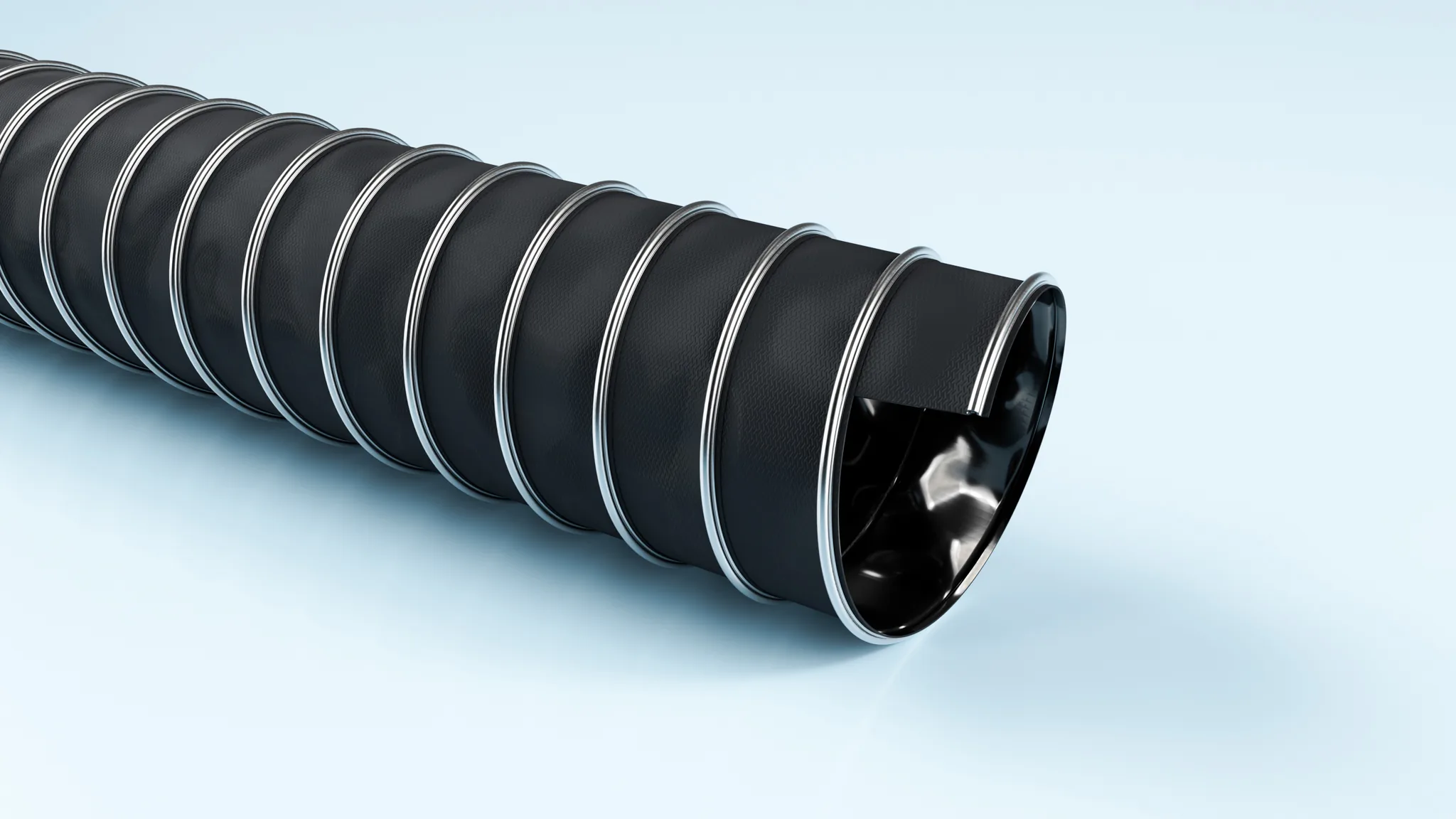
Highly flexible double-layer clamp profile hose with PTFE lining and HYP (high-temperature polymer) outer layer, stainless steel clamp profile. Anti-adhesive surface and broad chemical resistance. Service up to +170 °C continuous. Designed for chemical industry where the medium is aggressive but temperature is moderate (lower than the 471 range's +260 °C). The HYP outer layer provides better mechanical durability than pure glass fibre reinforcement.
- Anti-adhesive PTFE
- Up to +170 °C
- Double-layer
- INOX clamp profile
- Chemical-resistant
- Cut to length
Why this hose?
CP PTFE/HYP-INOX 472 sits between the 471 range (PTFE/glass-INOX, +260 °C) and standard CP PVC in the temperature segment. It's a good middle position for chemical applications where the medium is aggressive but temperature is moderate — typically vapour return at operating temperatures.
The HYP outer layer provides better mechanical durability than glass fibre reinforcement during handling — particularly in installations where the hose is moved or adjusted regularly. The PTFE inner lining delivers the broad chemical resistance.
Where it is used
In chemical industry the hose typically sits on vapour return installations where process vapours are chemically aggressive but at operating temperature (below +170 °C). It covers a broad part of chemical industry applications without over-specifying on temperature.
In pharma it's used where anti-adhesion is important but ATEX isn't a requirement — e.g. specific process applications in enclosed environments.
In everyday talk we call it a "PTFE/HYP" — it sits in the middle segment for PTFE-based hoses.
Technical specifications
Technical specifications for CP PTFE/HYP-INOX 472.
| Material | PTFE lining, HYP outer layer, INOX clamp |
|---|---|
| Temperature | 0 to +170 °C |
| Anti-adhesion | Yes (PTFE) |
| Construction | Double-layer, INOX clamp profile |
| Conformity | REACH, RoHS |
| Cut to length | Yes |
| Manufacturer SKU group | 4720000 |
Dimensions and ordering
Standard dimensions for CP PTFE/HYP-INOX 472.
| Inner Ø |
Outer Ø |
Working pressure |
Vacuum |
Bend radius |
Max. length |
Weight |
Roll |
Article no. |
|---|---|---|---|---|---|---|---|---|
| 50.5 | 62.5 | 0.41 | 0.3 | 18 | 20 | 0.7 | 6 | 47200500000 |
| 60 | 72 | 0.37 | 0.25 | 20 | 20 | 0.82 | 6 | 47200600000 |
| 64.5 | 76.5 | 0.355 | 0.23 | 22 | 20 | 0.88 | 6 | 47200650000 |
| 70 | 82 | 0.34 | 0.21 | 22 | 20 | 0.95 | 6 | 47200700000 |
| 75.6 | 87.6 | 0.325 | 0.18 | 24 | 20 | 1.02 | 6 | 47200750000 |
| 80 | 92 | 0.315 | 0.16 | 24 | 20 | 1.07 | 6 | 47200800000 |
| 90 | 102 | 0.29 | 0.11 | 26 | 20 | 1.2 | 6 | 47200900000 |
| 101.5 | 113.5 | 0.195 | 0.1 | 28 | 20 | 1.04 | 6 | 47201000000 |
| 110 | 122 | 0.185 | 0.085 | 30 | 20 | 1.13 | 3, 6 | 47201100000 |
| 120 | 132 | 0.175 | 0.075 | 32 | 20 | 1.22 | 3, 6 | 47201200000 |
| 126.5 | 138.5 | 0.17 | 0.07 | 34 | 20 | 1.29 | 3, 6 | 47201250000 |
| 140 | 152 | 0.16 | 0.05 | 36 | 20 | 1.42 | 3, 6 | 47201400000 |
| 151.5 | 163.5 | 0.11 | 0.04 | 38 | 20 | 1.18 | 3, 6 | 47201500000 |
| 160 | 172 | 0.105 | 0.035 | 40 | 20 | 1.24 | 3, 6 | 47201600000 |
| 170 | 182 | 0.1 | 0.035 | 42 | 20 | 1.31 | 3, 6 | 47201700000 |
| 180 | 192 | 0.095 | 0.03 | 44 | 20 | 1.39 | 3, 6 | 47201800000 |
| 202.3 | 214.3 | 0.09 | 0.025 | 48 | 20 | 1.56 | 3, 6 | 47202000000 |
| 225 | 237 | 0.085 | 0.02 | 54 | 20 | 1.73 | 3, 6 | 47202250000 |
| 250 | 262 | 0.065 | 0.02 | 58 | 20 | 1.91 | 3, 6 | 47202500000 |
| 280 | 292 | 0.06 | 0.015 | 65 | 20 | 2.14 | 3, 6 | 47202800000 |
| 315 | 327 | 0.055 | 0.01 | 71 | 15 | 2.4 | 3, 6 | 47203150000 |
| 325 | 337 | 0.055 | 0.01 | 74 | 15 | 2.47 | 3, 6 | 47203250000 |
| 350 | 362 | 0.04 | 0.01 | 78 | 15 | 2.66 | 3, 6 | 47203500000 |
| 400 | 412 | 0.04 | 0.01 | 88 | 15 | 3.03 | 3, 6 | 47204000000 |
| 500 | 512 | 0.03 | 0.005 | 108 | 10 | 3.78 | 3, 6 | 47205000000 |
Fields without a value (—) are not specified in the manufacturer's factsheet. Overpressure and underpressure values are recommended operating limits; the product can be subjected to higher loads on request. Bend radius is measured along the inside of the hose bend.

Standards and compliance
CP PTFE/HYP-INOX 472 conforms to:
- REACH and RoHS. EU directives for chemicals and hazardous substances.
Documentation and downloads
Additional documents about this hose, its compliance and installation. Click to download as PDF in a new tab.
Help with material selection
Although this hose isn't ATEX-relevant, these two articles provide useful background on electrical resistance and industrial safety — important if you later combine the hose with electrical equipment or work in mixed environments:
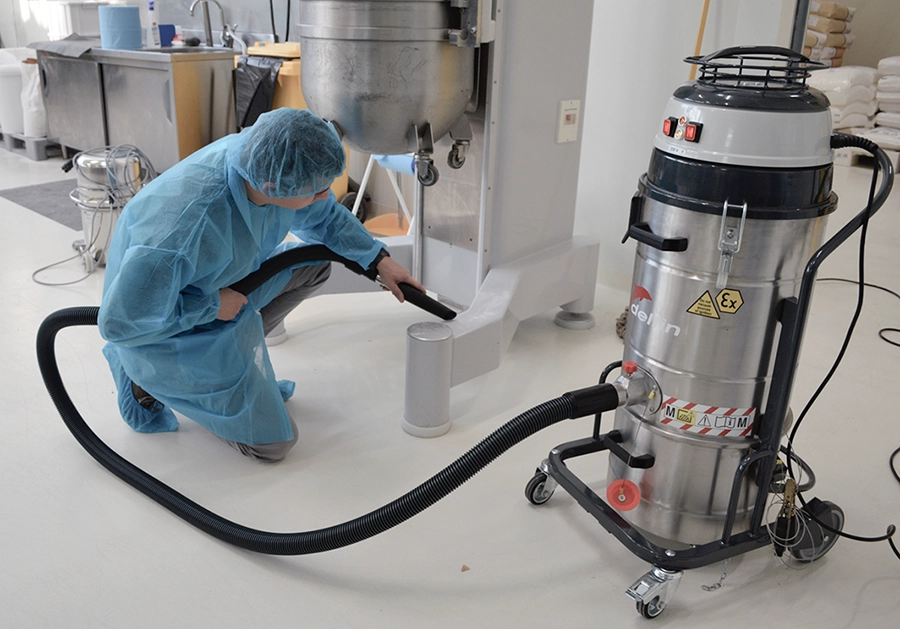
The invisible weakest link
Why a conductive or antistatic hose isn't sufficient on its own — and what grounding means for the complete system.
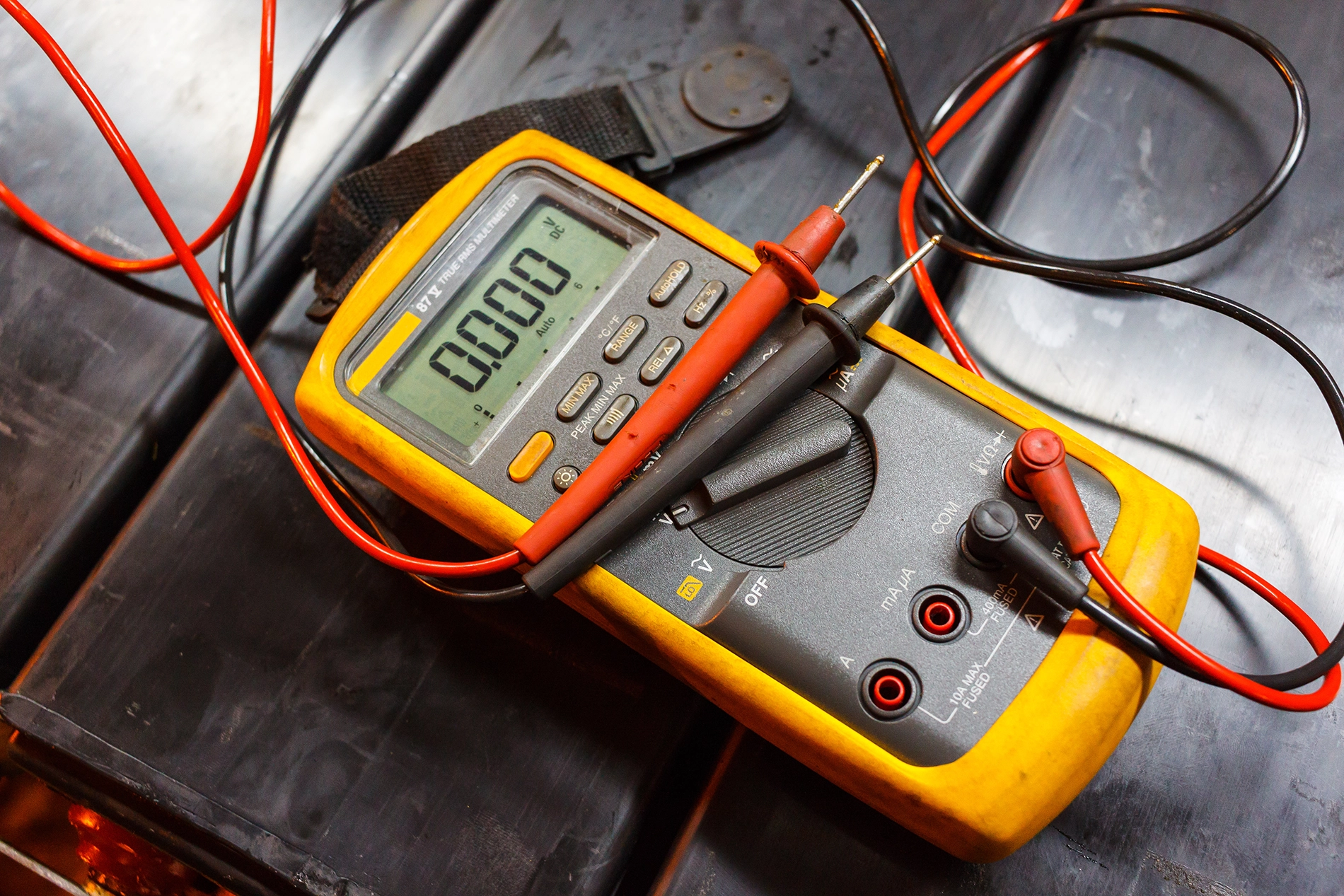
Know your ohm
The difference between antistatic and conductive, which resistance limits apply where, and how to measure them correctly.
Industries that use it
CP PTFE/HYP-INOX 472 is broadly applicable in chemical industry:
In chemical industry it covers vapour return and vapour extraction at moderate temperatures. PTFE's broad resistance makes it compatible with almost all media.
In pharma it's used where anti-adhesion is important — e.g. transporting powders that would otherwise form deposits.
Custom lengths and assemblies
The hose is delivered on 3 m, 6 m and 10 m rolls. We cut to length and fit INOX or PTFE-lined couplings.
For chemical facilities we advise on coupling materials matching your specific medium.


Frequently asked questions
What's the difference between 472 and 471?
472 has HYP outer layer and temperature limit +170 °C. 471 has glass fibre reinforcement and covers up to +260 °C. Choose 472 if temperature is below +170 °C and you prefer better mechanical handling; choose 471 at higher temperature.
Is it ATEX-approved?
No. Standard 472 is insulating. For ATEX zones choose 472 EC.
What is HYP?
HYP is the manufacturer's designation for a specific high-temperature polymer blend used as outer layer/reinforcement. It provides better mechanical durability than glass fibre during daily handling.
Does it tolerate the most aggressive chemicals?
Yes, the PTFE inner lining is chemically inactive toward almost all industrial media. The HYP outer layer isn't in contact with the medium — it only provides mechanical protection.
How long is the lifetime in process industry?
It depends on the medium, temperature and daily handling. Typically 2-5 years at continuous operation. The PTFE lining remains chemically stable; the HYP outer layer can show mechanical wear over time.
Can I get it with specific couplings?
Yes. We fit INOX or PTFE-lined couplings as a finished assembly.