Chemical hoses
Hoses for transporting chemicals where material choice is governed by concentration, temperature and exposure time — not by what the packaging says.
A chemical and a hose do not form a single unambiguous pair. The same hose can be fully resistant to 30% sulphuric acid at 20 °C and entirely unsuitable for 70% sulphuric acid at 60 °C. The resistance table is your starting point, not your definitive answer.
In chemical transport, the wrong decision quickly becomes a safety incident — one of the critical environments where material choice has no margin for error. We distribute hoses in PTFE, EPDM, FKM (Viton), CSM (Hypalon), PE and PP, and we always recommend material choice against the actual process profile — not a generic recommendation.
On this page you will find the hoses we have identified as candidates for chemical transport. Filter on property and standard to narrow the list, and use the resistance table in the documentation section to verify the material against your specific chemical.
Products
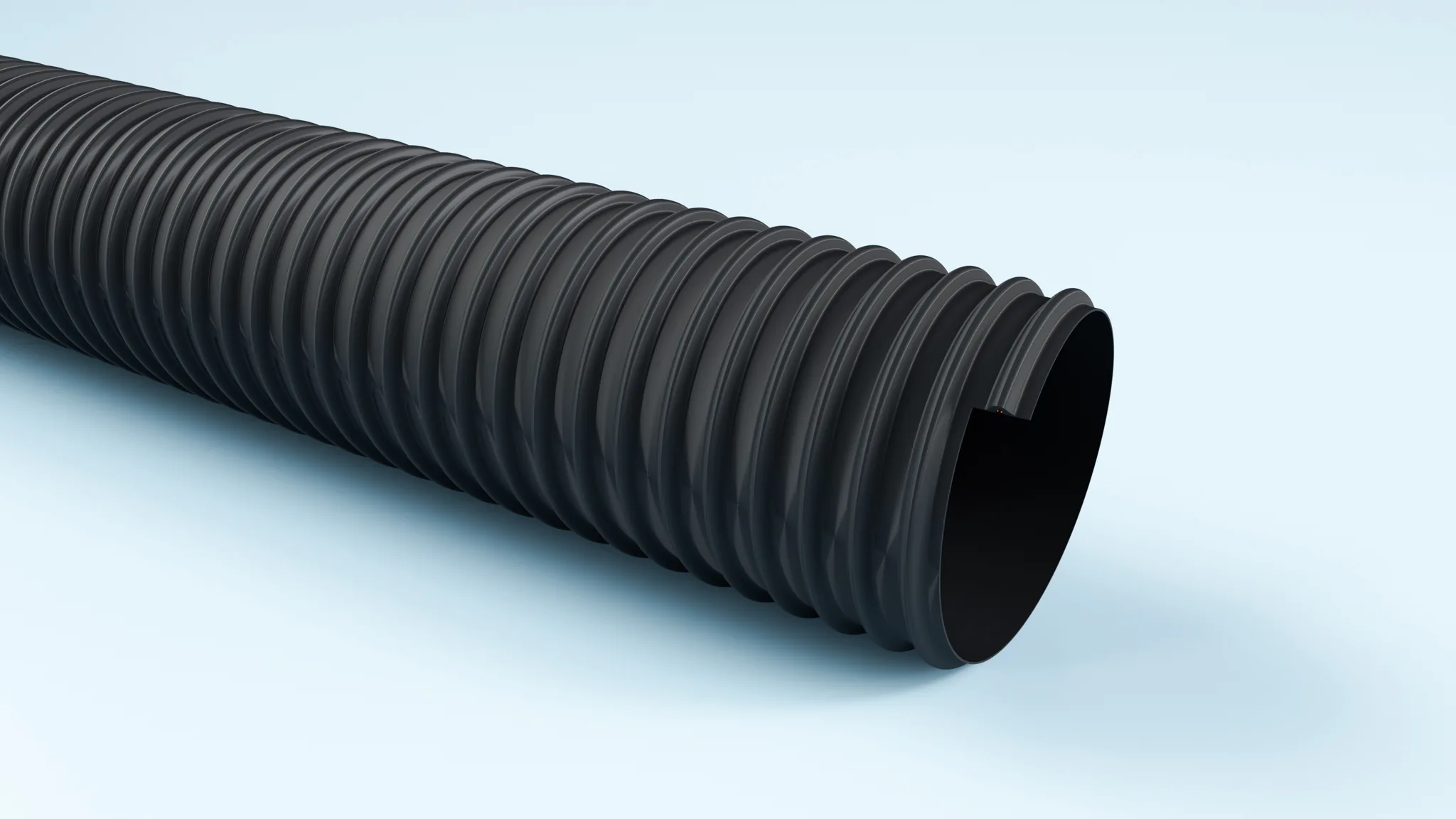
AIRDUC® PE 362 EC (MD)
Conductive PE hose for chemical industry and ATEX zones — Zone 0·1·2 + Zone 20·21·22
- Inner Ø: 28-250 mm
- Temp: -35 to +80 °C
- Standards: ATEX 2014/34/EU, TRGS 727
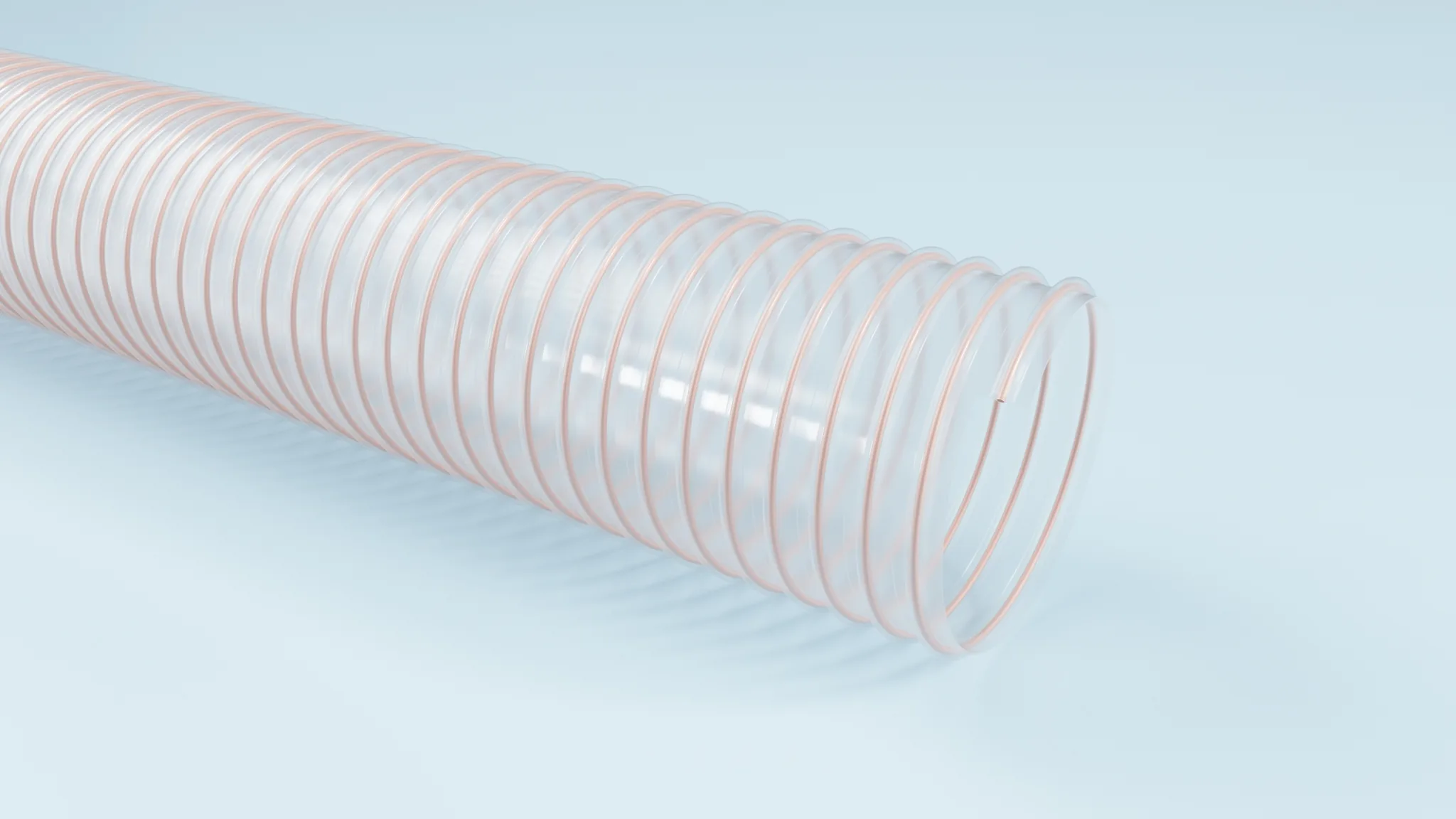
AIRDUC® PE 362 FOOD (MD)
Food-grade PE suction and pressure hose — chemical-resistant, for food and pharma industry
- Inner Ø: 25-250 mm
- Temp: -35 to +80 °C
- Standards: EU 10/2011

ARMOFLEX/OIL
Highly flexible suction and pressure hose for oil, petrol and chemicals
- Inner Ø: 25-51 mm
- Temp: -15 to +65 °C

CARBOCORD®/10
Conductive oil and petrol hose — discharge only, for loading unleaded fuels
- Inner Ø: 32-75 mm
- Temp: -40 to +90 °C

CARBOCORD®/EN
Oil- and petrol-resistant pressure hose — weather-resistant, for fuel in vehicles
- Inner Ø: 32-100 mm
- Temp: -35 to +90 °C

CARBOFLAT®
Flat collapsible fuel hose — UV- and weather-resistant, for ship bunkering
- Inner Ø: 75-203 mm
- Temp: -35 to +80 °C
- Standards: REACH, RoHS

CARBOFLEX®/EN
Oil-resistant suction and pressure hose — conductive, for fuel in tanks, ships and industry
- Inner Ø: 25-100 mm
- Temp: -40 to +90 °C

CARBOFLEX®/GRECATO
Oil-resistant suction and pressure hose — extremely small bend radius, for fuel and hydraulic
- Inner Ø: 19-102 mm
- Temp: -35 to +80 °C

CARBOFLEX®/OHM/10
Conductive oil and petrol hose — robust 10 bar working pressure for demanding industrial cleaning
- Inner Ø: 25-152 mm
- Temp: -40 to +90 °C

CARBOFLEX®/U.L./OHM
Conductive oil and petrol suction/discharge hose — for industrial cleaning and tank transport
- Inner Ø: 51-152 mm
- Temp: -40 to +90 °C

CARBOFORM®/EN/ISO
Flame-retardant self-extinguishing fuel hose — for leisure boats and yachts
- Inner Ø: 6-19 mm
- Temp: -35 to +80 °C

CARBOFORM®/PD
Conductive fuel hose for petrol pumps — EN 1360, 16 bar, for petrol and oil
- Inner Ø: 15-25 mm
- Temp: -30 to +90 °C

CORROSIV®/EN
Chemical-resistant EPDM hose for acids and alkalis at high concentration
- Inner Ø: 19-50 mm
- Standards: REACH, RoHS

CORROSIV®/SP/EN
Premium chemical-resistant EPDM hose for the most aggressive media
- Inner Ø: 25-100 mm
- Temp: -40 to +90 °C
- Standards: REACH, RoHS

CP ARAMID 461
High-temperature clamp profile with aramid wall — up to +300 °C, flame-retardant M1/B1
- Inner Ø: 38-508 mm
- Temp: -60 to +260 °C
- Standards: REACH, RoHS

CP HYP 450
Vibration-resistant HYP clamp profile hose — chemical-resistant, heat-resistant up to +170 °C
- Inner Ø: 38-1000 mm
- Temp: -40 to +150 °C
- Standards: REACH, RoHS

CP PE 457
Highly flexible PE clamp profile hose — extreme chemical resistance for large dimensions
- Inner Ø: 40-1000 mm
- Temp: -35 to +70 °C
- Standards: REACH, RoHS

CP PE 457 EC
Highly flexible clamp profile hose in polyethylene, electrically conductive, chemical-resistant and ATEX-approved
- Inner Ø: 50.5-800 mm
- Temp: -35 to +80 °C
- Standards: REACH, RoHS

CP PTFE-INOX 475 EC
ATEX-approved PTFE-INOX clamp hose — conductive, up to +250 °C, for extraction arms and ATEX zones
- Inner Ø: 50.5-325 mm
- Temp: -150 to +250 °C
- Standards: REACH, RoHS

CP PTFE-INOX 475 FOOD
PTFE food hose — up to +270 °C, extreme chemical resistance, for pharma and food
- Inner Ø: 50.5-600 mm
- Temp: -40 to +250 °C
- Standards: REACH, RoHS

CP PTFE/GLASS-INOX 471
Double-layer clamp profile PTFE/glass-INOX hose — anti-adhesive, up to +270 °C, chemical-resistant
- Inner Ø: 50.5-700 mm
- Temp: 0 to +260 °C
- Standards: REACH, RoHS

CP PTFE/GLASS-INOX 471 EC
ATEX-approved PTFE/glass-INOX double-layer hose — conductive, up to +250 °C, for vapour recovery
- Inner Ø: 50.5-300 mm
- Temp: -150 to +250 °C
- Standards: REACH, RoHS
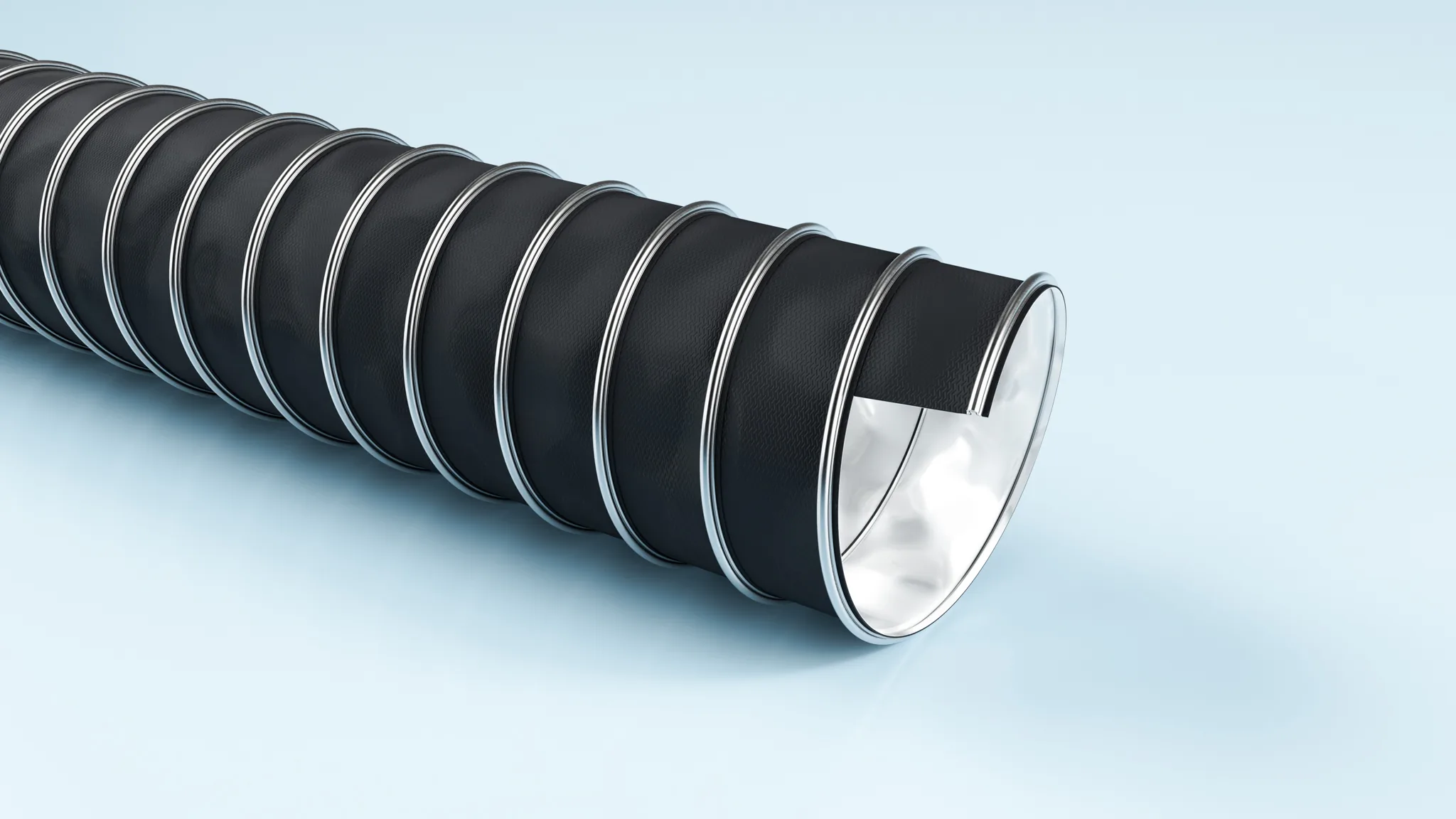
CP PTFE/HYP-INOX 472
PTFE/HYP-INOX double-layer clamp hose — anti-adhesive, up to +170 °C, chemical-resistant
- Inner Ø: 50.5-500 mm
- Temp: 0 to +170 °C
- Standards: REACH, RoHS
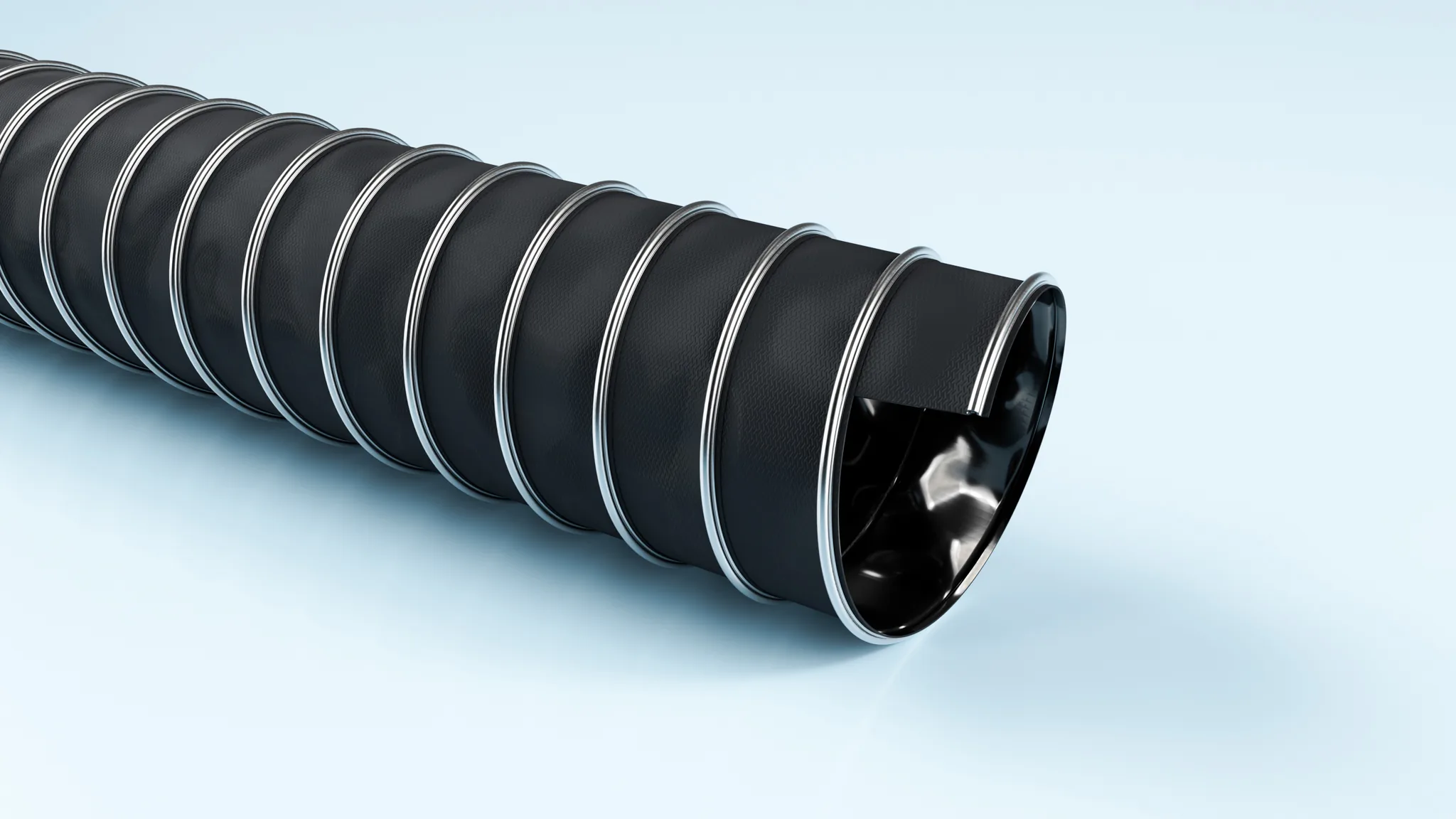
CP PTFE/HYP-INOX 472 EC
ATEX-approved PTFE/HYP-INOX clamp hose — conductive, up to +170 °C, for explosion hazard zones
- Inner Ø: 50.5-600 mm
- Temp: -40 to +170 °C
- Standards: REACH, RoHS

CP PVC 465
Flame-retardant clamp profile hose — fabric-reinforced, chemical-resistant, for extraction arms and welding fume
- Inner Ø: 38-900 mm
- Temp: -10 to +80 °C
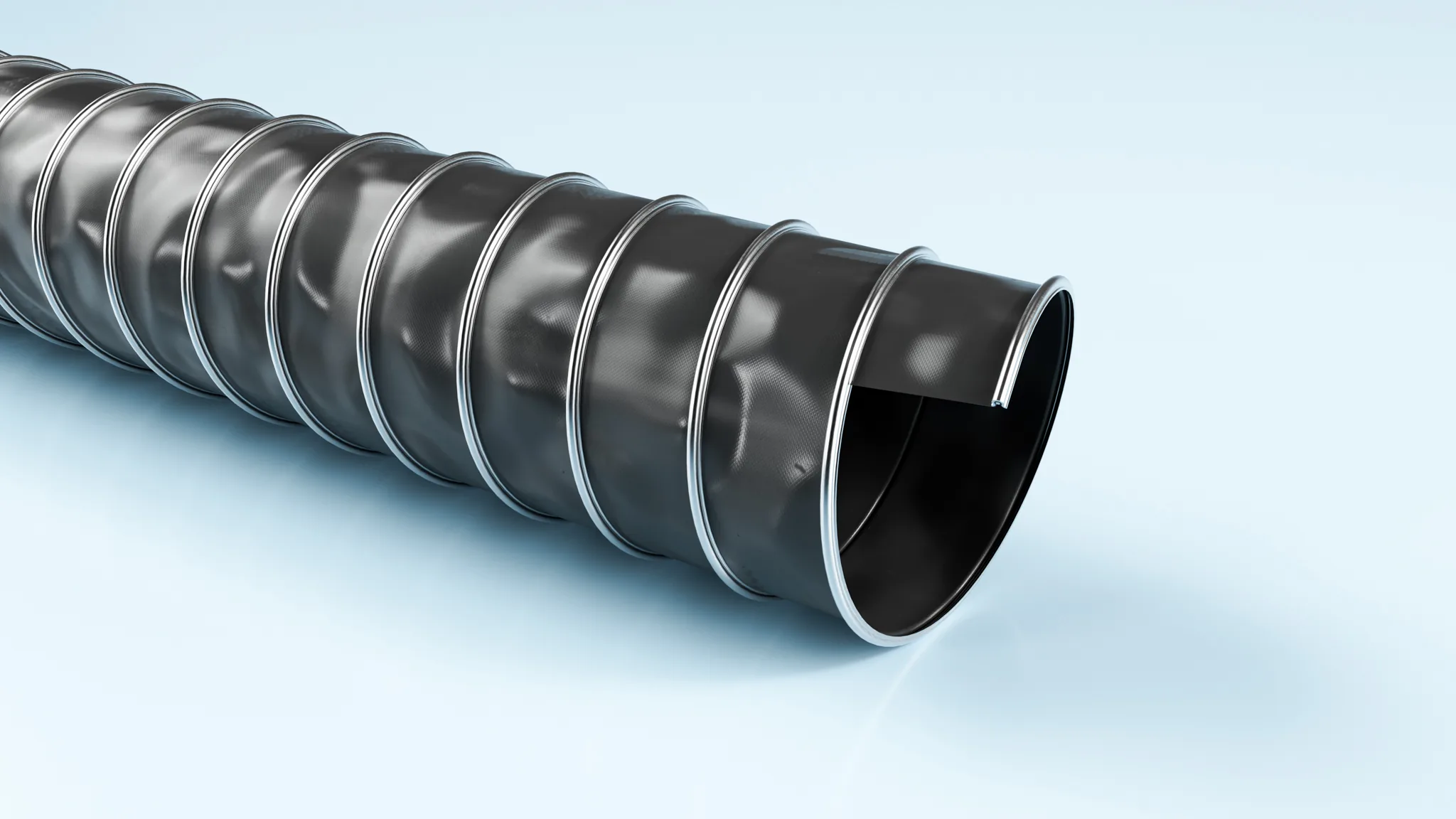
CP PVC 465 AS
Antistatic PVC clamp profile hose — fabric-reinforced, for welding fume extraction and chemical vapours
- Inner Ø: 50.5-800 mm
- Temp: -10 to +80 °C
- Standards: REACH, RoHS

CP PVC 466 HT
High-temperature clamp profile PVC hose — flame-retardant NF P 92-503 M1, up to +110 °C
- Inner Ø: 38-700 mm
- Temp: -10 to +110 °C

CP SIL 460
Silicone clamp profile hose — flame-retardant, heat-resistant up to +280 °C
- Inner Ø: 50.5-750 mm
- Temp: -30 to +250 °C
- Standards: REACH, RoHS

CP VITON® 459 EC
Conductive Viton®-lined hose for extreme chemicals at high temperatures
- Inner Ø: 38-712 mm
- Temp: -40 to +200 °C
- Standards: REACH, RoHS

INDUCORD Glasfiber
High-temperature pressure hose with fibreglass reinforcement
- Inner Ø: 13-76 mm
- Temp: -30 to +200 °C
- Standards: REACH, RoHS

INDUCORD Lancia
Marine mooring and bunkering pressure hose
- Inner Ø: 25-38 mm
- Temp: -30 to +80 °C
- Standards: REACH, RoHS

INDUCORD TC
Industrial pressure hose Type C for medium-duty chemicals
- Inner Ø: 38-51 mm
- Temp: -30 to +80 °C
- Standards: REACH, RoHS

INDUCORD®
Abrasion-resistant industrial water hose — for water, slurry and light chemicals in agriculture and industry
- Inner Ø: 22-254 mm
- Temp: -20 to +70 °C

INDUFORM RL
Thermoplastic pressure hose RL (round light) for chemical handling
- Inner Ø: 13-25 mm
- Temp: -20 to +80 °C
- Standards: REACH, RoHS

INDUFORM RR
Thermoplastic pressure hose RR (round robust) for higher load
- Inner Ø: 13-32 mm
- Temp: -20 to +80 °C
- Standards: REACH, RoHS

NAFTOIL/BUNA 30 MM
Specialised 30 mm NBR/PVC oil and water hose, 6 bar / 0.9 bar vacuum
- Inner Ø: 30-30 mm
- Temp: -30 to +65 °C
- Standards: REACH, RoHS

NAFTREX/B
Textile-braided NBR fuel hose per DIN 73379 Type B + SAE J30
- Inner Ø: 3.2-11.5 mm
- Temp: -35 to +90 °C
- Standards: REACH, RoHS

NITROGEN/YELLOW
Highly flexible antistatic gas hose — for air, water and nitrogen in petrochemistry and industry
- Inner Ø: 19.5-19.5 mm
- Temp: -20 to +60 °C
- Standards: REACH, RoHS

NORFLEX® PTFE 407
Highly flexible PTFE hose — food-grade, extremely chemical-resistant, for pharma
- Inner Ø: 2-14 mm
- Temp: -60 to +200 °C
- Standards: EU 10/2011

NORFLEX® PVC 400 SPECIAL WALL
Highly flexible PVC hose with extra wall thickness — for compressed air and coolant
- Inner Ø: 40-40 mm
- Temp: -15 to +60 °C

NORPLAST® PVC 389 NAFTOIL/BUNA
Highly flexible PVC suction hose for water, slurry and oils — in industry, horticulture and agriculture
- Inner Ø: 25-152 mm
- Temp: -30 to +65 °C

NORPLAST® PVC-C 389 CORRUFLEX®/AS
Antistatic PVC-C clamp profile suction hose — corrugated outer cover, for chemical industry
- Inner Ø: 51-152 mm
- Temp: -15 to +70 °C
PETROL-OIL
Specialised hose for oil and fuel transfer at tank trucks and terminals
- Inner Ø: 6-25 mm
- Temp: -40 to +90 °C
- Standards: REACH, RoHS

PROTAPE® PVC 310 (LD)
Flame-retardant PVC hose for solvent vapours and X-ray cable protection
- Inner Ø: 30-300 mm
- Temp: -10 to +80 °C

SOLVOFORM
Robust compressor hose — for compressed air, lubricating oil and greases in workshops
- Inner Ø: 6-19 mm
- Temp: -20 to +60 °C
- Standards: REACH, RoHS

SUPERCHEM®/UPE/EN
Extremely flexible suction and pressure hose for aggressive chemicals
- Inner Ø: 19-100 mm
- Temp: -30 to +100 °C
- Standards: REACH, RoHS
Material choice is driven by three parameters at once
The most common mistake we see is someone looking up the chemical in the table, seeing a "compatible" tick and ordering. The table should be read as a starting point: compatible means compatible at the specific concentration and temperature in the table. Other values require assessment.
The four materials worth knowing
PTFE has the broadest chemical resistance of any plastic material. Resistant to almost everything — acids, bases, solvents. Limits: stiffer than rubber, more expensive, and creep can be an issue at high temperature over time.
EPDM resists polar solvents, bases and dilute acids, but is not suitable for oils or mineral oil products. Good at high temperature (up to 150 °C).
FKM (Viton) resists acids, solvents and oils, but is weakened by amines, ammonia and lye. Good at high temperature. Not cheap.
CSM (Hypalon) handles strongly oxidising acids (chromic acid, nitric acid) where other rubbers degrade quickly.
Permeation: the failure you do not see
Degradation is easy to spot — the hose softens, swells or cracks. Permeation is harder: the chemical migrates through the hose wall at the molecular level without the hose appearing damaged. It can end up in the surroundings, corrode nearby equipment or form a flammable atmosphere. PTFE has the lowest permeation; rubber has the highest. Assess both failure modes, not just degradation.
ADR/RID relevance
If the chemical is to be transported by road or rail, ADR/RID rules apply. The hose must be marked with the UN number of the specific chemical and must meet pressure and resistance tests described in the regulation. That is a separate compliance level beyond the hose's underlying chemical resistance.
For the full resistance table, see the chemical-resistance documentation.
Questions we are asked often
How do I select material based on my chemical?
Look the chemical up in a resistance table and assess three parameters together: concentration, temperature and exposure time. A hose that resists 30% sulphuric acid at 20 °C may be entirely unsuitable for 70% sulphuric acid at 60 °C. The table is a starting point, not a definitive answer.
What is the difference between permeation and degradation?
Degradation means the material weakens, dissolves or becomes brittle — visible from the outside. Permeation means the chemical migrates through the hose wall without the material appearing damaged. Permeation is dangerous precisely because it is invisible: the chemical may end up in the surrounding environment and create safety hazards. Both failure modes must be considered.
Can a single hose be used for several chemicals?
Yes, if all chemicals are listed as compatible in the same table at the actual concentration and temperature. Watch for cross-reactions: a hose used for lye must be thoroughly cleaned before use with acid, otherwise an exothermic reaction is possible. Water flushing is often sufficient, but the factsheet specifies the requirement.
Where do I find a resistance table?
The manufacturer typically provides a resistance table as a PDF or online lookup. The resistance table for the hoses we distribute is in the documentation section. The table lists resistance per material (PTFE, EPDM, FKM and so on) at standard concentrations and temperatures — verify that your process matches the row.
What if my chemical is not in the table?
Contact us. We can often consult the manufacturer directly, or recommend a hose tested against a chemical relative. For particularly aggressive or unusual chemicals, an immersion test may be necessary before commissioning — a hose sample submerged in the chemical for a defined time and temperature, then material inspection.
See also
- ATEX & ESD hoses — many solvents are flammable and require conductive hoses.
- High-temperature hoses — hot chemicals combine two limits at once.
- Chemical-resistance documentation — resistance table per material.