Chemical-resistant · Chemical-resistant
CP PTFE-INOX 475 EC
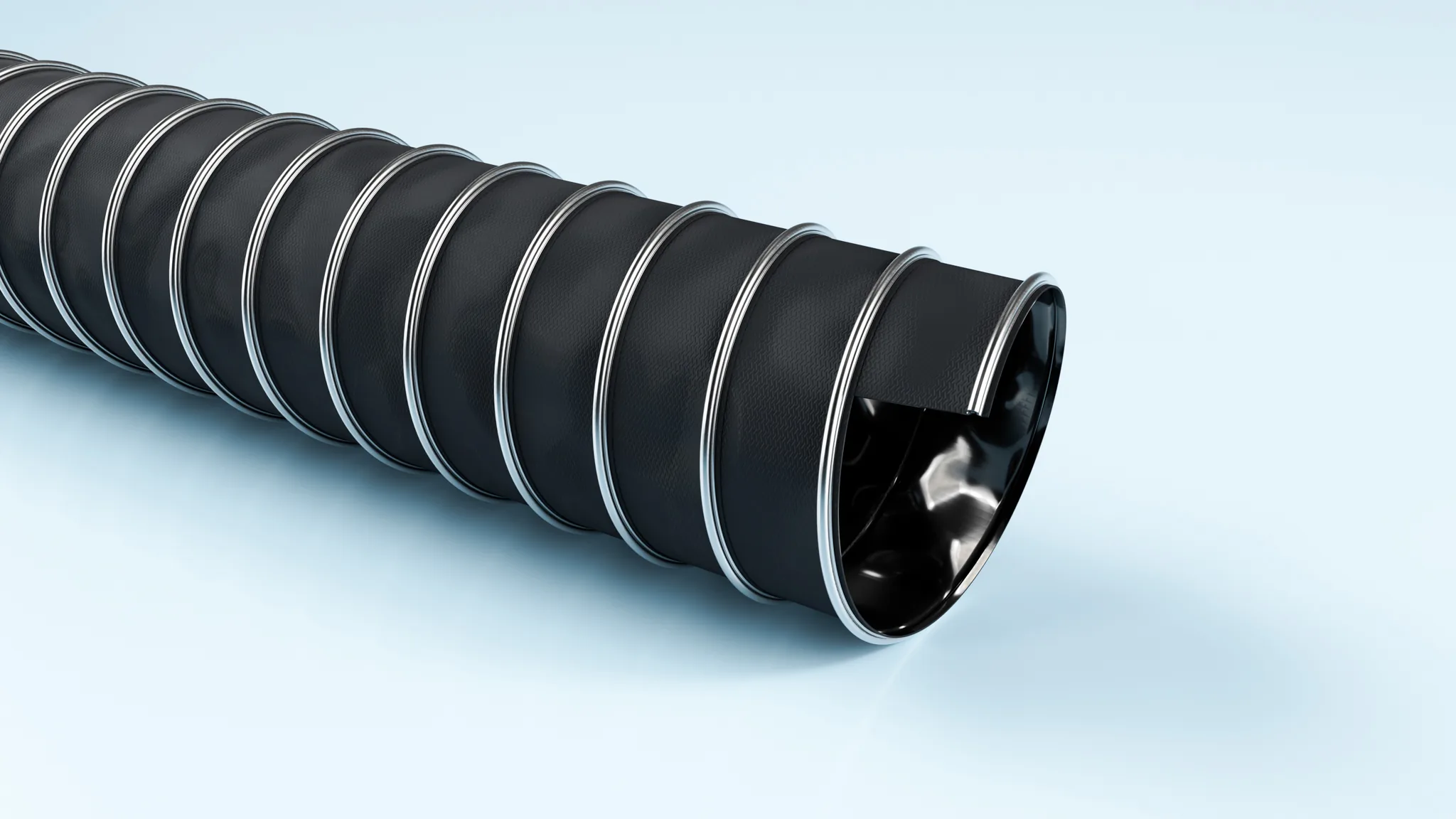
Highly flexible single-layer clamp profile hose with conductive PTFE lining and stainless steel clamp. ATEX-certified per 2014/34/EU + TRGS 727 for Zone 22 (dust) and Zone 0, 1, 2 (gases). Service from −150 °C to +250 °C, peak +270 °C. Designed for extraction arms in ATEX zones and for chemical industry where ATEX approval combines with high temperature and broad chemical resistance.
- ATEX Zone 0·1·2·22
- Conductive <10⁶ Ω
- Up to +250 °C
- Anti-adhesive
- INOX clamp profile
- Cut to length
Why this hose?
CP PTFE-INOX 475 EC resembles 471 EC but is a single-layer construction — without the extra glass fibre reinforcement. This gives a lighter hose that's easier to bend on extraction arms and similar mobile applications.
The ATEX approval and breadth of chemical resistance is identical to 471 EC. The difference lies in mechanical construction: 475 EC is the "slim" PTFE-EC variant; 471 EC is the "reinforced" version.
Where it is used
On extraction arms in ATEX zones it's often the preferred PTFE-EC hose because the single-layer construction gives better flexibility during bending. Users in laboratories and chemical process facilities appreciate the lighter handling.
In petrochemical industry it sits on vapour recovery installations where the medium is aggressive and ATEX compliance is a basic requirement.
In everyday talk we call it a "475 EC" or "slim PTFE" — it's the lighter PTFE-EC variant.
Technical specifications
Technical specifications for CP PTFE-INOX 475 EC.
| Material | Conductive PTFE lining, INOX clamp |
|---|---|
| Temperature | −150 to +250 °C (peak +270 °C) |
| Resistance | PTFE film <106 Ω |
| Construction | Single-layer (light), INOX clamp profile |
| ATEX | Zone 0·1·2 (gas) + Zone 22 (dust) |
| Conformity | ATEX 2014/34/EU, TRGS 727, REACH, RoHS |
| Cut to length | Yes |
| Manufacturer SKU group | 4751003 |
Dimensions and ordering
Standard dimensions for CP PTFE-INOX 475 EC.
| Inner Ø |
Outer Ø |
Working pressure |
Vacuum |
Bend radius |
Max. length |
Weight |
Roll |
Article no. |
|---|---|---|---|---|---|---|---|---|
| 50.5 | 62.5 | 0.41 | 0.27 | 18 | 10 | 0.52 | 6 | 47500501003 |
| 60 | 72 | 0.37 | 0.22 | 20 | 10 | 0.6 | 6 | 47500601003 |
| 64.5 | 76.5 | 0.355 | 0.2 | 22 | 10 | 0.64 | 6 | 47500651003 |
| 75.6 | 87.6 | 0.325 | 0.16 | 24 | 10 | 0.75 | 6 | 47500751003 |
| 80 | 92 | 0.315 | 0.14 | 24 | 10 | 0.79 | 6 | 47500801003 |
| 90 | 102 | 0.29 | 0.1 | 26 | 10 | 0.88 | 6 | 47500901003 |
| 101.5 | 113.5 | 0.195 | 0.085 | 28 | 15 | 0.73 | 6 | 47501001003 |
| 110 | 122 | 0.185 | 0.075 | 30 | 15 | 0.79 | 3, 6 | 47501101003 |
| 115 | 127 | 0.18 | 0.07 | 31 | 15 | 0.82 | 3, 6 | 47501151003 |
| 120 | 132 | 0.175 | 0.065 | 32 | 15 | 0.86 | 3, 6 | 47501201003 |
| 126.5 | 138.5 | 0.17 | 0.06 | 34 | 15 | 0.9 | 3, 6 | 47501251003 |
| 140 | 152 | 0.16 | 0.04 | 36 | 15 | 0.99 | 3, 6 | 47501401003 |
| 151.5 | 163.5 | 0.11 | 0.035 | 38 | 15 | 0.74 | 3, 6 | 47501501003 |
| 160 | 172 | 0.105 | 0.03 | 40 | 15 | 0.78 | 3, 6 | 47501601003 |
| 202.3 | 214.3 | 0.09 | 0.02 | 48 | 15 | 0.97 | 3, 6 | 47502001003 |
| 250 | 262 | 0.065 | 0.015 | 58 | 15 | 1.2 | — | 47502501003 |
| 275 | 287 | 0.06 | 0.015 | 64 | 15 | 1.31 | 3, 6 | 47502751003 |
| 300 | 312 | 0.055 | 0.01 | 68 | 15 | 1.43 | 3, 6 | 47503001003 |
| 325 | 337 | 0.055 | 0.01 | 74 | 15 | 1.55 | 3, 6 | 47503251003 |
Fields without a value (—) are not specified in the manufacturer's factsheet. Overpressure and underpressure values are recommended operating limits; the product can be subjected to higher loads on request. Bend radius is measured along the inside of the hose bend.

Standards and compliance
CP PTFE-INOX 475 EC is certified to:
- ATEX 2014/34/EU (1999/92/EC). Directive for equipment in explosive atmospheres. Covers Zone 0, 1, 2 (gas) and Zone 22 (dust).
- TRGS 727. German technical rule for handling of hazardous substances.
- REACH and RoHS. EU directives for chemicals.
Documentation and downloads
Additional documents about this hose, its compliance and installation. Click to download as PDF in a new tab.
Help with material selection
If you're choosing a hose and are unsure about the right resistance level or zone classification, these two articles are a good place to start:
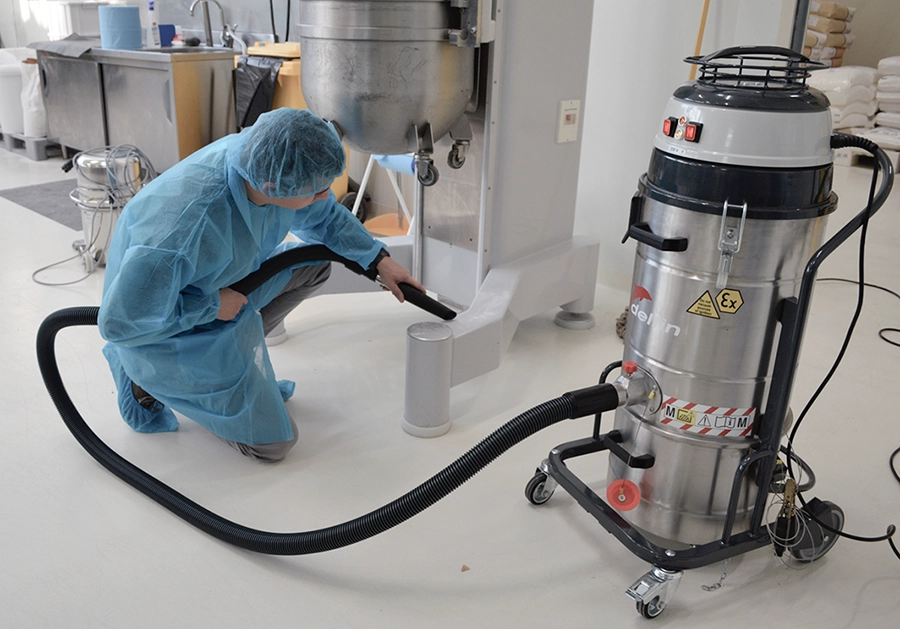
The invisible weakest link
Why a conductive or antistatic hose isn't sufficient on its own — and what grounding means for the complete system.
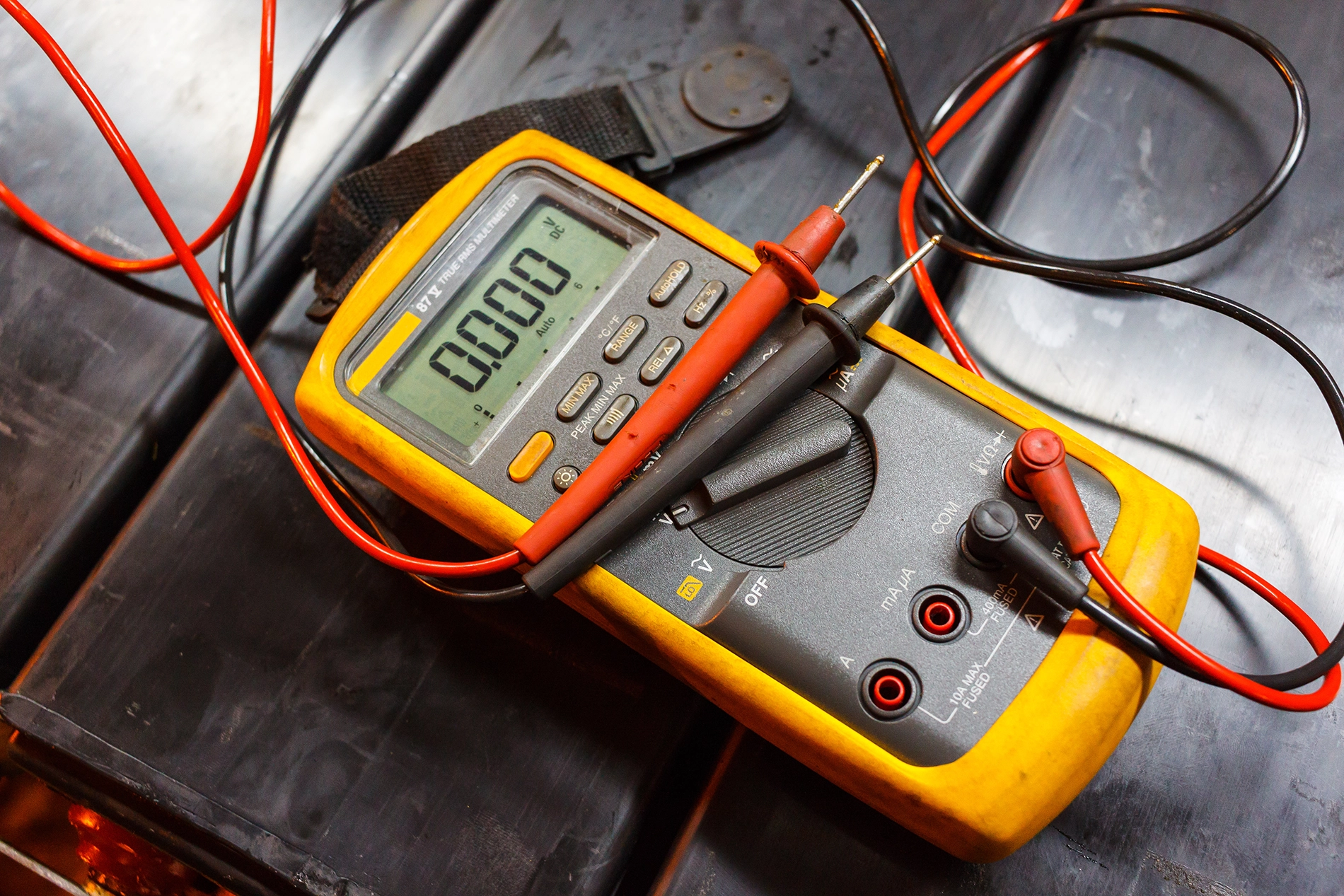
Know your ohm
The difference between antistatic and conductive, which resistance limits apply where, and how to measure them correctly.
Industries that use it
CP PTFE-INOX 475 EC is used on extraction arms and ATEX installations:
On extraction arms the single-layer construction is an advantage because the arm must be able to move in 3D — the hose follows arm movements more easily than the heavier 471 EC.
In petrochemical industry on vapour recovery tanks the lighter construction is also a plus during daily service and inspection.
Custom lengths and assemblies
The hose is delivered on 3 m, 6 m and 10 m rolls. We cut to length and fit INOX flange couplings with correct grounding.
For extraction arms we can fit bayonet connections that enable quick replacement.


Frequently asked questions
What's the difference between 475 EC and 471 EC?
475 EC is single-layer (lighter), 471 EC is double-layer with glass fibre reinforcement (stronger). Both have conductive PTFE and same ATEX approval + temperature range. Choose 475 EC for extraction arms where flexibility is important; choose 471 EC for fixed installations where mechanical durability is prioritised.
What are extraction arms?
An extraction arm is a mechanical arm that can be moved in 3D to position an extraction mouthpiece close to a work point. Typically used in workshops and laboratories. The combination of manual positioning + chemical and ATEX resistance requirements makes 475 EC a natural choice.
Does the hose need to be grounded?
Yes, ALWAYS. The ATEX approval requires correct grounding at both ends.
Does it tolerate cryogenic liquids?
Yes, PTFE is one of the few materials that work both at very low temperatures (cryogenic) and high temperatures. The hose can handle liquid nitrogen, helium and argon (depending on specific application).
How long is the lifetime on an extraction arm?
It depends on use — number of movements per day, medium and external wear. Typically 3-7 years with daily use in chemical laboratory. Single-layer construction can show mechanical wear slightly faster than double-layer variants.
Can I get it with specific ATEX flanges?
Yes. We fit INOX flanges with correct grounding — important for the entire system to maintain ATEX approval.