3D Printing • Wet Mix • Ordinary Locations
2D-10 (IT-40L) CFE HEPA ORDLOC
Electric wet mix immersion vacuum for the safe collection of combustible metal powder from 3D printing in ordinary, unclassified locations. Water immersion inerting, coalescing HEPA filtration and ESD-safe accessories as standard. NFPA 484 compliant.
- Water immersion (wet mix) — combustible powder neutralised in immersion bath
- CFE coalescing HEPA filter — 99.97 % at 0.3 µm
- ORDLOC — certified for safe use in ordinary unclassified locations
- ESD safe — under 10 ohm • conductive accessories included
- AISI 304 container • 12.3 L water capacity
- Bypass motor • brushless motor available
- NFPA 484 • CE • 3D accessory kit included
 CFE HEPA.webp)
What is the Tiger-Vac 2D-10 (IT-40L) CFE HEPA ORDLOC?
The 2D-10 (IT-40L) CFE HEPA ORDLOC is Tiger-Vac's entry model for the safe collection of reactive and self-igniting metal powder from additive manufacturing processes — specifically for facilities that are not formally classified as ATEX hazardous zones. ORDLOC stands for Ordinary Locations: workplaces where a formal risk assessment has determined that Zone 20, 21 or 22 classification is not applicable, typically because ventilation is adequate and powder volumes are controlled. In these environments the 2D-10 ORDLOC provides a structured, compliant approach to metal powder handling without the cost and complexity of full ATEX-rated equipment.
The machine uses water immersion — also known as wet mix inerting. When metal powder is vacuumed into the machine, it is directed into a water bath inside the AISI 304 stainless steel container. Contact with the water immediately cuts off oxygen access to the powder particles, preventing the reactive chain that leads to ignition. The container is factory-filled with 12.3 L of water and ships with a conductive wet recovery bag (3 L) already installed, which facilitates emptying without dispersing wet powder slurry.
Filtration is a two-stage system. Working air passes through a CFE coalescing HEPA filter (Coalescing Filter Element) positioned upstream of the motor. The CFE filter captures water droplets and fine particles carried from the immersion bath, ensuring the air reaching the motor is dry. Filtration efficiency is 99.97 % at 0.3 µm (HEPA grade). The machine is ESD safe with a system resistance of less than 10 ohm, and all included accessories are static dissipating.
Technical specifications
| Parameter | Value |
|---|---|
| Certification | ORDLOC (ordinary locations) • CE • NFPA 484 |
| Inerting method | Water immersion (wet mix) — not oil |
| Motor type | Bypass, heavy duty (brushless motor available) |
| Filter | CFE coalescing HEPA — 99.97 % at 0.3 µm |
| ESD safe | Under 10 ohm system resistance |
| Water capacity (container) | 12.3 L (3.25 gal) |
| Recovery bag | Conductive wet recovery bag — 3 L (0.8 gal) — included |
| Container | AISI 304 stainless steel |
| Suction inlet | Ø38 mm (1.5″ camlock) |
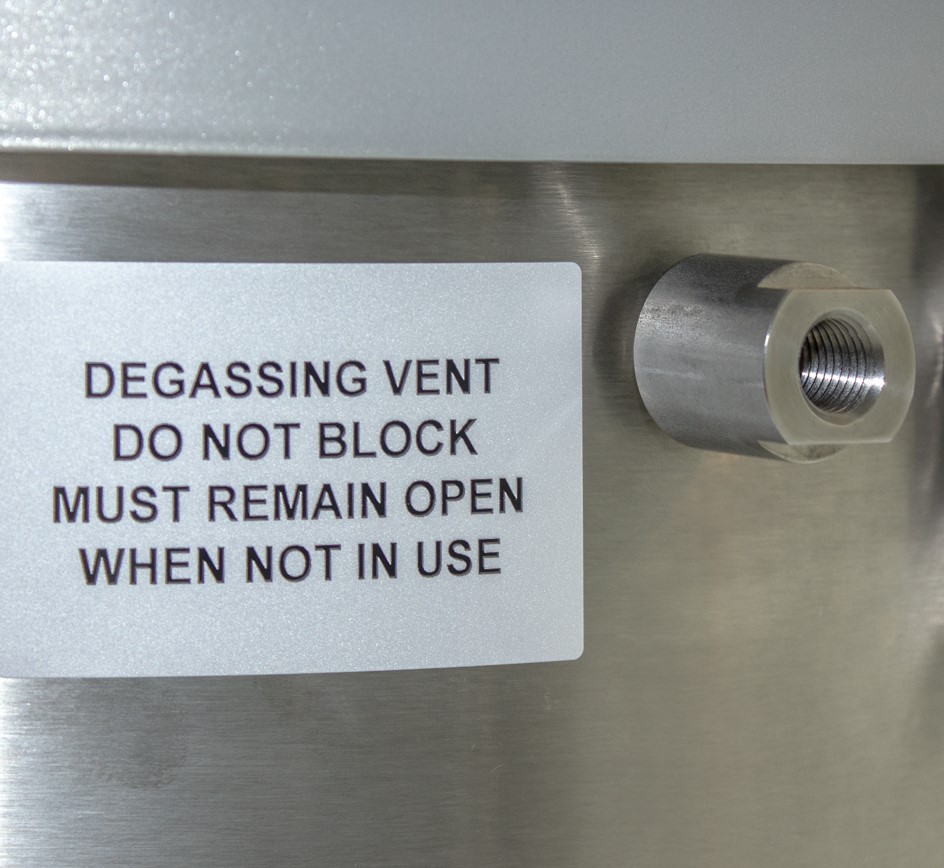
| Degassing vent | Included — automatic degassing |
| Liquid level indicator and drain valve | Included |
| 3D accessory kit | Included — see below |
Accessories and options
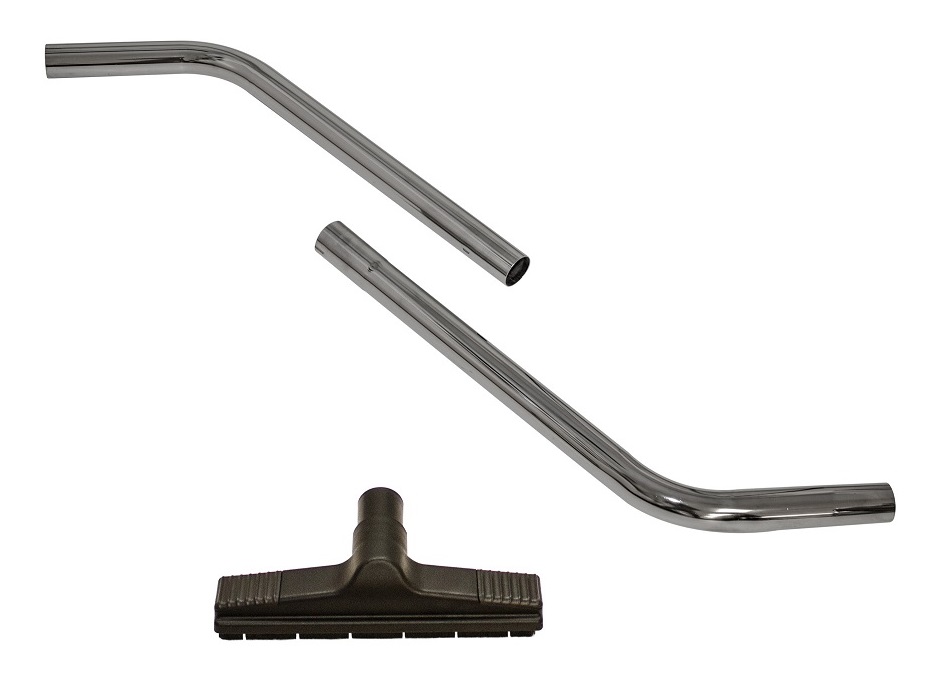
The machine ships complete with a 3D printing accessory kit for the 1.5″ camlock suction inlet, consisting of a static dissipating crush-proof hose (3 m), round brush, crevice tool and conical nozzle with curved tip — all in conductive material. The conductive wet recovery bag (3 L) is factory-installed in the container. Degassing vent, liquid level indicator and drain valve are also included. Options include the brushless motor (always supplied with 2×HEPA H14 filters) and an extended wand set with floor tool.
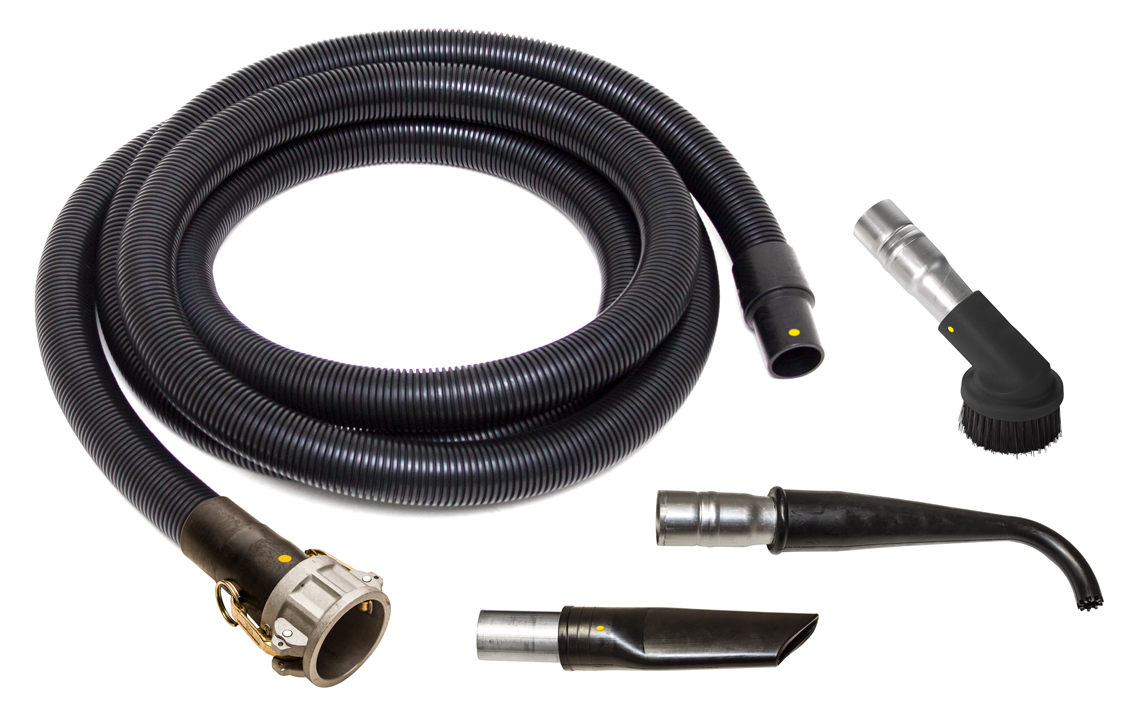 Included
3D accessory kit — hose, nozzles, brush
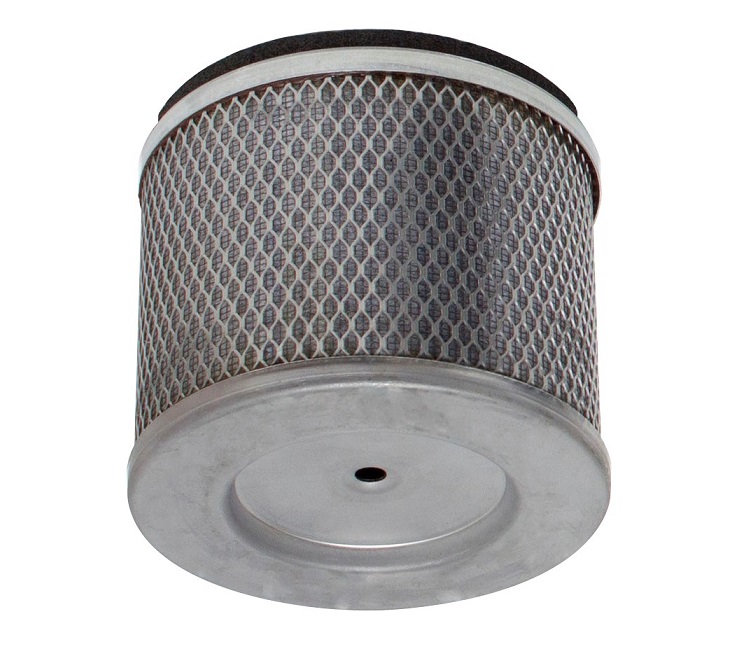 Included
CFE coalescing HEPA filter
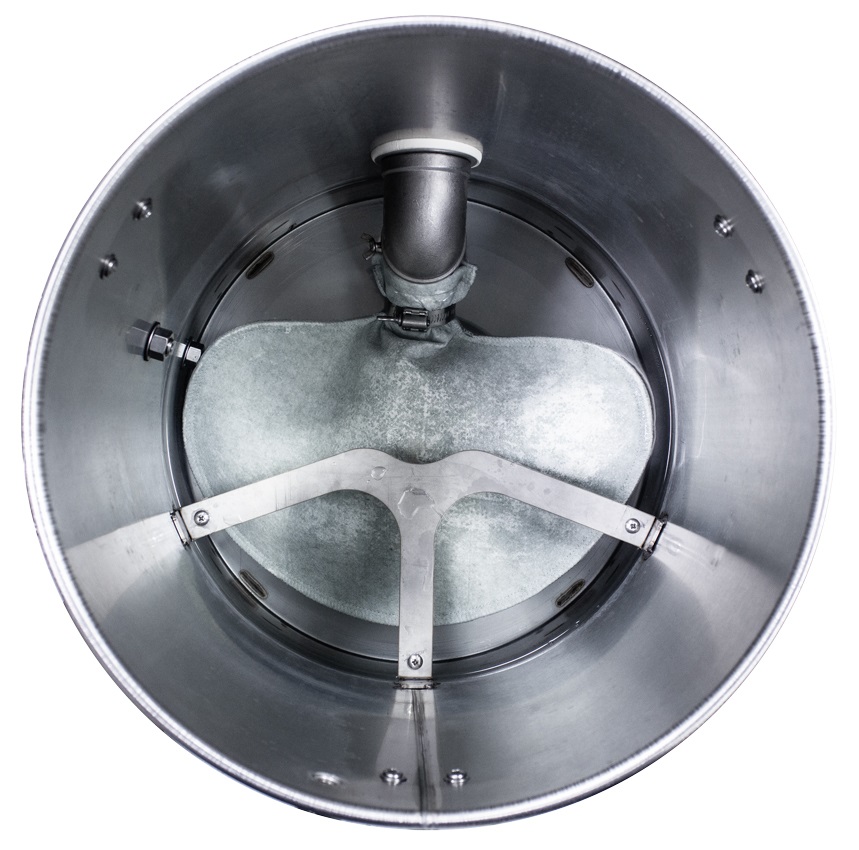 Included
Conductive wet recovery bag
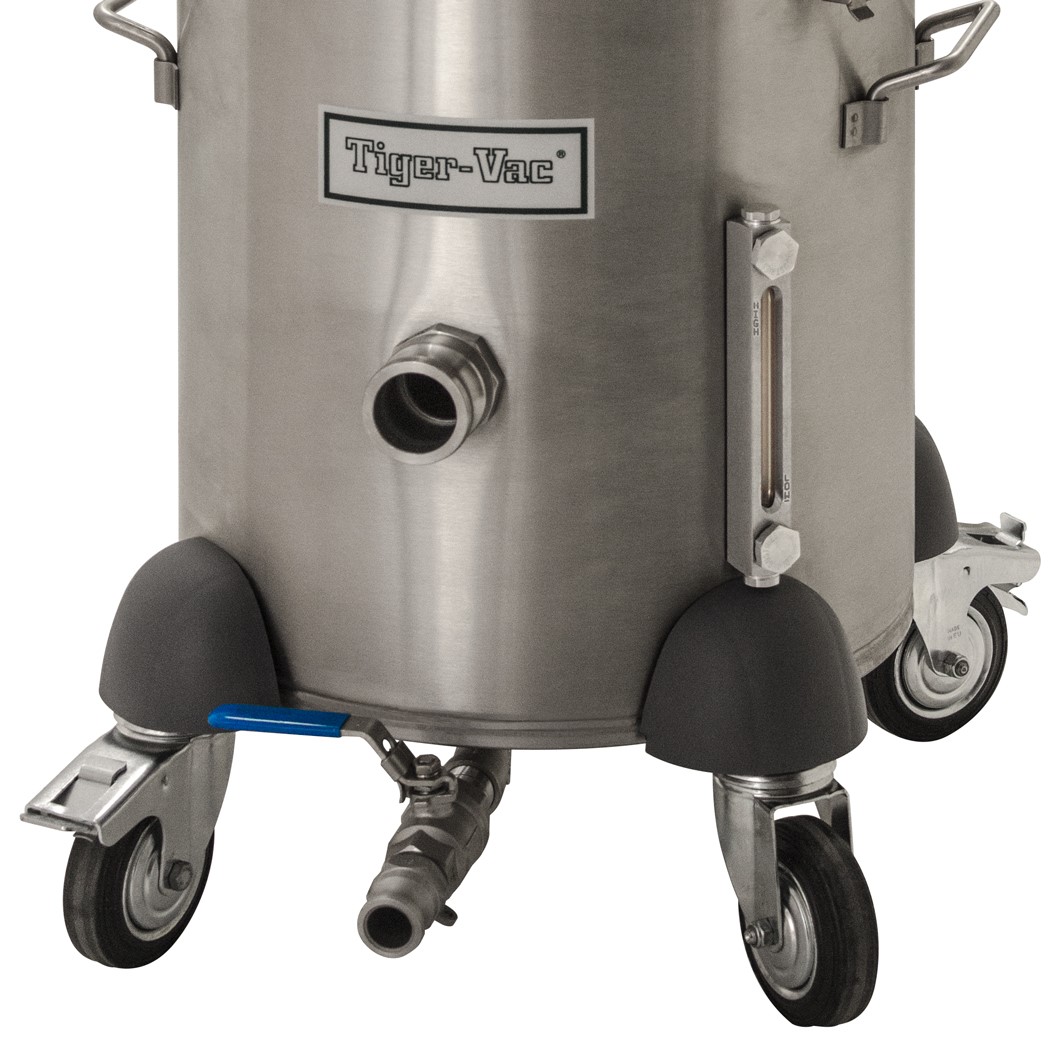 Included
Liquid level indicator and drain valve
 Included
Degassing vent
 Optional
Wand set and floor tool
Watch: How to replace the recovery bag
This Tiger-Vac video shows step by step how to replace the conductive wet recovery bag on the IT-40L mini immersion series.
Questions and answers
ORDLOC stands for Ordinary Locations — workplaces that have not been formally classified as explosive atmospheres under the ATEX Directive. It is sufficient when a formal risk assessment has established that the room does not meet the criteria for Zone 20, 21 or 22 classification — typically because ventilation is adequate and powder quantities are controlled. Using ORDLOC equipment in an ATEX-classified area is not permitted and may constitute a violation of workplace safety legislation. If you are uncertain about your zone classification, consult an explosion safety specialist before purchasing.
Both methods neutralise reactive metal powder by surrounding it with a medium that cuts off oxygen contact. Water immersion is suitable for most 3D printing metals including aluminium, titanium and magnesium, and is the simpler and more cost-effective approach. Oil inerting is used for the most pyrophoric metals — typically alkali metals — that react chemically with water and can release hydrogen gas. For standard SLM and DMLS processes, water immersion is the recommended method.
The brushless motor is relevant when the machine is used intensively with frequent and prolonged suction cycles. Carbon brushes in a conventional motor wear over time and must be replaced. The brushless motor has a significantly longer service life and requires less maintenance. Note that the brushless version always ships with 2×HEPA H14 filters, as the additional motor cooling path requires extra filtration coverage.
Water immersion is suitable for the metals used in standard SLM, DMLS and MBJ processes, including aluminium, titanium, stainless steel, cobalt-chrome and magnesium. Water is an effective inerting medium that cuts off oxygen access without chemical reaction with the powder. Water immersion must not be used for the most pyrophoric metals that react with water — typically sodium, potassium and certain lithium alloys — as contact can release hydrogen gas. Always consult the supplier's safety data sheet (SDS) for the specific powder before use.
When the recovery bag is full or after completing a work session, switch off the machine and allow it to stand for a short period so any residual gases can escape through the degassing vent, which must remain open. Then open the container, seal the conductive recovery bag before removing it — this prevents dispersal of wet powder slurry. The bag contents — a wet metal slurry — must be disposed of as hazardous waste in accordance with applicable waste regulations. Refill the container with clean water (12.3 L) and install a new conductive recovery bag before the next use.
NFPA 484 is the American standard for the handling of combustible metals and metal dusts. The standard defines requirements for “Liquid Precipitation Collectors” — liquid-inerting vacuum systems for metal dust. Although an American standard, it is referenced internationally as a recognised technical basis for safe metal powder handling. The 2D-10 ORDLOC's compliance with NFPA 484 is an important qualification for companies supplying the North American market or operating under international quality systems.
If a risk assessment results in the room being reclassified from unclassified to Zone 22, 21 or 20 — for example because production volumes increase or ventilation is reduced — the 2D-10 ORDLOC must immediately be taken out of service in that location. ORDLOC equipment may not legally be used in ATEX-classified zones. In that case an ATEX-certified model is required: EXP1-10, C-10 EX or ATEX-10A depending on the specific zone classification and operational profile.
The 2D-10 ORDLOC is designed for metal powder from additive manufacturing and is not classified as medical equipment or GMP-certified. It is relevant in pharmaceutical production environments where metal implants or medical titanium are produced via 3D printing in locations that are not ATEX-classified. For pharmaceutical cleanrooms with GMP requirements, our cleanroom and white line models are more appropriate.