3D Printing — 16 models
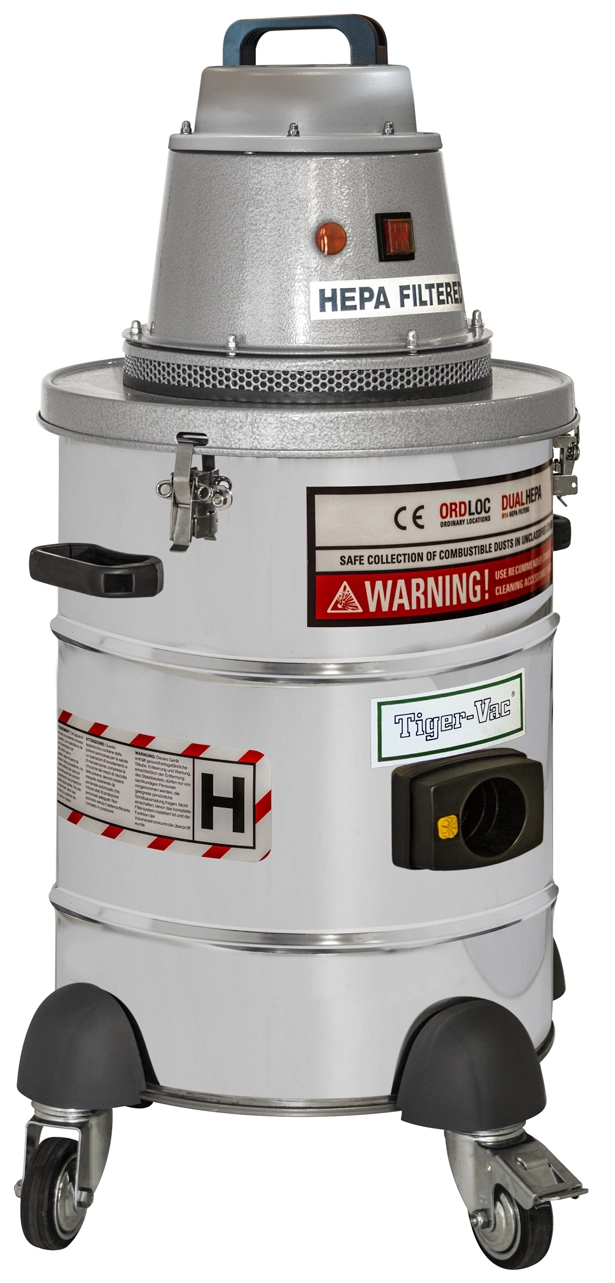
Tiger-Vac
2D-10 (4W) HEPA ORDLOC
Safe dry vacuum for combustible plastic powder in unclassified locations. HEPA H14. Conductive recovery bag. ESD safe. 75 dB(A). 3D printing accessories kit included.
 CFE HEPA.webp)
Tiger-Vac
2D-10 (IT-40L) CFE HEPA ORDLOC
Water immersion vacuum for reactive metal powder in unclassified locations. Wet mix inerting. Dual HEPA H14. Coalescing filter. ESD safe. SS 304. Brushless motor available. 75 dB(A).
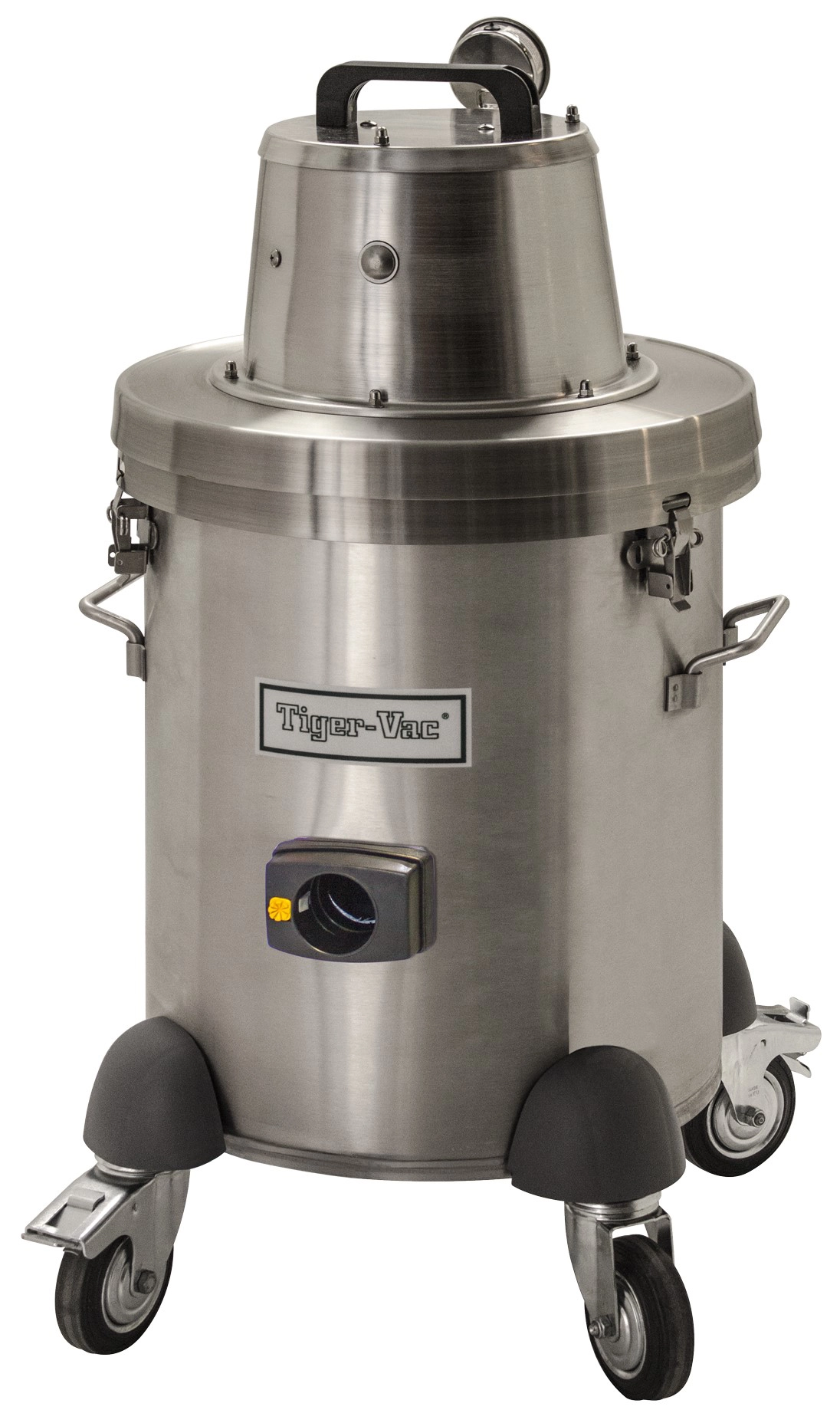
Tiger-Vac
ATEX-10A (40L) HEPA
Pneumatic ATEX II 2GD vacuum cleaner for combustible plastic powder from 3D printing. Continuous duty. HEPA H14. Stainless steel AISI 304. Zone 1/21. 68 dB(A). Pressure regulator and 3D tool kit included.
 CFE HEPA.webp)
Tiger-Vac
ATEX-10A (IT-40L) CFE HEPA
Pneumatic ATEX II 2GD water immersion vacuum. Continuous duty. Wet mix inerting. Coalescing HEPA. SS 304. Zone 21 external. Degassing vent. 68 dB(A).
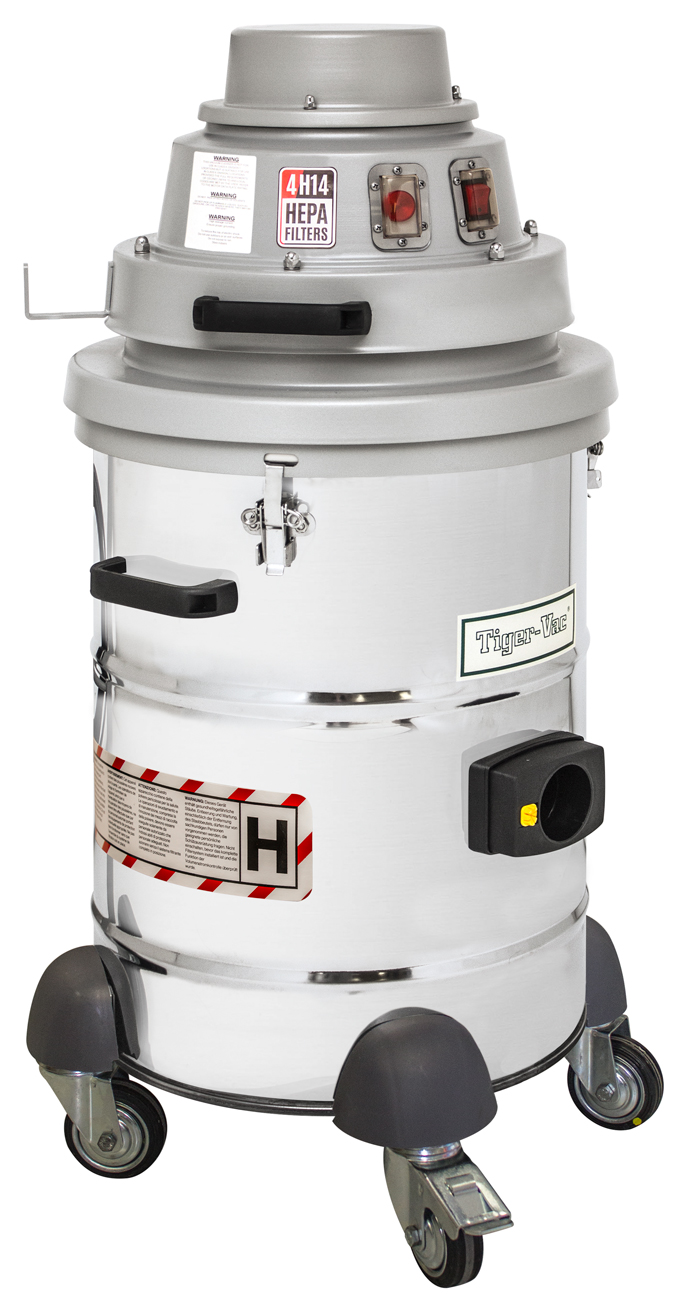
Tiger-Vac
C-10 EX (4W)
ATEX II 1/3D dry vacuum with formally attested Zone 20 internal protection. 4×HEPA H14. ESD safe. Zone 22 external. Stainless steel. Brushless motor available. IECEx. 72 dB(A).
 CFE HEPA.webp)
Tiger-Vac
C-10 EX (IT-40L) CFE HEPA
ATEX II 1/3D water immersion vacuum with formally attested Zone 20 internal. Wet mix inerting. Coalescing HEPA. ESD safe. SS 304. Brushless motor available. IECEx. 72 dB(A). 28.1 kg.
.webp)
Tiger-Vac
C-10 EX DT (PRS-HEC)
ATEX II 1/3D PRS powder recovery system. Zone 20 internal attested. Integrated cyclone (98%). HEPA H14. ESD safe. SS 304. Brushless motor available. IECEx. 72 dB(A). 25 L.
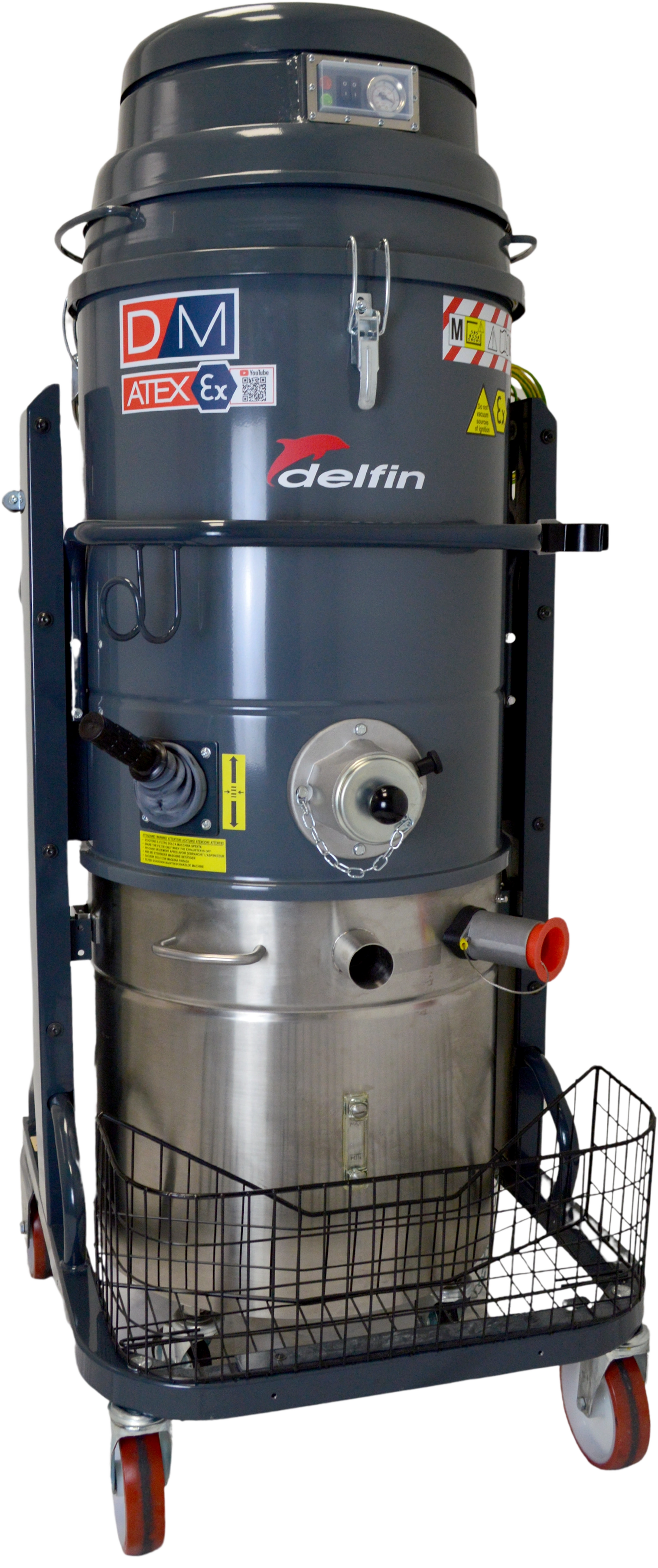
Delfin
DM2 1/2D INERT
Medium ATEX II 1/2D oil inerting vacuum for self-igniting metal powder. TEFC motor. Zone 20 internal and Zone 21 external attested. HEPA H14. AISI 304. IECEx. 74 dB(A). 90 kg.
Tiger-Vac
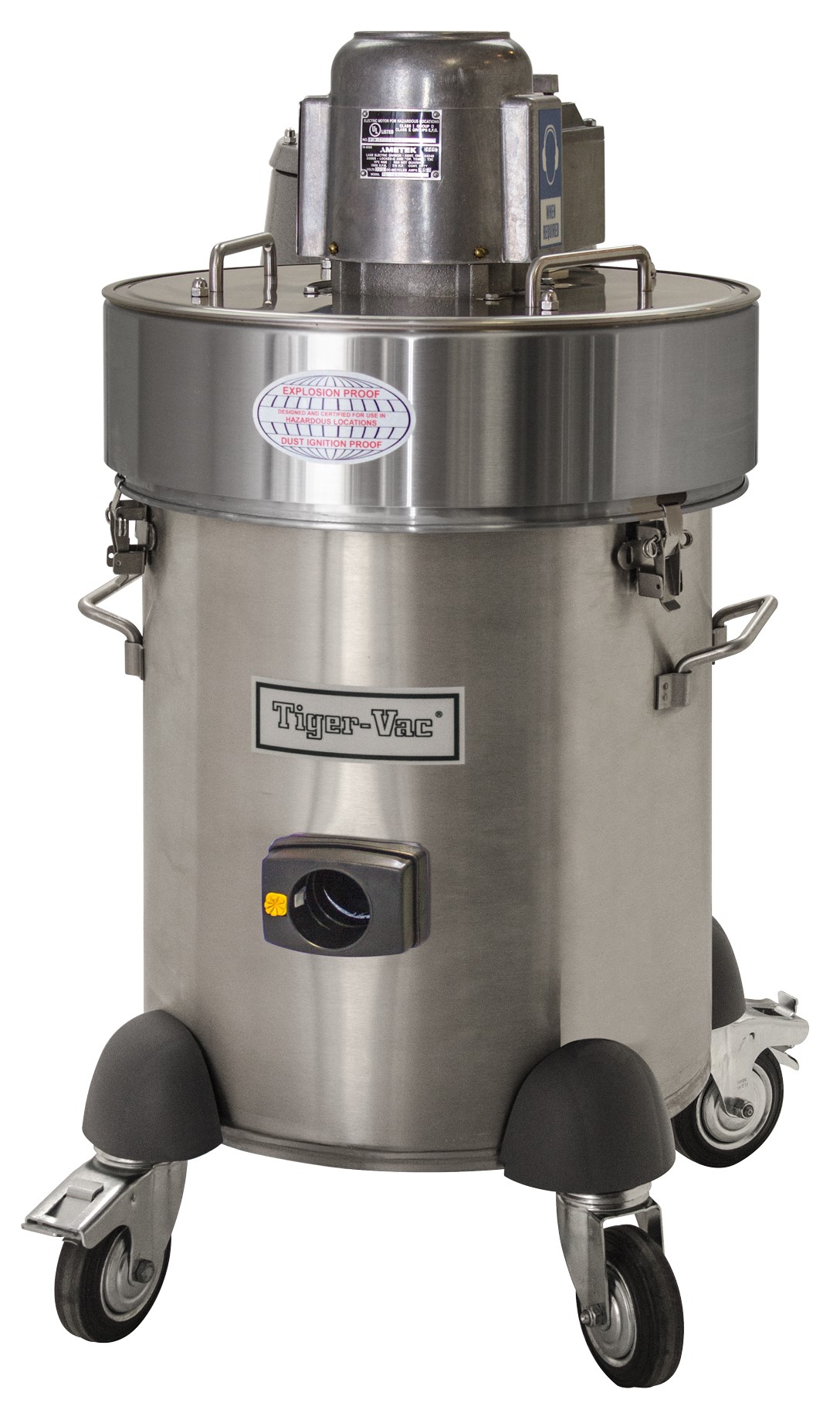
EXP1-10 (40L) HEPA
Compact ATEX II 2GD dry vacuum for plastic powder in 3D printing. TEFC motor. HEPA H14. Stainless steel 304. Zone 21 external. For medical and dental 3D printing. 78/85 dB(A).
 CFE HEPA.webp)
Tiger-Vac
EXP1-10 (IT-40L) CFE HEPA
ATEX II 2GD water immersion vacuum for reactive metal powder. TEFC motor. Wet mix inerting. Coalescing HEPA. Degassing vent. SS 304. Zone 21 external. 78/85 dB(A). 31.8 kg.
 RE HEPA.webp)
Tiger-Vac
EXP1-20 DT (PRS-HEC)
ATEX II 2GD PRS powder recovery system with high-efficiency integrated cyclone (98%). TEFC motor. HEPA H14. SS 304. 25 L detachable tank. Zone 21 external. IECEx. 78/85 dB(A). 98 kg.
Delfin
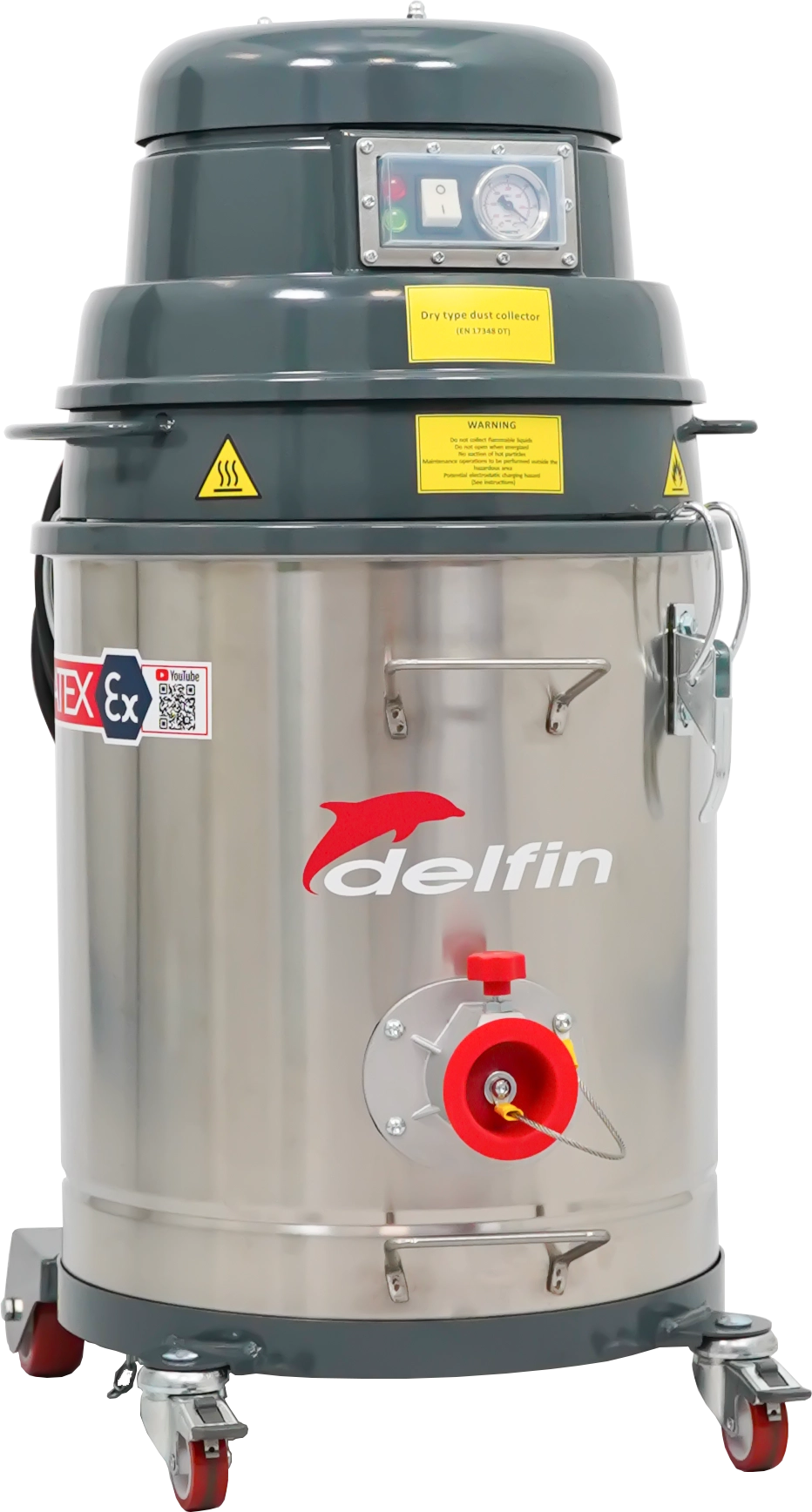
MTL 301 1/2D
Compact ATEX II 1/2D dry vacuum with Dust Tight IP64 protection. Zone 20 internal and Zone 21 external attested. HEPA H14. AISI 304. Brushless motor available. IECEx. 74 dB(A). 26 kg.
Delfin
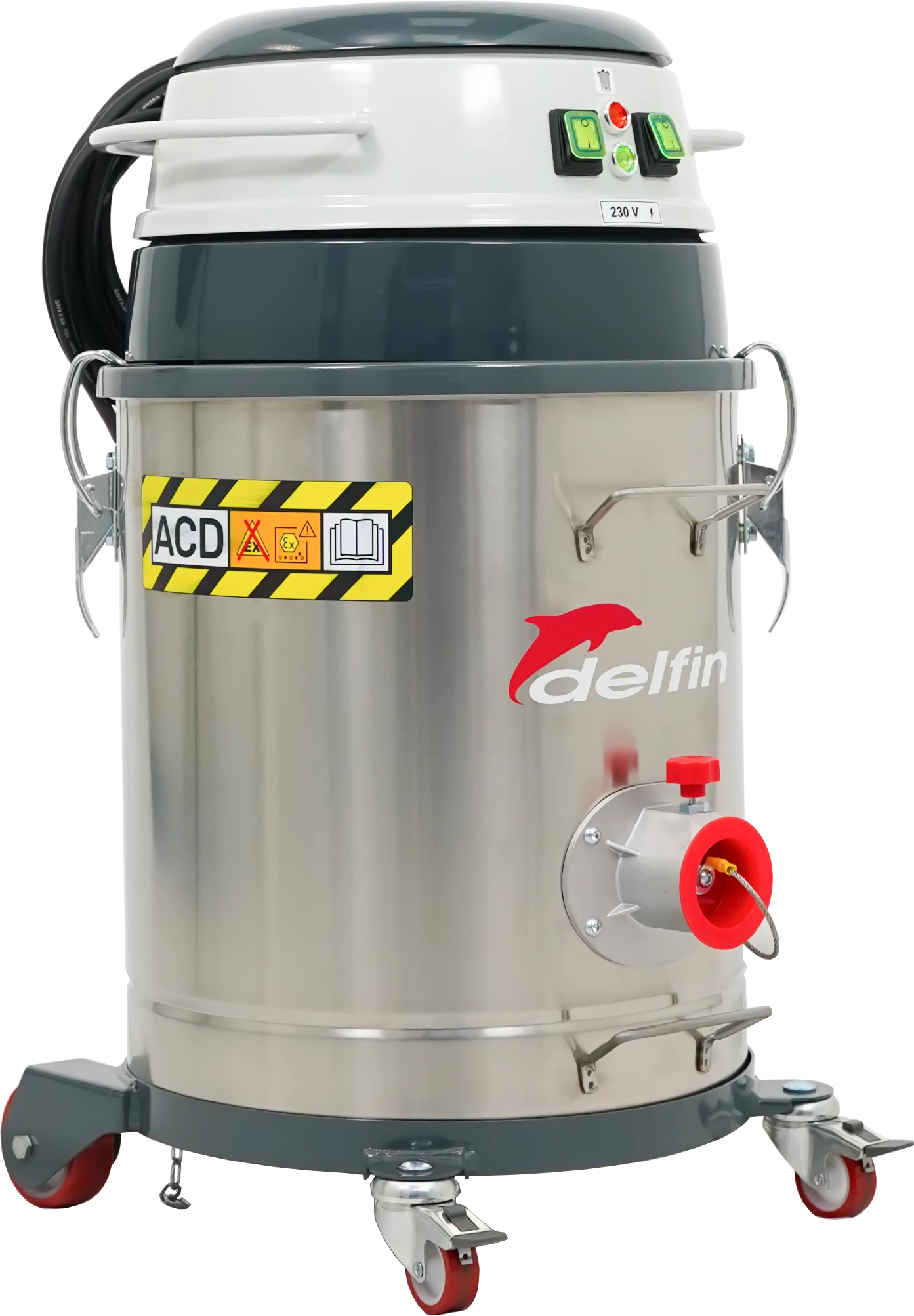
MTL 302 ACD
ACD vacuum cleaner for combustible plastic powder in unclassified locations. II 1/-D: Zone 20 internal certified by IMQ (NB 0738). HEPA H14. AISI 304. 2.2 kW. 360 m³/h. 74 dB(A). EN 17348.
Delfin
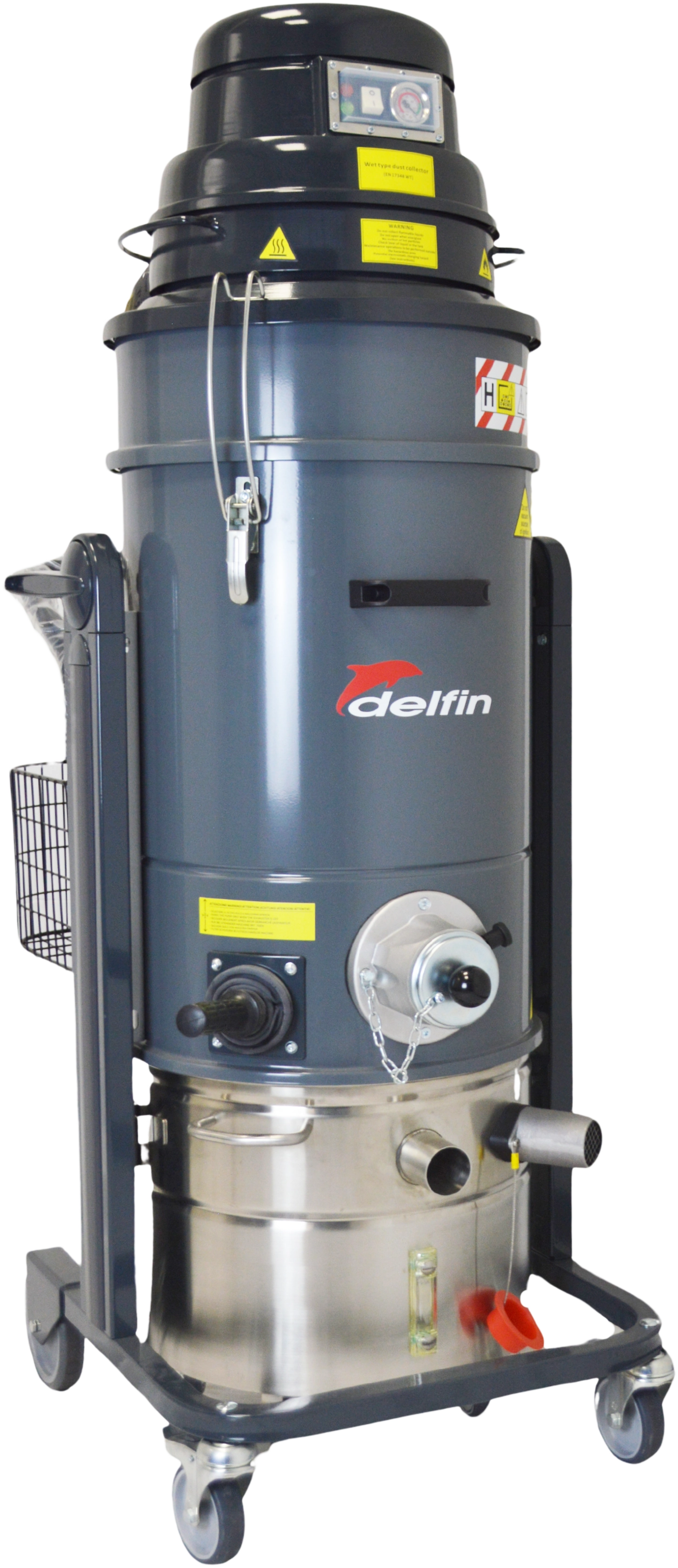
MTL 451 1/2D INERT
Compact ATEX II 1/2D oil inerting vacuum for self-igniting metal powder. TEFC motor. Zone 20 internal and Zone 21 external attested. HEPA H14. AISI 304. IECEx. 74 dB(A). 52 kg.
 RE HEPA.webp)
Tiger-Vac
SS-20 DT (PRS-HEC)
Pneumatic ATEX II 2GD PRS powder recovery system. Continuous duty. Integrated cyclone (98%). HEPA H14. SS 304. 25 L detachable tank. IECEx. 72 dB(A). 95 kg.
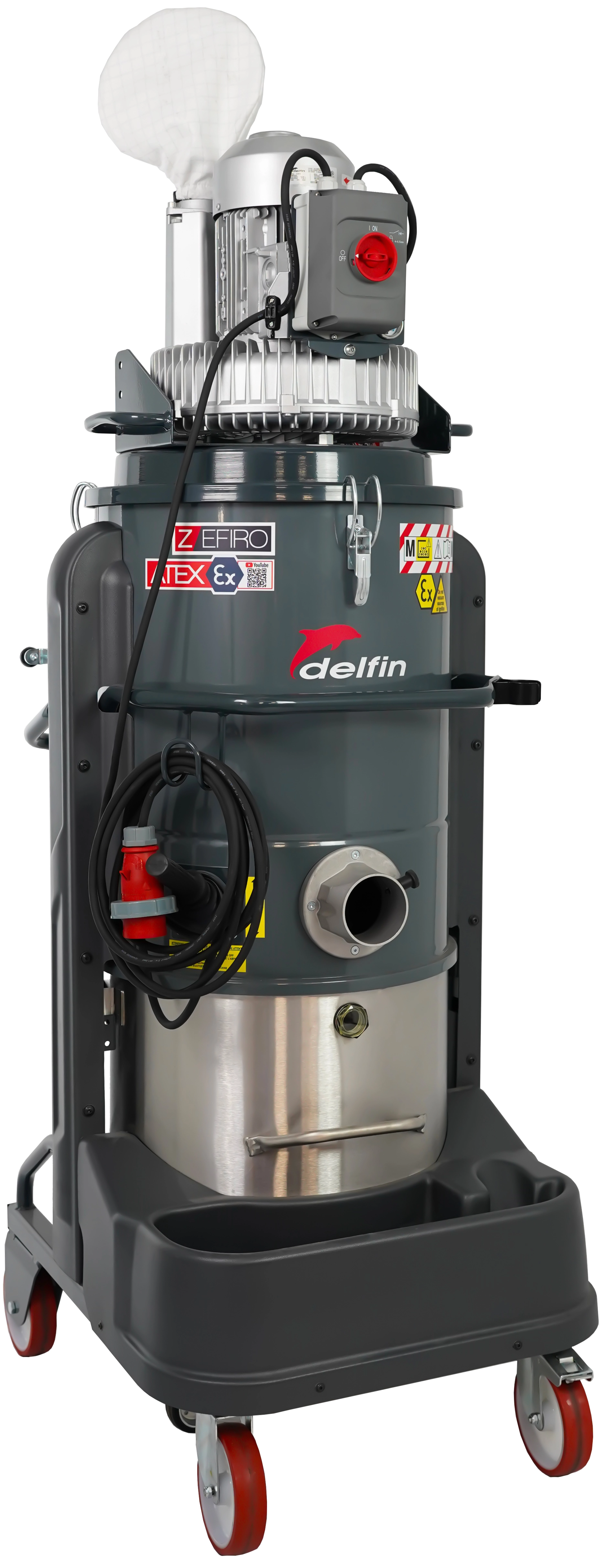
Delfin
Zefiro 75 INERT
Large ATEX II 3D oil inerting vacuum with side channel blower for continuous duty. For self-igniting metal powder in Zone 22. HEPA H14. AISI 304. Three phase. 75 dB(A). 95 kg.