3D Printing • ATEX II 2GD • Wet Mix • Continuous Duty
ATEX-10A (IT-40L) CFE HEPA
Pneumatic wet mix immersion vacuum with ATEX II 2GD certification for combustible metal powder from 3D printing. Venturi drive enables continuous 24/7 operation without motor wear. Zone 1 gas and Zone 21 dust. Just 68 dB(A).
- ATEX II 2GD — Zone 1 gas • Zone 21 dust (external)
- Pneumatic venturi drive — no motor, no wear, continuous 24/7
- Water immersion (wet mix) — combustible powder neutralised in immersion bath
- CFE coalescing HEPA filter — 99.97 % at 0.3 µm
- Only 68 dB(A) — quietest model in the range
- AISI 304 • 187 m³/h • 2,790 mmH₂O
- EN 17348 WT • EN ISO 80079-36:2016 • NFPA 484
 CFE HEPA.webp)
What is the Tiger-Vac ATEX-10A (IT-40L) CFE HEPA?
The ATEX-10A is the only pneumatically driven model in Tiger-Vac's IT-40L wet mix series. Instead of an electric motor, it uses a venturi principle: compressed air is fed through a single venturi unit, generating the vacuum that draws powder-laden air into the collection container. Because there are no rotating electrical components, no brushes and no bearings that wear under heat, the ATEX-10A can run continuously around the clock without rest periods or risk of overheating — a fundamental operational advantage over electric models in high-throughput production environments.
The machine carries ATEX II 2GD certification documented under LCIE file LCIE 16 AR 077 (Annex VIII, Notified Body 0081). This covers both Zone 1 gas (category 2G) and Zone 21 dust (category 2D) externally. The dual gas-and-dust rating makes the ATEX-10A the correct choice for 3D printing environments where both combustible metal powder and flammable solvents or process gases may be present simultaneously — a combination that a dust-only rated machine cannot legally cover. Performance has been verified to EN 17348:2022 WT and the machine meets the requirements of NFPA 484 for liquid precipitation collectors for metal dusts.
The coalescing HEPA filter (CFE) is positioned upstream of the working air exhaust, capturing moisture droplets and fine particles from the immersion bath so that the air returned to the room is clean and dry. Filter efficiency is 99.97 % at 0.3 µm. The pressure regulator is included as standard and factory set to 5.5 bar — the optimal balance between performance and noise level.
Technical specifications
| Parameter | Value |
|---|---|
| ATEX marking | II 2GD Ex h IIC T6 Gb / Ex h IIIC T85°C Db |
| ATEX zone | Zone 1 gas (external) • Zone 21 dust (external) |
| ATEX certificate | LCIE 16 AR 077 (Annex VIII, NB 0081) |
| Drive type | Pneumatic — single venturi |
| Minimum compressor | 15 HP |
| Air line size | 1/2″ (12.7 mm) |
| Input air volume | 16.5–21.2 L/s |
| Input air pressure | 5.5 bar (factory set) |
| Air flow | 187 m³/h |
| Vacuum pressure | 2,790 mmH₂O |
| Suction inlet | Ø38 mm (1.5″ camlock) |
| Filter | CFE coalescing HEPA — 99.97 % at 0.3 µm |
| Water capacity (container) | 12.3 L (3.25 gal) |
| Recovery bag | Conductive wet recovery bag — 3 L (0.8 gal) — included |
| Container | AISI 304 stainless steel |
| Dimensions | 48 × 46 × 86 cm (H) |
| Sound level | 68 dB(A) |
| Pressure regulator | Included — 0–10 bar, factory set 5.5 bar |
| Standards | EN 17348:2022 WT • EN ISO 80079-36:2016 • EN ISO 80079-37:2016 • EN 1127-1:2019 • NFPA 484 |
Accessories and options
The ATEX-10A ships with a complete static dissipating tool kit for the 1.5″ camlock suction inlet, including conductive suction hose (3 m), air supply hose (7.5 m with quick disconnect fittings), two-piece stainless steel wand, universal tool with conductive brush strips and rubber blades, conical nozzle, Tiger Claw and round brush with conductive bristles. A multimeter is also included. Conductive wet recovery bag, mist arrestor pack, pressure regulator, degassing vent and liquid level indicator are all included. Optional: wand set with floor tool.
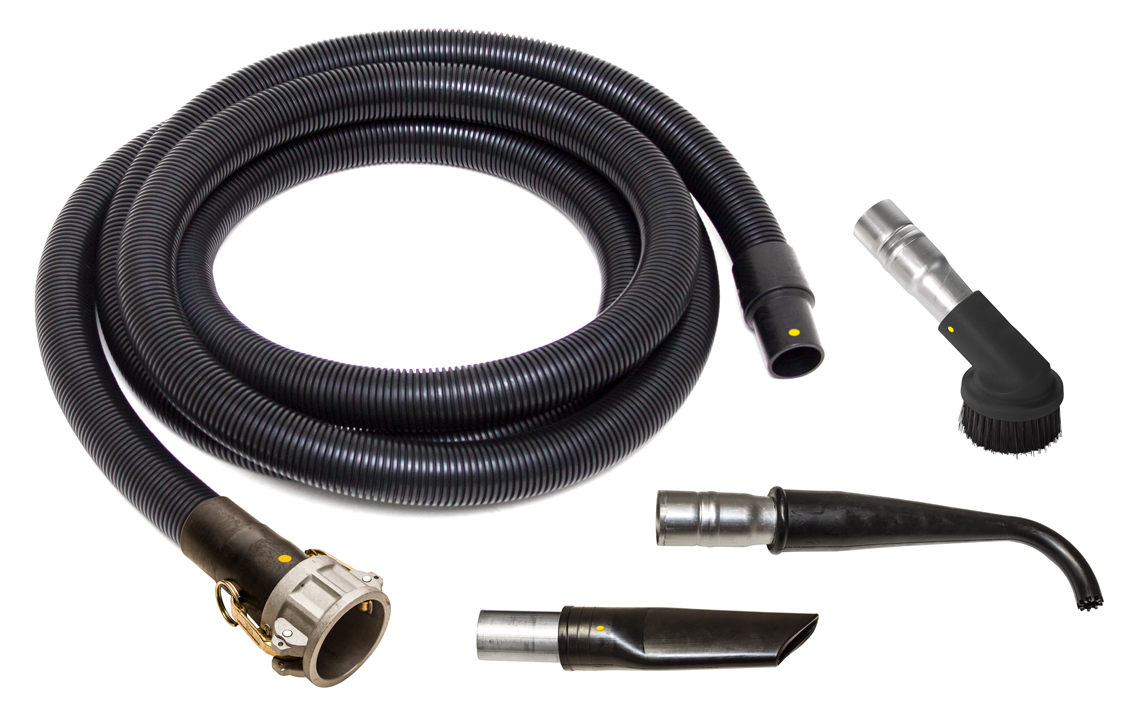 Included
SD accessory kit — hose, nozzles, brushes
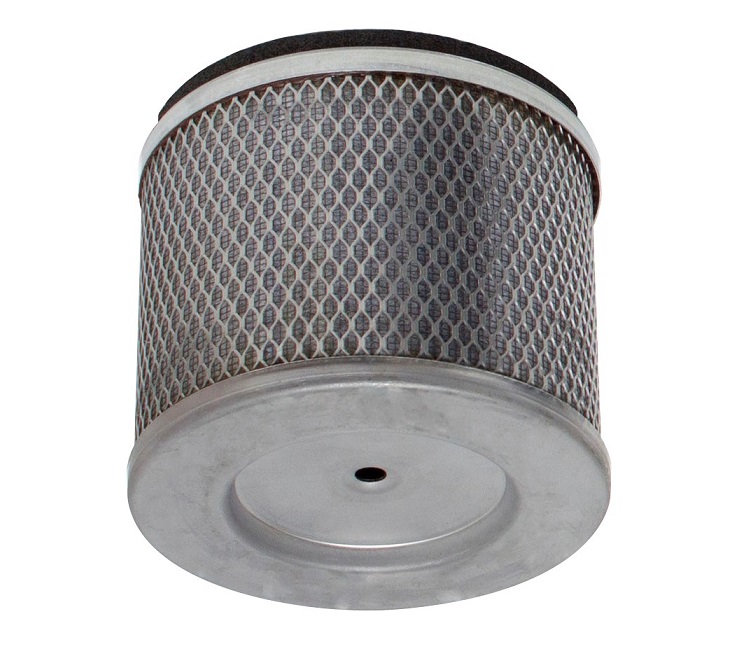 Included
CFE coalescing HEPA filter
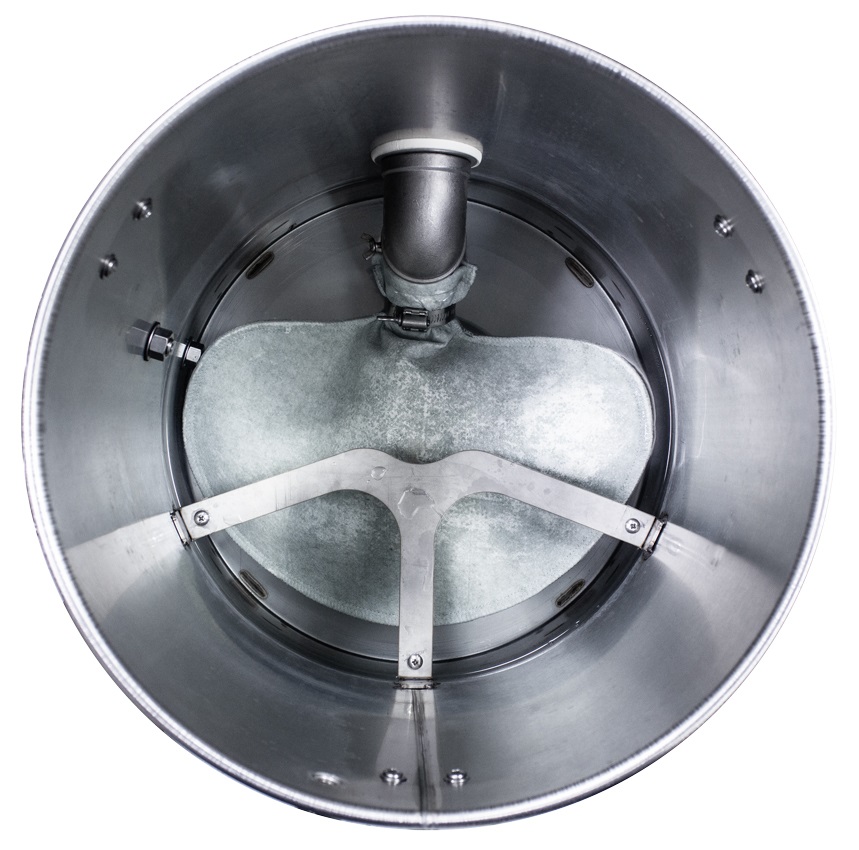 Included
Conductive wet recovery bag
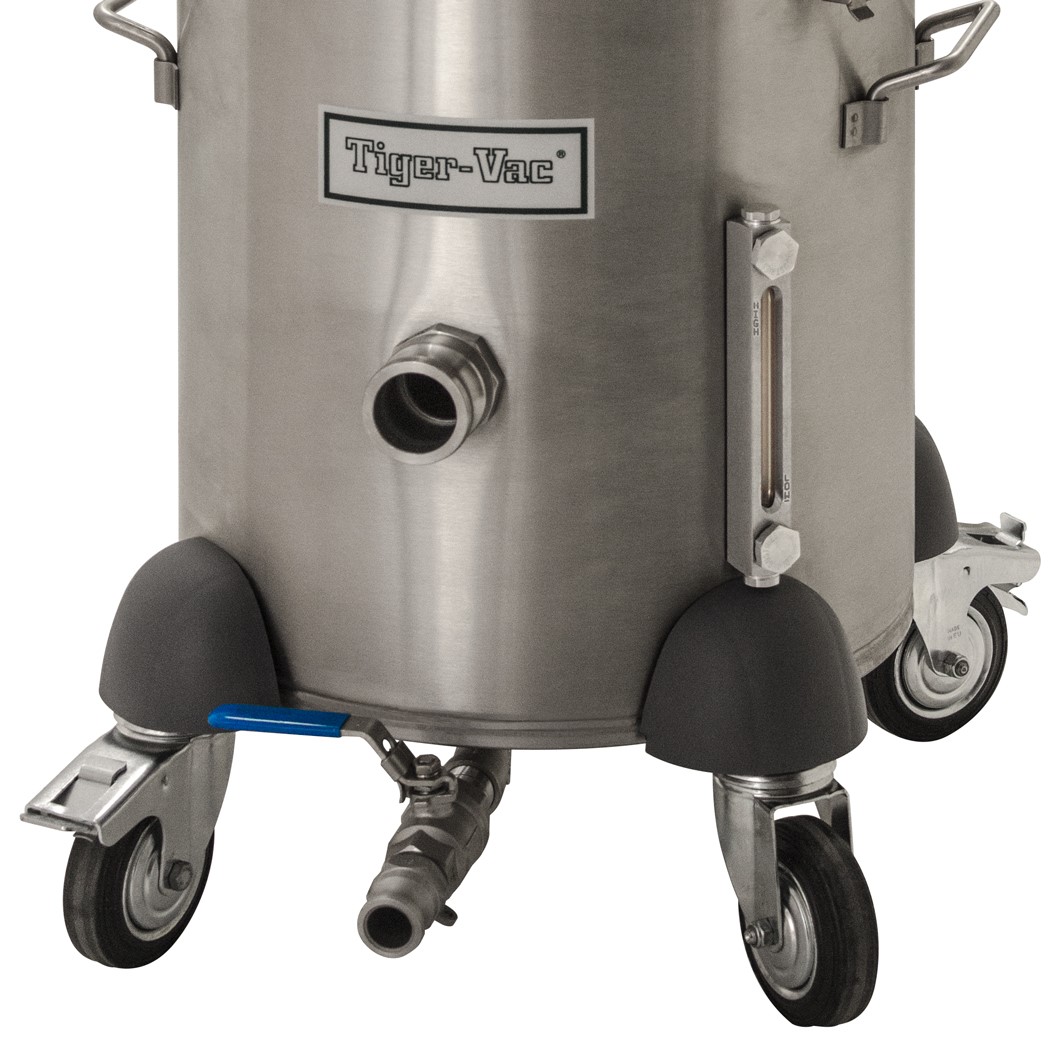 Included
Liquid level indicator and drain valve
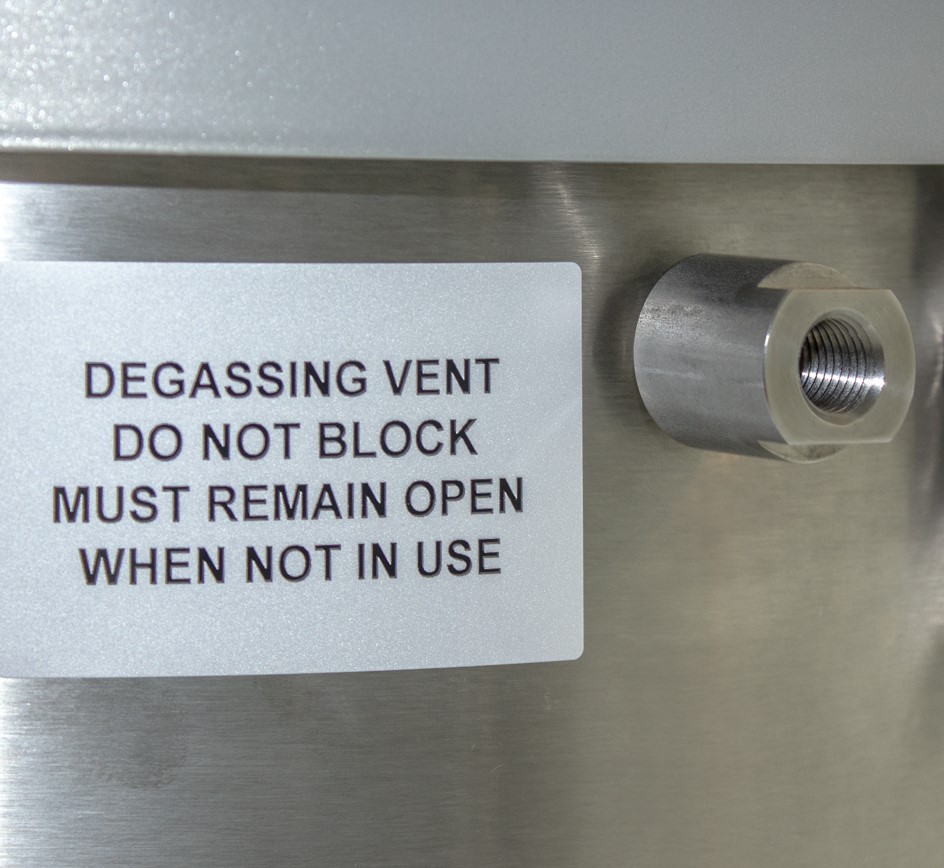 Included
Degassing vent
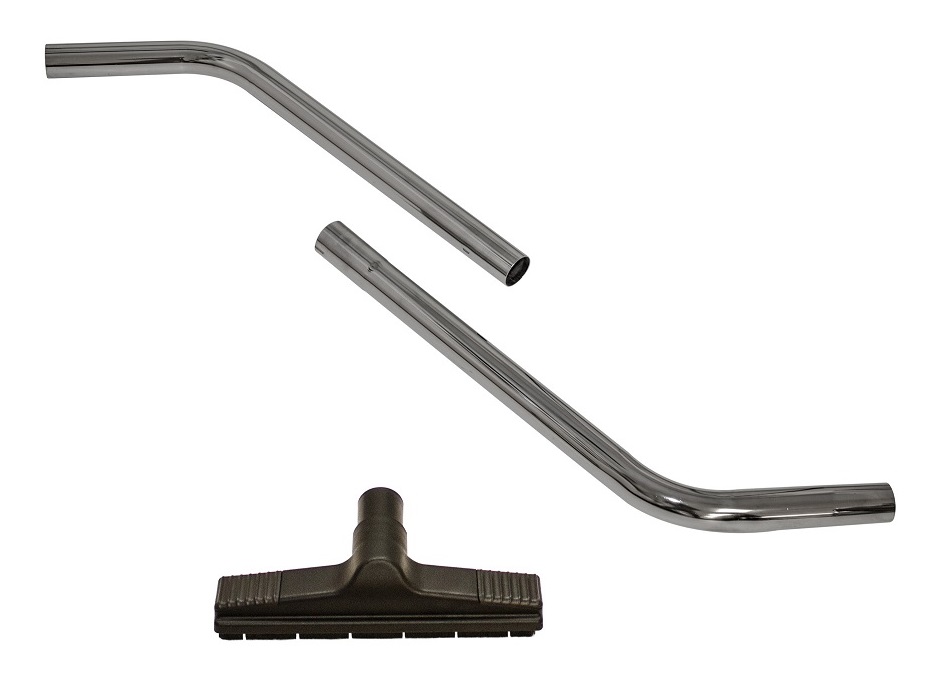 Optional
Wand set and floor tool
Watch: How to replace the recovery bag
This Tiger-Vac video shows step by step how to replace the conductive wet recovery bag on the IT-40L mini immersion series.
Questions and answers
A venturi-driven machine has no electric motor, no brushes and no bearings that generate heat under load. It can therefore run continuously without cooling breaks or risk of overheating. In addition, a pneumatic machine eliminates all electrical ignition sources entirely, which simplifies compliance documentation in environments where gas and dust zones overlap. The trade-off is the requirement for a reliable compressed air supply of at least 15 HP compressor capacity at 5.5 bar.
The marking II 2GD reads as follows: Group II (surface industry, not mining), category 2 (suitable for Zone 1 gas and Zone 21 dust externally), G (gas) and D (dust). This dual certification covers both gas and dust hazards simultaneously. A machine rated only for dust zones (D) cannot legally be used in an environment also classified as a gas zone, even if the gas risk is considered secondary.
The ATEX-10A is the right choice when: (1) production runs continuously and requires a machine that never needs to stop, (2) the environment is classified as both a gas zone and a dust zone simultaneously, or (3) the objective is to eliminate all electrical ignition sources entirely. The EXP1-10 and C-10 EX are electric models covering higher dust zone categories but not gas zones, and are intermittent-duty. Where a reliable compressed air supply of sufficient capacity is available, the ATEX-10A is technically the most robust solution for intensive continuous use.
The ATEX-10A requires a compressor of at least 15 HP. The air line must be 1/2″ (12.7 mm) internal diameter, and the working pressure must be 5.5 bar — the factory setting on the included pressure regulator. The included air supply hose is 7.5 m with quick disconnect fittings at both ends. Note that actual performance — air flow and vacuum pressure — depends on the compressor's real capacity under load. An undersized compressor will noticeably reduce suction performance.
The ATEX Directive (2014/34/EU) defines several conformity assessment procedures. Annex VIII is the internal production control procedure, where the manufacturer takes responsibility for conformity — but with technical documentation submitted to and acknowledged by a notified body. For the ATEX-10A this is LCIE (Laboratoire Central des Industries Électriques, NB 0081), which acknowledged receipt of the documentation under reference LCIE 16 AR 077, valid until 2026. This differs from third-party type examination (Annex III/IV), where the notified body actively tests and approves the product. Annex VIII is the correct procedure for non-electrical ATEX equipment of this type.
Water immersion is suitable for the metals used in standard SLM, DMLS and MBJ processes, including aluminium, titanium, stainless steel, cobalt-chrome and magnesium. Water is an effective inerting medium for these materials, cutting off oxygen access without chemical reaction with the powder. Water immersion must not be used for the most pyrophoric metals that react with water — typically sodium, potassium and certain lithium alloys — as contact can release hydrogen gas and in the worst case amplify the fire risk. Always consult the supplier's safety data sheet (SDS) for the specific powder before use.
When the recovery bag is full or after completing a work session, shut off the compressed air supply and allow the machine to stand for a short period so any residual gases can escape through the degassing vent, which must remain open. Then open the container, seal the conductive recovery bag before removing it — this prevents dispersal of wet powder slurry. The bag contents — a wet metal slurry — must be disposed of as hazardous waste in accordance with applicable waste regulations. Refill the container with clean water (12.3 L) and install a new conductive recovery bag before the next use.
The ATEX-10A is designed specifically for metal powder from additive manufacturing and is not classified as medical equipment or GMP-certified. It would not be the right choice for cleanrooms or production areas under pharmaceutical GMP regulation, unless ATEX explosion protection is the primary requirement — for example in the production of metal implants or medical titanium via 3D printing in ATEX-classified locations. For pharmaceutical cleanrooms without ATEX classification, our cleanroom and white line models are more relevant.