3D Printing • ATEX II 2GD • Zone 1 gas • Zone 21 dust • TEFC motor
EXP1-10 (IT-40L) EX (CFE) HEPA
Electric ATEX II 2GD wet mix immersion vacuum with TEFC motor (Totally Enclosed Fan Cooled) for combustible metal powder from 3D printing. Highest airflow in the IT-40L range: 224 m³/h. Zone 1 gas and Zone 21 dust external. Third-party certified LCIE 03 ATEX 6297.
- ATEX II 2GD — Zone 1 gas • Zone 21 dust (external)
- LCIE 03 ATEX 6297 — 3rd party type examination certificate
- Water immersion (wet mix) — combustible powder neutralised in immersion bath
- TEFC motor 1 kW — hermetically sealed, no cooling air intake
- Highest airflow: 224 m³/h • CFE HEPA 99.97 %
- 31.8 kg • 15 m cord • AISI 304
- EN 17348 WT • EN ISO 80079-36:2016 • NFPA 484
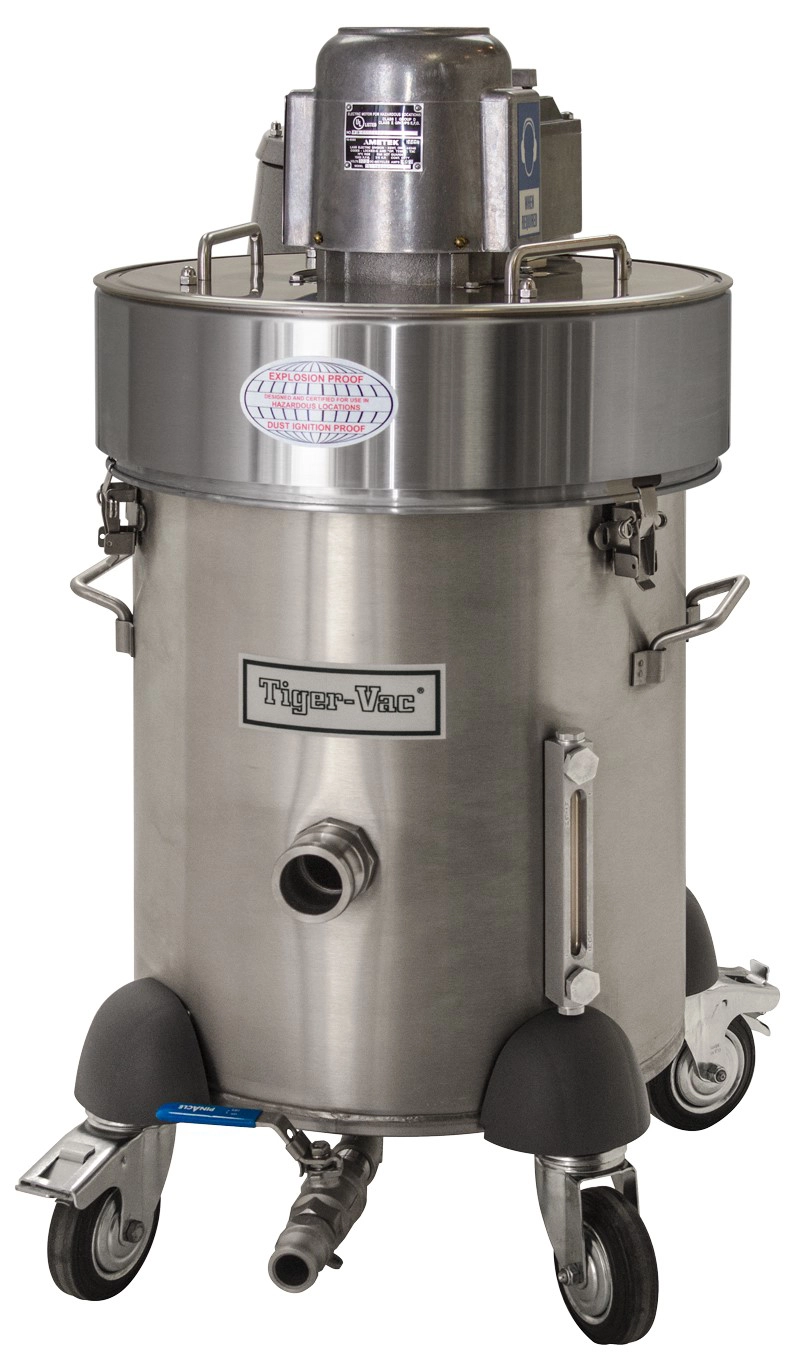
What is the Tiger-Vac EXP1-10 (IT-40L) EX (CFE) HEPA?
The EXP1-10 is the electric model in the IT-40L series with ATEX II 2GD certification covering both Zone 1 gas and Zone 21 dust externally. This distinguishes it from the C-10 EX, which is certified for Zone 22 externally but has Zone 20 internal protection — the EXP1-10 is the correct choice when the environment is classified as Zone 21 dust and Zone 1 gas, and when there is no requirement for IECEx certification or Zone 20 protection inside the collection container.
The motor is a TEFC motor — Totally Enclosed Fan Cooled. TEFC motors are hermetically sealed: cooling air circulates over the motor housing rather than through it. This makes the motor robust against dust and moisture, and is the preferred choice in ATEX environments that also carry gas risk, as the motor interior is shielded from the surrounding atmosphere. The EXP1-10 is the only electric model in the IT-40L series with a TEFC motor; both the C-10 EX and 2D-10 use bypass motors. There is no brushless motor option for the EXP1-10.
The EXP1-10 delivers the highest airflow in the series at 224 m³/h, but correspondingly the lowest vacuum pressure at 1,550 mmH₂O. This makes it well suited to rapid cleaning of open powder deposits over large areas, but it is not optimised for reaching deep into perforated structures or narrow geometries that require high vacuum pressure. The ATEX certificate is LCIE 03 ATEX 6297 issued by LCIE (NB 0081). There is no IECEx certification.
Technical specifications
| Parameter | Value |
|---|---|
| ATEX marking | II 2GD Ex d IIA T3 Gb / Ex t IIIC T200°C Db IP6X |
| ATEX zone | Zone 1 gas (external) • Zone 21 dust (external) |
| ATEX certificate | LCIE 03 ATEX 6297 (3rd party, NB 0081) |
| Motor type | TEFC (Totally Enclosed Fan Cooled) 1 kW |
| Voltage | 230 V • 50 Hz • single phase • 4.5 A |
| Air flow | 224 m³/h |
| Vacuum pressure | 1,550 mmH₂O |
| Suction inlet | Ø38 mm (1.5″ camlock) |
| Filter | CFE coalescing HEPA — 99.97 % at 0.3 µm |
| Water capacity (container) | 12.3 L (3.25 gal) |
| Recovery bag | Conductive wet recovery bag — 3 L — included |
| Container | AISI 304 stainless steel |
| Dimensions | 48 × 46 × 86 cm (H) |
| Weight | 31.8 kg |
| Sound level | 78/85 dB(A) |
| Cord length | 15 m (power outlet plug not included) |
| Standards | EN 17348 WT • EN ISO 80079-36:2016 • EN ISO 80079-37:2016 • NFPA 484 |
Accessories and options
The EXP1-10 ships with a complete static dissipating accessory kit for the 1.5″ camlock suction inlet, including conductive crush-proof hose (3 m), crevice tool, round brush and conical nozzle with curved tip. Conductive wet recovery bag, mist arrestor pack, degassing vent and liquid level indicator are all included. There is no brushless motor option. Optional: wand set with floor tool.
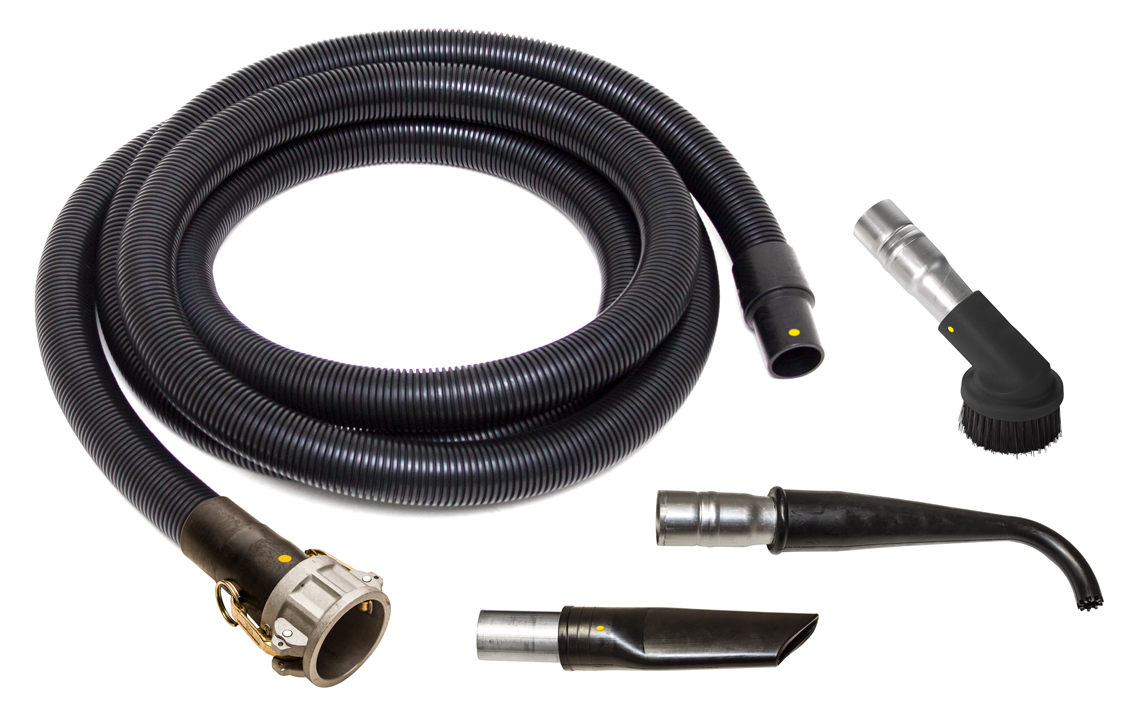 Included
3D accessory kit — hose, nozzles, brush
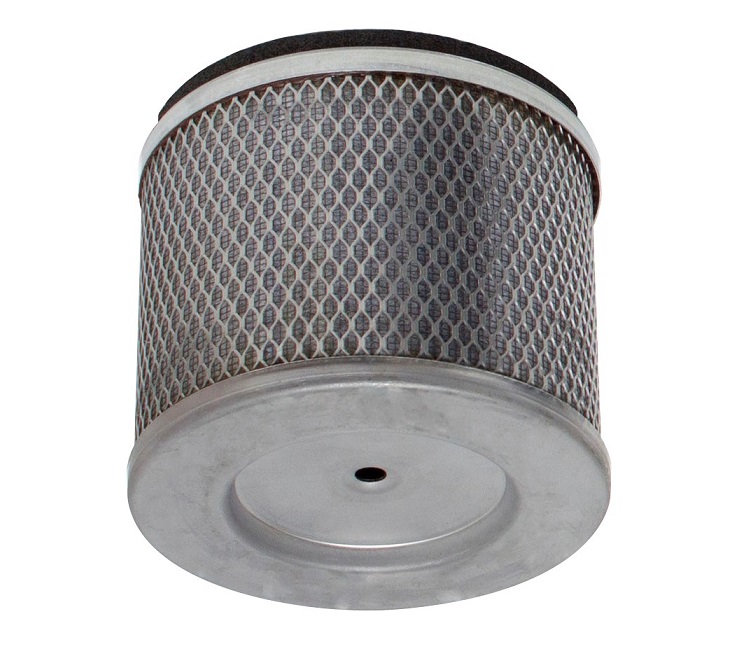 Included
CFE coalescing HEPA filter
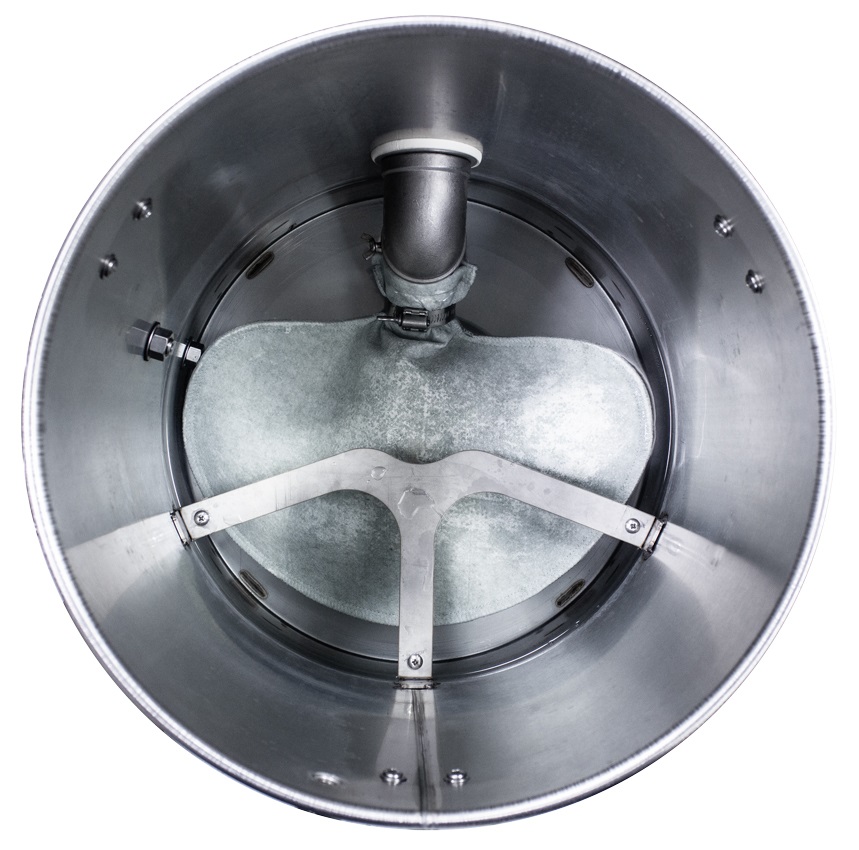 Included
Conductive wet recovery bag
 Included
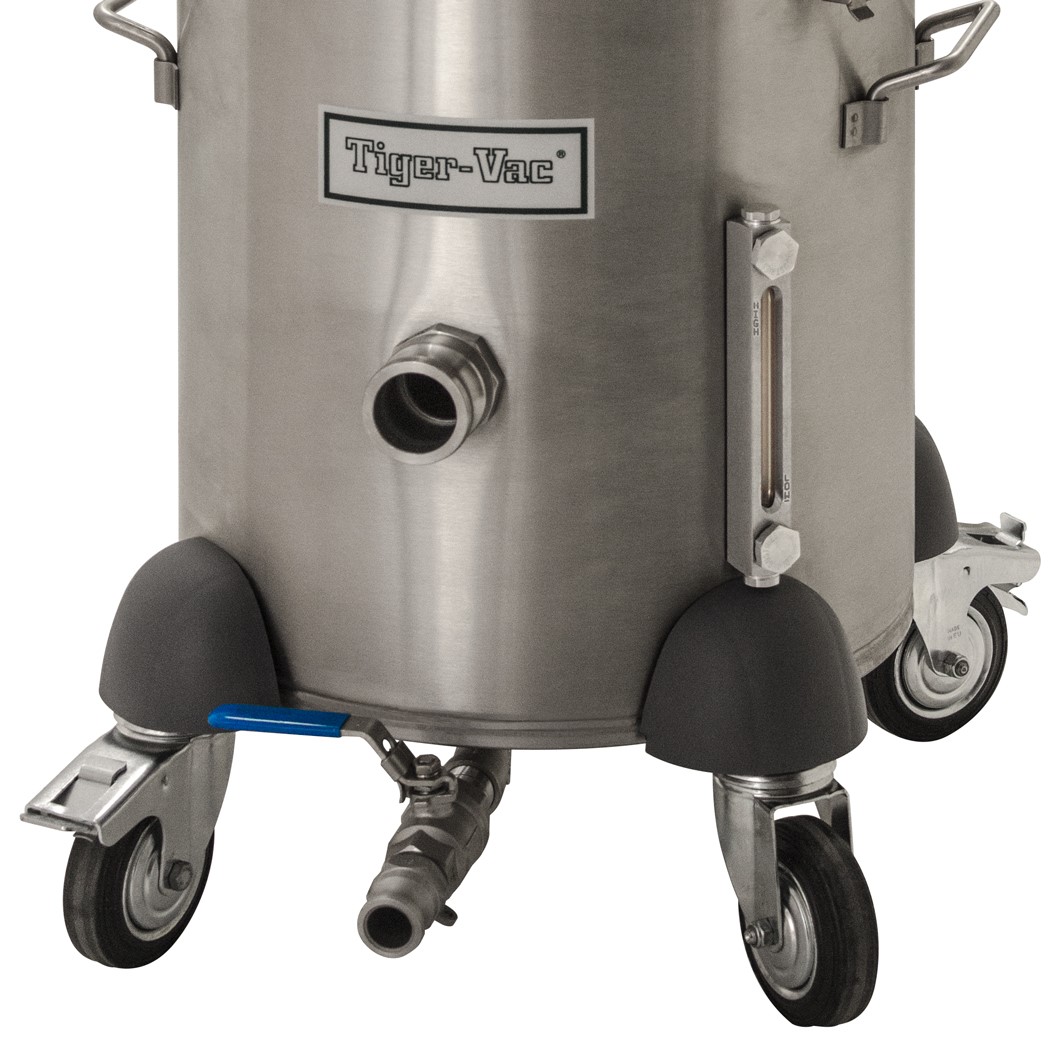
Liquid level indicator and drain valve
 Included
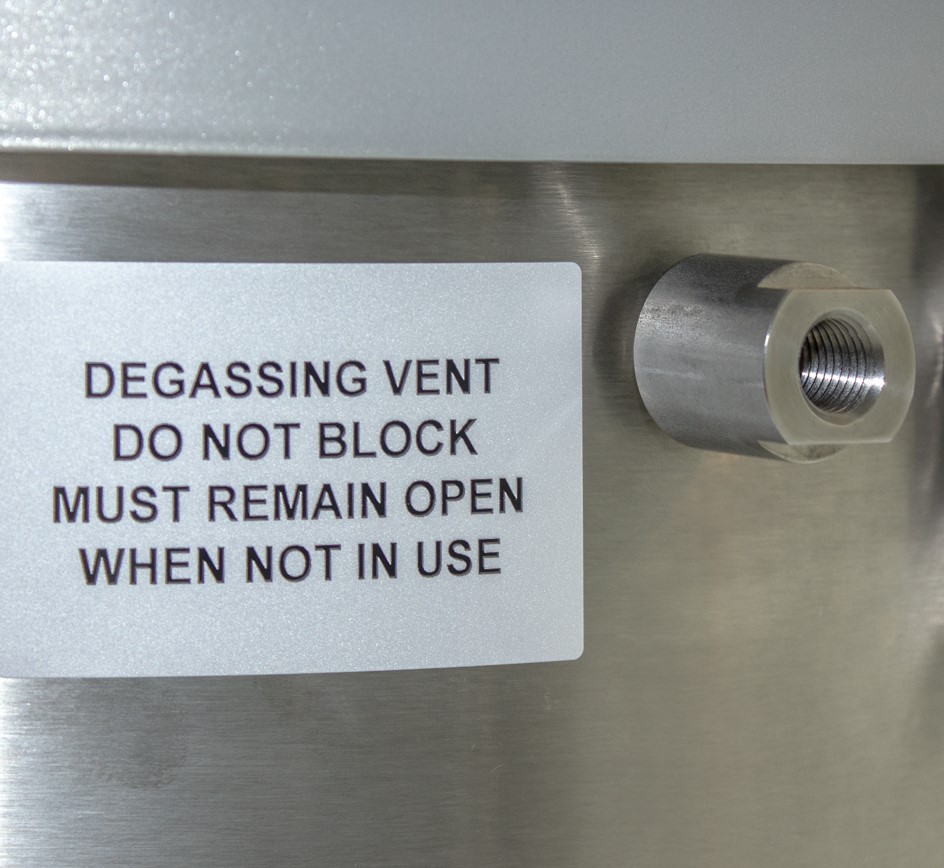
Degassing vent
 Optional
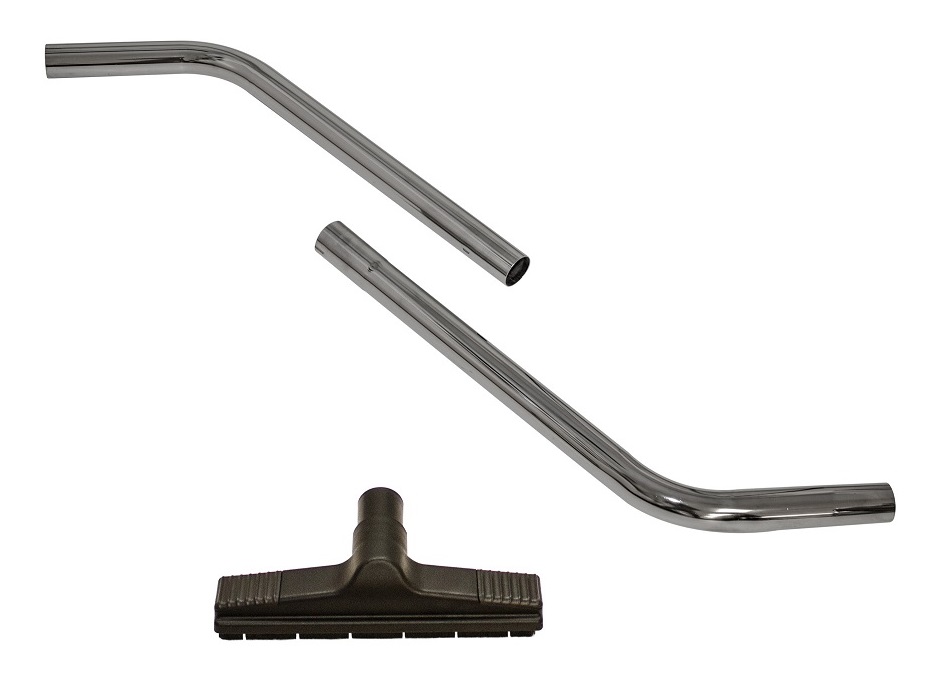
Wand set and floor tool
Watch: How to replace the recovery bag
This Tiger-Vac video shows step by step how to replace the conductive wet recovery bag on the IT-40L mini immersion series.
Questions and answers
TEFC stands for Totally Enclosed Fan Cooled. It is a motor design in which the motor housing itself is hermetically sealed — cooling air circulates over the outer casing via an external cooling fan rather than flowing through the motor. This makes the motor resistant to dust, moisture and corrosive atmospheres, as none of these reach the motor's electrical components. In ATEX environments with gas risk (Zone 1), the hermetic sealing is critical: flammable gases must not enter and ignite on contact with hot components inside the motor. Unlike bypass motors, the TEFC motor is rated for intermittent rather than continuous duty.
Choose the EXP1-10 when the environment is classified as Zone 21 dust and Zone 1 gas externally, but there is no requirement for Zone 20 protection inside the collection container and no need for IECEx certification. The EXP1-10 is ATEX II 2GD certified and covers both gas and dust externally — that is sufficient for most Nordic 3D printing environments with gas zone classification. The C-10 EX is more stringent with Zone 20 internal and IECEx, but also considerably more expensive.
The marking II 2GD reads: Group II (surface industry), category 2 (suitable for Zone 1 gas and Zone 21 dust externally), G (gas) and D (dust). This dual certification covers both gas and dust hazards simultaneously. A machine rated only for dust zones (D) cannot legally be used in an environment also classified as a gas zone, even if the gas risk is considered secondary.
Water immersion is suitable for the metals used in standard SLM, DMLS and MBJ processes, including aluminium, titanium, stainless steel, cobalt-chrome and magnesium. Water immersion must not be used for the most pyrophoric metals that react with water — typically sodium, potassium and certain lithium alloys. Always consult the supplier's safety data sheet (SDS) for the specific powder before use.
When the recovery bag is full or after completing a work session, switch off the machine and allow it to stand for a short period so any residual gases can escape through the degassing vent, which must remain open. Then open the container, seal the conductive recovery bag before removing it. The bag contents — a wet metal slurry — must be disposed of as hazardous waste in accordance with applicable waste regulations. Refill the container with clean water (12.3 L) and install a new conductive recovery bag before the next use.
The two values 78/85 dB(A) represent sound levels measured under partial and full load respectively, or at two different measurement positions. TEFC motors are generally louder than bypass motors at the same power level because the external cooling fan contributes to noise. For comparison, the ATEX-10A (pneumatic) produces only 68 dB(A) and the C-10 EX (bypass) 72 dB(A). For extended work close to the machine, appropriate hearing protection should be worn.
Airflow and vacuum pressure are inversely related characteristics of a given motor configuration. The TEFC motor on the EXP1-10 is designed for high volumetric flow (224 m³/h) but produces a lower vacuum pressure (1,550 mmH₂O) than the bypass motor on the C-10 EX (2,504 mmH₂O). In practice this means the EXP1-10 is best suited to rapid cleaning of open powder deposits and large surface areas, while the C-10 EX performs better when vacuuming through long hose runs or into confined geometries that require high vacuum pressure.
The EXP1-10 is designed for metal powder from additive manufacturing and is not classified as medical equipment or GMP-certified. It is relevant in pharmaceutical production environments where metal implants or medical titanium are produced via 3D printing in locations classified as Zone 21 dust and Zone 1 gas. For pharmaceutical cleanrooms with GMP requirements and without ATEX classification, our cleanroom and white line models are more appropriate.