Delfin • OEB Facilities • Cyclone Separator with BIBO
Delfin SEP.DC-020
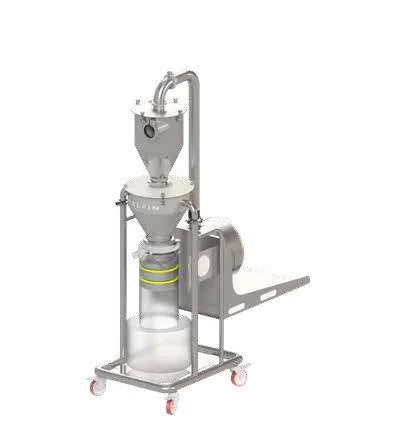
Cyclone separator with a built-in BIBO filter unit for OEB 4 containment at process equipment. The cyclone is made from AISI 316 and polished both inside and out. An H14 absolute filter (20,500 cm²) and an F9 safety filter are included as standard, both with BIBO replacement. Requires an external vacuum unit.
- Cyclone in AISI 316, polished both inside and out — easier to clean and validate
- H14 absolute filter, 20,500 cm² — 99.995 % efficiency at 0.18 µm
- Both the H14 and F9 filters are supplied in stainless BIBO housings as standard
- 30 L containment bag with an ø150 AISI 316 butterfly discharge valve
- 24 VDC capacity sensor included — signals when the bag needs changing
- No integrated motor — the vacuum source is provided by an external unit
What is the Delfin SEP.DC-020?
The SEP.DC-020 is Delfin's cyclone separator with a built-in BIBO filter unit. It combines cyclone separation, the H14 absolute filter, the F9 safety filter and the containment bag in a single wheeled unit, so it can be moved to whichever process equipment it serves. The cyclone is made from AISI 316 and polished both inside and out — that is the difference from the SEP.DC-001, which is polished on the inside only, and it makes cleaning and validation noticeably easier in a GMP context.
The unit has no motor of its own. Suction is provided by an external vacuum unit, typically installed in a plant room. This keeps motor noise and heat out of the production area and makes it possible to serve several separators from one central system. The 24 VDC capacity sensor is included as standard and signals when the containment bag needs changing.
The filtration chain in detail
Dust-laden process air enters through the 3″ clamp connection and passes into the cyclone, where centrifugal force throws the particles against the cyclone wall and down into the containment bag. The cyclone separates at least 98 % of the material before the air reaches the filter — that is what keeps filter life up and running costs down.
The remaining air fraction passes through the H14 absolute filter with a surface area of 20,500 cm² and an efficiency of 99.995 % measured at 0.18 µm. Downstream sits the F9 safety filter. Both filters are supplied in stainless BIBO housings: the used filter is sealed inside a disposable bag before it leaves the housing, so the operator never touches contaminated material.
Emptying takes place through the ø150 AISI 316 butterfly valve into the containment bag, which is crimped and sealed before removal. The entire chain from process to disposal therefore takes place without open handling of the powder.
Technical specifications
| Parameter | Value |
|---|---|
| OEB suitability | OEB 4 |
| Cyclone efficiency | ≥98 % |
| Max air flow | 420 m³/h — design maximum for cyclone and filter |
| Filter | H14 absolute filter — included as standard |
| Filtration efficiency | 99.995 % at 0.18 µm |
| Filter surface | 20,500 cm² |
| Safety filter | F9 in a stainless BIBO housing — included as standard |
| Filter replacement | BIBO (Bag-In Bag-Out) on both H14 and F9 |
| Collection system | Containment bag |
| Container capacity | 30 L |
| Capacity sensor | 24 VDC — included as standard |
| Suction inlet | Clamp 3″ |
| Air inlet | Clamp 2½″ |
| Discharge | Butterfly valve ø150 AISI 316 |
| Construction — cyclone | AISI 316 polished inside and out |
| Construction — chassis | AISI 304 |
| Motor | None — requires an external vacuum unit |
| Dimensions | 60 × 142 × 196h cm |
| Weight | 115 kg |
CE marking based on: Machinery Directive 2006/42/EC • IEC 60335-2-69 • Low Voltage Directive 2014/35/EU • EMC Directive 2014/30/EU
Options and accessories
The H14 and F9 filters and the capacity sensor are included in the standard delivery. Below are the accessories most often ordered alongside.
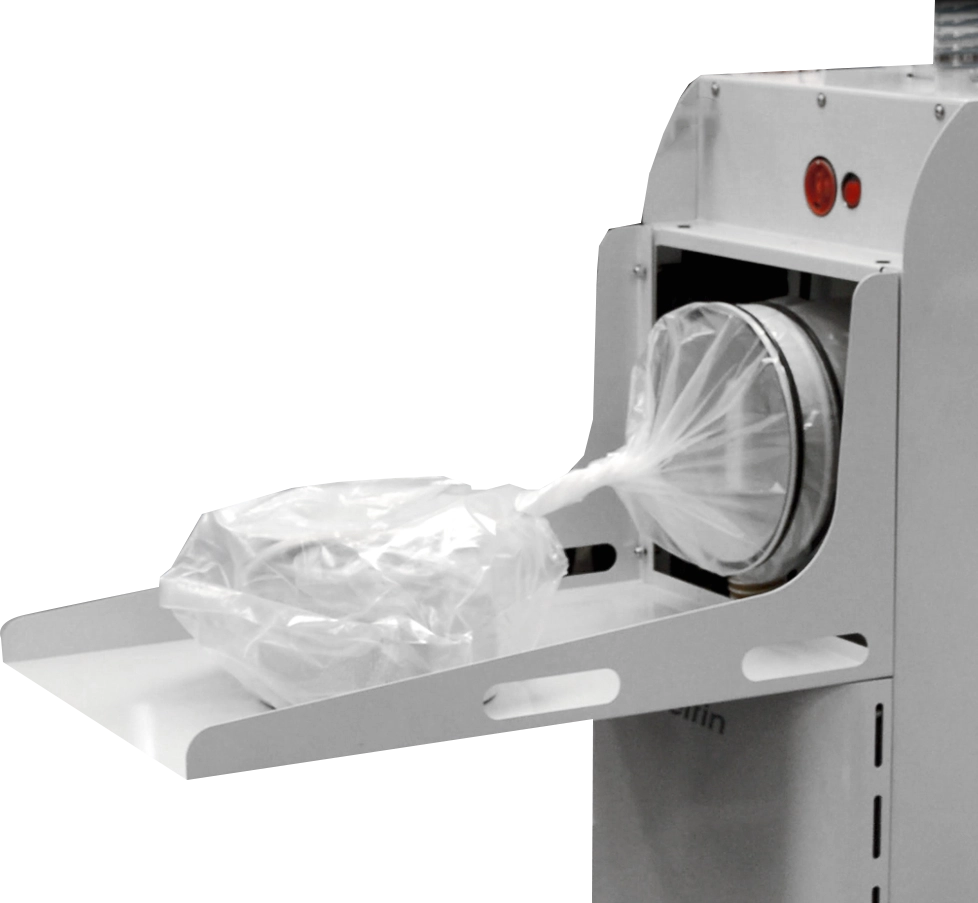
BIBO filter replacement
H14 and F9 in stainless BIBO • Standard
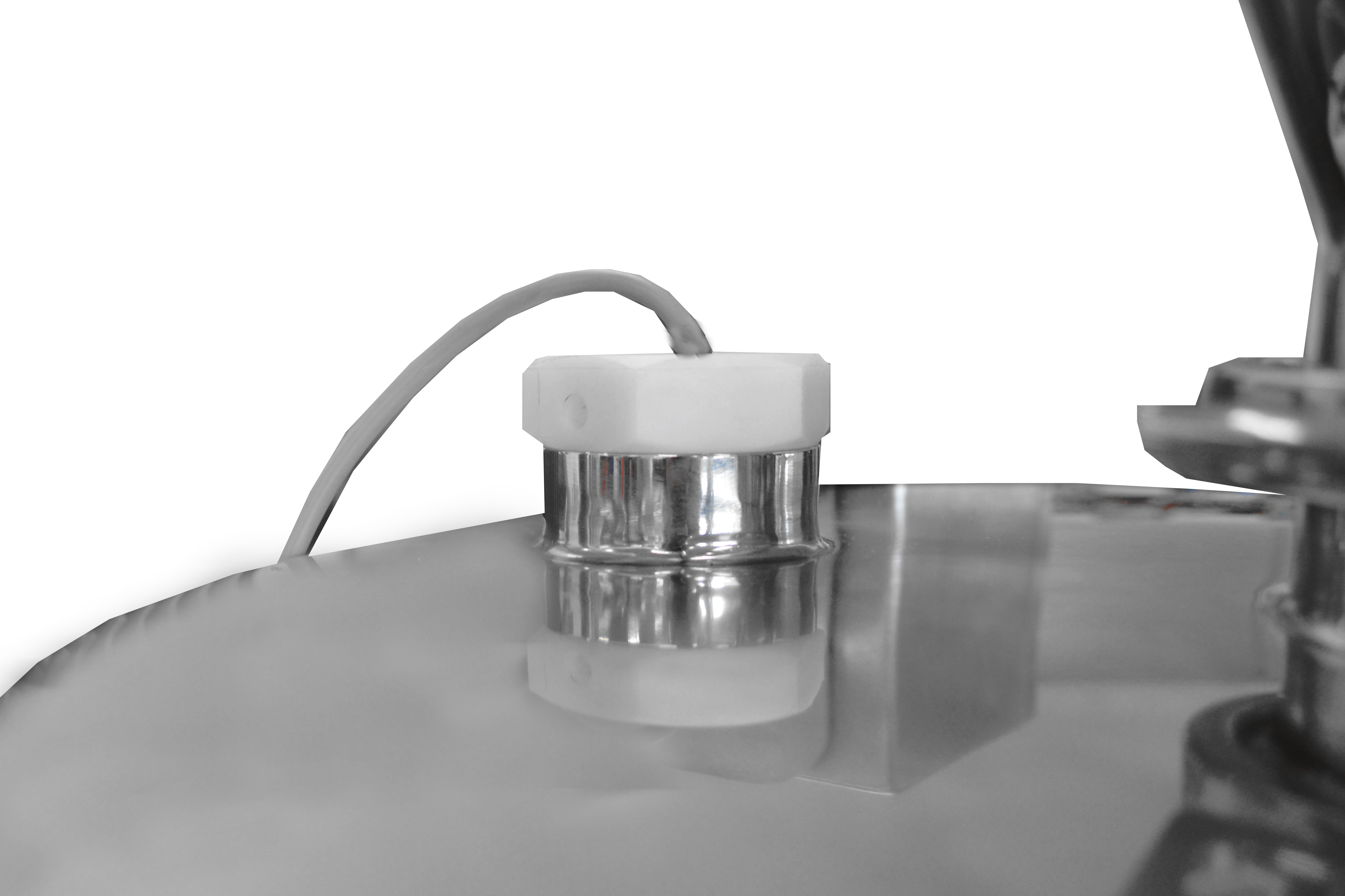
Capacity sensor
24 VDC signal • Standard
Also available: crimping tool with cutter and sealing caps for the containment bag; a kit of five PE ANT bags with six silicone rings; BIBO spare filter kits in both H14 and F9 versions, polished inside and out; and 3″ clamp coupling kits for ø50 or ø70 flexible hose in polished stainless steel, inside and out.
Questions and answers
Is the SEP.DC-020 the right choice for your OEB 4 processes?
We help size the external vacuum unit, the pipework and the accessories to your process equipment and OEB requirements. Advice is free and without obligation.