Abrasion-resistant · Abrasion-resistant
PROTAPE TPE 321 REINFORCED (LD)
PROTAPE TPE 321 REINFORCED (LD) is a highly flexible suction and pressure hose in thermoplastic elastomer (TPE) with fabric reinforcement and spring-steel wire spiral. The operating range is -40 to +110 C continuous with peak +125 C, making the hose well-suited to hot-air distribution, granulate drying and chemical vapour extraction. The TPE wall combines elasticity with broader chemical resistance than PUR and a broader temperature range than PVC.
- -40 to +110 C
- Peak +125 C
- Fabric-reinforced
- UV-resistant
- Hot-air
- Granulate drying
Why this hose?
TPE is the material that bridges the gap between PVC and PUR in the extraction hose portfolio. PVC has good chemical resistance but limited temperature range and becomes brittle in cold. PUR has better wear resistance but does not tolerate as high temperatures. TPE combines broader chemical resistance than PUR with broader temperature range than PVC - particularly valuable where the application requires both.
The fabric reinforcement is functionally important in TPE hoses because TPE is a relatively elastic material. Without reinforcement the hose would stretch over time under tensile load and become flat under vacuum. Polyester fabric embedded in the wall limits this deformation and ensures dimensional stability over the hose's lifetime.
The operating range to -40 C is one of the hose's greatest advantages. PVC-based hoses become brittle below -10 C, and even regular PUR has problems below -25 C. TPE retains flexibility all the way down to -40 C, making the hose well-suited to outdoor installations in nordic climates, to cold storage extraction and to transport applications where thermal peaks may occur in both directions.
Where it is used
The plastics industry's granulate drying systems are the classic application. A typical installation has a hot-air unit and granulate drying hopper connected with 5-10 m PROTAPE TPE 321 - the heat is 80-100 C, and the flexibility makes it possible to reconfigure the installation at product change without cutting and reassembling the hose.
UV and IR drying systems in offset printing are secondary markets. Here the hose is used to distribute hot air between the drying unit and the printing machine's output section. Temperature can be right at the limit (110 C) and the hose is one of few that retains flexibility in this range.
Car test benches use the hose for exhaust gas extraction from engine test installations and emissions testing. Here the broad temperature tolerance is decisive - cold-start emission is at ambient temperature, but hot operation can reach 100+ C, and the hose must tolerate both in the same installation.
The hose is colloquially known as a TPE hose, heat hose or granulate hose.
Technical specifications
The hose's key specifications are briefly summarised below. The wall is NOT antistatic - for ATEX zones we recommend a conductive or antistatic PROTAPE variant.
| Wall material | TPE (thermoplastic elastomer) |
|---|---|
| Reinforcement | Polyester fabric embedded |
| Spiral | Spring-steel wire embedded |
| Colour | Black |
| Wall thickness | 0.4 mm (all dimensions) |
| Temperature range | -40 to +110 C (peak +125 C short-term) |
| Antistatic | No (insulating wall) |
| Compressibility | Highly flexible |
| UV resistance | Suitable for partial outdoor installation |
| Manufacturer SKU | 3210000 |
Dimensions and ordering
The table shows the hose's 14 standard dimensions. Pressure and vacuum values are per ID; some dimensions (40, 110, 160 mm plus one SKU without ID) are delivered as pure transport hose without specified pressure rating.
| Inner Ø |
Outer Ø |
Wall thickness |
Working pressure |
Vacuum |
Bend radius |
Max. length |
Weight |
Article no. |
|---|---|---|---|---|---|---|---|---|
| 40 | — | — | — | — | — | 20 | 0.2 | 32100400000 |
| 50 | 54 | 0.4 | 0.3 | 0.1 | 50 | 20 | 0.21 | 32100500000 |
| 75 | 79 | 0.4 | 0.2 | 0.07 | 70 | 20 | 0.31 | 32100750000 |
| 100 | 104 | 0.4 | 0.15 | 0.05 | 100 | 20 | 0.56 | 32101000000 |
| 110 | 114.04 | 0.4 | — | — | — | 20 | 0.48 | 32101100000 |
| 125 | 129 | 0.4 | 0.13 | 0.04 | 125 | 20 | 0.68 | 32101250000 |
| 150 | 154 | 0.4 | 0.11 | 0.04 | 150 | 20 | 0.73 | 32101500000 |
| 160 | 164 | 0.4 | — | — | — | 20 | 0.69 | 32101600000 |
| 200 | 204 | 0.4 | 0.08 | 0.025 | 200 | 20 | 1.28 | 32102000000 |
| 250 | 255 | 0.4 | 0.07 | 0.02 | 250 | 20 | 1.4 | 32102500000 |
| 300 | 305 | 0.4 | 0.05 | 0.015 | 300 | 20 | 1.55 | 32103000000 |
| 350 | 355 | 0.4 | 0.04 | 0.015 | 350 | 20 | 1.6 | 32103500000 |
| 400 | 405 | 0.4 | 0.04 | 0.015 | 400 | 20 | 1.77 | 32104000000 |
| 450 | 455 | 0.4 | 0.03 | 0.01 | 450 | 20 | 1.99 | 32104500000 |
Fields without a value (—) are not specified in the manufacturer's factsheet. Overpressure and underpressure values are recommended operating limits; the product can be subjected to higher loads on request. Bend radius is measured along the inside of the hose bend.

Standards and compliance
The hose is manufactured to general European quality standards for industrial hoses. RoHS and REACH are the primary references.
- RoHS Directive (2011/65/EU). Restriction of hazardous substances in electrical and electronic products. Manufacturer declaration on file.
- REACH (EC 1907/2006). Registration, evaluation and restriction of chemical substances. Manufacturer declaration on request.
- EN 12115. European standard for rubber and thermoplastic hoses for liquids and chemicals. Relevant for hoses that may come into contact with hot process gas or chemical vapours.
- EN ISO 1307:2008. European standard for rubber and thermoplastic hoses for general use. Defines dimensions, pressure tolerance and marking.
- ISO 9001:2015. Quality management system at the manufacturer. Ensures each batch follows the same specification.
- EN 13501-1. European classification of building materials for fire properties. The hose is not specifically fire-classified - for fire-resistance-demanding applications we recommend a flame-retardant variant.
- DIN 4102. German building material standard for fire resistance; the hose is not specifically B1 qualified.
Documentation and downloads
Additional documents about this hose, its compliance and installation. Click to download as PDF in a new tab.
Help with material selection
Although this hose isn't ATEX-relevant, these two articles provide useful background on electrical resistance and industrial safety — important if you later combine the hose with electrical equipment or work in mixed environments:
The invisible weakest link
Why a conductive or antistatic hose isn't sufficient on its own — and what grounding means for the complete system.
Know your ohm
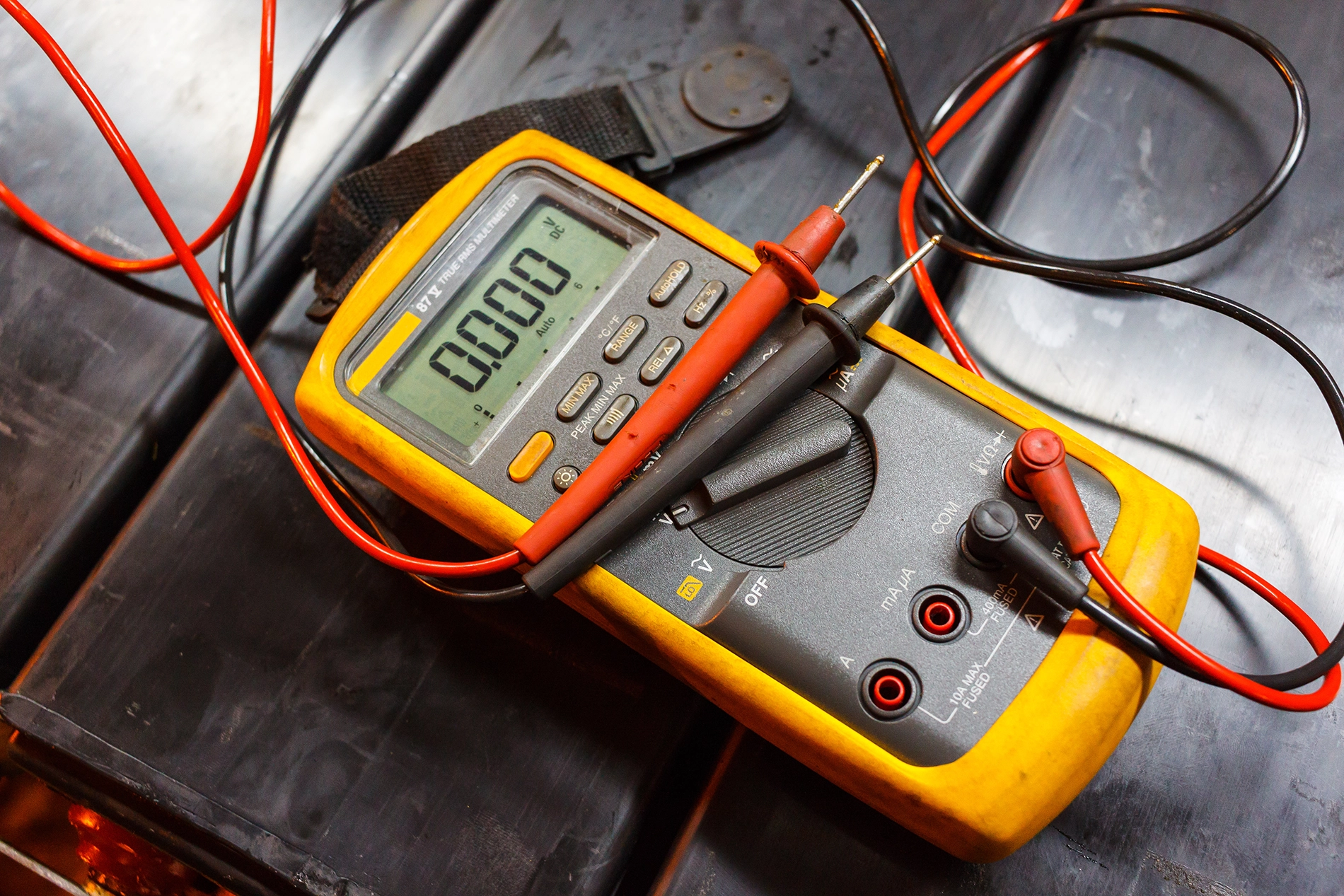
The difference between antistatic and conductive, which resistance limits apply where, and how to measure them correctly.
Industries that use it
PROTAPE TPE 321 REINFORCED (LD) is used where a flexible ventilation hose must tolerate hot process gas streams or chemical vapours - typically in plastics industry, printing and general industrial ventilation.
The plastics industry is a main market. Granulate drying systems send hot air (typically 80-100 C) through polymer granulate to remove moisture before extrusion or moulding. The hose leads the hot air between unit and drying hopper - an application where TPE's heat resistance combined with flexibility is a major advantage. The fabric reinforcement ensures the hose does not stretch under the moderate vacuum used to draw air through the granulate.
Printing and UV/IR drying systems use the hose for hot-air distribution between thermal units and the printing machine's drying zones. The temperature can reach 100-110 C, which TPE handles continuously. The hose's flexibility and light weight make it easy to integrate in compact machine installations.
The automotive industry uses the hose for exhaust gas extraction on test benches and similar installations. Here the combined temperature and chemical resistance is decisive: exhaust gas contains nitrogen oxides, NOx, and particles that over time degrade PVC walls - the TPE wall withstands these chemicals better.
Custom lengths and assemblies
The hose can be delivered cut to desired lengths. The standard roll can be supplemented with shorter pieces or multiple rolls by arrangement.
At Particulair we advise on couplings and sizing. Send us a sketch of your application and we will assess the right variant and length.


Frequently asked questions
What is TPE and what is the difference to PUR and PVC?
TPE (thermoplastic elastomer) is a group of materials that combine polyurethane's elasticity with plastics' re-formability. TPE has better chemical resistance than PUR against some solvents, and tolerates higher temperature (here up to 110 C continuous and 125 C peak) than regular PVC. TPE is also lightweight and UV-resistant. Choose TPE 321 where hot process gas streams or chemical vapours are expected.
Is the hose ATEX-approved?
No. PROTAPE TPE 321 REINFORCED (LD) has NO antistatic or conductive specification on the factsheet - the wall is insulating. For ATEX zones with dust or combustible gases we recommend a conductive or antistatic variant (PROTAPE PUR 330 AS BLACK or similar). TPE 321 is intended for non-ATEX applications where heat and chemical resistance is the dominant requirement.
Which applications are particularly suitable?
The factsheet's list covers over 30 applications; the most typical are granulate drying systems, hot-air distribution, IR/UV drying in offset printing, blow-in insulation and oil-mist extraction. The hose tolerates the combination of hot air (up to +110 C continuous) and solvent vapours typically found in these processes.
Is fabric-reinforced an important property here?
Yes. TPE is a relatively elastic material that can be stretched significantly under tensile load. The fabric reinforcement limits this stretching and ensures the hose maintains dimensional stability under suction and pressure. Without reinforcement, the TPE hose would 'suck flat' under high vacuum, and stretch too long under tensile installation.
Which dimensions are in the range?
14 dimensions from 40 mm to 450 mm inner diameter, all with 20 m standard roll length. Wall thickness is 0.4 mm across the range. Certain dimensions (40, 110, 160 mm) are delivered without specified pressure rating - they are pure transport hoses without pressure limitation. Small dimensions can also be delivered as special order.
How low a temperature does the hose tolerate?
-40 C in normal operation. This is a major strength of TPE hoses - most PVC-based hoses become brittle below -10 C, but TPE retains flexibility down to -40 C. This makes the hose well-suited to outdoor installations in cold climates, to cold storage rooms and to transport applications where thermal peaks may occur in both directions.
What colour is the hose?
Black. Like most industrial TPE hoses, black is the standard colour - not because the material needs to be antistatic (it is NOT here), but because black is functional: UV-resistant, wear-resistant against colour discolouration, and practical in visible industrial installations.
Can the hose be delivered in specific lengths?
Yes - we cut the hose to length as needed. The 20 m standard roll can be divided into multiple pieces, or couplings can be fitted by arrangement. For hot-air distribution we recommend standard hose-end couplings, and for granulate transport we recommend worm-drive clamps with wear-secured rings.