Abrasion-resistant · Abrasion-resistant
PROTAPE TPE 326 MEMORY
PROTAPE TPE 326 MEMORY is a specialised exhaust gas extraction hose in thermoplastic elastomer (TPE) with a special plastic profile spiral that provides crush resistance and shape recovery after compression. The hose tolerates continuous operation up to +200 C with correct use of exhaust funnels and fresh-air mixing. Vibration damping and a fabric-reinforced wall make the hose specifically well-suited to mobile exhaust extraction arms in car workshops, engine test benches and emissions testing facilities.
- Up to +200 C
- Crush-resistant
- Vibration damping
- Fabric-reinforced
- Exhaust extraction
- Shape recovery
Why this hose?
PROTAPE TPE 326 MEMORY is the variant in the PROTAPE family that combines +200 C resistance with a crush-resistant plastic profile spiral. This is a rare combination in the market - most heat-resistant hoses have metal spirals that over time become tilted by mechanical impact. The plastic profile spiral provides shape recovery, which is critical in mobile exhaust extraction arms that are compressed and stretched out daily.
The vibration damping comes from two mechanisms in combination: the flexible plastic profile absorbs vibration energy in its own deformation, and the fabric reinforcement in the wall prevents micro-cracks in the TPE layer itself. This means the hose can handle continuous engine operation for thousands of hours without the wall bursting - a service life that is several times better than metal spirals in the same application.
The +200 C specification is precise because the factsheet explicitly requires correct use of exhaust funnels and approx. 50% fresh-air mixing. Direct engine exhaust at full load can easily exceed 200 C, and without dilution the hose would be subjected to a higher temperature class than it is specified to. Correct installation with exhaust funnels and fresh-air supply ensures the hose is operated within its specification.
Where it is used
Car workshops use the hose in mobile exhaust extraction arms that connect directly to car exhaust pipes. A typical arm has 4-6 m of TPE 326 MEMORY that can be compressed to 1-1.5 m for storage and stretched out at the installation point. Shape recovery ensures the hose returns to full diameter after each use, which is critical for sufficient airflow.
Engine test benches and emissions laboratories use the hose in continuous operation where a test engine runs for entire workdays. The high vibration tolerance and crush-resistant spiral mean the hose can last 6-12 months in continuous operation where a standard ventilation hose would fail after 1-3 months.
Shipbuilding yards and generator test benches use the hose for engine testing on large diesel and gas generators. Here the installation is typically fixed - not mobile - but the hose's shape recovery is still valuable because the equipment is periodically dismantled for maintenance, and the hose must be able to resume its function without loss of shape after these cycles.
The hose is colloquially known as an exhaust hose, engine extraction hose or hot-air hose.
Technical specifications
The hose's key specifications are briefly summarised below. Note that the +200 C specification assumes correct use of exhaust funnels and fresh-air mixing (approx. 50%). Direct engine exhaust without dilution may exceed the hose's capacity.
| Wall material | TPE (thermoplastic elastomer) |
|---|---|
| Reinforcement | Polyester fabric embedded |
| Spiral | Special plastic profile spiral (not metal) |
| Colour | Black |
| Wall thickness | 0.4 mm (all dimensions) |
| Maximum operating temperature | +200 C with approx. 50% fresh-air mixing |
| Vibration-resistant | Yes (plastic profile spiral) |
| Crush-resistant | Yes (shape recovery after compression) |
| Compressibility | Highly flexible |
| Manufacturer SKU | 3260000 |
Dimensions and ordering
The table shows the hose's 9 standard dimensions. Vacuum values are per ID; pressure values are not separately specified on the factsheet (the hose is primarily a suction hose under vacuum). Some dimensions are delivered with multiple length options (10, 15 or 20 m) - contact us for specification.
| Inner Ø |
Outer Ø |
Wall thickness |
Vacuum |
Bend radius |
Max. length |
Weight |
Roll |
Article no. |
|---|---|---|---|---|---|---|---|---|
| 50.5 | 67.5 | 0.4 | 0.4 | 48 | 20 | 0.38 | 10 | 32600510000 |
| 64.5 | 81.5 | 0.4 | 0.28 | 53 | 20 | 0.48 | 10, 15, 20 | 32600630000 |
| 75.6 | 92.6 | 0.4 | 0.17 | 60 | 20 | 0.54 | 10, 15, 20 | 32600760000 |
| 80 | 97 | 0.4 | 0.055 | 65 | 20 | 0.57 | — | 32600800000 |
| 90 | 107 | 0.4 | 0.05 | 70 | 20 | 0.63 | — | 32600900000 |
| 101.5 | 118.5 | 0.4 | 0.05 | 71 | 20 | 0.71 | 5, 7, 10, 15, 20 | 32601020000 |
| 126.5 | 143.5 | 0.4 | 0.035 | 100 | 20 | 0.87 | 10, 15, 20 | 32601270000 |
| 151.5 | 168.5 | 0.4 | 0.03 | 110 | 20 | 1.04 | 10, 15 | 32601520000 |
| 202.3 | 219.3 | 0.4 | 0.01 | 155 | 20 | 1.37 | — | 32602030000 |
Fields without a value (—) are not specified in the manufacturer's factsheet. Overpressure and underpressure values are recommended operating limits; the product can be subjected to higher loads on request. Bend radius is measured along the inside of the hose bend.

Standards and compliance
The hose is manufactured to general European quality standards for industrial hoses for high-temperature applications. RoHS and REACH are the primary references.
- RoHS Directive (2011/65/EU). Restriction of hazardous substances. Manufacturer declaration on file.
- REACH (EC 1907/2006). Registration of chemical substances. Manufacturer declaration on request.
- EN 12115. European standard for rubber and thermoplastic hoses. Relevant for hoses that may come into contact with hot exhaust gas or hot-air streams.
- EN ISO 1307:2008. European standard for rubber and thermoplastic hoses for general use. Defines dimensions, pressure tolerance and marking.
- ISO 9001:2015. Quality management system at the manufacturer. Ensures each batch follows the same specification.
- ISO 8033:2016. Test of adhesion between lining, wall material and reinforcement. Relevant for fabric-reinforced hoses that experience layer adhesion stresses at temperature cycles.
- DIN 14811. German standard for heat- and fire-resistant hoses. The hose is not specifically classified per DIN 14811, but its +200 C capacity is comparable.
Documentation and downloads
Additional documents about this hose, its compliance and installation. Click to download as PDF in a new tab.
Help with material selection
Although this hose isn't ATEX-relevant, these two articles provide useful background on electrical resistance and industrial safety — important if you later combine the hose with electrical equipment or work in mixed environments:
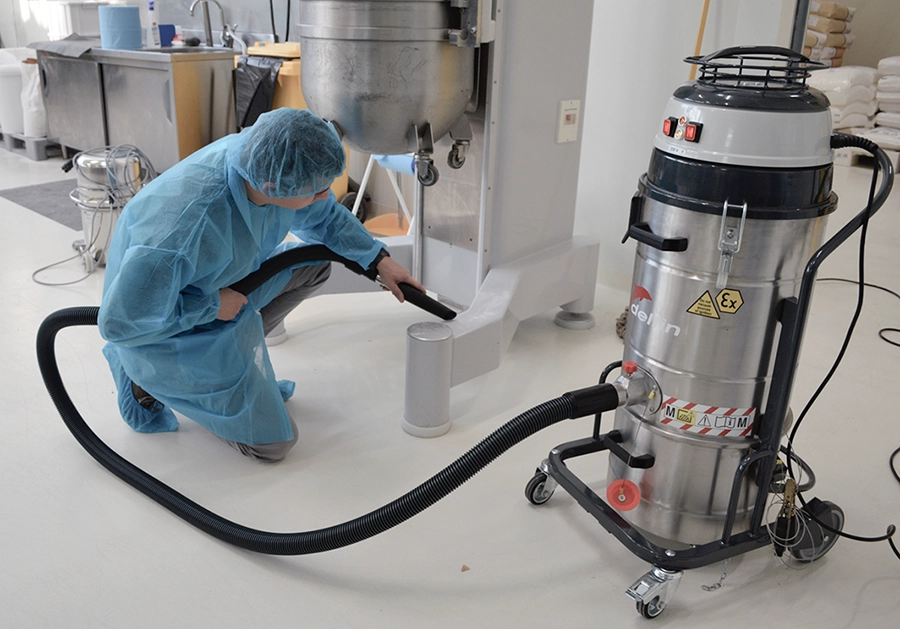
The invisible weakest link
Why a conductive or antistatic hose isn't sufficient on its own — and what grounding means for the complete system.
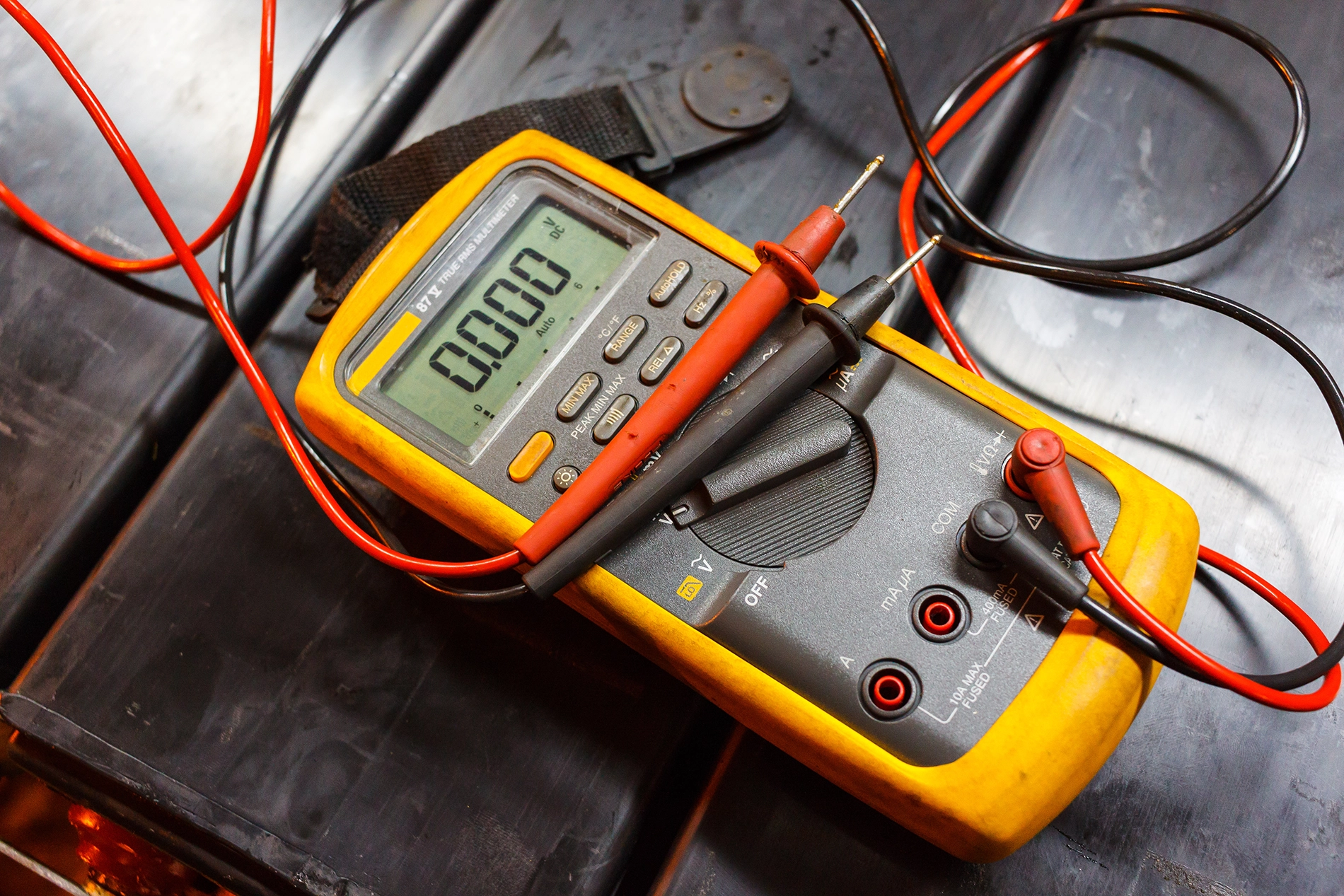
Know your ohm
The difference between antistatic and conductive, which resistance limits apply where, and how to measure them correctly.
Industries that use it
PROTAPE TPE 326 MEMORY is used where hot exhaust gas or other hot-air streams require a hose that can handle high temperatures, mechanical vibration and daily compression without losing shape.
Automotive industry and car workshops are the main market. Mobile exhaust extraction arms that connect to car exhaust pipes for 1-4 hours at a time require a hose that can be compressed for storage (3-4x reduction), stretched out across different car lengths, and last hundreds of engine-on/engine-off cycles. The special plastic profile spiral provides shape recovery after compression, which is exactly the property that distinguishes this hose from regular industrial extraction.
Engine test benches and emissions testing laboratories use the hose for continuous operation where the engine runs for hours or days. Vibration damping is decisive here - a stiff metal spiral would over time break the hose wall from the constant engine vibrations. The plastic profile spiral absorbs these vibrations and significantly extends the hose's service life.
Shipbuilding and generator test facilities use the hose for engine validation and exhaust extraction on large machines. Here the high temperature tolerance is decisive - ship engines and diesel generators can have exhaust temperatures that with correct fresh-air mixing reach the 150-200 C range, which the hose handles.
Custom lengths and assemblies
The hose can be delivered cut to desired lengths. The standard roll can be supplemented with shorter pieces or multiple rolls by arrangement.
At Particulair we advise on couplings and sizing. Send us a sketch of your application and we will assess the right variant and length.


Frequently asked questions
What does 'MEMORY' mean in the name?
'MEMORY' refers to the hose's ability to return to its original shape after compression or deformation - a form of shape recovery. It is NOT shape-memory alloy or thermally activated form memory. In practice this means the hose can be compressed for transport or storage and stretched out at the installation point without losing its nominal shape. The special plastic profile support spiral is the key to this property.
How high a temperature does the hose tolerate?
+200 C continuously - higher than most other PROTAPE variants. This makes the hose specifically suitable for hot exhaust gas from internal combustion engines. The factsheet notes however that +200 C is only reached with CORRECT use of exhaust funnels and sufficient fresh-air supply (approx. 50% fresh-air mixture). With direct engine exhaust without dilution, the temperature can exceed the hose's specification.
Is the hose ATEX-approved?
No. The hose has NO antistatic or conductive specification on the factsheet. In exhaust gas applications, ATEX is often not a primary concern because exhaust gas contains already-combusted substances. If the hose is to be used near fuel tanks or in fuel-related ATEX zones, we recommend a conductive variant.
What makes the 'special plastic profile' spiral different?
Most extraction hoses have spring-steel wire as spiral - a simple round wire. PROTAPE TPE 326 MEMORY has a plastic profile spiral (typically a 'C'-shaped or flat-broad profile in hard plastic). The profile shape gives three advantages: (1) better collapse resistance under suction, (2) the 'memory' property where the hose returns to shape after compression, and (3) better vibration damping. This is particularly valuable in car exhaust applications where the engine vibrates the hose continuously.
Which dimensions are in the range?
9 dimensions from 50.5 mm to 202.3 mm inner diameter. Smaller than most PROTAPE ranges - reflecting that the hose is specialised for exhaust gas applications, where typical dimensions are 75-150 mm. Some dimensions (50.5, 64.5, 75.6 mm) are delivered with multiple length options (10, 15, 20 m), and larger ones are typically 20 m standard.
Is the hose vibration-resistant?
Yes - this is an explicit property, important in car exhaust applications where the engine vibrates the hose over time. The special plastic profile spiral provides better vibration damping than spring-steel wire. The fabric reinforcement in the wall prevents vibrations from leading to crack formation in the TPE wall itself. In practice this means the hose can last many thousand operating hours in continuous engine test applications.
What colour is the hose?
Black. The black colour is a functional advantage in hot exhaust applications: black surface absorbs and dissipates heat better than clear or coloured material, and the colour does not show particle deposition from carbon particles in motor exhaust.
Can the hose be used for things other than exhaust gas?
Yes, the factsheet also specifies general extraction applications in the automotive industry and general extraction and filtration industry. The high temperature resistance and vibration damping are useful in many hot-air and emissions applications beyond pure engine exhaust. The hose is well-suited where local thermal peaks up to 200 C may occur.