
We help you make the right choice in environments where the wrong decision is not an option
Particulair supplies equipment and decision support for those who work in environments where explosion risk, combustible dust or electrostatic discharge imposes documented requirements on the choice of vacuum equipment. We help you find solutions that hold up technically, in regulatory terms and in daily practice.
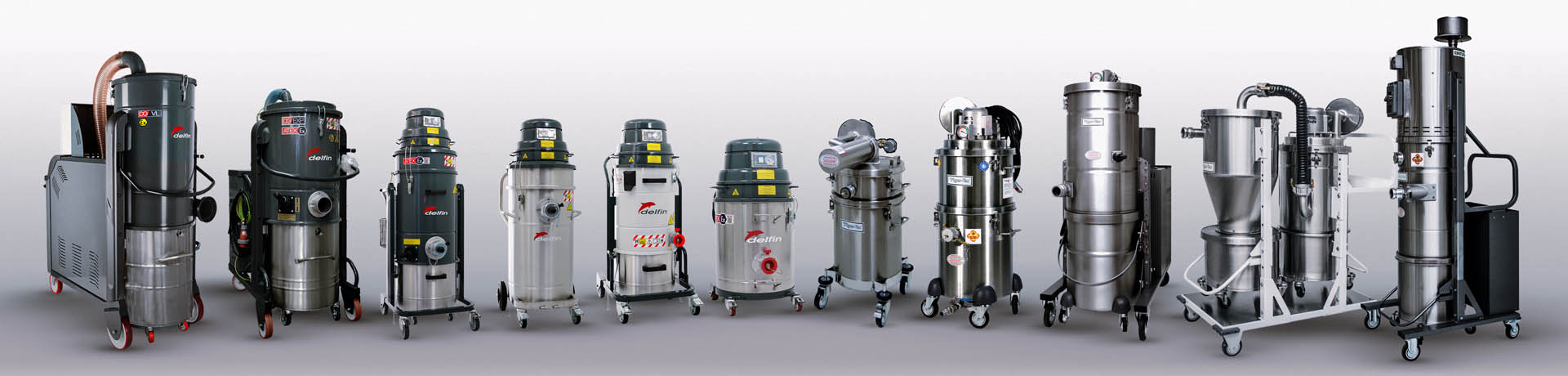
We are not a webshop or a customer service office selling one-size-fits-all. We are your professional shortcut to the right choice.
When you choose a vacuum cleaner for an ATEX-classified zone, an ACD environment with combustible dust or a production area with explosive gases, the decision is not a matter of price and lead time. It is a question of correct classification, documented certification and a supplier who understands the difference between zone 21 and zone 22 and when one calls for something the other does not.
We take pride in making complex rules and standards understandable. The ATEX Directive (2014/34/EU), EN 17348:2022, IEC 60335-2-69, and the ESD standards EN 60079-32-1 and EN 60079-32-2. We translate them into clear recommendations and practical equipment, and into complete system solutions when the situation calls for it.
- ATEX vacuum cleaners for zones 1, 2, 21 and 22
- ACD vacuum cleaners for non-classified areas with combustible dust
- Combined ATEX solutions for gas and dust zones
- Stationary and centralised ATEX installations
- ESD-safe accessories and hoses with measurable conductivity
- Inertised systems for self-igniting and reactive dust types
- OEM solutions for machine builders and system integrators
- Advisory on zone classification and documentation requirements
1991
In the industry since
2002
First formal ATEX specialisation
150+
ATEX models in our range
EU
Serving the entire EU with a focus on Scandinavia and Poland
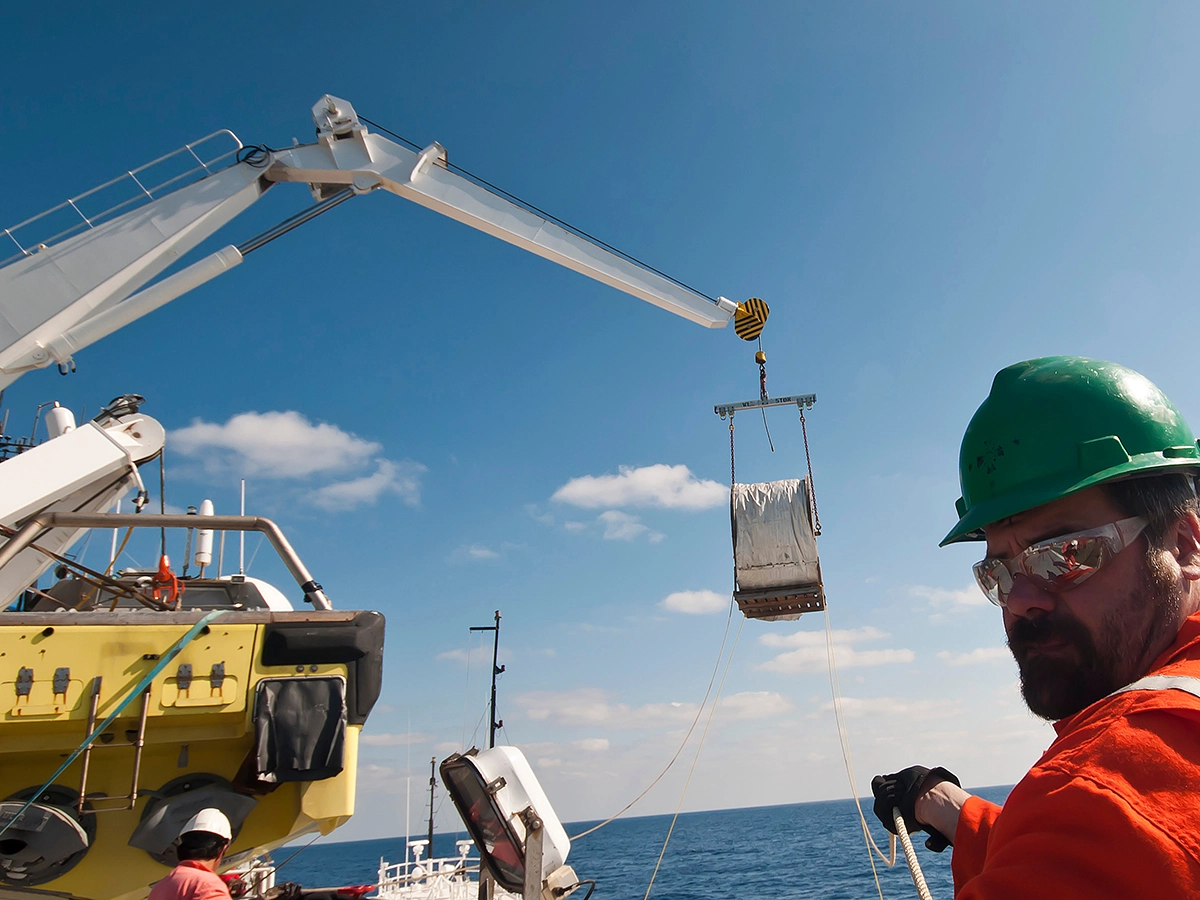
From sea to land. Explosion protection has always been our field.
Explosion protection existed long before the ATEX directives. And we were part of the field back then. It was a time without harmonised standards or the kind of checklists that eventually came. Each country had its own rules, and offshore had yet another set. We worked with a combination of IEC 60079 standards, national regulations and industry-specific requirements.
The offshore industry knew the problem long before legislation reached dry land. On platforms and vessels, surrounded by flammable gases under pressure, the consequence of a single spark was not a theoretical scenario in a risk analysis. It was a disaster waiting for the smallest mistake. And that was the environment we worked in, with a fundamental understanding that equipment in explosive atmospheres is either safe or a no-go.
Back then we supplied stainless steel industrial vacuum cleaners with documented antistatic bonding to earth, venturi-driven suction units and compressed-air motors instead of electric motors, and side-channel blowers that could generate the spark no one was allowed to witness. It was not the product category we sell today. It was an engineering problem to be solved in an environment that did not forgive mistakes.
When the ATEX user directive approached entry into force in Denmark in 2003, the transition was therefore not a reorientation for us. It was a mindset we knew inside out from the sea, now on its way to the mainland. So when we were introduced to ATEX in 2002 during a working visit to Zocca in Italy and received our first formal training in the directive, it was mainly a matter of understanding how the work we already knew was now being formalised into a single European directive.
At that point we had only two ATEX-certified vacuum cleaner models to offer. That was the full extent of approved equipment available for the zones that thousands of companies would now have to address. But although the beginning was a little heavy, things moved quickly.
Already in 2004 we could present a range of more than fifty models covering all four zones across dust and gas: zone 22, 21, 2 and 1. Three-phase models throughout, with a small number of pneumatic units. Three years later the first single-phase ATEX models arrived and opened the market for a wide range of companies that had lacked a practical solution until then.
Since then the range has grown wider and deeper with every year. But the biggest technical milestone came relatively late: the harmonisation of EN 17348:2022. It was the first dedicated European standard specifically for ATEX-certified industrial vacuum cleaners. It entered into force under the ATEX Directive in March 2023 and under the Machinery Regulation in August 2024. It has raised the bar for the entire industry and made certifications sharper, documentation requirements clearer and advisory work more precise. For us it was a confirmation of a direction we had followed for more than two decades.
We think long term and sustainably
All our solutions are chosen with an eye on long service life, low operational load and high safety. ATEX-certified equipment is an investment, and that investment needs to last for many years without the requirements outpacing it.
When we prefer to meet our customers face to face, it is not about a social need. But the better our understanding of your needs, and your understanding of the options available, the more years you and your colleagues will get out of the investment you make.
We are not a webshop. We have no cart, no checkout and no standard online prices. That is a deliberate choice. The environments we supply to are too complex and too critical for a product purchase to happen without a conversation. Selecting equipment for ATEX zones calls for a dialogue about your zone, your dust, your operating pattern and your documentation requirements.

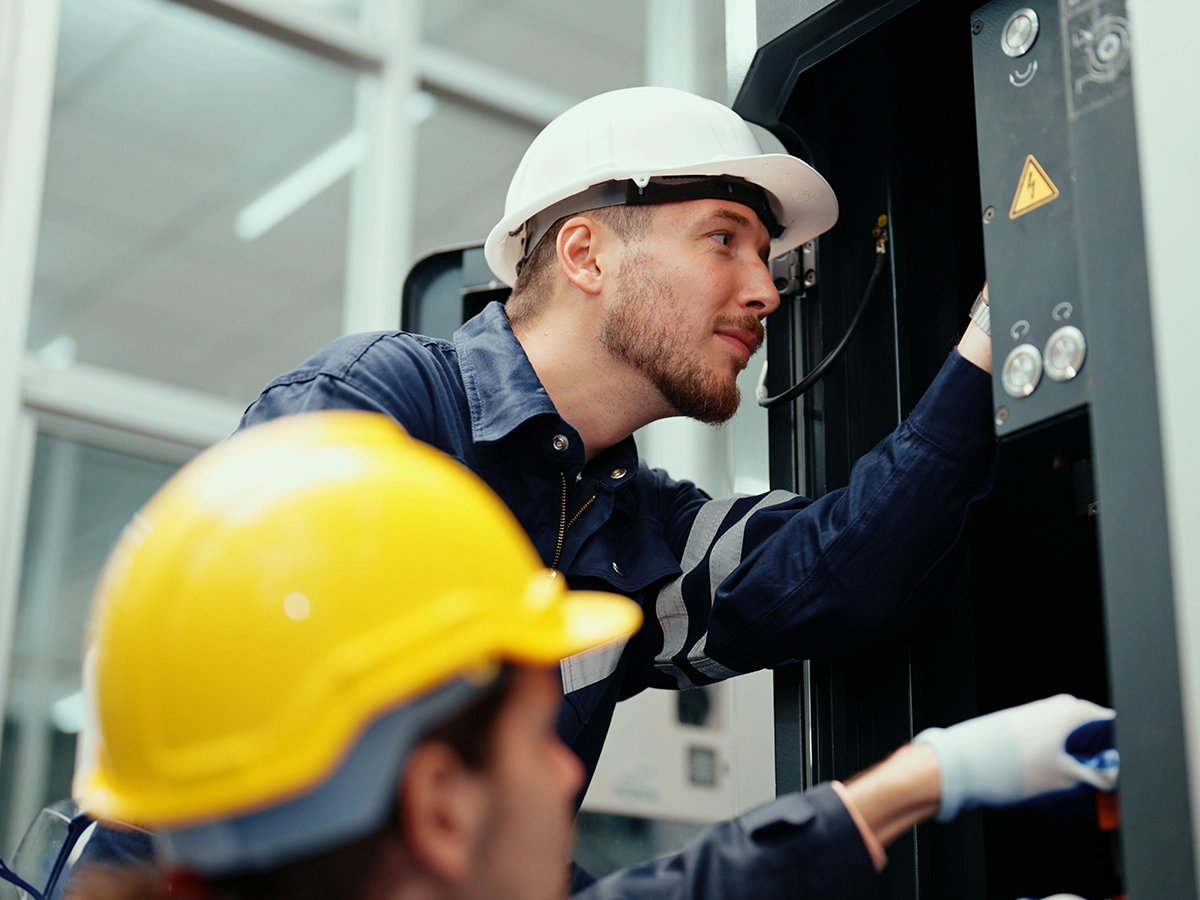
We install and we stick around
When you choose Particulair, you do not just choose a supplier. You choose a partner who makes sure that your equipment is installed correctly, documented and adjusted to your environment.
We offer installation, commissioning and service on both central installations and mobile units, and we make sure that every piece of equipment is maintained over time and continues to meet applicable requirements, including ATEX review, filter replacement and annual inspection.
Our market and network
We serve production and process environments across the EU with a particular focus on Scandinavia and Poland, and we work closely with end users, engineers and OEM manufacturers alike.
We believe in relationships, professional depth and technical solutions that can hold up in reality. Not in standard solutions shipped in a box without dialogue.
If you have a project, a problem or a question about the requirements in your environment, you are always welcome to contact us directly. We normally respond within one working day.

Let us talk about your environment
We advise on the choice of equipment for your specific ATEX zone, ACD classification or ESD-sensitive production, whether it is zone 22, 21, 2 or 1 or a combined gas and dust environment.