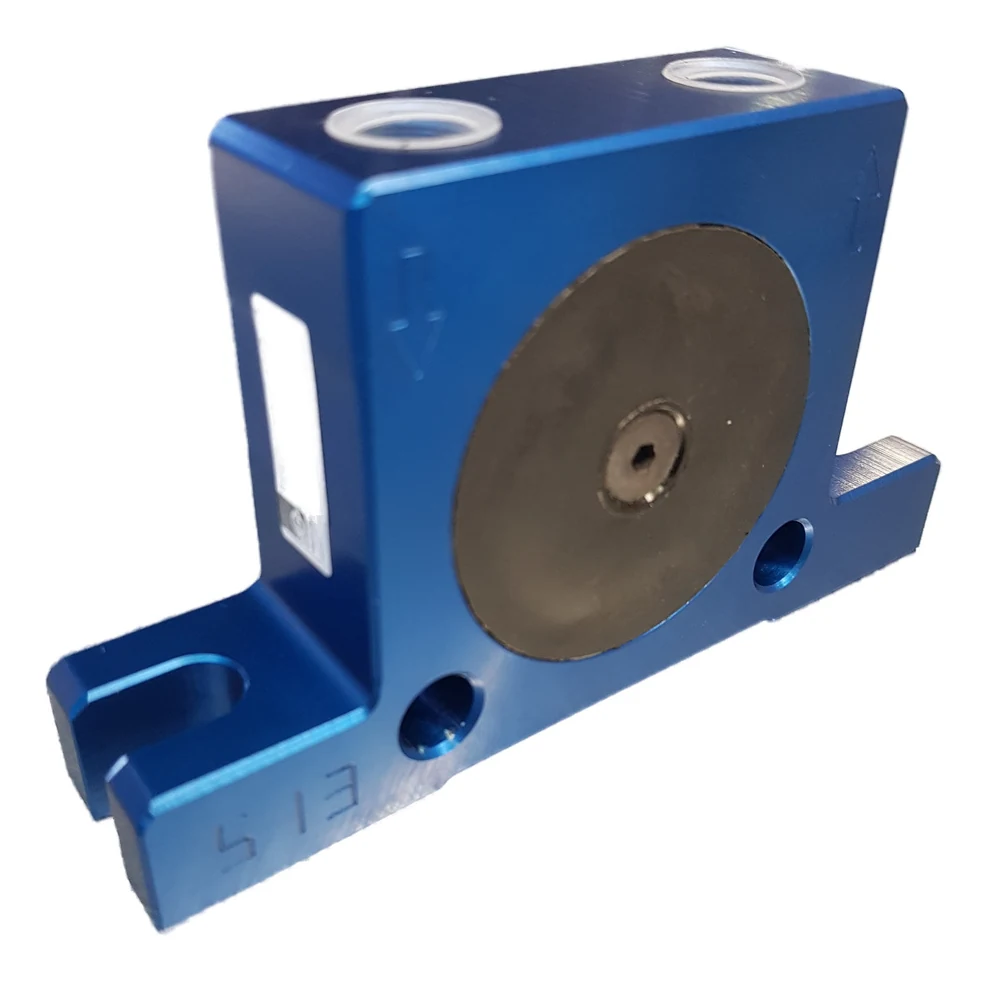
Inside the body is a circular track of hardened and ground steel, and in the track lies a steel ball. Compressed air at 2 to 6 bar drives the ball round the inner face of the track, and the mass running round is what produces the vibration. The force is therefore not a movement back and forth along one axis, as on a piston vibrator: it is a vector that rotates. That is the difference the word rotary covers.
The frequency is high and the amplitude small. An S 8 reaches 35,000 vibrations per minute at 6 bar, and even the largest, the S 36, sits at 10,000. By comparison the pneumatic piston vibrators run between 1,200 and 6,720. That is what makes the S the right one where the problem sits in the boundary between the material and the steel, rather than deep inside a full silo.
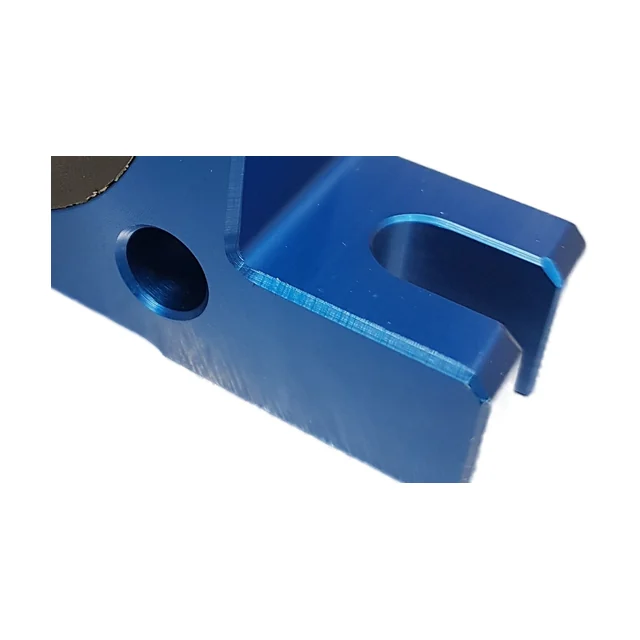
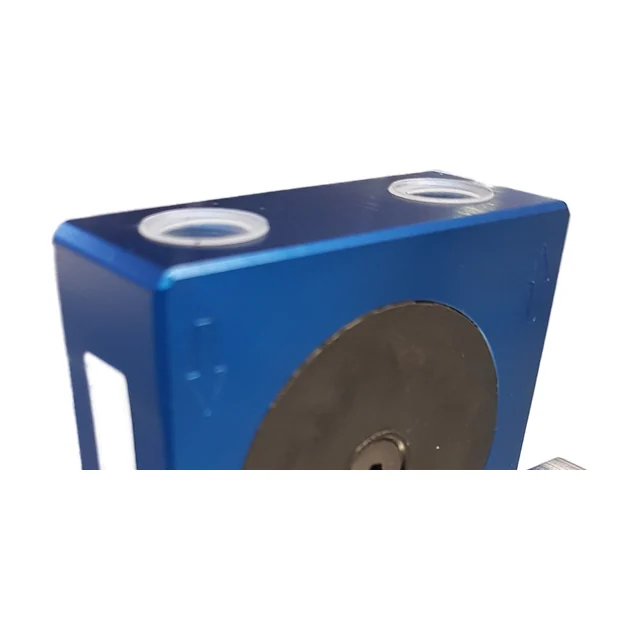
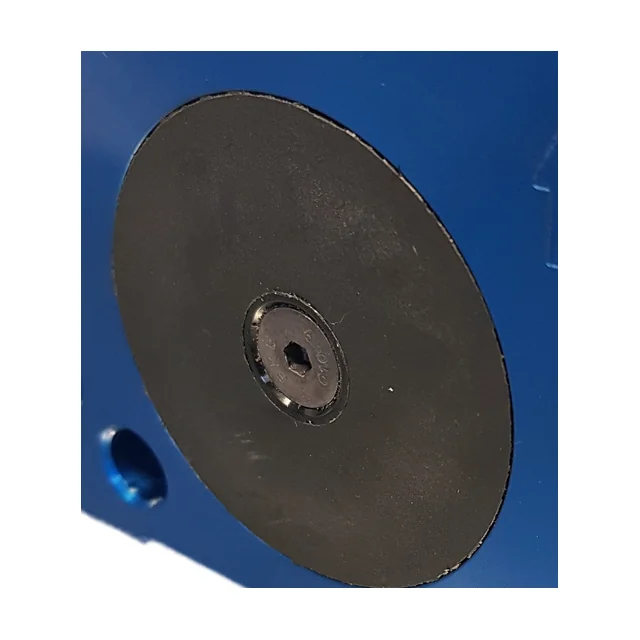
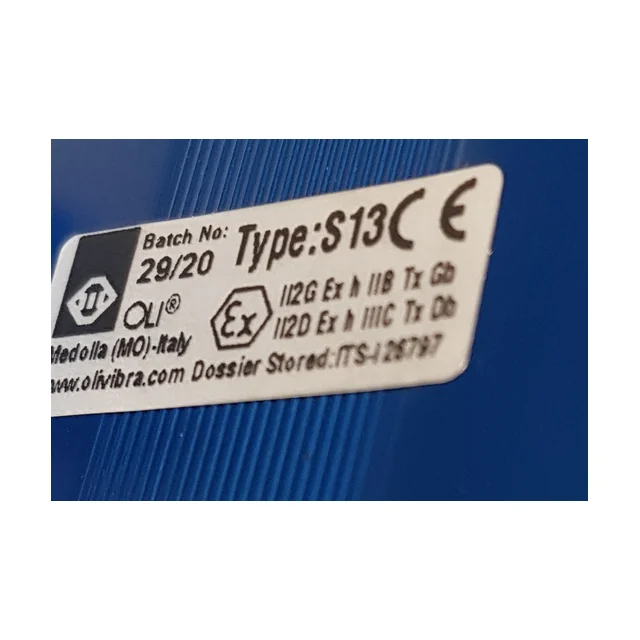
The body is blue anodised aluminium and the covers are Ixef®, a fibre reinforced plastic that stands up to weather and hard working conditions. The unit comes in eight sizes from 130 grams to 1.34 kilos, and all eight carry ATEX category 2 for both gas and dust as standard. The air has to be lubricated, class 5.4.4, and the duty is discontinuous. If the unit has to run without stopping, tell us for how long at a time and we will find the right answer.