Tiger-Vac · Clean Room · ULPA U15 · ISO Class 4

Cleanroom vacuum with ULPA U15: the lightweight or the autoclavable?

Tiger-Vac CR-1 ULPA and CR-1000 (SS) are both cleanroom vacuums for dry recovery in ISO Class 4. They share the same motor, the same suction power and the same ULPA U15 filter. The difference is how the machine has to be cleaned: the CR-1 ULPA is light and mobile for the laboratory and daily cleaning, while the CR-1000 (SS) is made of 316 stainless steel and can be autoclaved when the machine itself must be sterilised.

Request a quote Which one is right for you? ›

From €1,203 excl. freight

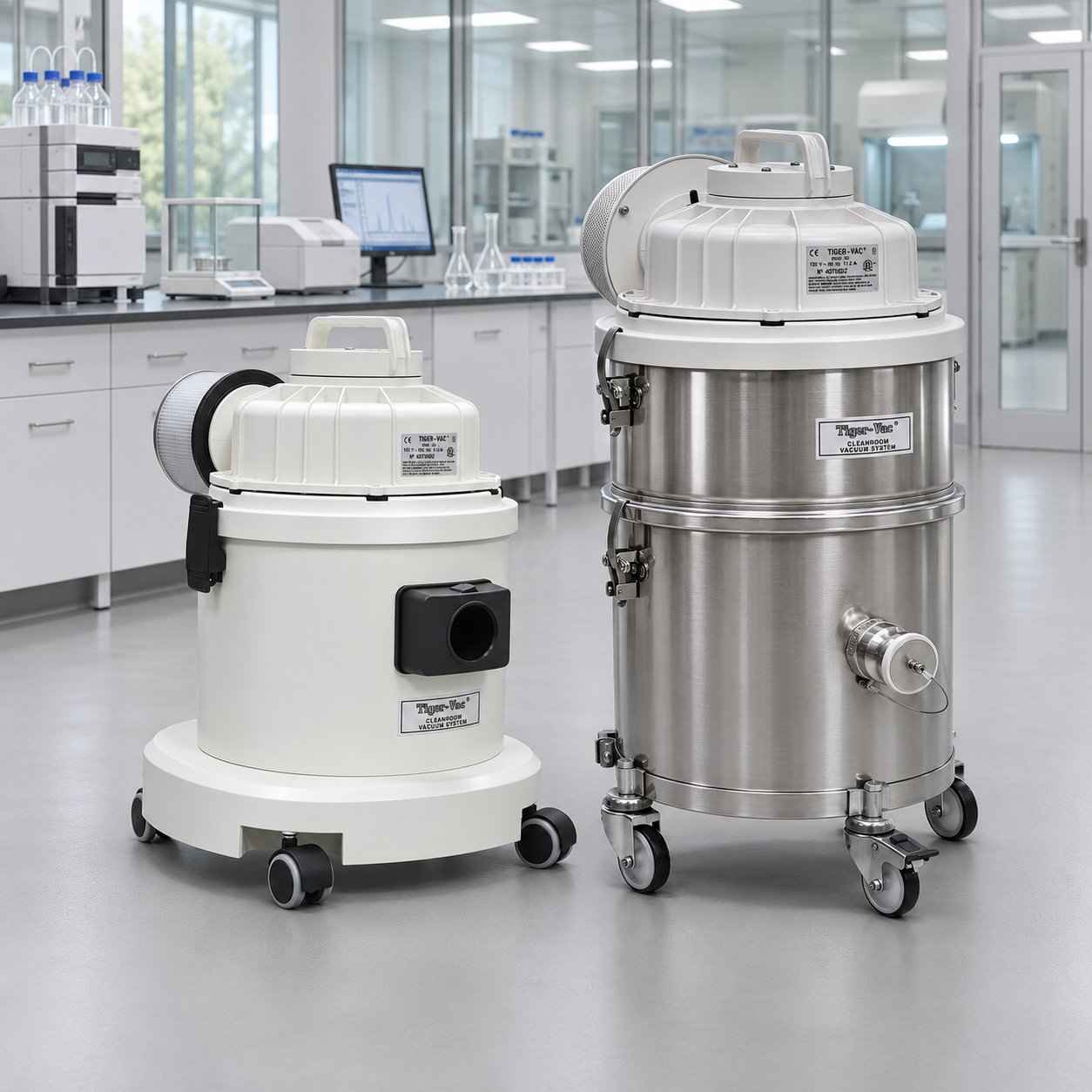
Tiger-Vac CR-1 ULPA in white plastic and CR-1000 (SS) in stainless steel side by side on the floor of a laboratoryAI-generated
  • ULPA U15 · 99.9995 % at 0.18 µm
  • ISO Class 4
  • Aerosol leak tested at the factory
  • 163 m³/h · 2,510 mmH₂O
  • 60 dB(A) at 2 m
  • Dry recovery only
  • From €1,203 excl. freight

Two tasks

Same cleanroom class, two different tasks

Both vacuums keep the cleanroom clean. The question is whether wiping the machine down is enough, or whether the machine itself must be sterilised.

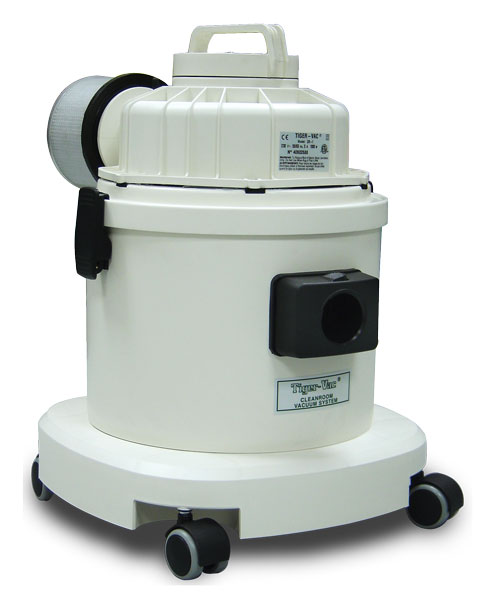
Tiger-Vac CR-1 ULPA cleanroom vacuum with white plastic body on a wheeled base

The lightweight and mobile

CR-1 ULPA – for the laboratory and daily cleaning

  • Weighs only 9 kg and moves easily from room to room.
  • White plastic body that is easy to wipe down. The tank is also available in stainless steel.
  • 3 filter stages: disposable bag, cloth filter and ULPA U15.
  • Supplied with a complete accessory kit and 5 disposable bags.

› See the CR-1 ULPA

€1,203 excl. freight
With housing around the ULPA filter: €1,395

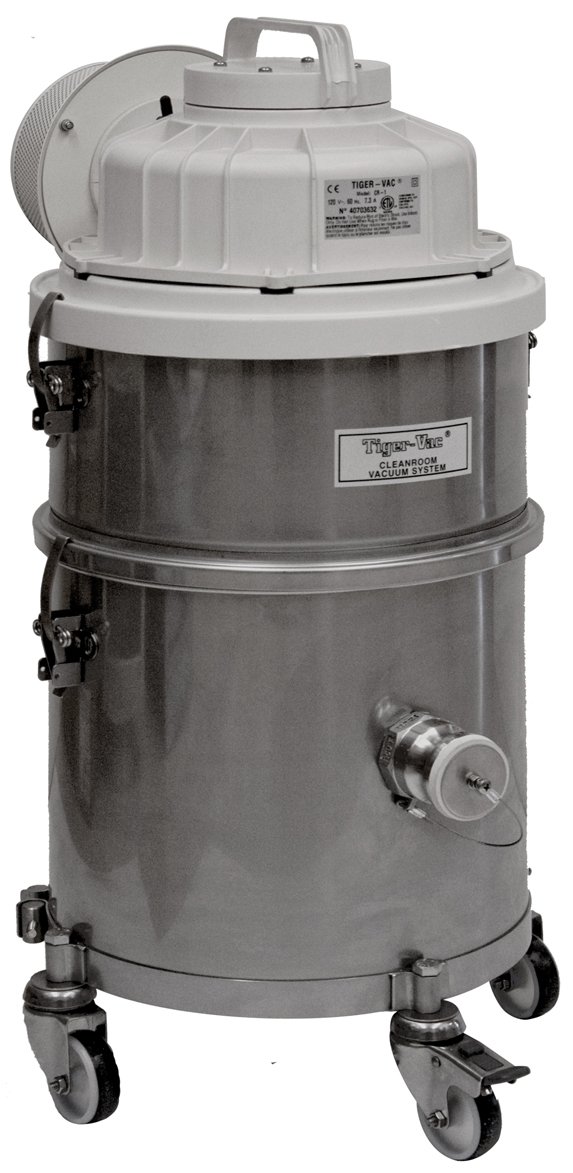
Tiger-Vac CR-1000 (SS) cleanroom vacuum with filter chamber, tank and wheel base in stainless steel

The autoclavable

CR-1000 (SS) – when the machine itself must be sterilised

  • Filter chamber, tank and wheel base in Type 316 stainless steel that can be autoclaved.
  • 5 filter stages: disposable bag, PTFE-laminated main filter, safety filter, HEPA H14 and ULPA U15.
  • All filters are included.
  • You choose the accessories to suit the room: standard, ESD-safe or autoclavable.

› See the CR-1000 (SS)

€3,120 excl. freight
With housing around the ULPA filter: €3,330

What they have in common

The same heart in both machines

You do not give up suction power or filter class, whichever of the two you choose.

  1. Same motor. A 1 kW Thru-Flow motor in which all air – including the cooling air – passes the filters before it is exhausted into the room.
  2. Same suction power. 163 m³/h and 2,510 mmH₂O, Ø38 mm suction inlet.
  3. Same final filter. ULPA U15 with 99.999 % at 0.12 µm and 99.9995 % at 0.18 µm, classified to EN 1822 (MPPS) and tested to IEST-RP-CC001.
  4. Same check. Every vacuum is aerosol leak tested at Tiger-Vac before it leaves the factory.
  5. Same noise level. 60 dB(A) at 2 m, so it can run in a room where people are working.
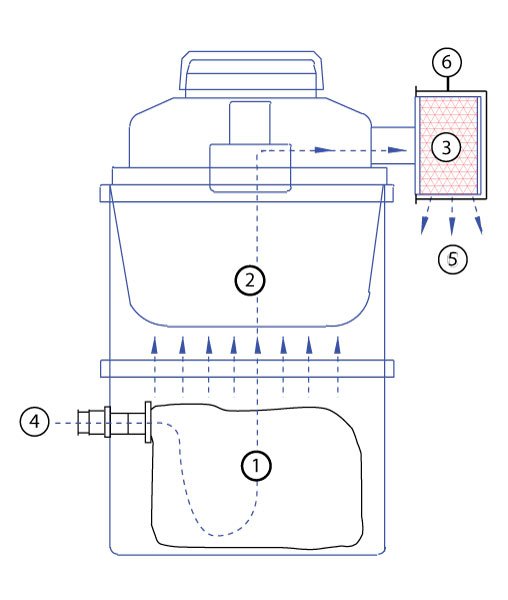
Air flow diagram for the Tiger-Vac CR-1000 (SS): air goes from the suction inlet through the disposable bag and the filters and out through the ULPA U15 filter
The air's path through the CR-1000 (SS), from inlet to the ULPA U15 filter. Source: Tiger-Vac.

Comparison

CR-1 ULPA and CR-1000 (SS) side by side

CR-1 ULPACR-1000 (SS)
The same on both models
Cleanroom classISO Class 4 (formerly Class 10)ISO Class 4 (formerly Class 10)
Final filterULPA U15 – 99.999 % at 0.12 µm, 99.9995 % at 0.18 µmULPA U15 – 99.999 % at 0.12 µm, 99.9995 % at 0.18 µm
MotorThru-Flow, 1 kW, 240 V, 50 Hz, 4.3 AThru-Flow, 1 kW, 240 V, 50 Hz, 4.3 A
Air flow and vacuum163 m³/h · 2,510 mmH₂O163 m³/h · 2,510 mmH₂O
Noise level60 dB(A) at 2 m (EN ISO 11203)60 dB(A) at 2 m (EN ISO 11203)
Tank and bagTank 15.1 L · disposable bag 8 LTank 15.1 L · disposable bag 8 L
Suction inlet and cordØ38 mm · 10 m cordØ38 mm · 10 m cord
CollectionDry onlyDry only
What is different
Filter stages3: disposable bag, cloth filter, ULPA U155: disposable bag, PTFE-laminated main filter, safety filter, HEPA H14, ULPA U15
MaterialWhite plastic body · tank in plastic or SAE 430 stainless steelFilter chamber, tank and wheel base in Type 316 stainless steel
AutoclavableNoYes – filter chamber, tank and wheel base
Weight9 kg13 kg
Dimensions (H × W × L)56 × 41 × 41 cm74 × 36 × 53 cm
AccessoriesComplete kit includedYour choice: standard, ESD-safe or autoclavable kit

Which one is right for you?

The deciding question: must the machine be autoclavable?

The answer is usually in your cleaning procedure. If in doubt, give us a call and we will work it out together.

Choose the CR-1 ULPA when …

  • the vacuum is cleaned by wiping and disinfection,
  • it is often moved between laboratories and rooms,
  • you want ULPA U15 and ISO Class 4 at a sharp price.

Choose the CR-1000 (SS) when …

  • the machine itself must be autoclavable,
  • you want a HEPA H14 filter on top of ULPA U15,
  • equipment in the room must be 316 stainless steel.

If potent substances must be collected in a sealed container, that is a third task. Then it is the sister model CR-1000 (CV) or the compact CWR-10 EX (CV) with ATEX.

Accessories for the CR-1000 (SS)

You choose the accessories – to suit the room

The CR-1000 (SS) comes without fixed accessories. So you do not pay for hoses and tools that do not match your requirements, but choose the kit the room actually needs.

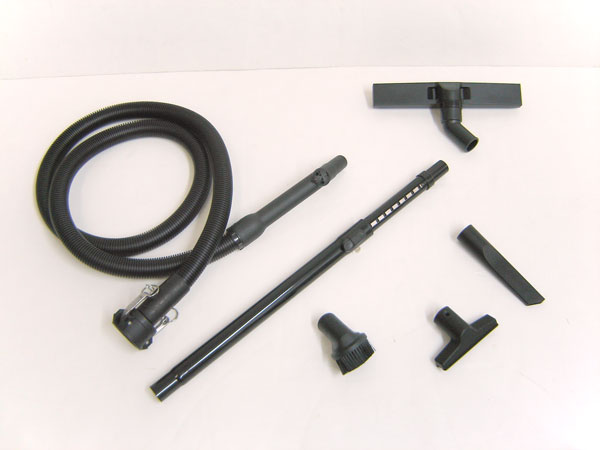
Tiger-Vac accessory kit 1 for the CR-1000 (SS): suction hose, telescopic wand and plastic tools

Kit 1 · Standard

For daily cleaning

Suction hose 2.4 m, plastic telescopic wand, 36 cm floor tool, crevice tool, dusting brush and upholstery tool.

€310 excl. freight
Part no. 323600

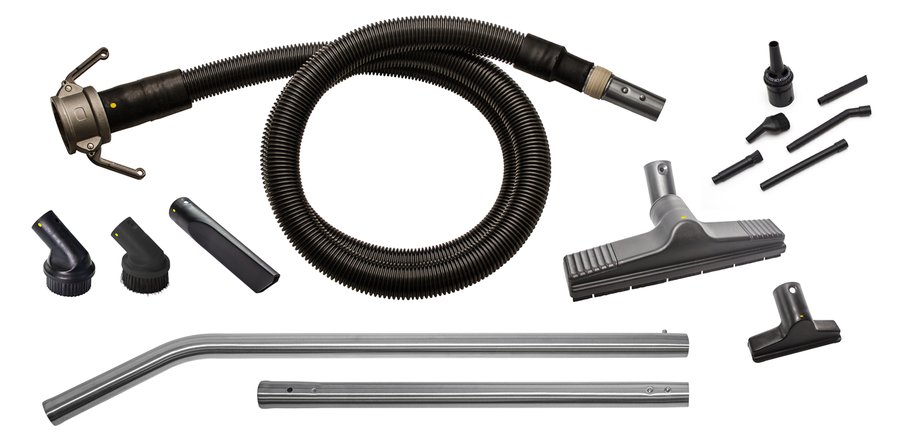
Tiger-Vac ESD-safe accessory kit 2 for the CR-1000 (SS): ESD-safe hose, stainless steel wands and tools

Kit 2 · ESD-safe

When static electricity must be kept down

ESD-safe suction hose 2.4 m, two stainless steel wands (one curved, one straight), static-conductive 30 cm floor tool, micro tool kit, crevice tool, round brush, round tool with rubber blades and upholstery tool – all ESD-safe.

€830 excl. freight
Part no. 323602

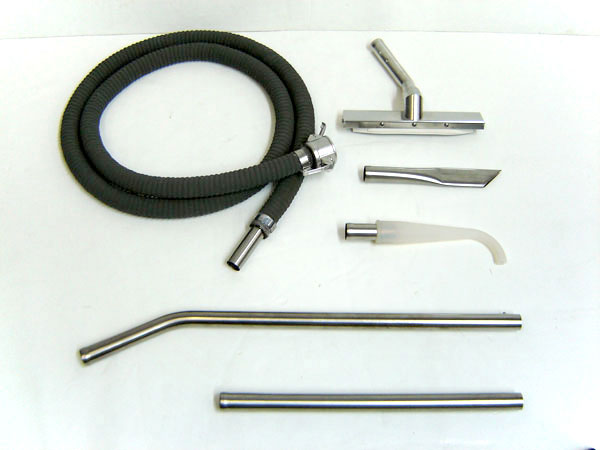
Tiger-Vac autoclavable accessory kit 3 for the CR-1000 (SS): EPDM hose, stainless steel wands and tools

Kit 3 · Autoclavable

When the accessories must be autoclaved too

Autoclavable EPDM suction hose 2.4 m, two stainless steel wands (one curved, one straight), autoclavable 30 cm stainless steel floor tool with nitrile blades, stainless steel crevice tool and conical nozzle in food-grade silicone.

€2,050 excl. freight
Part no. 323604

Prices

What do they cost?

Both are available with or without a housing around the ULPA filter. The housing protects the filter and makes changing it safer.

CR-1 ULPA

ItemPart no.Price
CR-1 ULPA110760B€1,203
CR-1 ULPA with filter housing110760BP€1,395

Accessory kit and 5 disposable bags included.

CR-1000 (SS)

ItemPart no.Price
CR-1000 (SS)111989B€3,120
CR-1000 (SS) with filter housing111990B€3,330

Choose one accessory kit for the CR-1000 (SS)

Kit 1 · Standard323600€310
Kit 2 · ESD-safe323602€830
Kit 3 · Autoclavable323604€2,050

Part numbers are for the European plug. All prices are in euros, excl. freight.

Questions and answers

What customers ask

What is the difference between the Tiger-Vac CR-1 ULPA and CR-1000 (SS)?

Both have the same motor, the same suction power (163 m³/h and 2,510 mmH₂O), the same ULPA U15 filter and are compatible with ISO Class 4. The CR-1 ULPA is light (9 kg) with a white plastic body and 3 filter stages. The CR-1000 (SS) has a filter chamber, tank and wheel base in Type 316 stainless steel that can be autoclaved, and 5 filter stages with an extra HEPA H14 filter.

Which cleanroom vacuum should we choose for the laboratory?

If the vacuum is cleaned by wiping and moved around a lot, the CR-1 ULPA is usually enough. It weighs 9 kg, has ULPA U15 and comes with an accessory kit. If the machine itself must be autoclavable, choose the CR-1000 (SS).

Can the CR-1000 (SS) be autoclaved?

Yes. According to Tiger-Vac, the filter chamber, recovery tank and wheel base in Type 316 stainless steel can be autoclaved. The CR-1 ULPA cannot be autoclaved.

Are both vacuums approved for ISO Class 4?

Tiger-Vac states that both are compatible with ISO Class 4 cleanrooms (formerly Class 10). The ULPA U15 filter has an efficiency of 99.999 % at 0.12 µm and 99.9995 % at 0.18 µm, classified to EN 1822 (MPPS), and every vacuum is aerosol leak tested before it leaves the factory.

Can the CR-1 ULPA and CR-1000 (SS) pick up liquids?

No. Both are for dry recovery of dust and particles only.

What do the CR-1 ULPA and CR-1000 (SS) cost?

The CR-1 ULPA costs €1,203, or €1,395 with a housing around the ULPA filter. The CR-1000 (SS) costs €3,120, or €3,330 with the housing. All prices exclude freight. An accessory kit is included with the CR-1 ULPA. For the CR-1000 (SS) you choose the kit that suits the room: standard (€310), ESD-safe (€830) or autoclavable (€2,050).

What does it mean that the CR-1000 (SS) has a HEPA H14 filter on top of the ULPA filter?

The air passes a HEPA H14 filter (99.995 % at 0.3 µm) and a safety filter before it reaches the ULPA U15 filter. That adds two extra stages between the dust and the exhaust, and the ULPA filter is protected.

What if we need to collect potent substances?

For potent substances that must be collected in a sealed container, there is the sister model CR-1000 (CV) and the compact CWR-10 EX (CV) with ATEX. Contact us and we will find the right model.

Shall we find the right one for you?

Tell us which room the vacuum will be used in and how it must be cleaned. We will tell you honestly whether the CR-1 ULPA is enough or whether you need the CR-1000 (SS).

Thomas Lyngskjold · +45 2022 8272 · thl@particulair.com
Particulair · Højtoften 12 · DK-2690 Karlslunde · +45 7023 1203 · sales@particulair.com

Request a quote
Particulair is ready to help with your task

The information on this page is based on the manufacturer's documentation for the Tiger-Vac CR-1 ULPA and CR-1000 (SS) and may change without notice. The image at the top is an illustration and may differ from the equipment supplied. Whether a vacuum suits a particular room and cleaning procedure is always decided by your own requirements and the product documentation. This page is not legal or regulatory advice.

Other Particulair universes