Flame-retardant hoses
Conductive and antistatic hoses for Zone 0/1/2 (gas) and Zone 20/21/22 (dust). The hose is often the weakest link in the earthing chain — here is the equipment that completes it correctly.
In explosive atmospheres, a hose is not just a transport route. It is an electrical component that either bleeds charges away or accumulates them. The difference cannot be seen, but it can be measured — and it is decisive when the process handles combustible dust, gas or liquids.
ATEX and ESD are the area where material choice and documentation are most often under-specified in critical installations. We distribute hoses from manufacturers whose ATEX marking can be copied verbatim from the factsheet, and whose surface resistance can be tested per EN 60079-32-2.
On this page you will find the hoses we recommend for ATEX zones and for ESD control without formal ATEX certification. Filter on property and standard in the left column to narrow the list to those hoses that meet your specific requirements.
Products

AIRDUC PUR 352 SE RAILWAY PLUS (MD)
Fire-safe PUR suction and pressure hose per EN 45545-2 for railway and marine
- Inner Ø: 20-50 mm
- Temp: -40 to +90 °C

AIRDUC® PUR 352 SE (MD)
Flame-retardant polyurethane hose for ventilation, heating and plumbing in rail vehicles and ships
- Inner Ø: 20-450 mm
- Temp: -40 to +90 °C

AIRDUC® PUR 350 AS (MD)
Lightweight antistatic PUR hose for pneumatic transport in ATEX zones
- Inner Ø: 25.1-500 mm
- Temp: -40 to +90 °C
- Standards: ATEX 2014/34/EU, TRGS 727, DIN 26057

AIRDUC® PUR 351 FOOD (MD)
Food-grade polyurethane hose for abrasive media
- Inner Ø: 19-500 mm
- Temp: -40 to +90 °C
- Standards: EU 1935/2004, EU 10/2011, FDA 21 CFR

AIRDUC® PUR 352 SE RAILWAY (MD)
Self-extinguishing EN 45545-2 railway hose — abrasion-resistant PUR for ventilation, heating and sanitary systems
- Inner Ø: 20-125 mm
- Temp: -40 to +90 °C

AIRDUC® PUR 355 AS (HD)
Antistatic heavy-duty polyurethane hose for abrasive media in ATEX zones
- Inner Ø: 13-500 mm
- Standards: ATEX 2014/34/EU, TRGS 727, DIN 26057

AIRDUC® PUR 355 EC (HD)
Conductive heavy-duty polyurethane hose for abrasive media in ATEX zones
- Inner Ø: 20-110 mm
- Temp: -40 to +90 °C
- Standards: ATEX 2014/34/EU, TRGS 727, DIN 26057

AIRDUC® PUR 355 FOOD (HD)
Heavy-duty food-grade PUR hose for abrasive media
- Inner Ø: 13-400 mm
- Standards: EU 1935/2004, EU 10/2011, FDA 21 CFR

AIRDUC® PUR 356 AS (XHD)
Antistatic extra heavy-duty PUR hose for the toughest media in ATEX zones
- Inner Ø: 32-300 mm
- Temp: -40 to +90 °C
- Standards: ATEX 2014/34/EU, TRGS 727, DIN 26057
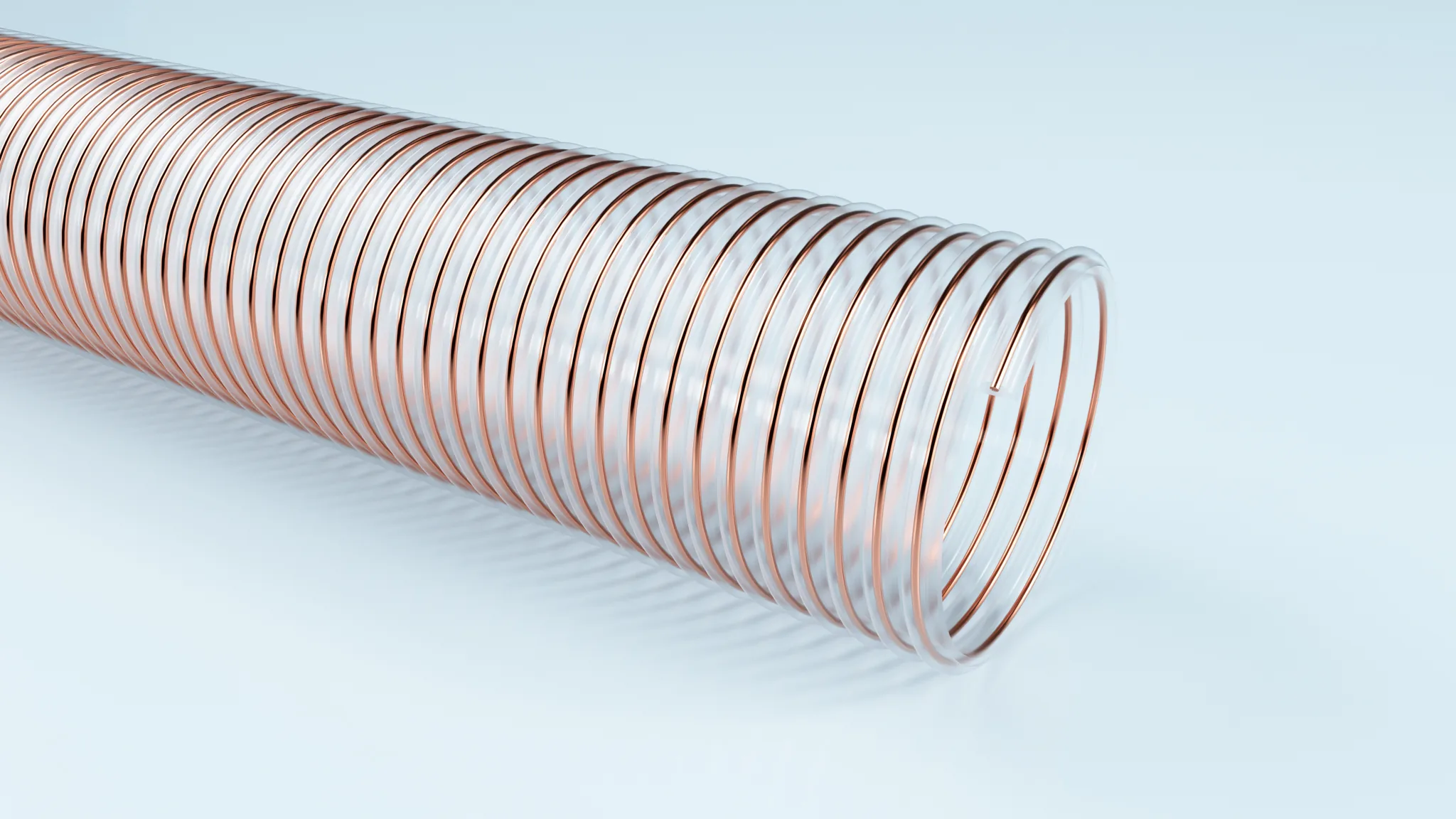
AIRDUC® PUR 356 FOOD (XHD)
Extra heavy-duty food-grade PUR hose for high throughputs of abrasive food media
- Inner Ø: 32-152 mm
- Temp: -40 to +90 °C
- Standards: EU 1935/2004, EU 10/2011, FDA 21 CFR

AIRDUC® PVC 341 (MD)
Flame-retardant PVC suction and pressure hose — MD construction for industrial extraction and powder pneumatics
- Inner Ø: 20-350 mm
- Temp: -20 to +70 °C

CARBOFORM®/EN/ISO
Flame-retardant self-extinguishing fuel hose — for leisure boats and yachts
- Inner Ø: 6-19 mm
- Temp: -35 to +80 °C

CARBOFORM®/PD
Conductive fuel hose for petrol pumps — EN 1360, 16 bar, for petrol and oil
- Inner Ø: 15-25 mm
- Temp: -30 to +90 °C

CP ARAMID 461
High-temperature clamp profile with aramid wall — up to +300 °C, flame-retardant M1/B1
- Inner Ø: 38-508 mm
- Temp: -60 to +260 °C
- Standards: REACH, RoHS

CP ARAMID 461 PROTECT
High-temperature clamp profile hose — engine exhaust extraction up to +300 °C, M1 fire class
- Inner Ø: 75.6-250 mm
- Temp: 0 to +300 °C

CP HiTex® 467 WELDING
Specialised high-temperature hose for welding fume extraction
- Inner Ø: 50-200 mm
- Temp: -60 to +280 °C

CP PVC 465
Flame-retardant clamp profile hose — fabric-reinforced, chemical-resistant, for extraction arms and welding fume
- Inner Ø: 38-900 mm
- Temp: -10 to +80 °C

CP PVC 466 HT
High-temperature clamp profile PVC hose — flame-retardant NF P 92-503 M1, up to +110 °C
- Inner Ø: 38-700 mm
- Temp: -10 to +110 °C

CP SIL 460
Silicone clamp profile hose — flame-retardant, heat-resistant up to +280 °C
- Inner Ø: 50.5-750 mm
- Temp: -30 to +250 °C
- Standards: REACH, RoHS

ISODUC ALU-PES 368
Highly flexible HVAC hose in aluminium-polyester laminate
- Inner Ø: 76-610 mm
- Temp: -30 to +140 °C

ISODUC ALU-PES 368 Anti-Bacterial
Antibacterial HVAC hose for hospitals and laboratories
- Inner Ø: 76-610 mm
- Temp: -30 to +140 °C

ISODUC ALU-PES 368 SE
Reinforced ALU-PES variant with extra coil density
- Inner Ø: 76-610 mm
- Temp: -30 to +140 °C

ISODUC ALU-PES 368 Sound Insulation
Sound-damping HVAC hose for fans and cooling units
- Temp: -30 to +140 °C

ISODUC PVC 368 Anti-Bacterial
Antibacterial PVC ventilation hose for standard HVAC
- Inner Ø: 76-610 mm
- Temp: -10 to +80 °C

ISODUC PVC 368 Black
Black PVC ventilation hose for visible installations
- Inner Ø: 76-610 mm
- Temp: -10 to +80 °C

ISODUC PVC 368 Grey
Grey PVC ventilation hose - classic HVAC colour
- Inner Ø: 76-610 mm
- Temp: -10 to +80 °C

METAL HOSE ALU 377 - ALUFLEX
Self-locking aluminium hose — flame-retardant, for air conditioning and extraction hoods
- Inner Ø: 75-400 mm
- Temp: 0 to +300 °C

PROTAPE® ALU-PES 369
Highly flexible air conditioning hose — flame-retardant, up to +140 °C, alu-pes-based
- Inner Ø: 75-610 mm
- Temp: -40 to +140 °C

PROTAPE® ALU-PVC 369
Highly flexible air conditioning hose — flame-retardant, up to +140 °C, alu-pvc-based
- Inner Ø: 76-610 mm
- Temp: -40 to +140 °C

PROTAPE® PUR 301 AS (XLD)
Extra-light-duty antistatic PUR hose — flame-retardant, microbe-resistant, for Zone 22
- Inner Ø: 25.1-500 mm
- Temp: -40 to +90 °C
- Standards: ATEX 2014/34/EU, TRGS 727

PROTAPE® PUR 330 AS (LD)
Highly flexible antistatic PUR hose — flame-retardant multipurpose in light-duty construction
- Inner Ø: 25-500 mm
- Temp: -40 to +90 °C
- Standards: ATEX 2014/34/EU, TRGS 727

PROTAPE® PUR 330 AS BLACK
Antistatic PUR hose, lightweight and flame-retardant — microbe-resistant and easy to identify
- Inner Ø: 50.5-300 mm
- Temp: -40 to +90 °C

PROTAPE® PUR 332 SE (LD)
Self-extinguishing PU hose — DIN 4102-B1 + FMVSS 302, for ventilation in trains and ships
- Inner Ø: 30-65 mm
- Temp: -40 to +90 °C

PROTAPE® PVC 310 (LD)
Flame-retardant PVC hose for solvent vapours and X-ray cable protection
- Inner Ø: 30-300 mm
- Temp: -10 to +80 °C

PROTAPE® PVC 371 (HD)
Heavy duty PVC ventilation hose — self-extinguishing per ISO 3795, blue, for galvanic extraction
- Inner Ø: 50-600 mm
- Temp: -20 to +90 °C

PROTAPE® PVC 371 (LD)
Flame-retardant PVC ventilation hose — the lightest (LD) variant of PROTAPE® PVC 371
- Inner Ø: 40-508 mm
- Temp: -10 to +80 °C

PROTAPE® PVC 371 (MD)
Flame-retardant ventilation hose — flexible, fabric-reinforced, for hot air and welding fume
- Inner Ø: 50-600 mm
- Temp: -10 to +80 °C

PROTAPE® PVC 371 ANTI-BACTERIAL (XLD)
Flame-retardant PVC ventilation hose — the antibacterial XLD variant for air conditioning systems
- Inner Ø: 76-610 mm
- Temp: -10 to +80 °C

PROTAPE® PVC 371 GREY (XLD)
Flame-retardant PVC ventilation hose — the grey XLD variant with 10:1 compression and FMVSS 302 approval
- Inner Ø: 76-610 mm
- Temp: -10 to +80 °C
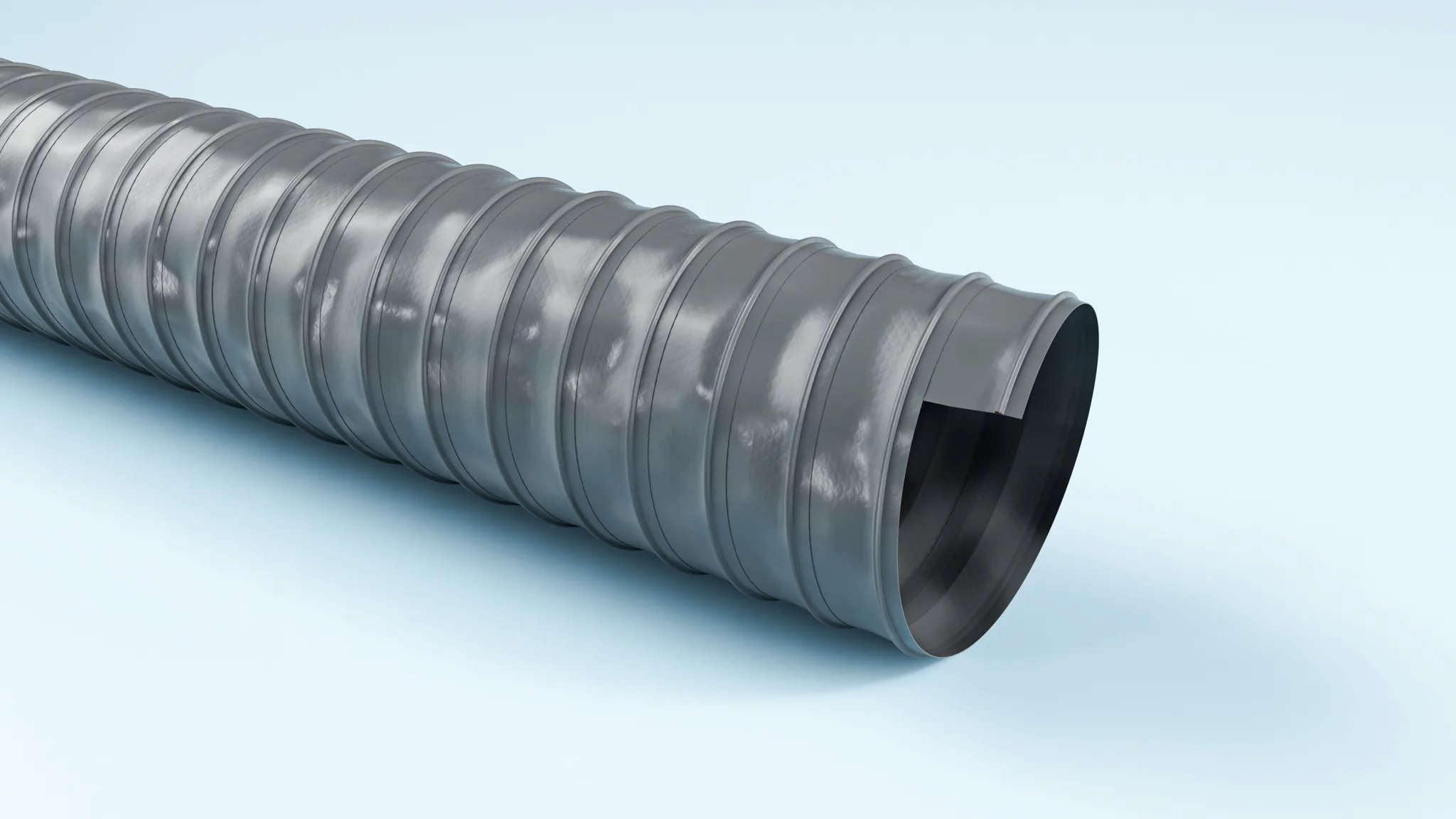
PROTAPE® PVC 371 HT (LD)
Flame-retardant PVC ventilation hose — the high-temperature (HT) variant with M1 fire class, up to +110 °C continuous
- Inner Ø: 50.5-305 mm
- Temp: -10 to +110 °C

PYROFLAT
Layflat firefighting hose, EPDM/PU, seawater-resistant
- Inner Ø: 38-102 mm
- Temp: -40 to +80 °C

RESPIROFORM
Breathing air hose per EN 14594, antistatic, flame-retardant
- Inner Ø: 9.5-9.5 mm
- Temp: -20 to +70 °C

SALDAFORM/BLACK
Corrugated welding hose (black) for neutral gases in oxy-fuel applications
- Inner Ø: 6.3-9 mm
- Temp: -30 to +80 °C

SALDAFORM/RED
Corrugated acetylene welding hose (red) for oxy-fuel applications
- Inner Ø: 6.3-16 mm
- Temp: -30 to +80 °C
SALDAFORM®
Twin welding hose — for oxyacetylene welding of oxygen and acetylene in one assembly
- Temp: -25 to +65 °C

SALDAFORM®/BLUE
Corrugated oxygen hose — for oxyacetylene welding, ISO 3821:2019
- Inner Ø: 6.3-16 mm
- Temp: -30 to +70 °C

TIMBERDUC PUR 531 AS (XLD)
Highly flexible suction and pressure hose for the wood industry (XLD = extra light duty)
- Inner Ø: 50.5-400 mm
- Temp: -40 to +90 °C
- Standards: ATEX 2014/34/EU, TRGS 727

TIMBERDUC PUR 532 AS (LD)
Highly flexible suction and pressure hose for the wood industry (LD = light duty)
- Inner Ø: 40-400 mm
- Temp: -40 to +90 °C
- Standards: ATEX 2014/34/EU, TRGS 727

TIMBERDUC PUR 532 CNC (MD)
Medium-duty hose specifically for CNC milling
- Inner Ø: 200-400 mm
- Temp: -40 to +90 °C
- Standards: ATEX 2014/34/EU, TRGS 727

TIMBERDUC PUR 533 AS
Highly abrasion-resistant suction and pressure hose with increased pressure and vacuum resistance
- Inner Ø: 100-104 mm
- Temp: -40 to +90 °C
- Standards: ATEX 2014/34/EU, TRGS 727
TIMBERDUC PUR 533 AS (MD)
Highly abrasion-resistant suction and pressure hose with increased pressure and vacuum resistance
- Inner Ø: 100-104 mm
- Temp: -40 to +90 °C
- Standards: ATEX 2014/34/EU, TRGS 727
Antistatic and conductive — not the same thing
Many collection systems do not fail because someone made the wrong choice on purpose. They fail because the market is full of hoses marketed as "antistatic" or "ATEX-suitable" without meeting the specific electrical-conductivity requirements set by EN 60079-32-1 and TRGS 727.
An antistatic hose limits charge build-up by having a surface resistance in the dissipative range. A conductive hose is something different: it has a continuous, measurable electrical connection from end to end, typically via an embedded copper wire, and can be verified with a multimeter. Only the latter meets the ATEX-zone requirements, because only the latter can serve as a verifiable link in the earthing chain.
Resistance limits in numbers
EN 60079-32-1 specifies as guidance that metal components in ATEX zones should have a resistance to earth of at most 1 MΩ, equivalent to 10⁶ Ω. TRGS 727 supplements this with product-specific limits for hoses: conductive below 10⁶ Ω, antistatic below 10⁹ Ω to earth or specific resistance below 2.5×10⁸ Ω·m. Both must be met for the hose to form part of an ATEX system.
The hose and the rest of the chain
In practice, what counts is the system's combined ability to dissipate charges. A hose that meets the requirement in isolation can, combined with a coupling that does not seat properly, render the whole system ineffective. We often see couplings glued onto the hose without electrical contact between coupling and the hose's conductive spiral core. It feels solid, but in practice it is isolated. Measure the entire chain, not just the parts.
For the deeper background, see the article The invisible weakest link, which walks through the failures we see again and again on ATEX installations.
Questions we are asked often
What is the difference between antistatic and conductive hoses?
Antistatic means the material limits charge build-up and typically has a surface resistance in the dissipative range (10⁶–10⁹ Ω). Conductive means the hose has a continuous, measurable electrical connection from end to end, typically below 10⁶ Ω. Only conductive hoses can serve as a verifiable link in an earthing chain.
In which ATEX zones can a conductive hose be used?
A correctly earthed conductive hose (below 10⁶ Ω to earth) can be used in Zone 20/21/22 for dust and Zone 0/1/2 for gas, provided the entire system is ATEX-assessed in line with 2014/34/EU and that TRGS 727 resistance limits are met.
How do I test whether my hose is still conductive?
Measure resistance from the outermost accessory all the way to the process earthing bolt with a multimeter. Test per EN 60079-32-2. Record the value and date in a logbook, and repeat the measurement after service, cleaning or hose replacement. The hose's electrical properties can change over time due to wear and deposits.
What does TRGS 727 specifically require?
TRGS 727 specifies resistance limits for hoses used in pneumatic conveying of combustible media. Conductive hoses must have surface resistance below 10⁶ Ω; antistatic below 10⁹ Ω to earth, or specific resistance below 2.5×10⁸ Ω·m. The standard refers to EN 60079-32-1 for test methods.
Must the hose be earthed at both ends?
The hose must be part of a continuous earthing chain from the process earthing bolt all the way to the outermost point. This requires electrical contact in the coupling at both ends — not just mechanical clamping. Glued couplings without continuous metal contact isolate the hose from the rest of the system.
See also
- Abrasive hoses — many granulate and sandblasting hoses must also meet antistatic requirements.
- Chemical hoses — some solvents are flammable and require conductive hoses in Zone 1.
- ATEX & TRGS zones documentation — the legal and technical requirements collected.